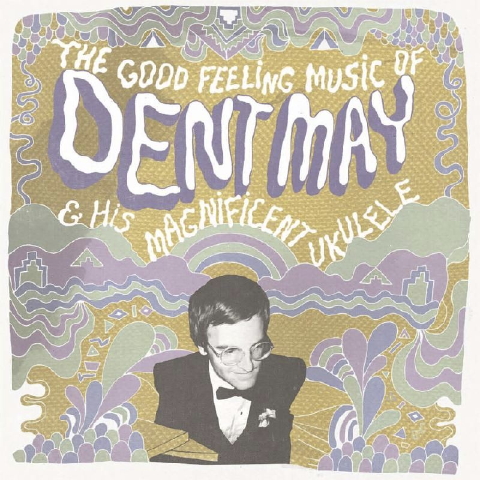
Dent May And His Magnificent Ukulele: “At The Academic Conference” (2009)
This song won the Grammy for Best Catchy Sad-Sack Ballad With Ukulele. Or should have.
See also: https://edcyphers.com/2012/07/18/recommended-albums-22/
Art is the music we make from the bewildered cry of being alive. ~Maria Popova
23 Feb 2012 Leave a comment
in Songs You May Have Missed Tags: at the academic conference, dent may, dent may and his magnificent ukulele
Dent May And His Magnificent Ukulele: “At The Academic Conference” (2009)
This song won the Grammy for Best Catchy Sad-Sack Ballad With Ukulele. Or should have.
See also: https://edcyphers.com/2012/07/18/recommended-albums-22/
22 Feb 2012 2 Comments
in Articles, Best of the Blog Tags: harry nilsson, paul mccartney, rod stewart

The Overdone: Rod Stewart’s Great American Songbook was the album series that wouldn’t go away. It spawned five volumes (with Roman numerals, no less–like the Super Bowls), a four-disc box set and even had its own best-of. As Rod points at you in the above photo he’s thinking: I’m glad YOU don’t realize how much better Bobby Darin could do this.
Rod, write some songs now. Or…retire?

The Overdue: Paul McCartney’s first-ever standards album is Kisses On The Bottom. It’s badly titled but tastefully arranged and given a pleasant, relaxed vocal treatment by one of the all-time great songwriters, who ironically seems to bring some of his best performances to others’ material. (Entered into evidence: his “It’s So Easy”, by all accounts a fiery highlight of a 2011 Buddy Holly tribute album:
Paul even includes two new originals which fit in quite well among the all-time standards. A nice trick, that.
On the downside, these arrangements are quite spare at times, and the vocals “in close”. The 69-year-old McCartney, despite having amazingly well-preserved vocal range, is not always ready for his closeup. Just a little breathy or rough around the edges here and there. It’s a small distraction, especially when I consider how much I love Jimmy Durante doing the same kind of material. My only real complaint for Sir Paul is that he didn’t do this sooner. His reason? Had to wait for Rod to finish. (No, really!)

The Overlooked: Harry Nilsson’s A Little Touch of Schmilsson in the Night came, in 1973, at a point in his career when he should have been consolidating the mainstream success he’d found with the hit Nilsson Schmilsson album. Instead he insisted on singing an album of standards with Sinatra’s arranger Gordon Jenkins. Not the best career move perhaps. But in hindsight we’re probably just as lucky to have this collection of timeless songs, impeccably arranged and sung by one of the great voices of his era, as we’d have been to have another Nilsson Schmilsson. This one’s a comparatively little-known gem today, but worth seeking out. Of all the rock musicians who moonlighted singing the standards, no one could touch the voice of Nilsson.
22 Feb 2012 Leave a comment
in Songs You May Have Missed Tags: blood and fire, van halen
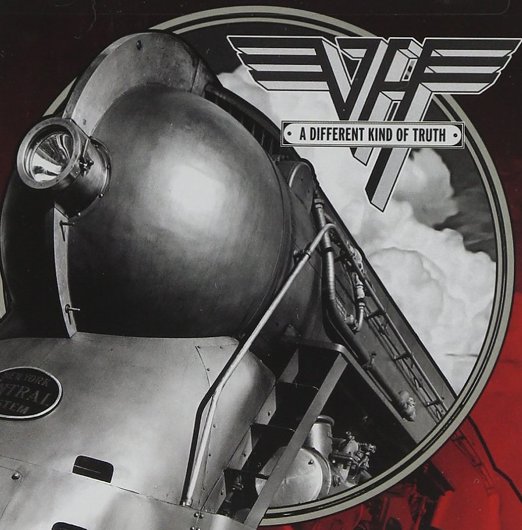
Van Halen: “Blood and Fire” (2012)
“Told you I was coming back. Say you missed me. Say it like you mean it.”
There’s only one David Lee Roth. And I did miss him. Rock n Roll, if there is still such a thing, will always need someone with its elemental cock-sure swagger to step out and remind us what its pure strain looked like. And so few are left who can still deliver that. (Wouldn’t you love to go see a Thin Lizzy show today?)
Van Halen’s new album, A Different Kind of Truth, has somewhat confounded critics who were ready to pan it and fans who were prepared to hate it. It’s not one of their absolute best, but it’s much better than we probably had any right to expect.
If you like Van Halen, you like “Blood and Fire”. If you don’t, you don’t.
22 Feb 2012 2 Comments
in Best of the Blog, Songs You May Have Missed Tags: celeste, donovan
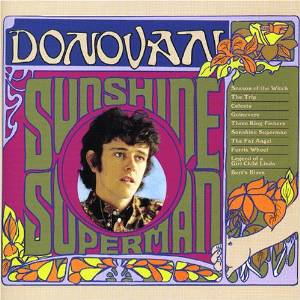
Donovan: “Celeste” (1966)
Smell the patchouli on this one…
If you saw the Dylan documentary Don’t Look Back by D.A. Pennebaker you may have come away with an impression of Donovan as a mere Dylan imitator. And if you’ve heard only hits like “Mellow Yellow” you may have assumed he’d moved on to become a Beatles imitator.
Both are inaccurate.
Donovan was an artist with a unique voice and diverse catalog, whose career happened to have parallels to the two most influential artists of the 60’s. Like Dylan, he began his career as a folk singer, became restless, and eventually “plugged in” to more electric and eclectic sounds. Like the Beatles, he allowed Eastern mysticism to inform his songwriting, and studio experimentation to broaden his sonic palette.
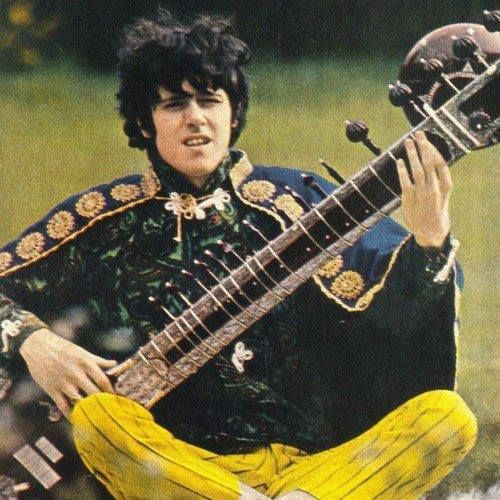
In England especially the Beatles’ influence on Donovan’s music was overestimated as the result of the delayed release of the sonically adventurous Sunshine Superman LP. While in America the album charted in September of 1966 (with the title song going #1 the same month) in England the album’s release was delayed a full year due to a dispute between Donovan and Pye Records. Quoting from Mick Houghton’s 2011 liner notes:
“For Donovan it was most frustrating, particularly since, in the UK, Sunshine Superman now appeared after Sgt. Pepper, which overnight became the landmark pop album. Yet recording with Mickie Most had commenced on December 19th, 1965 at Abbey Road and the Sunshine Superman sessions were completed during the first week of April 1966…This makes Donovan’s achievements all the more impressive considering that, as Donovan was wrapping up his masterwork, the Beatles were just entering Abbey Road studios to commence work on Revolver.”
It is breathtaking to hear some of the arrangements on Sunshine Superman and to realize it was recorded at least a year and a half before Sgt. Pepper. “Celeste” is a great example. A bed of organ, sitar and mellotron (Donovan used one before the Beatles or the Moody Blues) is joined in the instrumental section (2:05) by harpsichord and glockenspiel.
Again: 1966. A sitar, mellotron, harpsichord and glockenspiel arrangement. On other songs it was clarinets, oboes, vibes or a small string section. This was as progressive as anything in pop at the time.
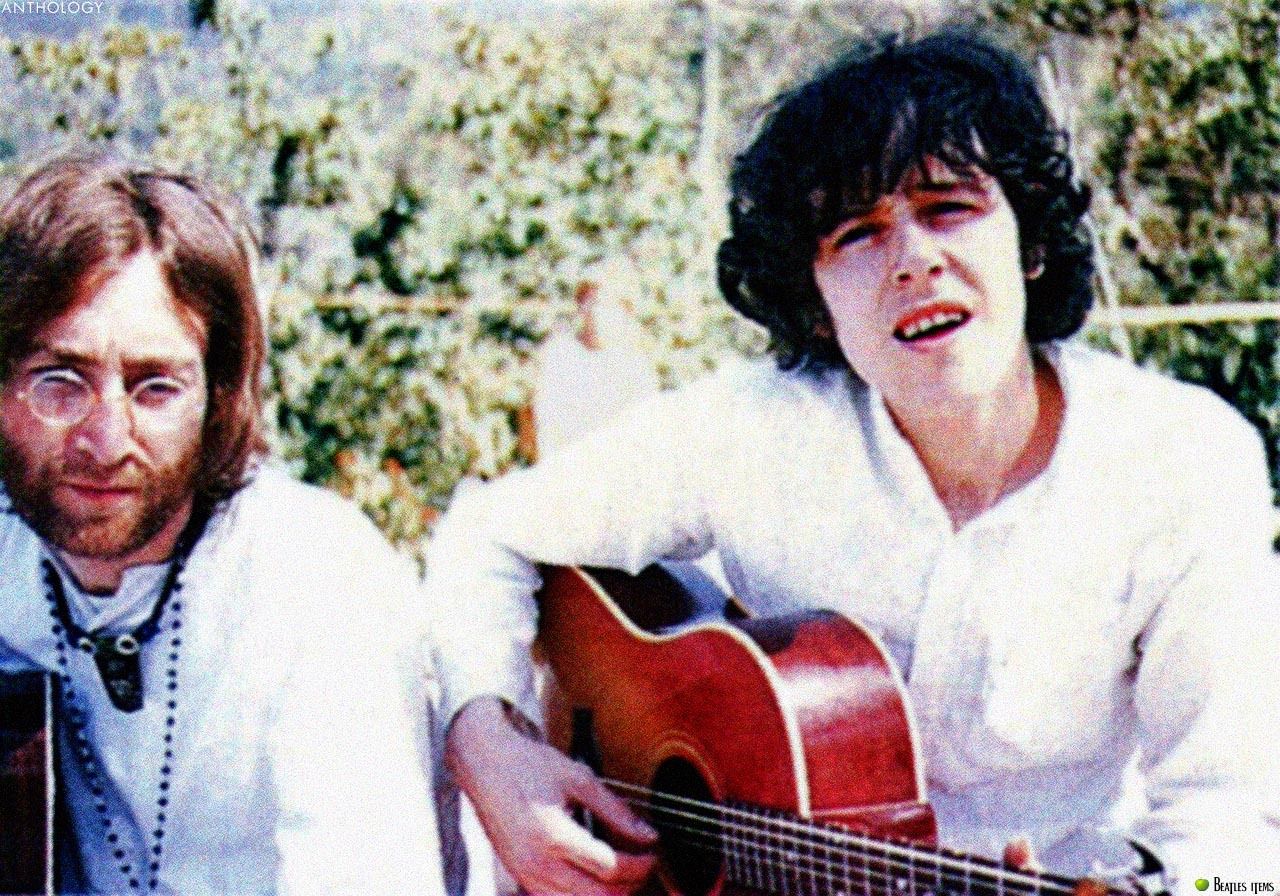
Producer Mickie Most is credited with helping turn “Folkie Donovan” into “Groovy Donovan”, but Most’s strength lay in creating hits, and the truth is it was Donovan who heard the harpsichords in his head. So Most brought arranger John Cameron, who had jazz and classical sensibilities, on board to score the complex arrangements. At times it got so carried away it became Most’s job to thin out an overly ambitious arrangement, and make a commercial record.
For another example of the exquisite baroque-pop sound they created–pre-“Eleanor Rigby”–check out the 7-minute “Legend of a Girl Child Linda”. Even if you don’t fully follow the song’s storyline, you’ll surely agree this is not the work of anybody’s imitator.
See also: https://edcyphers.com/2012/05/07/recommended-albums-16/
See also: https://edcyphers.com/2025/12/17/recommended-albums-102/
See also: https://edcyphers.com/2026/01/23/songs-you-may-have-missed-816/
21 Feb 2012 2 Comments
in Recommended Albums Tags: dawes, north hills

Dawes: North Hills (2009)
In keeping with the trend of extolling mostly albums with either black or beige-ish covers, I present Los Angeles band Dawes’ 2009 debut, North Hills.
When I think of the various types of musical talent, the visual in my head is a triangle–but let’s call it a pyramid, ’cause nobody talks about the Food Triangle or the Inverted Triangle Of Global Liquidity. Pyramids are clearly cooler than simple triangles.
At the base of my Pyramid Of Musical Talent are competent vocalists. As the glut of singing-competition TV shows suggests, there are a lot of people out there who’ve been blessed with the ability to carry a tune (although I think these shows are the death bell for subtlety and nuanced song interpretation, but that’s another rant).
Above good singers in the pyramid are proficient instrumentalists. Seems like every third kid you meet can plug in and shred to one degree or another (although he has a sister and a girlfriend who can sing).
Above the people who can play, in the more rarified third tier of the triangle pyramid, are those who can compose an original, hummable melody. The writers of credible pop tunes are less common than the musicians who can play them, and much less so than those who can sing them. That’s why in, say, the 60′s there were far fewer Burt Bacharachs than Dionne Warwicks–as great a singer as she was, she was luckier to get to sing his songs than he was to have her sing them. Burt wrote timeless pop standards sung by Dusty Springfield, Jackie DeShannon, B.J. Thomas and many others. Warwick arguably never sang a classic song unless Bacharach (and David) wrote it. Without the melody the singer is irrelevant.
And because I believe gifted lyricists are an even rarer phenomenon than good composers, the topmost penthouse of my Pyramid Of Musical Talent is reserved for people who can write words like these:
So I am taking off my wristwatch/To let the time move how I please/To let my day be guided by the sunlight/Through morning’s bell and twilight’s soft release//So if you want to get to know me/Follow my smile down into its curves/All these lines are born in sorrows and pleasures/And every man ends up with the face that he deserves
…and…
So find me when you welcome back your roots/And I will be where all of your ends meet/I want the feeling waking next to you/I want to find my children at your feet
…and…
I will move somewhere the ocean’s never seen/Somewhere weeds just make their claims/Where my best friends exist only on screen/Where my love all fits in frames
Comparatively speaking, a new artist or band will frequently catch my attention with a distinctive sound or sticky melody. But seldom do lyrics penetrate to the forefront as they do here. And Dawes seem to construct their songs with this in mind–the arrangements are clean and restrained, with every instrument and voice put in service of the song. This is not a band interested in showing off by stepping out for the flashy solo or the over-the-top vocal performance. Think of Creedence Clearwater Revival who, with the rare exception, eschewed lead solos in favor of forming a good, solid pocket for the lyric. Jackson Browne will come to mind, too. Dawes seems to have borrowed his lyric-focused style and vocal sound, while happily avoiding the melodrama quotient that can make large doses of Browne’s stuff a bit tedious.
The band has a knack for an appealing turn of melody too. The album was recorded “live to tape” to achieve an organic, relaxed California Rock sound that should appeal to fans of the Eagles or Neil Young’s gentler tunes. Above all, I’d call it authentic. In a world of ear-candy, Dawes is making ear-nutrition that goes down real easy.
See also: https://edcyphers.com/2020/02/13/songs-you-may-have-missed-653/
Listen to: “When You Call My Name”
Listen to: “My Girl To Me”
Listen to: “If You Let Me Be Your Anchor”
21 Feb 2012 Leave a comment

Can anyone explain why Susan Dey is on the cover of this album?
http://www.amazon.com/Take-Five-Live/dp/B0012KUXC2/ref=sr_1_2?s=music&ie=UTF8&qid=1329861858&sr=1-2
 Every Moment Has A Song