Every era and genre of music has songs that were popular in their day, but whose footprints have been washed from the sand over time. Our goal in this series of posts is to resurrect their memory; to help in a small way to reverse the process of the “top tenning” of oldies formats, which reduce hit makers from previous decades to their most popular song or two and then overplay them until you almost loathe an artist you used to enjoy (think “Sweet Caroline” or “Don’t Stop Believin'”).
I’ll be citing the Billboard pop charts for reference. Billboard Hot 100 charts of the 60’s and 70’s were a much more accurate reflection of a song’s popularity, before there were so many other ways for a song to enter the public consciousness (reflected by the number of pop charts Billboard now uses). It was an era when radio ruled–before a car commercial, social music sharing site, or Glee were equally likely ways for a song to break through.
We continue our little tour of the vanished Soft Rock hits of the 70’s, hoping to jog a few pleasant memories…
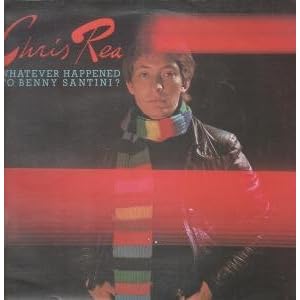
Chris Rea: “Fool (If You Think it’s Over)”
#12 in 1978
Chris Rea was a much more prominent figure at home in England than he ever became in the U.S. Here, he was a true one-hit entity, that hit being 1978’s #12 charting “Fool (If You Think It’s Over)”. Even if you recall the song, I’m guessing you didn’t attach Rea’s name to it.
Toby Beau isn’t a dude, it’s a band from Texas. They were already touring with heavyweights like the Doobie Brothers, Steve Miller Band and Bob Seger when this song became a smash hit. But the lack of a follow-up put a strain on the band that began to tear it apart even before a second album was released. A sad and too familiar tale. This three and a half minutes is the difference between one-hit wonder and band you probably never would have heard of. At least they had their moment.
LeBlanc & Carr. I’ll say that once again: LeBlanc & Carr. Anything? 1977’s “Falling” was their sole foray into the top 40, their three minutes, twelve seconds of fame. Lenny LeBlanc later went into the Contemporary Christian field, sealing their fate as one of many 70’s one-hit wonders no one seems to remember by name. This particular bit of wimpy pop was and is a favorite of mine.
Michael Johnson hit the top twenty twice in the decade of the 70’s. One song will likely be fresher in your memory than the other, although come to think of it I can’t remember the last time I heard either on the radio. Still, the man has his fans, even if programming directors don’t appear to be among them. His out of print hits compilations are priced between 50 and 150 dollars on Amazon.com.
I’m guessing that if you’re old enough, “Bluer Than Blue” (#12 in ’78) is very familiar:
But I bet it’s been a while since “This Night Won’t Last Forever” floated through your transom. Its #19 chart peak doesn’t qualify it for the top ten-only formats of many oldies radio stations, like so many other nice tunes.
Seals & Crofts made the airwaves a softer, more tuneful place between the years of 1972 and 1976 with such top ten hits as “Summer Breeze”, “Diamond Girl” and “Get Closer”. But a greatest hits collection followed at that point, dooming any subsequent hits to obscurity, a phenomenon I refer to as “premature compilation”. Since their “Greatest Hits” is one of the very few compilations from the days of vinyl that hasn’t to this day been updated and expanded for the CD era, two forgotten Seals & Crofts hits are topic for this post.
“My Fair Share” was the love theme from the Robby Benson movie One On One. (Admit it: you saw it and you loved it. You also dug The Blue Lagoon, didn’t you? DIDN’T YOU?) Anyway, the song went to number 28 in 1977.
“You’re the Love” was a bit of a disco thing from early 1978, and it made its way to #18 during the height of Saturday Night Fever um, fever. Good strategy? Hard to say: it was the last time Seals & Crofts cracked the top 40. Maybe if they’d come up with a punk single…
England Dan & John Ford Coley were kings of mid- to late-’70’s soft-serve pop; they defined the genre–like Bread did the first half of the decade. And for fans of that flavor of music it’s a damn shame that in subsequent years radio effectively made one-hit wonders of them, choosing to give their number two hit, “I’d Really Love To See You Tonight” virtually all the spins and ignoring other top 40 hits such as: “Nights Are Forever Without You”, “It’s Sad To Belong”, “We’ll Never Have To Say Goodbye Again”, and Todd Rundgren’s “Love is the Answer” (which features a strange John Hiatt cameo at about 2:49, by the way).
But probably the most “forgotten” of their hits is “Gone Too Far”. This one really didn’t survive the decade that gave it to us.
“England” Dan Seals (who passed away of cancer in 2009) was the brother of Jim Seals of Seals & Crofts, and I wish I could say I’d thought through this article thoroughly enough that it’s anything but a coincidence his entry falls below theirs. Dan became a hit country artist in the 80’s, like so many other pop acts of the ’70’s (Exile, the Bellamy Brothers, Michael Johnson, Michael Murphey…)
The Partridge Family: “It’s One of Those Nights (Yes Love)”
#20 in 1972
The Partridge Family, if they’re played on radio at all anymore, are represented by the Tony Romeo-penned 1970 pop gem “I Think I Love You”. And that’s really about it. Except it wasn’t. Because if you were there you know that they hit the top 40 more than once (seven times actually) with well-crafted, well-performed, well, okay, bubblegum during the run of their hit TV series. But this bubblegum was performed and arranged by the best session aces in the business–the famed L.A. Wrecking Crew (sorry to disappoint you if you thought that was really Tracy on tambourine and wood block). And even as the Partridge Family TV show lost its ability after a couple of seasons to push singles up the chart, it wasn’t because the singles diminished in quality. In fact, they even evolved somewhat into the more sophisticated adult contemporary sound you hear on “It’s One of Those Nights (Yes Love)”, which was also written by Tony Romeo.
Listen to the interplay of the woodwinds and horns…the “Aaahh” harmonies after each chorus that swell like the “waves upon the shore” of the lyric…and Lori gets the best acoustic guitar tones from that little piano…
Seriously, anything the Wrecking Crew recorded is worth three minutes of a pop fan’s time, even if it’s from a TV show featuring the lead singer equivalent of Captain James T. Kirk.
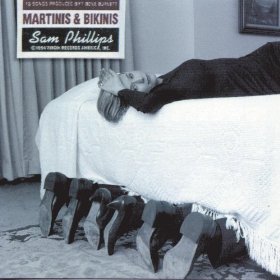
Sam Phillips started out making power pop, then morphed sometime subsequent to this album into a singer with a sparer, artsier sound. I do prefer the power pop phase, especially this one.
Lead track from 1979’s self-titled album, which was something of a comeback for Harrison after a case of writer’s block (and perhaps some residual bitterness over losing the “He’s So Fine”/”My Sweet Lord” lawsuit) (get it–“residual”?) kept him from the studio for a couple years. This cut, one of my favorites of his non-singles, established the airy, positive vibe that pervades the album.
We can all learn from failed love. The good thing is it can make us more sensitive people. The sad thing it’s usually too late to apply the lessons to the lost relationship.
Tonight I saw Glen Campbell on the Pittsburgh stop of his Goodbye Tour. I went there fully expecting to be sad…I planned to be sad, and was okay with it. And sad was one of the emotions I experienced. But I also felt thrilled, amazed, amused, touched and blessed.
I bought the ticket for other reasons than the desire to feel sad, among them the fact that I’ve always had a soft spot for the masterpieces of pop (many written by Jimmy Webb) that Campbell gave us. My father too was a fan before me. I figured the price of a couple tickets was the least I could do to say thanks, on behalf of myself and my dad, for the lifetime of great music.
But I feel the “sad” needs some explanation, because when I told some people I was going to see Glen Campbell, who suffers from moderate-stage Alzheimer’s disease and is soon to retire from music, they didn’t understand why I’d want to see something so sad. The reason became clear to me right around the time the Rhinestone Cowboy sang his last-ever Pittsburgh encore, “A Better Place”, the song in the above video. So let me explain:
My late-starting concert-going career (I was a high school senior when I saw my first show) cost me the chance to see many of the bands I grew up listening to while they were at their peak of popularity. Since attending concerts has become more of a passion in the second half of my life, I’ve seen bands well past their prime on many, many occasions. Of course, I wonder how it would have been to see Yes in ’72 or the Who’s original lineup, or the Dark Side of the Moon tour, but I’ve actually become aware of a certain attraction in seeing the same artists in their present, geriatric stage. It’s partly because I have no choice, of course. But it’s something else too.
Tonight I came to a fuller realization of what draws me to see artists in decline: it’s truer art.
If a musician is an artist (and he is of course) and one of the purposes of art is to help us to see something about ourselves (and it is of course) then the aging, well past his prime musician has as much to “say” as the pop star at the peak of his powers. It’s a different something, but equally valid. And he says it not only in his lyrics, but with his performance.
My dad taught me countless things at many stages of my life. And as his health declined and then he passed away almost a decade ago, he taught me something else: how to die. I hadn’t seen it done before, except by grandparents when I was too young to relate. But I knew my dad. He was close. And I thought he was as immortal as…me. And so as he died (with all the customary dignity with which he lived) he gave me a needed frame of reference about the process.
Worthwhile music informs our frame of reference in much the same way. Life is art, art is life. We can learn about aging, loneliness, melancholy and acceptance of fate from a lyric. Or we can see it in the performer onstage.
Glen Campbell spent 90 minutes or so showing me that even after you need a teleprompter to sing the lyrics, you can be an unbelievable guitarist. He showed me that you can do amazing things despite the wicked curveballs life throws you, especially if you have your family nearby (three of his children are actually in his touring band).
He showed me some of the same things I see each time Steve Howe walks onstage before my eyes and my brain must once again extend its comprehension of how old a rock guitarist can look and still shred it up…or when I see the two female backup singers added to a band’s lineup to get the high notes the barrel-chested lead singer once reached with ease…or when Robert Plant shows the good judgment not to reunite with Jimmy Page and call it Led Zeppelin…or when I see Roger Daltrey wearing a shirt. Artist growing old aren’t really sad unless they’re trying to act like they’re still 22. In fact, some are just growing into their songs. But they find a way to go on as artists, just as we all must find ways to go on, as whatever we may be.
Yeah, I felt a little like I was in Branson tonight, amidst the baldies and blue-hairs. But that was okay, because it was Glen freaking Campbell onstage, and I was lucky to be watching him. He’s a legend to me. Like my dad. And his courage in being up there, and his willingness to see it all through, and the poignancy of the songs all combined to move me in a deeper way than if I’d decided to see the Avett Brothers tonight instead.
Sad is great art. Glen Campbell’s songs always seemed beautifully sad to me. But all the more so now that he personifies beautiful sadness. And since the years have piled some sadness on me. I get Glen Campbell now. Because there’s been a load of compromisin’ on the road to my horizon, too.





 Every Moment Has A Song