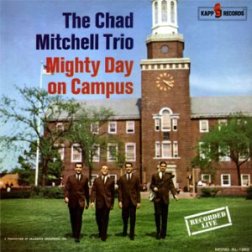
Think of the Kingston Trio (if you’ve heard of ’em) but with a better sense of humor. Three years after this #44 hit, Mitchell left the trio, which kept his name, though like Florida polling places, they dropped the “Chad”. His replacement was a young, unknown John Denver.
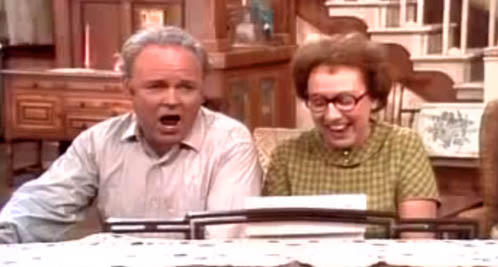
I think it’s nearly criminal that one of the greatest-ever TV show themes is very nearly impossible to find for purchase. I’m posting it here as a public service. This is not the shortened version you hear most often, but the complete theme. It was released as a single and charted at #43 in 1972.
Every era and genre of music has songs that were popular in their day, but whose footprints have been washed from the sand over time. Our goal in this series of posts is to resurrect their memory; to help in a small way to reverse the process of the “top tenning” of oldies formats, which reduce hit makers from previous decades to their most popular song or two and then overplay them until you almost loathe an artist you used to enjoy (think “Sweet Caroline” or “Don’t Stop Believin’”).
I’ll be citing the Billboard pop charts for reference. Billboard Hot 100 charts of the 60′s and 70′s were a much more accurate reflection of a song’s popularity, before there were so many other ways for a song to enter the public consciousness (reflected by the number of pop charts Billboard now uses). It was an era when radio ruled–before a car commercial, social music sharing site, or Glee were equally likely ways for a song to break through.
And now our third installment dedicated to 70’s hits that fell between rock and a soft place…and through the cracks of oldies radio.
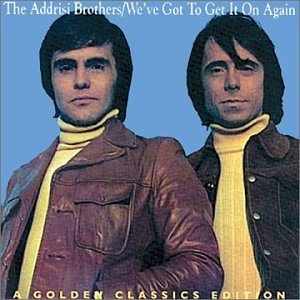
The Addrisi Brothers: “We’ve Got to Get it On Again”
#25 in 1972
“Slow Dancin’ Don’t Turn Me On”
#20 in 1977
Pop singing/songwriting duo Dick and Don Addrisi are responsible for writing at least one certified classic pop song, that being the Association’s “Never My Love”. As performers they cracked the top 40 twice, with neither song seeing much airplay since the decade of its release. At least one, “We’ve Got to Get it On Again” deserves a better fate. Actually, I’m surprised it didn’t chart higher than #25 at the time.
“Slow Dancin’ Don’t Turn Me On” however, is among the cheesier hits the decade produced. This one’s a forgotten hit with pretty good reason. “Wiggle their class”?
____________________
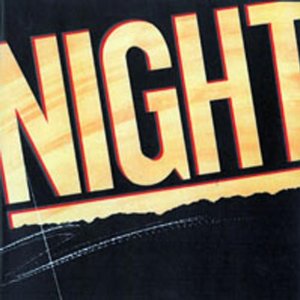
Chris Thompson & Night: “Hot Summer Nights”
#18 in 1979
“If You Remember Me”
#17 in 1979
Night had two top 40 singles with two very different sounds. “Hot Summer Nights” was a cover of a Walter Egan song with Stevie Lange on female lead vocals, and the ballad “If You Remember Me” featured a male vocal from Chris Thompson. (Thompson was the lead singer on Manfred Mann’s Earth Band’s “Blinded by the Light” a couple of years earlier.) If you remember it, I bet you haven’t heard it in a while.
____________________
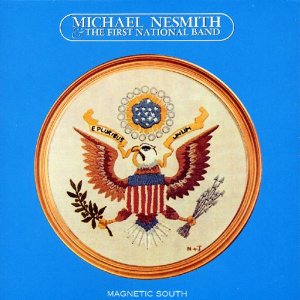
Michael Nesmith & The First National Band: “Joanne”
#21 in 1970
“Silver Moon”
#42 in 1971
Mike Nesmith will always be best known as one of the Monkees, but he was a professional musician before joining them and his songwriting credits include “Different Drum”, which gave Linda Ronstadt her very first chart hit. With The First National Band he released three albums of country rock from 1970-71.
____________________
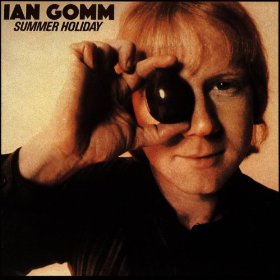
Ian Gomm: “Hold On”
#18 in 1979
English pop singer/songwriter Ian Gomm is a classic one-hit wonder in the U.S. But he did co-write at least one other hit, Nick Lowe’s “Cruel to be Kind”. The two songs share a prominent strummed acoustic guitar and a catchy chorus.
____________________
Eddie Rabbitt: “Suspicions”
#13 in 1979
Eddie Rabbitt mastered the country crossover hit in the early 80’s with songs like “Drivin’ My Life Away” and “I Love a Rainy Night”. All but forgotten though is this 1979 hit that sounds like the perfect blend of pop and easy listening. Such was the blurring of the lines between genres in the 70’s that this song, which sounds like it could be an Ambrosia hit, was recorded by a nominally country artist.
____________________
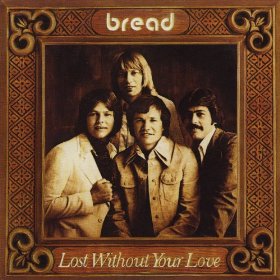
Bread: “Hooked On You”
#60 in 1977
Bread’s excellent 1977 comeback album Lost Without Your Love was their first since ’72. It would prove to be a brief reunion and the album was the band’s last. The title track was their final top ten single and “Hooked On You” its less successful follow-up. But it’s a typically lovely David Gates ballad.
____________________
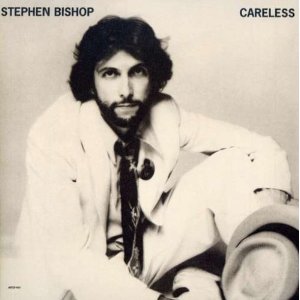
Stephen Bishop: “Save it for a Rainy Day”
#22 in 1977
Although we get the full wrath of Chaka Khan in this song’s final coda, its other featured guest, Eric Clapton, is wasted on a 6-second guitar solo. I know you’re a Bishop but…Clapton is god.
PSY’s “Gangnam Style” is now the most-watched YouTube video of all time. The 4:13 clip from the South Korean rapper has earned approximately 803,761,000 views since it was posted on July 15.
Early on Saturday, that total passed the longtime YouTube champ — the music video for Justin Bieber’s “Baby,” which has garnered 803,732,000 views since its February 2010 release.
“Gangnam Style” already set YouTube’s record for the Most Liked video ever posted to the site, with its total now standing at 5.3 million Likes and 323,000 Dislikes. Bieber’s “Baby” clip has 1.4 million Likes and 3.1 million Dislikes. Bieber’s “Baby” clip enjoyed an impressive run at the top of the YouTube heap, becoming the most-watched video on the site in July 2010. At that time, the clip had collected more than 246 million views to leapfrog over Lady Gaga’s “Bad Romance.”
“#GangnamStyle just became the most watched video @YouTube!! #History,” PSY posted to Twitter on Saturday morning in celebration of the achievement.
10cc at the height of their fame, in 1976 (left to right): Graham Gouldman, Eric Stewart, Lol Creme, Kevin Godley. Photograph: Erica Echenberg/Redferns
(Reprinted from The Guardian)
They made some of the cleverest and most inventive music of the 70s, but split up at the height of their success. 10cc come together for the first time in 36 years to explain where it went wrong
by Paul Lester
Forget the Stone Roses’ comeback and the mooted (and denied) Smiths reunion: another great Manchester band has reunited. True, it is solely for the purpose of being interviewed by the Guardian. But it is the first time all four members of 10cc have spoken to the same publication, for the same article, since their split in 1976.
The reason they have “reconvened” is to discuss Tenology, a five-CD box set focusing on the pioneering pop music they made between 1972 and 1976, when their fast-paced, action-packed hits made them one of the biggest bands in Britain.
“Yes, in a way we’re back together,” says Graham Gouldman. “Only we’re in a box, not a studio. Help!”
With Tenology, 10cc should finally get their due as the Fab Four of the 70s. Songs such as Donna, Rubber Bullets and The Dean and I were melodically ingenious, sonically inventive, radical yet hugely commercial, crammed with ideas and hooks. As for the four albums the original foursome made together, from 1973’s self-titled debut to 1976’s How Dare You!, they posit 10cc as the missing art-pop link between the Beatles of the White Album and the Blur of Parklife.
“We took on the mantle of the Beatles,” agrees Eric Stewart, nominally 10cc’s guitarist even if, like all the members, he handled other instruments and sang. He also functioned as the band’s own in-house George Martin, largely producing and engineering their records, albeit with help from the others. “We experimented on every song – you’ll never hear two that sound alike.”
Ensconced at their Strawberry Studios in Stockport, 10cc – Gouldman, Stewart, Kevin Godley and Lol Creme – didn’t just include four singers and musicians who dabbled with the recording console. They also all wrote together, in various permutations, which probably explains the super-diverse nature of the material: a Gouldman-Stewart composition would differ wildly from a Godley-Creme one, while a Godley-Stewart or Creme-Gouldman track would take another tack entirely.
“I’d forgotten how avant-garde some of our music was,” says Godley, the drummer and singer whose ethereal falsetto was used to striking effect, despite him being the only member not to sing on a 10cc No 1 – that’s Stewart on I’m Not in Love and Creme on Rubber Bullets, while the basso profondo on Dreadlock Holiday is Gouldman’s.
Godley is perhaps thinking of Une Nuit a Paris, the nine-minute, three-part mini-opera that opens 1975’s The Original Soundtrack, and inspired Queen to make Bohemian Rhapsody. “One magazine recently described it as ‘an overreach’,” he says, “but we were constantly testing the waters of what we could and couldn’t do.”
Gouldman (bass, guitar, mandolin, autoharp) is annoyed by the pigeonholing of 10cc as a “guilty pleasure” when their so-called “soft rock” was artfully jagged: imagine what Frank Zappa might have achieved had he assembled a pop group in Manchester. They were the kid brothers of invention.
“People would ask: ‘What sort of music is it?’ But it’s not prog, it’s not art rock – it’s 10cc music,” Gouldman says. He brings up the song Clockwork Creep from 1974’s Sheet Music: “Who else would write a song about a bomb on an airplane – from the position of the bomb?”
For all the rapier satire and hyper-kinetic approach to songcraft, 10cc became hugely popular. Creme (guitar, keyboards), who grew up wanting to be a comic artist and brought that cartoon vision to bear on the music, was stunned by the scale of their success. “In those days, records sold in their thousands,” he says of 10cc’s many chart forays. “You needed to sell 40,000 to 50,000 a week to get in the top 10. I used to try to imagine thousands of people going out of their homes or work, into a record shop, to buy our track. It used to boggle my mind.”
It was Creme who, after lending his comically high falsetto to Donna, The Dean and I and Rubber Bullets, came closest to being 10cc’s frontman, at least in the early days. But then, 10cc had three other frontmen, what with Godley’s more austere charisma – not forgetting Stewart, who had sung on two worldwide No 1s in the 60s with the Mindbenders, and Gouldman who had written hits for the Yardbirds, Herman’s Hermits and the Hollies. Any one of them could have legitimately claimed the spotlight for themselves.
But there was hardly a rush to do that because in another sense they were all backroom boys – just before forming 10cc, they had been the session band for Neil Sedaka on his two “comeback” albums of the early 70s. They never intended to be pop stars, nor did they have much rock’n’roll in them – apart, Gouldman says, from the odd bit of creative vandalism when Godley and Creme, art-school graduates both, would doodle on paintings in hotel lobbies or lifts.
Rather, they were happiest in the studio, endlessly finessing their complex four-minute creations – the “professional wing” of Stewart and Gouldman would do their thing, and Godley and Creme would work their magic while stoned on lethal grass – what Stewart calls “their Benson & Hedges mindfuckers”.
“Eric had already been a fully fledged pop star, but he wanted to get into production,” Creme says. “We liked being backroom boys at Strawberry. I was horrified when we had to play live.”
Really, 10cc were less rock stars than part of a Brill Building or Hollywood tunesmith tradition. “We weren’t Zeppelin,” Creme admits. “We were pop, albeit an extreme version. That’s because we had four pretty odd minds. All sorts of things can happen when you’re free and easy with ideas and encouraged by the other lunatics around you.”
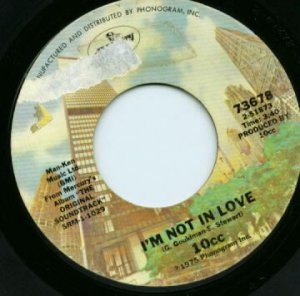
10cc peaked in the summer of 1975 with a supremely evocative piece of sustained mood music – all six minutes and 12 seconds of it – with a revolutionary soundbed of multitracked vocals and an ambiguous lyric that painted a sombre picture of young love. I’m Not in Love was a production milestone, one that has since won acclaim from Paul McCartney and Axl Rose, as well as 8m radio plays around the world. It also suggested the cerebral 10cc did have beating hearts.
Within a year, though, Godley and Creme had quit, to work on a guitar-based contraption called “the gizmo” and a triple album featuring comedian Peter Cook and jazz legend Sarah Vaughan, entitled Consequences. The bifurcation of 10cc revealed much about their component parts. By 1981 Godley and Creme’s music had more in common with the brainiac funk of Talking Heads, and within a couple of years they had become video pioneers, directing promos for Frankie Goes to Hollywood and Peter Gabriel. Meanwhile, the smoother pop axis of Gouldman-Stewart continued as 10cc, enjoying considerable success with Deceptive Bends (1977) and Bloody Tourists (1978), although by the early 80s Stewart had lost an eye in a car crash and the music had lost much of its edge.
All agree they should have been adult enough to accommodate Godley and Creme’s extracurricular activities and welcomed them back as and when they were ready to record as 10cc. But that didn’t happen, and although Godley and Gouldman remain friends and Creme and Stewart keep in touch (they are brothers-in-law), Godley and Creme’s partnership dissolved after 27 years in the late 80s and Stewart and Gouldman’s relationship broke down soon after that.
A full-scale reunion, then, seems unlikely. And yet not reforming is more in keeping with 10cc’s original spirit of adventurism and risk-taking.
“I remember seeing a programme on VH1 that brought dead bands back to life, and it was toe-curlingly embarrassing,” says Godley. “If I didn’t see a future, creatively, then I might be one of those people who dream about the past, but I’m not. It was fantastic for its time, but I have no delusions about recreating it.” Consequently, he’s now working on a music-sharing app.
Today, Creme (the only survivor of the 60s “beat boom” to become a member of a sampling/techno band, as he did when he joined Art of Noise in 1998) is in the Producers with Trevor Horn, Gouldman still tours as 10cc, and Stewart – arguably the one most affected by the fall-outs – makes music from his home studio in France.
They agree it was their lack of a coherent image that has meant 10cc have been replaced by Queen as representatives of 70s rock’s giddily inventive wing. As Godley puts it: “We only had 50% of what’s required for a successful cultural moment. We had The Noise, not The Look.” Not that there are any hard feelings about Queen having picked up their baton. “I’d like to ram the baton up their backside,” says Gouldman with some relish. He’s joking, of course, but he is more serious when he says: “It’s a tragedy that we didn’t stay together. It was a flame that burned incredibly brightly, but we could have lasted so much longer.” He allows himself a chuckle. “If you’ll forgive the expression, we had quite long candles.”
____________________
Here’s a little bonus audio clip: a fascinating look into the making of the band’s pop masterwork “I’m Not in Love”



 Every Moment Has A Song