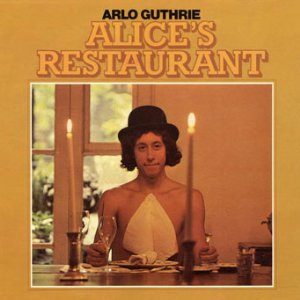
The full version of Arlo Guthrie’s 1967 counterculture classic, which took up all of side one of the album of the same name. The events, people, and restaurant were real.
Art is the music we make from the bewildered cry of being alive. ~Maria Popova
23 Nov 2012 Leave a comment
in General Posts, On a Lighter Note Tags: alice's restaurant, arlo guthrie
The full version of Arlo Guthrie’s 1967 counterculture classic, which took up all of side one of the album of the same name. The events, people, and restaurant were real.
21 Nov 2012 Leave a comment
in Songs You May Have Missed Tags: the moody blues, the swallow
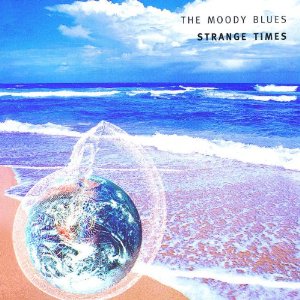
The Moody Blues: “The Swallow” (1999)
From the last studio album the Moody Blues released, excepting their very good 2003 Christmas release, December. This is an overlooked little Justin Hayward jewel, and understandably so: Strange Times is one of the weakest records of the band’s long and distinguished career.
See also: https://edcyphers.com/2015/02/17/songs-you-may-have-missed-523/
See also: https://edcyphers.com/2012/09/16/songs-you-may-have-missed-173/
See also: https://edcyphers.com/2013/11/06/songs-you-may-have-missed-500/
See also: https://edcyphers.com/2025/10/22/songs-you-may-have-missed-800/
21 Nov 2012 2 Comments
in Songs You May Have Missed Tags: chasing colours, lake
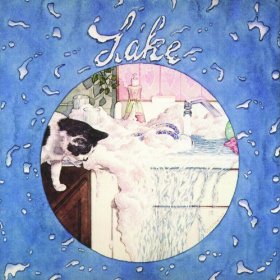
Lake: “Chasing Colours” (1976)
The German band Lake sounded like a combination of 70’s West Coast pop, Little River Band and Supertramp, with just a touch of British Prog.
Japanese film director Yasujiro Ozu is known for his “pillow shots”–transitional shots of scenery or random details that give the viewer a moment for reflection. Lake used what I’d call “pillow notes”, an extra bar or two of music that helped to “frame” a song. Listen for them here in the middle and end of the chorus.
It’s an interesting characteristic of this band, the presence of these little “unnecessary” notes. And it’s what I believe causes people to attribute a subtle progressive rock element to them.
21 Nov 2012 1 Comment
in Songs You May Have Missed Tags: citizen K, for citizen a
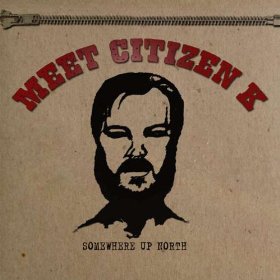
Citizen K: “For Citizen A” (2009)
Citizen K is Swede Klas Qvist, who mixes diverse 60’s and 70’s pop influences on his second record, on which he plays most of the instruments. Lead track “For Citizen A” is a heartrendingly fatalistic look at love and its potential for loss.
If anything we can’t foresee should blow this candle out
Please remember that I loved you for dear life
If Qvist is saying that to love is to risk the loss of something precious, he’d surely find agreement from a certain American songwriter he seems to have taken a cue from.
See also: https://edcyphers.com/2013/07/07/songs-you-may-have-missed-442/
21 Nov 2012 2 Comments
in General Posts Tags: flaming lips, wayne coyne, yoshimi battles the pink robots
(Reprinted from the Los Angeles Times)
By Charles McNulty, Los Angeles Times Theater Critic
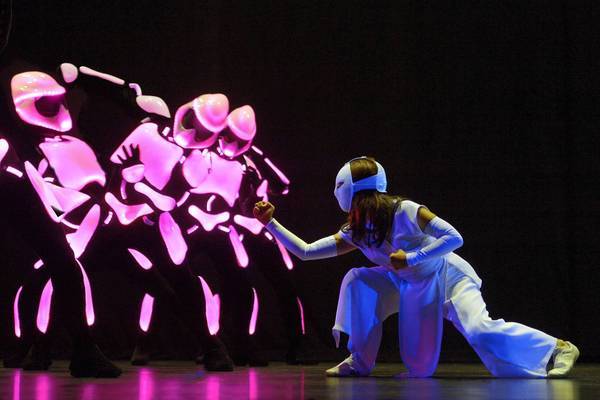
LA JOLLA — Futuristic theatrical effects are deployed like a hypnotist’s pocket watch in “Yoshimi Battles the Pink Robots.” But the real mesmerizing aspect of this new musical at La Jolla Playhouse, inspired by the music of the psychedelic rock band the Flaming Lips, is the way it sounds.
Our ears are delighted at a higher level than our eyes — or our minds, for that matter. The show’s sophistication lies in the floating lyricism of its score, which can be categorized in that Tower Records-era indie catch-all known as “alternative rock.” The visual imagination is seductive, but in a manner that can seem shallow for a work chronicling in surreal fashion a young woman’s desperate fight against cancer.
You either go along with the premise — a Japanese American artist’s battle with lymphoma is transformed into a war against flying robots — or you balk at its New Age underpinnings. Count me in the second category, though the ride through a night sky swarming with alien creatures is often exhilarating.
Inspired by the music of the Flaming Lips, the show incorporates songs from several albums, including of course the critically acclaimed “Yoshimi Battles the Pink Robots.” The sublime orchestrations are by music director Ron Melrose, who frequently collaborates with Des McAnuff, the show’s director and probably the most knowledgeable theater artist on the planet when it comes to bringing concept albums to the stage.
McAnuff, who shaped the story with the Flaming Lips’ Wayne Coyne, seems to enjoy the freedom of working in that space between music video and book musical. The electric fluidity that he brought to his recent revival of “Jesus Christ Superstar” and his landmark production of “The Who’s Tommy” is certainly on full multimedia display here. And back at his old haunt, where he’s director emeritus (his unstoppable production of “Jersey Boys” surely sealed his Playhouse legacy), McAnuff seems intent on dazzling us with glitzy galactic spectacle.
The scenic imagery, a combination of Japanese anime and a loopier version of “Star Wars,” is relentless. The design team — which includes Robert Brill (scenic design), Basil Twist (puppetry), Sean Nieuwenhuis (video and projections), Paul Tazewell (costumes), Michael Walton ( lighting) and Steve Canyon Kennedy (sound) — has fashioned an extraordinary kaleidoscope, dominated by a cast of actor-controlled robots, including one 14-foot baby that looms over the action like a giant killer. And a group of ace musicians, conducted by Jasper Grant, one of the keyboardists, sets it all in motion to a lush, full sound.
But the awkward narrative tension between the seriousness of the subject matter and the fanciful way the allegory is realized never goes away.
A hipster painter with a penchant for white canvases featuring a blob of yellow, Yoshimi (Kimiko Glenn) is healthy when we first meet her. She’s in a relationship with Booker (Nik Walker), an investment broker, and trying her best to keep her computer graphics designer ex-boyfriend, the romantically dogged Ben (Paul Nolan), at bay.
Then, out of nowhere, Yoshimi collapses. Booker launches into “Mr. Ambulance Driver” from the Flaming Lips’ album “At War With the Mystics.” And her hospital nightmare, which gets visually transmogrified into a three-dimensional video game (complete with Bradley Rapier’s hallucinatory choreography) begins.
Doctor Petersen (the capable Tom Hewitt in a thankless role) informs her that her body is attacking itself with mutant lymphocytes: “These pink cells are the enemy. They must be defeated.”
What results can be described as a chemotherapy fantasia. Ben sums it up for us in “Yoshimi Battles the Pink Robots Part I”: “Those evil-natured robots/They’re programmed to destroy us/She’s gotta be strong to fight them/So she’s taking lots of vitamins.”
The spoken vocabulary isn’t always this basic. There are words in “Pink Robots” you wouldn’t normally expect to hear in a musical — words that would stop even Stephen Sondheim dead in his tracks. “Immunotherapy,” “synthetic antibodies” and the names of medical procedures I’m too much of a hypochondriac to repeat contribute to the show’s odd blend of space-age fantasy and clinical realism.
La Jolla Playhouse is getting a reputation for developing musicals that don’t act like musicals. Earlier this year “Hands on a Hardbody,” a show about a contest for a pickup truck at a Texas auto dealership, had its premiere here and is now headed to Broadway despite the choreographically challenging fact that the characters must maintain one hand on the vehicle to win it.
Thinking in an untraditional way is precisely what’s needed at a time when the American musical has reverted to cheesy movie adaptations and jejune jukebox contraptions. But the literary sensibility behind “Pink Robots” is markedly inferior to its visual imagination. This show needs a book writer, STAT.
The basic outline of the story is clear enough, but the details can be fuzzy or cramped or, in the case of Yoshimi’s parents (played by John Haggerty and Pearl Sun), stereotypical. The romantic turmoil is treated in the imagistic shorthand of a Madonna video. And then there are lines (“You know, there is evidence that love actually has the ability to heal”) that had me flipping through the program to see if inspirational author Louise L. Hay had a hand in the work’s creation. (It’s not the sentiment so much as the banality of expression.)
Nolan, who was Jesus in McAnuff’s production of “Jesus Christ Superstar,” anchors the show with a bohemian clownishness that contains a searching lyricism. Glenn is exquisite to look at and listen to, though Yoshimi is treated too picturesquely, like a suffering doll. Walker brings sympathy to a character who can’t bear to witness what he’s helpless to change.
It’s the singing of these performers, rather than their acting, that stirs up the emotions — just as it’s the haunting sound of the show, rather than its dazzling sights, that has stayed with me. If you want to go to a deeper place with “Yoshimi Battles the Pink Robots,” you’ll have to close your eyes and travel there via your own imagination.

21 Nov 2012 Leave a comment
in General Posts Tags: buffalo springfield, cream, elo, genesis, journey, Led Zeppelin, the fugees, the supremes, van halen
(Reprinted from Rolling Stone)
By Andy Greene
Earlier this month, Neil Young confirmed widespread suspicion that last year’s Buffalo Springfield reunion was over after a mere seven-show tour. “I have to be able to move forward,” he said. “I can’t be relegated. I did enough of it for right then.” But they aren’t the first band to reform with great fanfare, only to collapse again pretty quickly. Here’s a look at some others.
Break-Up: 1980. The group dissolved immediately after the death of drummer Jon Bonham.
Reunion: The surviving members reformed for the rare special occasion in the 1980s and 1990s, but in December of 2007 they did their first full concert since the break-up at London’s 02 Arena.
Duration: One night. Jimmy Page and John Paul Jones were extremely interested in a reunion, but Robert Plant had absolutely no interest. In 2008 the group rehearsed with Steven Tyler and Myler Kennedy and even began putting venues on hold for a tour, but ultimately came to their senses.
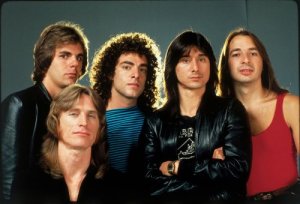
Break-Up: The group dissolved after their tour in support of 1986’s Raised On Radio. Frontman Steve Perry was exhausted and wanted to take a long break.
Reunion: They played a couple of songs in 1991 at a Bill Graham memorial show, but Perry shocked the band in 1996 when he agreed to reform the group. They recorded the new album Trial By Fire and a reunion tour was in the works. Their single “When You Love A Woman” even became a big hit.
Duration: One album. Perry injured his hip while hiking in Hawaii and required hip replacement surgery. He refused to set a date for the procedure, delaying any shows. This caused tremendous tension within the band, and in 1998 they hit the road with a replacement singer. Perry hasn’t sung a note in public with Journey in over twenty years.
Break-Up: The Fugees spent five years struggling to break big, only to implode almost immediately after becoming superstars. Looking back, it was pretty inevitable. Wyclef Jean was dating Lauryn Hill, but he was also seriously involved with another woman while they were together. At the same time, Hill felt that she wasn’t getting enough credit for her contributions to the band. Pras felt the same way. They split in 1997, about a year after The Score hit shelves.
Reunion: Much to the surprise of pretty much everybody, the group reformed in September 2004 to play Dave Chapelle’s Block Party in Brooklyn. The following year they launched a European tour, and even released the new single “Take It Easy.”
Duration: A little over a year, with large gaps of inactivity within that. Everyone hated the new single, and Lauryn caused tremendous tension by pulling an Axl on the tour and repeatedly coming out late. To the surprise of nobody, they pulled the plug in early 2006.
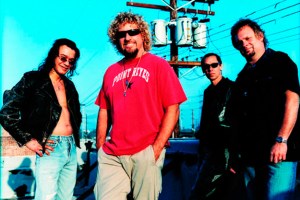
Break-Up: Believe it or not, tension surrounding the soundtrack to Twister caused Sammy Hagar to leave Van Halen in 1995. The group had just finished a long world tour, and a worn out Hagar was unwilling to fly right back to the studio and continue work on a song for the disaster movie. When all was said and done, Hagar left the band.
Reunion: An ill-fated LP and tour with Gary Cherone convinced the Van Halen brothers that they needed their old singer back. Both sides had talked a lot of shit over the years, but they put that aside to record some new songs for a compilation and launch a tour in 2004.
Duration: A little under a year. The tour coincided with the peak of Eddie Van Halen’s alcoholism. Hagar and Eddie had horrific clashes on tour (detailed in Sammy Hagar’s amazing autobiography) and neither party has spoken with each otter since the final show in November of 2004. That’s also the last time Eddie spoke with original bassist Michael Anthony.
Break-Up: In the summer of 1986, the group (now reduced to a trio) toured in support of their new disc Balance of Power, and then called it a day. Members of the group carried on in ELO Part II, but the group’s leader Jeff Lynne was done. (Even later, The Orchestra rose from the ashes of ELO Part II, but they were an offshoot of an offshoot and barely worth mentioning.)
Reunion: Lynne always saw himself as the Trent Reznor of ELO, and when he reformed the group in 2000 for the new album Zoom he didn’t invite any of the original guys back – though keyboardist Richard Tandy did wind up playing on one song. For some reason, Lynne was under the impression the group could still fill arenas and a massive tour was announced.
Duration: One album and one TV concert. This was like one of those 1950s rockets that crashed a few moments after takeoff. The group did a single show for PBS, but the tour sold horribly and the entire thing was called off before it even started. Lynne’s done a pretty good job of staying out of the spotlight ever since, though he remains a busy producer.
Break-Up: Diana Ross left The Supremes in 1970, but they carried on with new singer Jean Terrell and continued to score hits and tour for a few years. By 1977 things had slowed down considerably and they called it quits.
Reunion: Mary Wilson and Cindy Birdsong briefly put aside their differences with Diana Ross at the 1983 Motown 25th Anniversary Concert. (Founding member Florence Ballard died in 1976.) They performed “Someday We’ll Be Together.” Three years later, Wilson released her memoir and it was sharply critical of Ross, driving the two even further apart. In 1999 Ross reached out to Wilson and Birdsong about a reunion tour for the following year, exactly 30 years after they had last played a full show together.
Duration: This one went really, really poorly. According to multiple reports, Ross was offered around $15 million, Wilson was offered $2 million and Birdsong $1 million. They asked for more, but were ultimately replaced by two latter-day Supremes who had no history with Ross. This resulted in a flood of negative press, and ticket buyers seemed to have little interest in this “reunion.” The tour forged ahead, but was canceled after less than a month.
Break-Up: Cream crammed a lot of music into their two-year career. According to legend, Eric Clapton decided to break up in the band in 1968 when he first heard the Band’s debut LP Music From Big Pink, and when he read a scathing review of the group’s music in Rolling Stone by Jon Landau. In November of 1968 they played a farewell show at Madison Square Garden.
Reunion: The group played in 1993 at their induction into the Rock and Roll Hall of Fame, but that didn’t lead to any other activity until 2005. At the time Jack Bruce was recovering from liver cancer, and Ginger Baker was struggling with arthritis. To Clapton, it seemed like it was now or never. They played four shows at the Royal Albert Hall in May of 2005, followed by three shows at Madison Square Garden that October.
Duration: Five months. The reunion fizzled out during the three-night stand in New York. “In many ways, I wish we had left it at the Royal Albert Hall,” Clapton wrote in his memoir. “But the offer was too good to refuse … My heart had gone out of it, and also a certain amount of animosity had crept back in.” They haven’t played together since.
Break-Up: In 1997 Genesis made the ill-fated decision to carry on without Phil Collins. Former Stiltskin singer Ray Wilson was brought into the band, and they released the new LP Calling All Stations. The disc sold extremely poorly, as did their tour. Ticket sales were so bad in America that the entire tour was called off. The tour ended in May of 1998 in Germany, and the group quietly ended afterwards.
Reunion: In November of 2005 Phil Collins came to Glasgow on his First Final Farewell tour. Backstage he met up with his former bandmates Peter Gabriel, Steve Hackett, Tony Banks and Mike Rutherford to discuss a reunion tour. The plan was to perform their 1975 rock opera The Lamb Lies Down On Broadway straight through. Gabriel only wanted to do a tiny number of dates, and when he felt pressure to commit to a longer tour he bowed out of the whole thing. With him out of the picture, the 1980s line-up of Collins, Banks and Rutherford decided to tour instead. In 2007 they did 47 dates across Europe and North America.
Duration: Four months. The tour ended at the Hollywood Bowl in October of 2007. On the tour Collins dislocated some vertebrae in his neck. It caused nerve damage in his hands, making it nearly impossible for him to play drums. Collins is now completely retired from music, and any sort of Genesis reunion seems incredibly unlikely.
 Every Moment Has A Song