Wonderfully rustic acoustic British folk from a band who were so uncomfortable working in a studio that they recorded out in a field near the Thames River. You can actually hear bird song in some of the quiet moments at the beginning or end of a song.
Heron’s debut eschewed drums completely; it’s just acoustic guitars with organ and accordion touches and nothing overwhelming the gentle vocals.
Nellie McKay is a songwriter of many styles and moods. She’s clearly in a pissed off mood here.
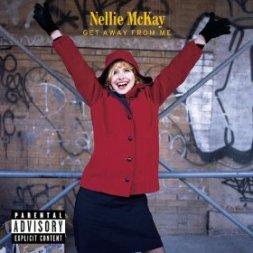
McKay’s Geoff Emerick-produced 2004 double-disc debut, Get Away From Me (a play on Norah Jones’ Come Away With Me) was a breath of fresh air. Her Doris Day look and pose on the cover seemed at odds with the Parental Advisory sticker below her picture.
McKay is said to be the first woman to release a double album as her first release. Originally, her contract with Columbia called for 13 songs, but McKay aggressively lobbied her label for a double album, including bottles of wine, a PowerPoint slide show, and a mock photo of her threatening Emerick with a gun. (Allmusic).
“The Big One” is from Pretty Little Head, her second album, released on her own label. It too was a double and included a 44-page color booklet. McKay bounces cheerfully between crooner jazz, reggae, rap, and songs that sound like full-fledged Broadway-style production numbers. Stylistic diversity, ambitious arrangements and intelligent lyrics are hallmarks of her work.
Truly one of the brightest lights in pop music, McKay seems to have a long road ahead of her as an artist. Given that she seems to enjoy careening her music career like a bumper car, it should be fun for everyone.
Cleveland’s Blue Arrow Records is a refuge for lovers of vintage vinyl. And among the music fans flipping through the bins, you’ll find no lack of opinions about performers missing from the city’s Rock and Roll Hall of Fame. For Lance Kaull, it’s one of the original boy bands. “The Monkees,” he says. “What they did for rock ‘n’ roll — they should absolutely be in there.”
The Rock and Roll Hall of Fame’s new class of inductees for 2013 will be announced later Tuesday at a news conference in Los Angeles. While the event generally prompts high-fives among fans of the winners, the list also provokes an annual debate over who gets in and why.
The Rock and Roll Hall of Fame Foundation oversees the nomination process. Its head, Joel Peresman, chafes at the frequent suggestion that the inductees are picked by a handful of guys in a smoke-filled room. “That’s just not true,” Peresman says. “It’s truly a committee of people that are smart; it’s truly a committee of people who care. These people know what they’re talking about.”
There are approximately 35 members on the nominating committee, including a mix of music journalists, scholars, performers and business people. But there’s still a problem with that group, according to Neil Walls. He runs the website Future Rock Legends, which is devoted to the minutiae of the nominating process.
“Most of them were born in the late ’40s, mid-’50s, and so they had their adolescence and their teenage years in the ’60s, when rock ‘n’ roll was really exploding,” Walls says. “When you look at the inductees, there have been more inductees that had their first record in the 1960s than all the other decades combined.”
The committee creates a list of about 15 Hall of Fame nominees, who are voted on by a group of about 600 past inductees and others in the music industry. According to published Rock Hall guidelines, inductees are picked based on their influence and the significance of their contributions. Performers are only eligible for the honor 25 years after the release of their first recording. Musician and journalist Greg Tate says there’s even a problem with that.
“It’s still a conversation among fans about music that really transformed their life, but it might be a little too early to talk about how that music made a lasting contribution to American culture,” says Tate. “I think if you’re talking about a 50-year mark, you’re more in an acceptable zone of measuring impact and significance [of music on culture, not the influence of music on a particular generation of consumers].”
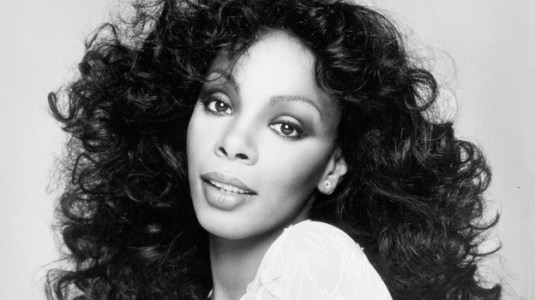
But rock is music for the young, and waits for no one. NPR Music critic Ann Powers agrees that the committee was once a bastion of middle-aged white guys, but she says there have been efforts to bring in a younger, more diverse membership, which is reflected in recent hip-hop nominees and, this year, even Chic and the late Donna Summer.
“Disco is really influential among a lot of young artists today — both in urban music and hip-hop, and even in indie rock,” says Powers. “Young artists really like disco music. That was not true of earlier generations.”
Despite the new mix of artists, one of the biggest criticisms of the nominating process is its secrecy. Rock Hall watchdog Walls suggests following the example set by the Baseball Hall of Fame, which publishes the results of its nominating process each year. “The Rock and Roll Hall of Fame could do itself a big favor, I think, by being a lot more open about its process,” he says. “It’s just a very closed system that would benefit from opening it up a bit.”
But, the Rock Hall’s Peresman argues that it’s disrespectful to start parsing the relative popularity of the nominees. “The ones that get in — they’re in,” he says. “It doesn’t matter whether they came in first or sixth. They’re into the Hall of Fame, and we never felt it was necessary to say, ‘Oh, this one was the most popular than the other one.’ ”
For the time being, journalist Greg Tate doesn’t see any end to the back and forth between the Hall of Fame and its critics. “It’s not like it’s going to be resolved to anyone’s satisfaction,” Tate says.
But back at Blue Arrow Records, clerk Tom DeChristofaro proves that you don’t even have to be a fan to join the party: “I don’t like Kiss at all — I hate that band — but, it’s, like, ridiculous that they’re not in the Rock and Roll Hall of Fame. They’re, like, one of the biggest bands of all time.” But that’s just one man’s opinion.
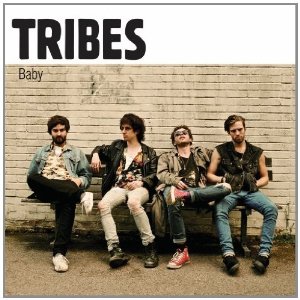
Odd that England’s New Music Express called Tribes “Britain’s best American band”. They sound peculiarly British to me. Of course, so did The Redwalls, and they are from Chicago. I think it just might be that influences skip across the pond more liberally in both directions than ever before.
2012 was a downright depressing year for rock: the biggest newsmakers in the genre were names like The Beach Boys (50th anniversary tour), the Rolling Stones (also celebrating 50) and Springsteen (who may as well be). New rock took a back seat to Classic rock, and both were overshadowed by dance music and indie pop. That thud we all heard was the sound of a genre hitting (rock) bottom.
Maybe new rock bands aren’t ambitious enough. So seldom do you hear one even attempt to craft a polished, accessible, well-produced record–you know, the kind with audible lyrics and everything. And maybe Tribes won’t be the band to turn it all around. But at least they seem to go for it. They seem to be trying to make that great record that can be embraced by millions.
And we need it.A generation have grown up without knowing what it’s like to buy a new classic rock record. I don’t mean “classic rock” as in Steve Miller Band. I mean a rock record that is a classic. As much as I like to see a youngster wearing a Pink Floyd or Beatles T-shirt, isn’t it time a next wave of great rock bands stepped forward and made their presence felt on the charts alongside Taylor Swift and Rihanna?
The anthemic chorus of “We Are Children” is something I could hear a full arena chanting along with. “Corner of an English Field” may bring to mind Oasis in their better moments. And while “Himalaya” might not grab you at first listen, it’s a grower with a Zeppelinesque heaviness.
Tribes don’t sound like a flash in the pan to me. I’ll be interested to see where their ambition takes them next time out. And hoping they enjoy a bright future both in England where they seem to be loved, and in America where the critics have so far been less impressed.
Cateura, Paraguay is a town essentially built on top of a landfill. Garbage collectors browse the trash for sellable goods, and children are often at risk of getting involved with drugs and gangs. When orchestra director Szaran and music teacher Fabio set up a music program for the kids of Cateura, they soon had more students than they have instruments.
That changed when Szaran and Fabio were brought something they had never seen before: a violin made out of garbage. Today, there’s an entire orchestra of assembled instruments, now called The Recycled Orchestra. An upcoming film will show how trash and recycled materials can be transformed into beautiful sounding musical instruments, but more importantly, it will bring witness to the transformation of precious human beings.


 Every Moment Has A Song