Hoyt Axton wrote more than a few songs popularized by others:
“Greenback Dollar” (Kingston Trio)
“The Pusher” and “Snowblind Friend” (Steppenwolf)
“No-No Song” (Ringo Starr)
“Never Been To Spain” and “Joy to the World” (Three Dog Night)
As several of the above songs suggest, Axton didn’t shy from dealing either frankly or humorously with the subject of drug use, with which he was acquainted due to his own cocaine addiction struggles.
Axton was also a familiar face on big and small screen. In addition to roles in nearly 20 movies he appeared on such TV shows as Bonanza, Dukes of Hazzard, I Dream of Jeannie, McCloud, Murder She Wrote, and Growing Pains.
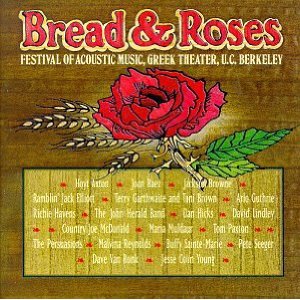
His own live rendition (better than the studio) of his minor hit “Boney Fingers” was a highlight of the Bread & Roses folk festival late in the 70’s.
Gratitude to my late brother Jim for playing this record for me so many years ago.
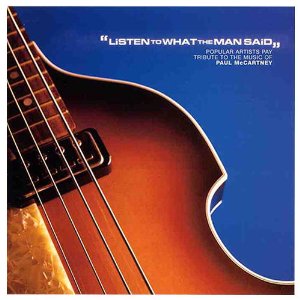
Various Artists: Listen to What the Man Said–Popular Artists Pay Tribute to the Music of Paul McCartney (2001)
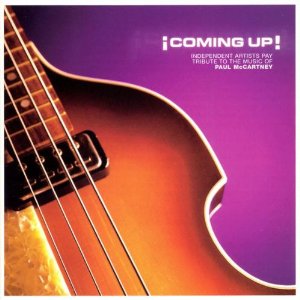
Various Artists: Coming Up–Independent Artists Pay Tribute to the Music of Paul McCartney (2001)
These were the tribute albums that, more than any other, changed my mind about tribute albums. My thinking as a music consumer had been: if you really love an artist, why would you waste time listening to other artists cover that artist? And other than those made for a charitable cause, why would such albums be worth the money? Aren’t they just a poor man’s version of the original? I mean, the Beatles never recorded trib– oh wait. They kinda did. What were “A Taste of Honey”, “Anna”, “Twist and Shout”, or Lennon’s Rock and Roll album but tributes to artists they admired?
Anyway, I’ve come around about enjoying a reverent–or even an imaginatively different–version of a song I love. But basically it took an extraordinary tribute album–actually a pair of them–to begin that change for me.
Listen to What the Man Said is supposedly “popular” artists’ musical tributes to McCartney. It’s actually a mix of household names (Matthew Sweet, The Finn Brothers) and lesser-knowns (Owsley, The Merrymakers).
Coming Up, described as “independent” artists, is where it gets truly indie, with Kyf Brewer, Cliff Hillis, Phil Keaggy and others, most of whom I’d never heard of before owning this CD. If you’d assume the volume featuring the “popular” artists would be the only one worth having, you’d be wrong. Matthew Sweet and company do a fine job, but the indies are mostly unsung power pop heroes, and imitating the Beatles is what they do. Their hearts are in the project, and they turn in some great performances.
Best example: Cliff Hillis’ take on “This One”, a Flowers in the Dirt album track that, frankly, McCartney didn’t maximize the potential of. It’s rare to hear anyone improve on a Beatle’s version of his own song, but Hillis does so here. In other cases, it’s a fresh energy (Michael Carpenter’s “Getting Closer”) or added harmony layers (Linus of Hollywood’s “Warm and Beautiful”) or meatier guitars (“Maybe I’m Amazed” by Virgos Merlot) or a female lead vocal (“With a Little Luck” by The Masticators) that enable you to hear McCartney’s greatness with fresh ears.
These two CDs are out of print, but still to be found. If you’re a real fan of McCartney’s work, this is music worth owning.
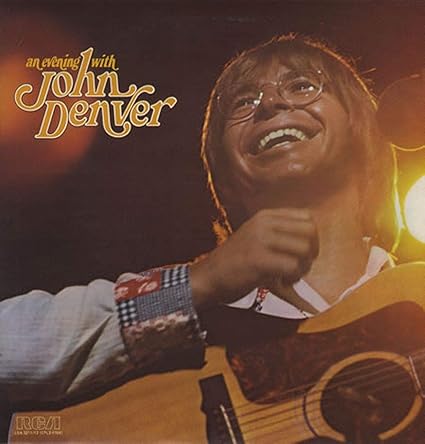
Though John Denver’s 1975 live double album An Evening with John Denver spent two weeks at number 2, went triple-platinum and spawned two hit singles, it’s a largely forgotten piece of his catalogue today, with the exception of #1 single “Thank God I’m a Country Boy”. (“Greatest Hits” collections, of which Denver has too many, often make relics of live albums).
But like “Country Boy”, much of this record’s performances actually outdid their original studio versions. Denver put his all into a live album that was a celebration of his rise to the top of the pop music world, backed by a stellar orchestra conducted by Lee Holdridge and such luminaries as Steve Weisberg and Hal Blaine.
The gentle bluegrass ballad “Matthew”, the story of Denver’s real-life uncle, is superior here to its Back Home Again LP version from less than a year earlier. Denver’s voice, one of pop’s sweetest and purest, was perfectly suited to his homespun, optimistic folk-pop, similarly to the way Karen Carpenter’s was a great match to her lovelorn ballad material.
But more than a pleasant voice, Denver was hitting his stride as a singer. His phrasing in this song shows great instincts. He knows to draw out the syllables on lines like “born just south of Colby, Kansas“, while the chorus lines “joy was just the thing that he was raised on, love was just a way to live and die” see him skipping across the short words like a stone across a stream. By alternating similarly throughout the song he both tells his story more credibly and keeps the ear from tiring of one pace of delivery. It’s the subtle genius of a superior singer.
I’ll step onto the soapbox only long enough to say the American Idolization of pop is killing both subtlety and variety in today’s music. With Adele-style belting and Christina Aguilera-style pyrotechnics as primary templates, the singing competitions are the bland tributaries feeding too much of one kind of singing into the mainstream. A young singer today wouldn’t aspire to sing like Karen Carpenter–there’s no one like her on TV to emulate. Neil Young would be laughed off a singing competition show.
John Denver came from a folk music background; young singers today don’t know what folk is. It’s a cliché to say there are no John Denvers anymore. But it’s accurate, I think, to say that pop’s rich diversity isn’t served well by TV singing competition culture.
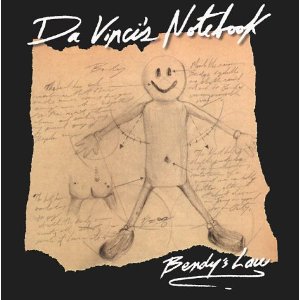
Comic a cappella vocal group Da Vinci’s Notebook are here to help with your post-holiday weight loss. You’ve already broken the New Year’s resolutions–time for something a little more drastic.
Predating the a capella trend in pop by a number of years, Da Vinci’s Notebook put the focus on humor above polished perfection.
Hence the deliberate sped-up tempo, cornpone delivery, conspicuous throat-clearing and other comic touches.Maybe not as radio-ready as Pentatonix, Rockapella, et al. But arguably more entertaining.

 Every Moment Has A Song