Every era and genre of music has songs that were popular in their day, but whose footprints have been washed from the sand over time. Our goal in this series of posts is to resurrect their memory; to help in a small way to reverse the process of the “top tenning” of oldies formats, which reduce hit makers from previous decades to their most popular song or two and then overplay them until you almost loathe an artist you used to enjoy (think “Sweet Caroline” or “Don’t Stop Believin’”).
I’ll be citing the Billboard pop charts for reference. Billboard Hot 100 charts of the 60′s and 70′s were a much more accurate reflection of a song’s popularity, before there were so many other ways for a song to enter the public consciousness (reflected by the number of pop charts Billboard now uses). It was an era when radio ruled–before a car commercial, social music sharing site, or Glee were equally likely ways for a song to break through.
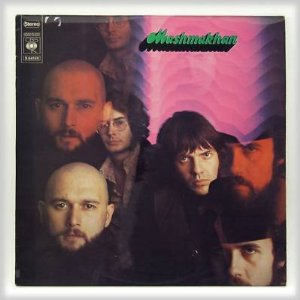
Mashmakhan: “As the Years Go By”
#31 in 1970
Some of these songs are being resurrected from the dustbin, but “As the Years Go By” by Montreal’s Mashmakhan sounds, at least for the first 30 seconds, like it’s rising out of a tomb. Surely one of the more distinctive-sounding songs to brush the top 40, perhaps it suffered from being a little too distinctive. The lyrics have been criticized as being typically jejune for the time. But hey, it’s cut from the same cloth as Zager and Evans’ “In the Year 2525” and I happen to have a soft spot for both songs.
“As the Years Go By” does have a message, and it’s one you don’t hear in a hundred other songs. It’s got mad hooks too. Plus the intro is super scary.
Though this song only peaked at #31 in America, it actually sold a million copies in Japan.
_________________________
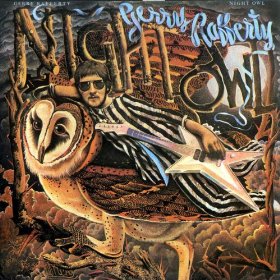
Gerry Rafferty: “Get it Right Next Time”
#21 in 1979
Ex-Stealers Wheel Gerry Rafferty had one massive, platinum selling success (1978’s City to City) then Nite Owl managed to sell gold in ’79. But with each successive subsequent release his albums were being dipped in less and less precious metals before framing. It’s the sad, clammy tale of many a 70’s pop star.
Rafferty, who struggled with alcoholism, died of liver disease in 2011. His two best-remembered works will surely be “Stuck in the Middle With You” and “Baker Street” while a layer of dust has already settled on hits like “Get it Right Next Time”.
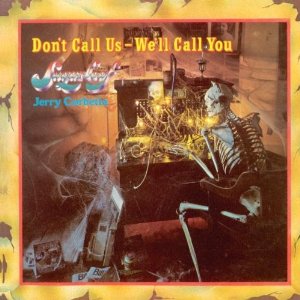
Almost five years after their only other top 40 hit, 1970’s #3 “Green-Eyed Lady”, Sugarloaf slyly made tribute to The Beatles, both by cribbing the guitar riff from “I Feel Fine” and by mentioning “John, Paul and George” in this amusingly cynical look at record company relations. (“You ain’t bad, but we’ve heard it all before”)
My favorite line is the spoken aside: “I said, ‘you got my number?’–He said, ‘yeah I got it when you walked in the door'”
_________________________
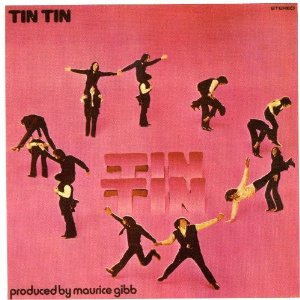
Tin Tin: “Toast and Marmalade for Tea”
#20 in 1971
Maurice Gibb of the Bee Gees produced this debut single by Australian pop duo Tin Tin, and it certainly carries the stamp of the Brothers Gibb’s stately ballads of the same period (think “Lonely Days” or “I Started a Joke”).
Singer/keyboardist Steve Kipner later went on to write hits like Chicago’s “Hard Habit to Break” and Olivia Newton-John’s “Physical”.
Thanks, Steve.
_________________________
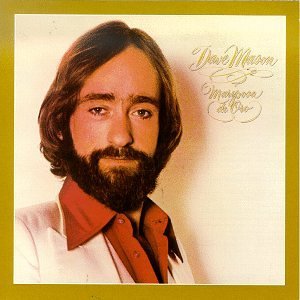
Dave Mason: “Will You Love Me Tomorrow”
#39 in 1978
An original member of Traffic, Dave Mason only cracked the top 40 twice in his subsequent solo soft-rock career. His 1977 #12 single “We Just Disagree” represents 3 minutes of classic 70’s soft rock, if you believe there could be such thing.
Mason brought a very similar sound (harmonies and flanger-effect acoustic guitar, switching out piano for organ) to his cover of a Carole King standard the next year, recording what is my personal favorite version of “Will You Love Me Tomorrow”. It grazed the top 40 and then was pretty much forgotten overnight. Kind of ironic, no?
_________________________
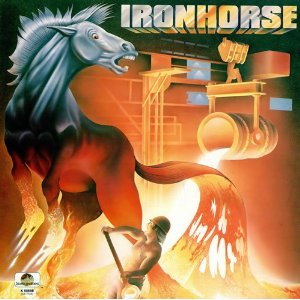
Ironhorse: “Sweet Lui-Louise”
#36 in 1979
Randy Bachman’s career trajectory (The Guess Who, then Bachman-Turner Overdrive, then Ironhorse) certainly makes the case that artists peak early in life. That’s not to say “Sweet Lui-Louise” is any worse a song than “Takin’ Care of Business” ’cause nothing is. But it’s no “Undone” or “These Eyes”.
This was the only time Ironhorse’s orbit brought them within the top 40. Interestingly (or maybe not) Bachman reprises the stuttering vocal style of BTO’s “You Ain’t Seen Nothing Yet”.
But we had. We’d seen it and we’d heard it. And we collectively said, “Go away and come back when you’ve reformed The Guess Who”.
Randy’s son Tal had a hit in 1999 with “She’s so High”.
_________________________
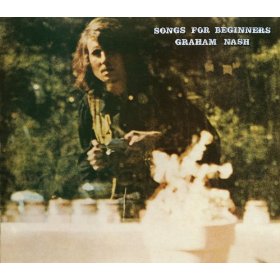
Graham Nash: “Chicago”
#35 in 1971
Graham Nash cut his pop music teeth with the Hollies during the British Invasion and the beginning of the psychedelic era. But while he was part of a truly great pop songwriting team along with Allan Clarke and Tony Hicks, responsible for such hits as “Stop, Stop, Stop”, “Carrie Anne”, “On A Carousel” and “Pay You Back With Interest”, he began to feel stifled when some of his more reflective, singer-songwriter style material only languished as obscure album tracks. Long story short, it wasn’t long before he hooked up with David Crosby and Stephen Stills and made the kind of singer-songwriter tunes that people still respect, such as “Our House” and “Teach Your Children”…before “singer-songwriter” came to mean “James Taylor” and it earned as many enemies as fans.
Fast-forward to 1971 and Nash is releasing his first solo album, Songs For Beginners, along with a star-studded lineup of guest musicians including Crosby, Jerry Garcia, Dave Mason, Rita Coolidge, Phil Lesh and Neil Young (“Joe Yankee” on the album credits).
The two best-known songs from this album are “Military Madness”, which missed the top 40 but remains relevant today due to the more universal and timeless message of the lyric, and “Chicago”, which actually hit the top 40 but was aimed lyrically at a specific time and place–the riots at the 1968 Democratic National Convention in Chicago and the trial of the Chicago Eight, who were charged with inciting. The line “won’t you please come to Chicago just to sing” is thought to be directed at band mates Crosby and Stills, in a plea to come to Chicago to protest the trial of the Chicago Eight.
But if the specificity of the lyric’s message is the reason you don’t hear the song today, why is Crosby, Stills, Nash and Young’s “Ohio”, which is similarly a protest song about a specific incident, still a classic rock staple?
Maybe it’s simply because pop music is essentially a fickle and inexplicable thing.
Going to rock concerts has always meant dealing with a bunch of unruly people, many of them very drunk – but it seems like lately things have been worse than ever. Attention spans are at an all-time low, and the ubiquity of smartphones has resulted in a huge percentage of the audience at any given show barely paying attention to the action onstage. Here are the 10 most annoying behaviors at rock concerts:
1. Taking pictures the entire freaking show.
I get it. You want to show all your friends on Facebook and Twitter that you saw a cool concert. Fine. Take a photo. Take five if you want! But please, don’t take 77. You always manage to hold your camera right in my line of sight. You don’t even look like you’re enjoying the show while you’re doing this. All your attention is on the photos. And you know what? Those photos are all going to look like shit. Every single one of them. You’re too far away. You’ll probably never even look at them. Also, you see those guys right in front of the stage with the giant cameras? They’re taking great professional pictures. There’s really no need for yours.
2. Checking e-mail, Facebook and Twitter every couple of minutes.
Unless you’re a surgeon or a firefighter, everything can wait. Live in the moment. Enjoy the show. You paid good money to be here. You can e-mail your friends when you get home. Also, that cellphone emits a very harsh and distracting glow. For the love of God, just turn it off.
3. Incessantly talking to your friends.
You might not like whatever song is playing. You may be bored with the show in general. You may have been dragged here against your will. But you’ve been chattering the entire show, and I can hear every word. It’s driving me crazy. Please shut up. Please. I can’t tell you how many shows I attend where the two people in front of me are yelling in each others’ ears the entire night. Not only is my sightline blocked when their heads come together, but I can hear them. Maybe go to a coffee shop when the show is done. Lie under an oak tree and talk until the sun comes up. I don’t care. Just quiet down so I can enjoy the show.
4. Yelling out requests.
Look, I hope Morrissey plays “There Is A Light That Never Goes Out” also. That would be cool – but stop screaming for it. Most of the time the set list is pre-determined, and you’re screaming in my ear. They’re going to play what they’re going to play. Go along for the ride. And to the guy screaming for a super obscure B-side from 15 years ago? Nobody thinks you’re cool.
5. Yelling out “Freebird!”
This request deserves its own subcategory of irritation. This joke has never been funny. Not once. Just stop. It was lame in 1981. Now it’s just infuriating.
6. Pushing your way to the front.
If a concert is general admission, the people in front earned their spots. They got there early and laid claim to their space. The people all the way in front might have even spent all day camped out by the doors, so when the lights go off and you shove your way to the front, you’re being a huge asshole. Don’t do that. If you show up late and there’s only room in the back, you’ve just gotta deal with it.
7. Getting so drunk you puke.
At pretty much any big concert, you’ll see a janitor emerge after a couple of songs with a big broom and a bucket of sawdust. It means somebody puked. It’s a bummer for the puker, but the people all around have to deal with the aftermath. Don’t be the vomit guy. There’s no worse kind of person to be at the concert.
8. Loudly complaining after the show because the band didn’t play your favorite song.
Not all artists take the Rod Stewart/Billy Joel/Tom Petty approach of “nothing but the hits.” Performers like Neil Young or Van Morrison are unpredictable. This is actually a good thing. Try to enjoy the show you’re getting as opposed the one you wish you were seeing. Besides, haven’t you heard “Brown Eyed Girl” and “Southern Man” enough?
9. Filming the entire show on your iPhone.
This distracts people even worse than taking pictures, and usually results in an equally horrid product. The sad irony is that people tend to film their favorite songs, but the smiles on their faces are gone when all their concentration goes into capturing these moments on film. Tomorrow morning, YouTube will be cluttered with crappy cellphone videos of every song from whatever show you’re seeing. There’s no need to add to that. You paid good money to see a show, and you’re joylessly watching it through a tiny screen on your iPhone. It just doesn’t make any sense.
10. Yelling “Sit down!” at people who are standing up.
This is a real problem at theater and arena shows that attract fans over the age of, say, 40. Nobody can quite agree when to stand or when to sit down. Inevitably, there are some people standing right in front of people that wish to remain seated. Between songs, someone will scream “Sit down!” The stander either obliges, or yells back something like “Go fuck yourself.” The person in the seat just seethes with rage, and the tension seeps through the whole section. Often the person is standing only because someone in front of them is standing. It leads to chaos, and grumpy old people spending the entire show miserable. This has to stop. Here’s a simple rule of thumb: If you can’t see, stand up. It’s very easy. Inversely, if everyone in front of you is seated, sit down. Go with the flow and just relax. We’re all in this concert together.
It was a glorious moment for Scot. For Keith, it was the middle of the end — another example of the outrageous substance abuse that would kill him five years later.
Fast forward to 1978, and we arrive at Keith Moon’s final live performance with The Who. It took place when the band shot live footage for the rockumentary, The Kids Are Alright. In his recently-published biography, Who Am I?, Pete Townshend writes that, by 1978, Moon’s addictions had caught up to him. His “drumming was getting so uneven that recording was almost impossible, so much so that work on the Who Are You album had ground to a halt…. [The Who] had just about enough tracks for a record, with very little additional material to spare. ‘Music Must Change‘ was completed with footsteps replacing drums.” When it came time to shoot live footage for The Kids Are Alright, Townshend “was terrified that Keith wouldn’t be able to hide his deteriorating condition,” but agreed to give it a try.
The initial shoot was appalling. The band was out of practice, and Keith couldn’t keep up. So they tried a second shoot, filmed at Shepperton Studios on May 25, 1978, where they played a limited number of hit songs before a small audience. (Watch above and below.) “Keith was in a good mood but bloated and unfit,” writes Townshend, “and he found the repeated takes wearying.” Because Moon’s earphones kept falling off, they taped them to his head with thick black gaffers’ tape. In the months that followed, Moon headed to Malibu, California where he tried to kick his alcohol habit and then started abusing medications to relieve the withdrawal symptoms. On September 6, Moon took 32 tablets of clomethiazole, a sedative meant to help him cope with the withdrawal. The next morning Roger Daltrey, The Who’s lead singer, called Pete Townshend and simply said “He’s done it.”
In the same way that This is Spinal Tap hilariously sent up the conventions and pretensions of metal, Fear of a Black Hat took a booty-shakin’, gun-totin’, rival-hatin’ look at early 90’s rap. NWA, Public Enemy, LL Cool J, Vanilla Ice and lots more are the butt of the humor. And here P.M. Dawn’s sound is lampooned for “I’m Just a Human”. This is the full version, not the film cut.
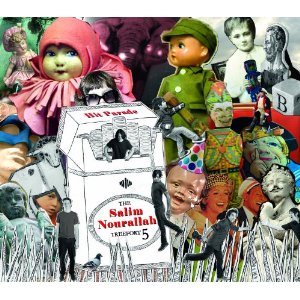
From Nourallah’s sixth album Hit Parade, which made a lot of power pop year-end top ten lists. This song is about giving a defiant middle finger to the adversity that “beats us all the time”.



 Every Moment Has A Song