In his early days, before he became associated with the “greeting card pop” of “Leader of the Band”, “Longer”, and “Same Auld Lang Syne” Dan Fogelberg was a credible album artist with a musical kinship to the Eagles, America and Jackson Browne.
Guest artists his first few albums included Don Henley, Joe Walsh, Glenn Frey, Randy Meisner, Graham Nash and Chris Hillman. Fogelberg opened concerts for Van Morrison.
Like John Denver, with whom he shared an appeal that never carried overseas to the European market, Fogelberg’s seemed to create his own inimitable genre of folk-infused California rock (even though he wasn’t from California). Once in a while a banjo even came to the fore, just as on early Eagles albums. “Morning Sky” might be a side of Dan you either haven’t heard or had forgotten about.
Nashville power poppers The Shazam can rock it out (see below) but are equally adept with a melancholy melody and pensive lyric. This one sounds like a lost Badfinger song to me.
The previous post collects the advice of 25 music icons (well, 24 “icons” and Courtney Love) to aspiring musicians. I thought it timely that English progressive rock band Big Big Train released this promo video today, as it seems to be the keynote address and simple summation of that post.
_________________________________________
Big Big Train were named Prog Magazine‘s Breakthrough Act of the Year for 2013 and are a favorite of this blog. Check out “Judas Unrepentant”, which I happen to think is one of the most brilliant prog songs of recent vintage:
This is pretty honest stuff. A love song about the nuts-and-bolts, every day slog that love usually ends up being. How rare is a song that, rather than taking the tact of idealizing love, incorporates it into the fabric of mundane, un-ideal everyday existence…
David Ramirez has realistic expectations–just a determined hope that there’s more pretty than gritty to it all. It isn’t what we’re used to in a love song. It almost rings too true.
Rob Montague’s video is every bit as honest and slice-of-life as the song’s sentiments–a perfect tact to take here.
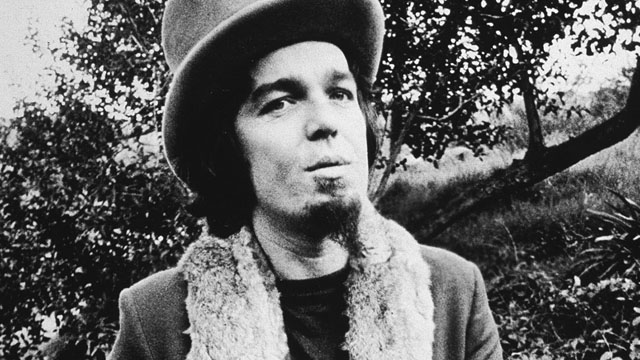
If you do not believe in Captain Beefheart, I doubt the 1974 Old Grey Whistle Test appearance above will convert you. If you are a Beefheart believer, you know. And if you don’t know where you stand on Beefheart, get to know this wild-eyed rock and roll shaman, poet, bluesman, painter, and childhood friend of Frank Zappa. (Start with his fairly straightforward take on Delta blues and sixties garage rock, 1967′s Safe as Milk.)
Beefheart’s Magic Band, a shifting collection of musicians that initially included Ry Cooder (who served as something of a musical director) created some of the most warped music of the last few decades, much of it very recognizably blues-based and much of it (such as the freak outs on Beefheart’s Trout Mask Replica) occupying a space all its own—a space that only exists, really, in Captain Beefheart’s head and heart. While Beefheart acquired a reputation as an uncompromising, and singularly demanding, employer of musicians, speaking as a musician, there are few others that I wish I’d had the chance to play with in their heyday.
Despite his demonically inspired weirdness and storied difficulty, what attracted musicians to Beefheart was his ability to push concepts so far beyond the bounds of intelligibility so as to make insanity make perfect sense. Take, for example, his list of instructions, or rather “commandments,” issued to Moris Tepper when the guitarist joined Beefheart’s band in 1976. This is not an obnoxious practical joke—it is the technique of a Zen master, disorienting his student with nonsensical truths mixed in with some very practical advice. Which one is which is for the student to decide.
Captain Beefheart’s “Ten Commandments of Guitar Playing”
1. Listen to the birds
That’s where all the music comes from. Birds know everything about how it should sound and where that sound should come from. And watch hummingbirds. They fly really fast, but a lot of times they aren’t going anywhere.
2. Your guitar is not really a guitar.
Your guitar is a divining rod. Use it to find spirits in the other world and bring them over. A guitar is also a fishing rod. If you’re good, you’ll land a big one.
3. Practice in front of a bush.
Wait until the moon is out, then go outside, eat a multi-grained bread and play your guitar to a bush. If the bush doesn’t shake, eat another piece of bread.
4. Walk with the devil.
Old Delta blues players referred to guitar amplifiers as the “devil box.” And they were right. You have to be an equal opportunity employer in terms of who you’re brining over from the other side. Electricity attracts devils and demons. Other instruments attract other spirits. An acoustic guitar attracts Casper. A mandolin attracts Wendy. But an electric guitar attracts Beelzebub.
5. If you’re guilty of thinking, you’re out.
If your brain is part of the process, you’re missing it. You should play like a drowning man, struggling to reach shore. If you can trap that feeling, then you have something that is fur bearing.
6. Never point your guitar at anyone.
Your instrument has more clout than lightning. Just hit a big chord then run outside to hear it. But make sure you are not standing in an open field.
7. Always carry a church key.
That’s your key-man clause. Like One String Sam. He’s one. He was a Detroit street musician who played in the fifties on a homemade instrument. His song “I Need a Hundred Dollars” is warm pie. Another key to the church is Hubert Sumlin, Howlin’ Wolf’s guitar player. He just stands there like the Statue of Liberty — making you want to look up her dress the whole time to see how he’s doing it.
8. Don’t wipe the sweat off your instrument.
You need that stink on there. Then you have to get that stink onto your music.
9. Keep your guitar in a dark place.
When you’re not playing your guitar, cover it and keep it in a dark place. If you don’t play your guitar for more than a day, be sure you put a saucer of water in with it.
10. You gotta have a hood for your engine.
Keep that hat on. A hat is a pressure cooker. If you have a roof on your house, the hot air can’t escape. Even a lima bean has to have a piece of wet paper around it to make it grow.
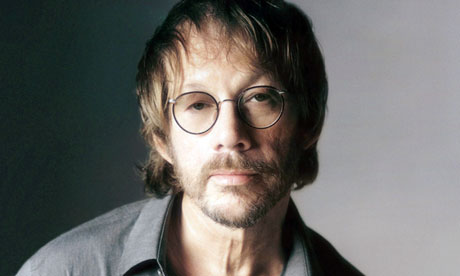
Singer/songwriter Warren Zevon died of lung cancer ten years ago tomorrow. I remember the day of his passing well, but at the time I was a little baffled by the enormous number of tributes to the musician, who I vaguely thought of (stupidly) as a novelty songwriter vaguely associated with the L.A. soft rock scene. How wrong I was. I arrived at the Zevon party late, but I finally showed up, and came to understand why almost every musician from the seventies and eighties that I admire deeply admires Warren Zevon and his hardbitten, witty, and unsentimental narrative style. There’s so much Zevon in so many troubadours I love: Joe Jackson, Tom Waits, Springsteen. Always on the cusp of stardom but never quite a star like peers and former roommates Lindsey Buckingham, Stevie Nicks, and Jackson Browne, Zevon was nevertheless one of the most well-regarded writers of the L.A. rock scene. Whether it was his misanthropic commitment to his cynicism—as Allmusic describes his personality—that sidelined him or his struggles with acute alcoholism isn’t entirely clear, but he always had his champions among critics and peers alike.
In addition to the aforementioned luminaries, Zevon’s career was boosted by members of R.E.M., with whom he recorded under the name Hindu Love Gods, and—most visibly and consistently—by David Letterman, who had a twenty year relationship with Zevon as his guest and sometime substitute band leader. At the top of the post, you can see Zevon’s final appearance on Letterman’s show. The two attempt light banter but lapse occasionally into awkward pauses as they discuss Zevon’s diagnosis. The talk is frank and filled with mordant wit, as was Zevon’s way, and Letterman confesses he’s astounded at his longtime friend’s ability to keep his sense of humor. When Letterman asks Zevon if he’s learned something Dave doesn’t know about life and death, Zevon responds with the endlessly quotable line, “not unless I know how much you’re supposed to enjoy every sandwich.” In the clip above, watch one of Zevon’s final performances on the same show. He plays the powerful ballad “Mutineer,” a song with a fitting epitaph for Zevon’s life: “ain’t no room on board for the insincere.”
And in the clip above, see Zevon’s first appearance on Letterman in 1982, playing “Excitable Boy” and “The Overdraft.” Watching these early and late performances, I’m baffled again—this time by why Warren Zevon wasn’t a major star. But it doesn’t matter. Those who know his work, including nearly every major singer/songwriter of the last forty years, know how amazing he was. For more of Zevon’s amazingness, check out this full 1982 concert film from an appearance in Passaic, New Jersey. And please, remember to enjoy every sandwich.




 Every Moment Has A Song