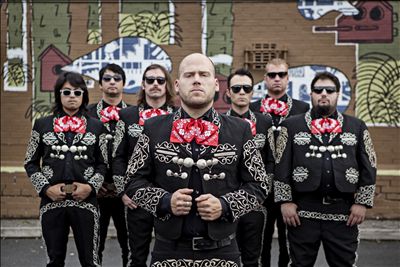
Band name that references NYC? Check. Sombreros? Check. Cheerful, ear-tugging melodies? Yup. Mariachi El Bronx have everything you’d expect from a hardcore punk band from L.A.
That’s what The Bronx have been for the better part of their existence. But since 2006 they’ve put out three albums of the punchiest, most party-friendly mariachi music this side of…wherever you’d usually go to hear mariachi music. “Everything Twice” is not quite typical of their mariachi sound, owing more to the Tex-Mex style of Texas Tornados. But it’s as catchy a tune as anything these guys have come up with.
Greg Todd’s six-song mashup of recent “bro-country” hits (above) along with Grady Smith’s supercut from 2013 (below) reveal what some of us have known for some time: contemporary country is a musically and lyrically bankrupt medium–pretty much creativity’s antithesis.
Which is fine if you’re into that kind of thing.
Just don’t ask my why I won’t listen to a genre of music in which a song is already, in effect, an oldie the day it’s released.
I’m beginning to believe you could actually write a hit country song by simply ticking enough boxes of hillbilly hackney…
Listen to Zac Brown Band’s “Chicken Fried”, for example, which rattles off no less than four of the above clichés within the song’s first seven lines (and that’s not counting the fried chicken reference). Many country songs amount to nothing more than lists of things identifiably rough-hewn and rustic–compiled into a testament either of the singer’s redneck cred or that of the (small town, blue-jean clad) girl of his affection.
It seems the only suitable locale for a country song is a small town. The only vehicle a country song’s protagonist may drive is a pickup, or perhaps a flatbed. The only acceptable dress for a woman in a country song is tight blue jeans. And the only time anything happens in a country song is on a weekend. Pretty rigid songwriting–and listening–requirements.
Now think of great–and I mean great–country songs of decades past. Songs such as “El Paso” and “Ruby, Don’t Take Your Love to Town” and “Sixteen Tons” and “King of the Road” and “Behind Closed Doors” and “Stand by Your Man” and “Ring of Fire” and even “The Gambler”. Notice how none of those songs were strewn with lazy lists of all things “country”. That’s because when those songs were popular, country music was the medium, and not the message. The song was about something else, something substantive.
To sum up what’s wrong with (or at least what’s differentabout) country music today: “country” has gone from being the genre to the subject matter itself. Like a painting of a picture frame.
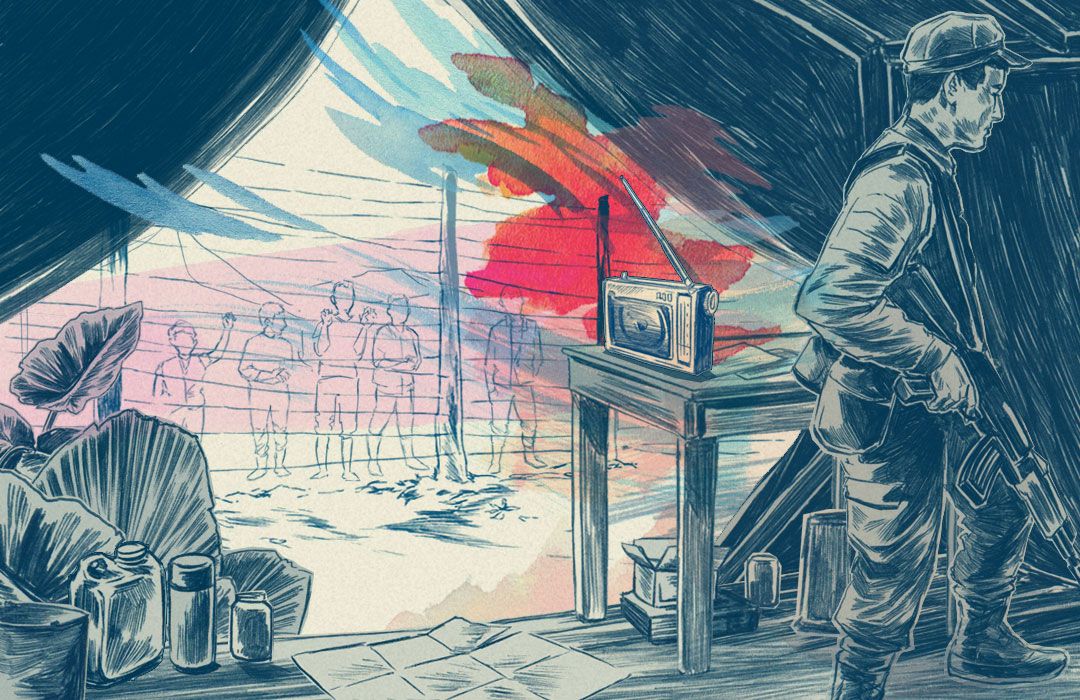
…Ortiz pitched the Colonel a plan as if he were pitching a commercial to Heinz or Coca-Cola. The Colonel stroked his chin. Espejo liked the code idea, because he knew that many soldiers — especially in the communications departments — were taught Morse code in their basic training. Furthermore, Espejo reasoned, “The FARC were peasants from the fields, they wouldn’t know [Morse].” It was a longshot, but if the team could disguise the telltale dot-dot-dash signals in a song, there was a chance the soldiers would hear the message…
Welcome to another segment of the widely tolerated “Poplifting” feature, wherein we like to demonstrate our vast (or at least half-vast) knowledge of pop history’s musical pickpockets. Let’s point some incriminating fingers!
____________________
“Girlfriend” by Avril Lavigne lifted from “I Wanna Be Your Boyfriend” by The Rubinoos lifted from “Get Off My Cloud” by The Rolling Stones
When power pop band The Rubinoos filed a claim against Avril Lavigne and her “Girlfriend” cowriter/producer Dr. Luke, saying her 2007 hit ripped off their 1979 song, Lavigne responded by saying she’d never heard their song before. Although her claim seems plausible (she wasn’t even born till five years after its release) there had been two cover versions in 1990 and 1996 that she certainly could have come across. And it’s not like music from 1979 didn’t exist on CD in 2007…
Be that as it may, Lavigne was exonerated in court despite the opinion of prominent music critics that her song is a total lift from the Rubinoos’. In Lavigne’s defense her manager pointed out that The Rubinoos song itself seems to borrow from the Rolling Stones’ “Get Off My Cloud”. Certainly a case can be made that there were two incidents of poplifting here:
____________________
“Let’s Live For Today” by The Grass Roots lifted from “I Count the Tears” by The Drifters
Legendary songwriters Pomus and Shuman had their hook hooked for a song recorded originally by The Rokes in 1966, then taken to #8 by The Grass Roots the following year.
____________________
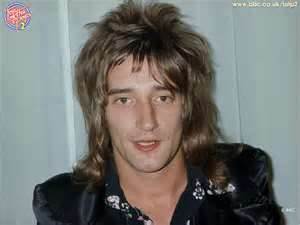
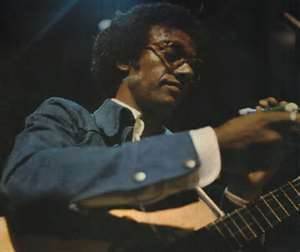
“Da Ya Think I’m Sexy” by Rod Stewart lifted from “Taj Mahal” by Jorge Ben
Jorge Ben, Brazilian musician and writer of the classic “Mas Que Nada”, didn’t take kindly to Rod Stewart’s unauthorized use of a melody from his “Taj Mahal”, a song Rod surely had opportunity to hear as the 1972 song was popular in London clubs. Ben sued for copyright infringement and the case was settled amicably with all future royalties from “Da Ya Think I’m Sexy” going to UNICEF. Stewart has admitted to “unconscious plagiarism” in the matter.
Jorge Ben added “Jor” to his name, becoming Jorge Benjor, supposedly in response to an incident where some of his royalties went to George Benson.
____________________
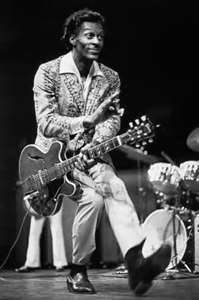
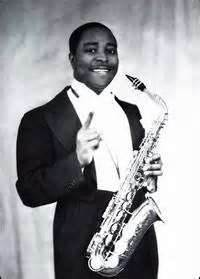
“Roll Over Beethoven”, “Sweet Little Sixteen” and “Johnny B. Goode” by Chuck Berry lifted from “Ain’t That Just Like a Woman” by Louis Jordan
Chuck Berry, as we learned in the last post on this subject, is the true originator, the one everybody cribs from…right? Well, yes. But he’s also a guy who recycled that signature riff a lot. And, oh yeah–he wasn’t the first to use that now-famous guitar intro, the one that rang in the birth of rock ‘n’ roll. The first three samples you’ll hear in this clip are the intros to Chuck’s “Roll Over Beethoven”, “Sweet Little Sixteen” and “Johnny B. Goode” respectively. The fourth is the intro from Louis Jordan’s “Ain’t That Just Like a Woman”. It’s from 1946. Call it rock ‘n’ roll’s false start.
____________________
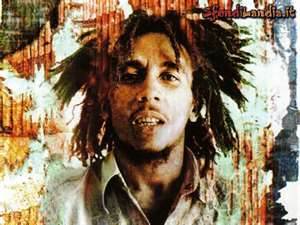
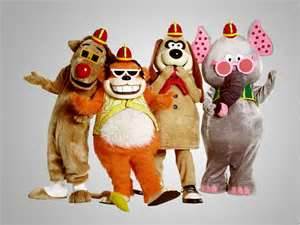
“Buffalo Soldier” by Bob Marley lifted from “The Tra La La Song (One Banana, Two Banana)” by The Banana Splits
I know. It doesn’t get any more unlikely than this. But maybe not–Marley did spend about half of 1969 living with his mother in Delaware, his wife and young kids with him. Seems almost likely he’d be exposed to Bingo, Drooper, Snorky and Fleegle and their Saturday morning Adventure Hour (if you’re too young to know who the Banana Splits were, think The Monkees in animal costumes. If you’re too young to know The Monkees, ask your mum).
Why he’d copy their song is another story. I’m thinking this is another case of “unconscious plagiarism”. A pretty funny one. To my knowledge, Fleegle and company took no legal action.
The other day I got into my car and the first thing I did–just like I was taught in Driver’s Ed class–was to check the CD player. As I switched the function from radio to CD and landed on track 3 where I’d left off listening, I heard parts of Ben Harper’s ‘Steal My Kisses’ and Belle & Sebastian’s ‘If She Wants Me’ back to back. It sounded a little like this:
A weird coincidence only, most likely. But It did get me thinking about some of the more heinous song-on-song crimes that have been perpetrated throughout the years. I’m talking about artists lifting musical ideas from other artists without necessarily giving credit where it’s due. I’m talking about the scandal of Pop-lifting…
____________________
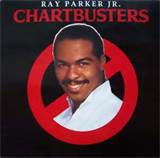
‘Ghostbusters’ by Ray Parker Jr. lifted from ‘I Want a New Drug’ by Huey Lewis
The producers of the film Ghostbusters approached Lindsay Buckingham to write a theme song based on his successful contribution of ‘Holiday Road’ to National Lampoon’s Vacation. When Buckingham declined Ray Parker Jr. took the job and wrote the ‘Ghostbusters’ theme. He was promptly sued by Huey Lewis, whose hit ‘I Want a New Drug’ had been a hit earlier that same year and sounded eerily like ‘Ghostbusters’ (ok maybe not ‘eerily’ but still…).
The two settled out of court, with Columbia Pictures paying a settlement to Huey Lewis. The details of this settlement were to remain confidential and were until Lewis made comment about his payment on an episode of VH1’s Behind the Music. Parker then sued Lewis for breach of confidentiality.
What’s really weird is that the bass line the two songs share that made them so similar, is also quite similar to that of M’s ‘Pop Muzik’, a number one hit in late 1979.
Here’s an excellent mashup showing why Ray Parker got Ghostbusted:
____________________
‘Come Together’ by The Beatles lifted from ‘You Can’t Catch Me’ by Chuck Berry
‘Come Together’ is pretty much a slowed down, heavier version of Chuck Berry’s ‘You Can’t Catch Me’ with different lyrics–mostly.
The song got John Lennon sued by Big Seven Music Corp, the publisher of Berry’s song. They settled out of court, but a pissed off Lennon vowed to record three more of Big Seven’s songs. He got around to releasing two. Both appeared on his Rock n Roll album and one of them was ‘You Can’t Catch Me’. (The third, ‘Angel Baby, went unreleased until after his death). Big Seven sued and won another award ($6,795) then released an album of Lennon’s unauthorized outtakes in a move designed to embarrass Lennon. This time Lennon sued and won, to the tune of $84,912.96. I’ll always wonder how it came down to that 96 cents…
____________________
‘Surfin’ U.S.A.’ by the Beach Boys lifted from ‘Sweet Little Sixteen’ by Chuck Berry
And speaking of Chuck Berry, rock n roll’s most ripped-off figure was pretty ticked off to hear ‘Surfin’ U.S.A.’ on the radio one day. It’s very nearly a note-for-note rip-off of his ‘Sweet Little Sixteen’. He sued and won royalties and a songwriting credit. It gets weirder: The lyrics of ‘Surfin’ U.S.A.’ also seems to have been ‘inspired’ by another song, Bobby Rydell’s ‘Kissin’ Time’, which names various American cities. And ‘Kissin’ Time’ borrows melodically from…yup, ‘Sweet Little Sixteen’. It all comes back to Chuck.
____________________
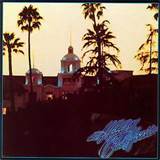
‘Hotel California’ by Eagles lifted from ‘We Used to Know’ by Jethro Tull
When the Eagles toured as opening act for Jethro Tull in their earliest days a song from Tull’s live set and written by Ian Anderson made an impression on songwriter Don Henley. It took a while, but about half a decade later his masterwork, ‘Hotel California’ showed the influence of the earlier song. As far as I know, no one sued anyone. But it is interesting to note how un-original Henley’s magnum opus actually is.
____________________
‘Take it to the Limit’ by Eagles lifted from ‘If You Don’t Know Me by Now’ by Harold Melvin & the Blue Notes
And while we’re on the subject of the Eagles, let’s take note (why not, everybody else is doing it) of Randy Meisner’s ‘Take it to the Limit’. The opening string arrangement comes across as a homage (to put it politely) to Harold Melvin’s R&B hit of three years earlier, written by Gamble and Huff. It was also, incidentally, the first Eagles single not to feature either Henley or Glenn Frey on lead vocals.
____________________
So, here’s to the Originals–the Chuck Berrys and Ian Andersons and Huey Lewis’ of the world–those who sometimes have to sue to get the recognition (and money) they deserve. It’s high praise when artists of the stature of Don Henley, John Lennon and Brian Wilson tap your musical legacy for ideas.



 Every Moment Has A Song