A Portrait of Michael Jackson at 50: A Sad and Ruined Life Nearing its End

mike 1

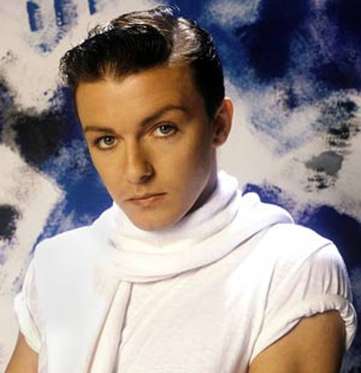
The above image is thought to be what Michael Jackson would have looked like at age 50 without surgery, extrapolated by experts using childhood photos.

The below article appeared on the UK Daily Mail site on August 28, 2008, less than a year prior to Michael Jackson’s death. It carries additional impact with the perspective of subsequent events (i.e. Jackson was preparing his This is It comeback concert series at the time of his death).

In one sense, Jackson wasn’t quite finished as a performer after all. In another, he was closer to the end than even the writer imagined.

by J Randy Taraborrelli for MailOnline

mike 2

A middle-aged man wearing pyjamas is being pushed in a wheelchair down a sidewalk by an assistant. He is gaunt and frail-looking. His skin seems to be peeling. His fingernails are a sickening shade of yellow-brown.

Beneath a red Marines baseball cap a surgical mask is visible, covering the bottom half of his face. A pair of large sunglasses shield the top.

Three children walk ahead – two boys and a girl. All seem happy and look adorable in colourful clothing. Their baseball caps do not seem a deliberate attempt to shield their faces.

‘Slow down,’ the man commands in a hoarse whisper, but the children ignore him and quickly cross the street to stand in front of a bookshop.

When the man in the wheelchair finally catches up, one of the children dutifully holds the door open as he is wheeled inside.

‘Thank you,’ he mutters weakly. All seems calm, but then – just as the children are about to follow the man into the shop – a stranger approaches the smallest of them.

‘Was that…?’ she begins to ask. The boy is about to answer, when a large man steps between them.

‘No. That was not,’ he says, taking the boy by the hand and rushing him inside. But, just before the door swings closed, the young boy turns to his inquisitor, smiles broadly and mouths just two words: Michael Jackson.

Welcome to the very sad world of Wacko Jacko. The scene I’ve just described is typical of what goes on in his life almost every day in Las Vegas, Nevada, where he now resides…

Read more: http://www.dailymail.co.uk/tvshowbiz/article-1050082/As-turns-50-Michael-Jackson-really-look-like.html#ixzz3wiawnoQX

On a Lighter Note…

c50a88d77e8028f07fcb421c3fa785c5[1]

criss

dog

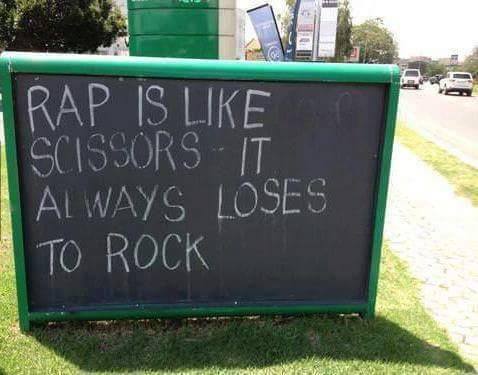
rap

bieber

clowns jokers

.facebook_1452290367997

kick

kanye

types of rock

bitch please

.facebook_1452072159963

Songs You May Have Missed #564

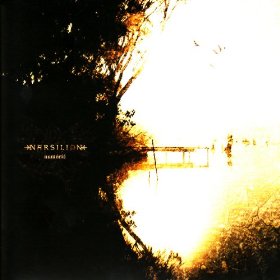
narsilion

Narsilion: “El Retorn a la Infantesa” (2008)

From Barcelona, Spain come Tolkien gateway drug Narsilion. Their particular brand of neoclassical ambient folk has been labeled Darkwave by whatever entity is responsible for the nomenclature of music’s multitudinous classifications.

narseEthereal and medieval-sounding, Narsilion may appeal to fans of Enya, Loreena McKennit or possibly Blackmore’s Night. However their music generally lacks Enya’s cohesive, populist songwriting, McKennit’s traditional rootedness or Ritchie Blackmore’s guitar wizardry.

Still, there is wizardry here of another sort. If you have a penchant for songs about elves, unicorns and autumnal equinoxes, pour a flagon of mead, sit back and enjoy the musical reverie.

The Deservedly Short Pop Career of Ricky Gervais

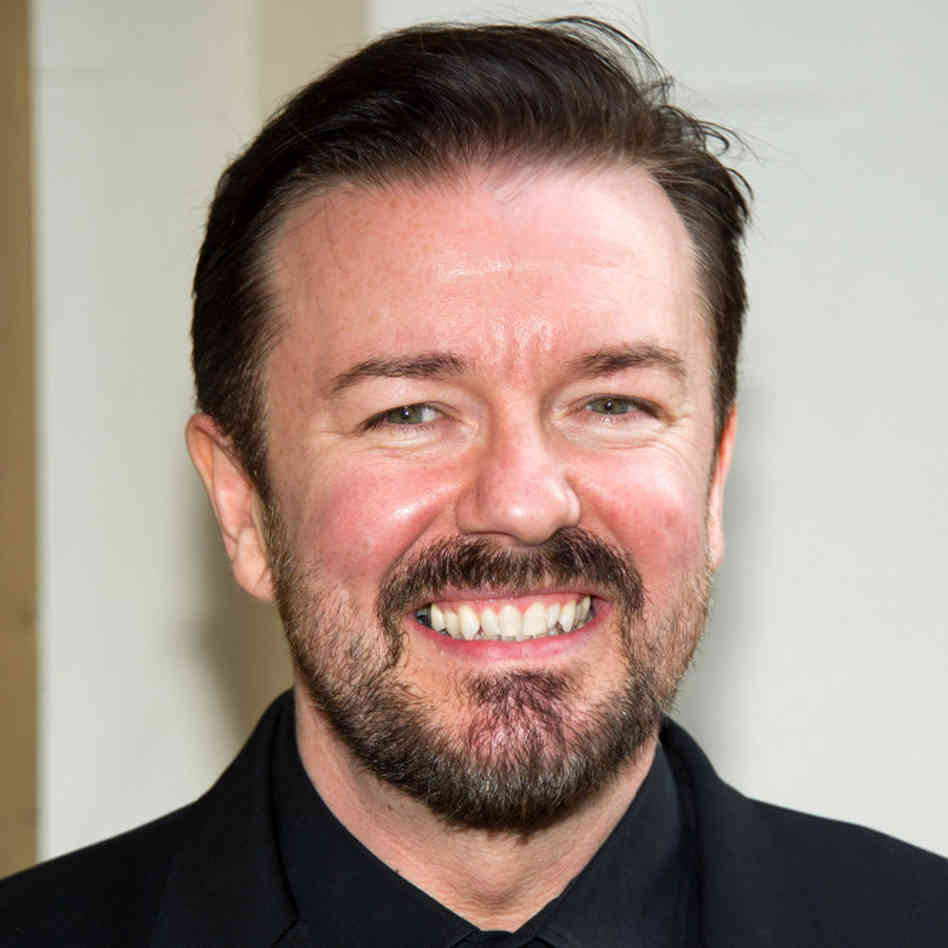
ricky

Ricky Gervais, host of this year’s Golden Globe Awards, is the comedic writer and actor who created, among other stellar TV shows, the original British The Office documentary-style sitcom, which in turn spawned 9 seasons of an American cash in adaptation.

But few fans on this side of the pond (or probably on the other, for that matter) realize he was a failed 80’s would-be pop star.

seonaIn 1983, while attending University College of London Gervais and friend Bill Macrae formed Bowie-esque synth duo Seona Dancing and released two singles on London Records.

The group split in 1984 after neither “More to Lose” or “Bitter Heart” cracked the British top 40.

But then something weird happened. According to Wikipedia:

In 1985, DWRT-FM (then known as 99.5 RT, now 99.5 Play FM), a radio station in Metro Manila, Philippines, started playing a song billed as “Fade” by Medium (also billed as “Medium” by Fade). DWRT-FM deliberately misnamed the artist and song title to prevent anyone from finding the record and playing it themselves. Additionally, to stop other radio stations from recording it and playing it, DWRT-FM inserted a station ID midway through the track. A year later, another radio station, DWXB-102, revealed the true identity of the song as “More to Lose” by Seona Dancing.[1]

The song, which utilises an opening piano riff to convey the sound of falling teardrops, became a major radio and club hit as well as a favourite at high-school dances during the 1980s and beyond. AllMusic critic Michael Sutton wrote that the track was “the theme song of angst-ridden New Wave youths in the Philippines” and “an ’80s anthem as ubiquitous as Peter Gabriel’s ‘In Your Eyes’, but with the eternal hipster cool of Joy Division’s ‘Love Will Tear Us Apart’.”

And as for “Bitter Heart”, despite its poor showing as a pop single it too had a second life of sorts.

Fans of the original Office may remember David Brent’s ridiculous dance, when he “sort of fused Flashdance with MC Hammer shit”. But the accompaniment seems to be the riff from none other than “Bitter Heart”.

After the demise of Seona Dancing, Gervais managed other pop bands in the late 80’s for a spell before landing on London’s alternative XFM radio station, where he met and hosted a Saturday afternoon radio show with Stephen Merchant, with whom he co-wrote and directed the work for which he’s best known, The Office, which has been remade in  Sweden, France, Germany, Quebec, Brazil and, of course, the United States.

But if you’ve never seen the original with Gervais himself playing the part of obnoxious and delusional boss David Brent, do check it out.

Seona Dancing comes slighly less recommended.

gervais

The Time John Fogerty Was Sued for Ripping Off John Fogerty

fogerty

(via mental floss)

by Ethan Trex)

In 1993, former Creedence Clearwater Revival singer John Fogerty found himself at the center of a case being argued before the United States Supreme Court. The country’s highest court wasn’t debating whether Bayou Country or Green River was the superior CCR album. Instead, Fogerty was in the middle of an important, somewhat obscure corner of copyright law.

The seeds for Fogerty’s day in court traced back 23 years to 1970. That April, CCR released the Fogerty-penned “Run Through the Jungle” as a single that would eventually be certified gold by the RIAA.

“Run Through the Jungle” is a solid tune, but it didn’t really grab headlines until 1985 when Fogerty released a solo track called “The Old Man Down the Road.”

“The Old Man Down the Road” is a pretty nice song, too; it even cracked the top 10 on the singles charts. One person wasn’t a fan, though. Saul Zaentz, who owned CCR’s old label Fantasy Records, also owned the copyright to “Run Through the Jungle.” Zaentz felt that “The Old Man Down the Road” was simply “Run Through the Jungle” with different words. In other words, John Fogerty had plagiarized a John Fogerty song to which he didn’t own the copyright.

Zaentz felt he had a case, so he sued Forgerty in federal court for copyright infringement…

Read more: http://mentalfloss.com/article/27501/time-john-fogerty-was-sued-ripping-john-fogerty

How Paul McCartney and John Lennon Lost Ownership Of The Beatles Catalogue

paul and mike

via Celebrity Net Worth

by Brian Warner

In 1982 Michael Jackson flew to England to record the song “Say, Say, Say” with former Beatle Paul McCartney at the famous Abbey Road studio. This was the second musical collaboration between Paul and Michael, the first being 1981’s “The Girl is Mine” which was featured on Jackson’s smash hit album “Thriller”. While working on “Say, Say, Say”, Paul invited Michael to stay with him and his wife Linda at their home in suburban London. One fateful night, after the three finished dinner, Paul took out a thick leather bookl and laid it out on the dining room table. This particular book listed every song and publishing right that Paul had acquired over the last 10 years. He made it clear to Michael that owning publishing rights was the only way to make really big money in the music industry. Paul further bragged that in the last year alone, he had earned approximately $40 million off his music catalogue.

“Every time someone records one of these songs, I get paid. Every time someone plays these songs on the radio, or in live performances, I get paid.”

Paul also clarified that none of those earnings came from Beatles songs because amazingly, he did not own them. Ironically, this free advice would come back to bite Paul in the butt two years later when Michael purchased the entire Beatles catalogue for $47.5 million. Paul felt appropriately back stabbed and his relationship with Michael was damaged forever. But how on earth did Paul McCartney and John Lennon lose ownership of The Beatles catalogue in the first place??!!

Read more: http://www.celebritynetworth.com/articles/entertainment-articles/how-michael-jackson-bought-the-beatles-catalogue-then-turned-it-into-a-billion-music-empire/

Previous Older Entries Next Newer Entries