In the spring of 2008, Sons of Maxwell were traveling to Nebraska for a one-week tour and my Taylor guitar was witnessed being thrown by United Airlines baggage handlers in Chicago. I discovered later that the $3500 guitar was severely damaged. They didn’t deny the experience occurred but for nine months the various people I communicated with put the responsibility for dealing with the damage on everyone other than themselves and finally said they would do nothing to compensate me for my loss.
So I promised the last person to finally say no to compensation (Ms. Irlweg) that I would write and produce three songs about my experience with United Airlines and make videos for each to be viewed online by anyone in the world. United Breaks Guitars is the first of those songs.
————————————————–
From Wikipedia:
The YouTube video was posted on July 6, 2009. It amassed 150,000 views within one day, prompting United to contact Carroll saying it hoped to right the wrong. The video had over half a million views by July 9, 5 million by mid-August 2009, 10 million by February 2011, and 15 million by August 2015. It has roughly 22 million views and 287,000 likes as of December 2022.
Bob Taylor, owner of Taylor Guitars, immediately offered Carroll two guitars and other props for his second video.The song hit number one on the iTunes Music Store the week following its release. The belated compensation offer of $3,000, which was donated by United to the Thelonious Monk Institute of Jazz as a “gesture of goodwill,” failed to undo the damage done to its image (it was later revealed that the Thelonious Monk Institute of Jazz was, at the time, chaired largely by United executives and used United Airlines exclusively for its corporate travel).
In response to his protest’s success, Carroll posted a video address thanking the public for their support while urging a more understanding and civil attitude towards Ms. Irlweg, who was just doing her job in accordance with mandated company policies in this affair.
Since the incident, Carroll has been in great demand as a speaker on customer service. Coincidentally, on one of his trips as a speaker, United Airlines lost his luggage.
“Day by day I am approaching the goal which I apprehend but cannot describe,” Ludwig van Beethoven (December 16, 1770–March 26, 1827) wrote to his boyhood friend, rallying his own resilience as he began losing his hearing. A year later, shortly after completing his Second Symphony, he sent his brothers a stunning letter about the joy of suffering overcome, in which he resolved:
Ah! how could I possibly quit the world before bringing forth all that I felt it was my vocation to produce?
That year, he began — though he did not yet know it, as we never do — the long gestation of what would become not only his greatest creative and spiritual triumph, not only a turning point in the history of music that revolutionized the symphony and planted the seed of the pop song, but an eternal masterwork of the supreme human art: making meaning out of chaos, beauty out of sorrow.
Across the epochs, “Ode to Joy” rises vast and eternal, transcending all of spacetime and at the same time compacting it into something so intimate, so immediate, that nothing seems to exist outside this singularity of all-pervading possibility. Inside its total drama, a total tranquility; inside its revolt, an oasis of refuge. The story of its making is as vitalizing as the masterpiece itself — or, rather, its story is the very reason for its vitality…
From toxic wastewater to greenhouse gas emissions, the boom in vinyl has dangerous effects – but streaming isn’t as clean an alternative as it looks
(via The Guardian) by Kyle Devine
Inside a US vinyl pressing plant – its owners have asked that I do not give its location – dozens of hydraulic machines run all day and night. These contraptions fill the building, as long as a city block, with hissing and clanking as well as the sweet-and-sour notes of warm grease and melted plastic. They look like relics, because they are. The basic technological principles of record pressing have not changed for a century, and the machines themselves are decades old.
While it is far exceeded by revenues from streaming, the vinyl market keeps growing – Americans now spend as much on vinyl as they do on CDs, while there were 4.3m vinyl sales in the UK last year, the 12th consecutive year of growth. So, if you’re one of the millions of people to re-embrace vinyl records, it’s worth knowing where they come from and how they’re made. There are containers called hoppers at each pressing station, brimming with the lentil-like polymer pellets that get funnelled down into the machinery, heated and fused to form larger biscuits that resemble hockey pucks, and squashed to make records…
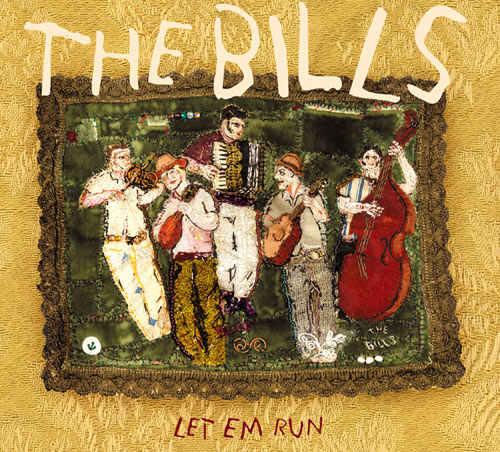
Folky Victoria, B.C. quintet the Bills eschew the usual mandolin, fiddle and accordion for an infectious a cappella sea chantey.
Though this song sounds for all the world like a traditional, it was actually written by the Bills’ Chris Frye in honor of his great uncle, Bamfield, British Columbia coastal fisherman John Vanden, who passed away in 2011 at age 96.
Since its appearance on 2005’s stylistically diverse Let Em Run LP, the song has found favor (and inspired cover versions) in folk circles, so maybe it will attain “traditional” status.













 Every Moment Has A Song