See also: https://edcyphers.com/2012/10/28/9601/
Video of the Week: The Seekers Open up About Fame, Fortune and Fallout
27 Jan 2024 Leave a comment
in Video of the Week Tags: the seekers
Quora: What is the meaning of the song “Helter Skelter” by the Beatles?
27 Jan 2024 Leave a comment
in General Posts Tags: helter skelter, the beatles
(Answered by Ely Matawaran)
A very interesting question. Because this song had two meanings:
The first was the meaning according to Paul McCartney which we could consider its true meaning since he was the one wrote the song.
And second was the meaning that Charles Manson found in the song that we could consider its twisted meaning since it made him and his group to kill people.
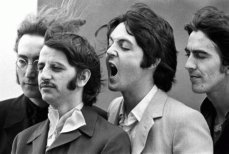
First of all, the title:
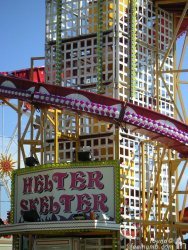
‘Helter Skelter’ referred to a fairground ride mainly popular in Britain, in which people could climb the inside of a wooden tower and slide down a spiral ride on the outside.
Paul McCartney about the song:
“I was using the symbol of a helter skelter as a ride from the top to the bottom -the rise and fall of the Roman Empire – and this was the fall, the demise, the going down.
“You could have thought of it as a rather cute title but it’s since taken on all sorts of ominous overtones because Manson picked it up as an anthem, and since then quite a few punk bands have done it because it is a raunchy rocker.
Charles Manson:
“Helter Skelter means confusion. Literally, it doesn’t mean war with anyone. It doesn’t mean that those people are going to kill other people. It only means what it means.
“Helter Skelter is confusion. Confusion is coming down fast. If you don’t see confusion coming down fast, you can call it what you wish.
“It’s not my conspiracy. It is not my music. I hear what it relates. It says, ‘Rise!’. It says, ’Kill!’.
“ Why blame it on me? I didn’t write the music. I am not the person who projected it into social consciousness! “
John Lennon commented:
“I don’t know what Helter Skelter has to do with knifing anyone. I’ve never listened to it properly, it was just noise.”
Yes, John Lennon said ‘Helter Skelter’ was just noise, and you’d wonder why the melodic Paul wrote this raunchy track which had been described as a prototype for 1970s Heavy Metal Sound.
Paul McCartney:
“I was in Scotland and I read in Melody Maker that Pete Townshend had said: ‘We’ve just made the raunchiest, loudest, most ridiculous rock ‘n’ roll record you’ve ever heard’. I never actually found out what track that was that The Who had made, but that got me going; just hearing him talk about it.
“So I said to the guys,’I think we should do a song like that; something really wild’. And I wrote ‘Helter Skelter’.
“You can hear the voice cracking, and we played it so long and loud and so often that by the end of it you can hear Ringo saying, ‘I’ve got blisters on my fingers!’”
As John Lennon once said about himself and Paul, “Whatever they can do, we can do it better.” And in the case of Helter Skelter, louder and wilder.
They made it so loud and wild that unfortunately, other people like Charles Manson heard it differently.
What’s In A Roar? Crafting Godzilla’s Iconic Sound
26 Jan 2024 Leave a comment
in General Posts Tags: godzilla
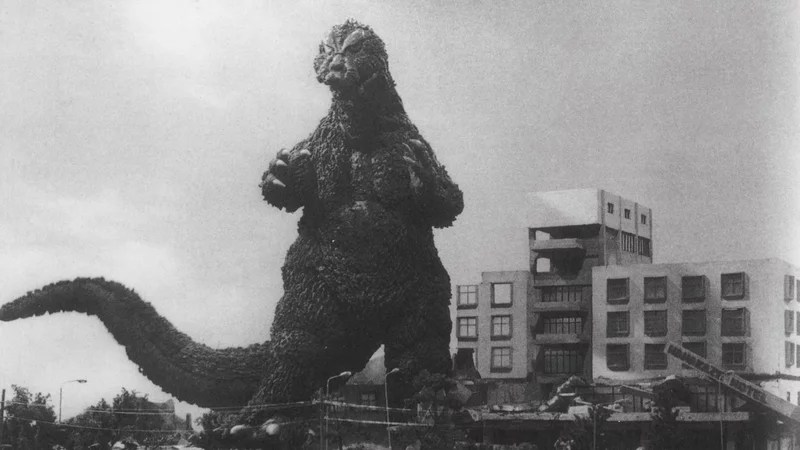
HEARD ON ALL THINGS CONSIDERED By NPR Staff
(This story appeared in 2014 but we thought it had new relevance with the 70th anniversary of Godzilla and 2023’s release of the excellent Godzilla Minus One.
Video of the Week: How the Beatles Changed the World (Documentary)
25 Jan 2024 Leave a comment
in Video of the Week Tags: the beatles
Video of the Week: John Lennon and Yoko Ono on Love
19 Jan 2024 Leave a comment
in Video of the Week Tags: john lennon, yoko ono
Quora: What is something a Pink Floyd fan may find surprising about Syd Barrett?
17 Jan 2024 Leave a comment
in General Posts Tags: pink floyd, syd barrett
(Answered by Nick Ford)

This is the famous picture of Syd, taken when he walked into the Abbey Road studios while Pink Floyd were recording “Wish You Were Here”. Bloated, with shaven head and eyebrows, for a time he was unrecognized by his old bandmates only 6 or so years after leaving the band. Syd himself had ceased to make any sort of recorded music after 1974.
During and after this unfortunate encounter, Syd lived in a succession of London hotels, spending money on anything and everything, and often gifting his acquisitions to the staff.
Syd found communication with the band and his old life to be too upsetting and emotionally disturbing. He had a chance 1977 encounter with Roger Waters in the exclusive department store Harrods, as Roger recalled – “but we didn’t speak – he sort of scuttled away.” Apparently, Syd would buy sweets (candy) there, and this wordless meeting was disturbing enough for him to drop his purchases and flee.
When eventually the money ran out, he gave away all his possessions, leaving only a bag of dirty laundry, and walked the 50 miles back to his home town of Cambridge to live with his mother. He dropped “Syd” and returned to using his original name, Roger.
He would slam the door in the face of anyone looking for “Syd”.
Even though they never talked or met again after mid 1975, David Gilmour quietly made sure that his old friend Syd’s financial needs were taken care of until the day he died. As well as ensuring that royalties were getting paid, he would also insist on a Syd song being included on any PF compilation to ensure an income stream.
Syd lived out the rest of his life in a modest Cambridge house, decorated in a highly eccentric style, enjoying painting and DIY (as you can see in the video, with rather mixed results). His siblings kept a reasonably close eye on him until his death from pancreatic cancer in 2006. His last years were plagued with health issues- diabetes and stomach ulcers.
He watched a BBC documentary on himself, but didn’t like it. His sister reported that “He came to watch it with me. He didn’t enjoy it. He didn’t like it – he didn’t quite know what was going on, I don’t think. He just said, ‘It’s very noisy. The music’s very noisy.’”
Despite refusing all contact with most people from his past, and anyone associated with the music industry in general, in 2002, he surprisingly agreed to sign 320 copies of Mick Rock’s book of photographs called “Psychedelic Renegades”. As he no longer used the name Syd, he simply signed them “Barrett”.
His family always denied he had any form of mental illness, insisting that he lived his life as he saw fit, and didn’t feel the need to conform to others’ expectations.
 Every Moment Has A Song