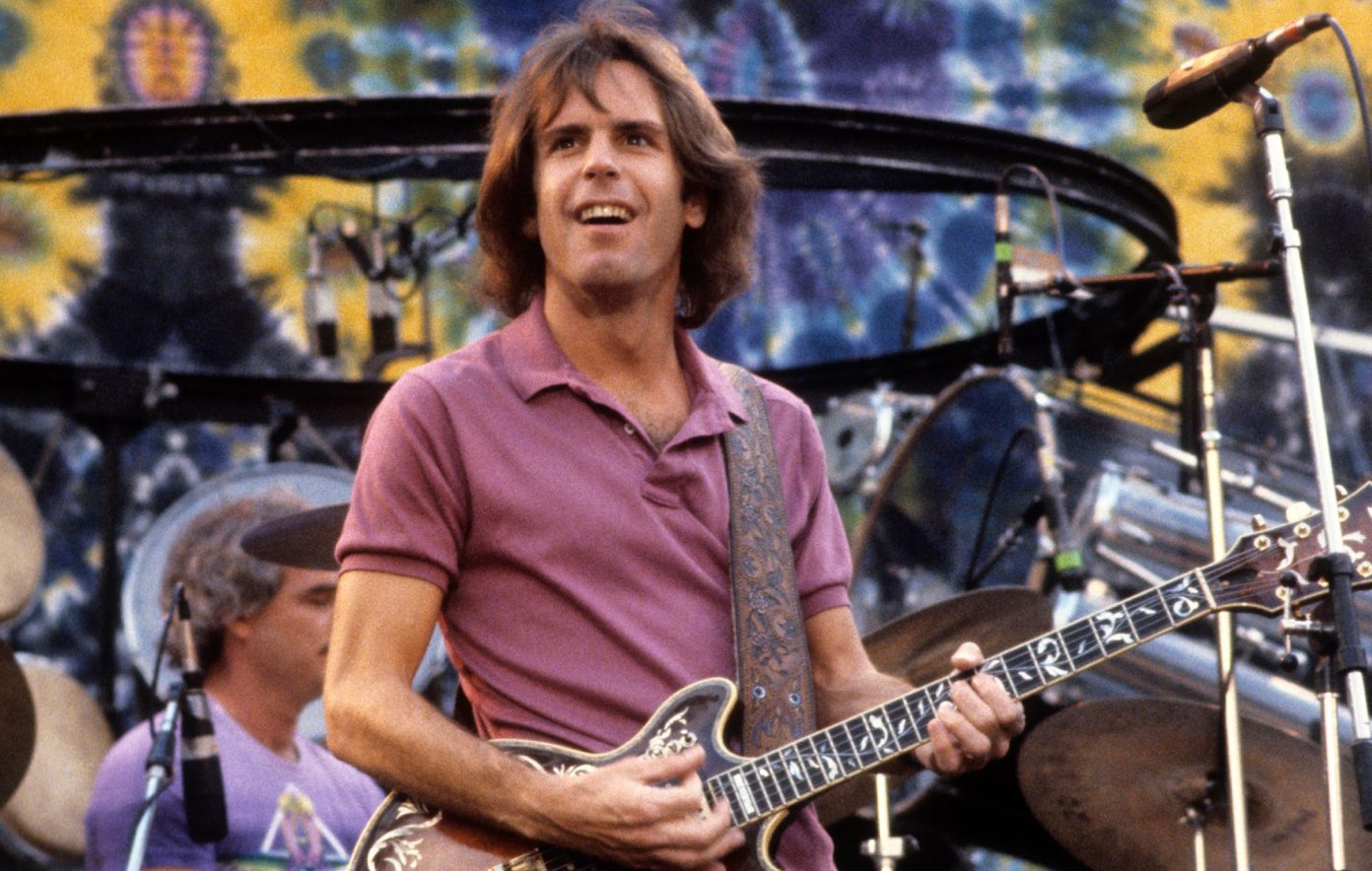
(Via Rolling Stone) by Alan Paul
Bob Weir is rightly being remembered as a transformative figure whose guitar playing made an indelible contribution to the Grateful Dead, and to improvisational rock & roll at large. In fact, Weir was such a pioneer that for many years his unique approach to rhythm guitar was often misunderstood, overlooked and underrated.
The simple fact that Jerry Garcia chose Weir as his three-decade foil and wingman in the Grateful Dead speaks volumes. Garcia was never shy about expressing his appreciation for his partner, once calling him “an extraordinarily original player in a world full of people who sound like each other.”
Weir dedicated his musical life to forging a distinct style of rhythm playing that was essential to the Grateful Dead’s sound. Rather than playing consistent, repetitive chords to build a groove, his approach was based around counterpoint and riffs, filling the musical gaps between the band’s drummers and Phil Lesh’s similarly unconventional bass playing.
Weir’s explanation for how he developed this approach — what he told me was his “dirty little secret” – was that instead of trying to copy other guitarists, he borrowed from pianists, specifically McCoy Tyner of the John Coltrane Quartet. “I just loved what he did underneath Coltrane’s work, so starting at age 17, I sat with that stuff for a long time and tried to absorb it,” Weir told me. “I got further and further toward it. I’m very fortunate that I found a perfect role for my approach at a very young age … Jerry was [also] very influenced by horn players, including Coltrane.”
 Every Moment Has A Song