Recommended Albums #107

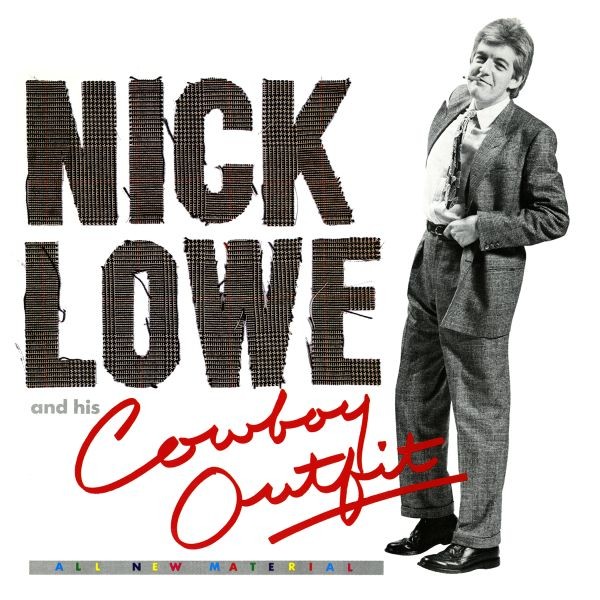
Nick Lowe: Nick Lowe and his Cowboy Outfit (1984)

Nick Lowe is the type of artist to whom critics like to attach descriptors like “legendary”, but in appraising his discography they’ll frequently use phrases like “released to little success” and “largely went unnoticed”.

His biggest album in America was 1979’s Labour of Lust, mainly on the strength of the single “Cruel to be Kind”, his only US top 40 hit.

But 1979 was the year of The Knack, when New Wave music was breaking. By 1984 Lowe had wisely stopped looking for the follow-up hit that would never come and turned to a rootsier sound.

“Half a Boy and Half a Man”, with its roller rink Farfisa organ arrangement, sounds like Sir Douglas Quintet-brand Tex Mex.

“Live Fast, Love Hard, Die Young” is a Faaron Young cover.

“L.A.F.S.” is co-produced by Elvis Costello, whose first five albums had been produced by Lowe, and features the same TKO horns that graced Costello’s Punch the Clock of the same year.

The album as a whole is an exuberant affair, and garnered positive reviews from critics.

And fate has a way sometimes of rewarding persistent effort. Curtis Stigers’ recording of Lowe’s “(What’s So Funny ‘Bout) Peace, Love and Understanding” appeared on the biggest-selling soundtrack in history, the My Bodyguard soundtrack, and the million dollars he made in songwriting royalties probably made Lowe’s previous sales figures a little easier to live with.

“Released to little success” indeed…

See also: https://edcyphers.com/2013/02/20/songs-you-may-have-missed-338/

Listen to: “Half a Boy and Half a Man”

Listen to: “Breakaway”

Listen to: “God’s Gift to Women”

Listen to: “L.A.F.S.”

Listen to: “Live Fast, Love Hard, Die Young”
Recommended Albums #106

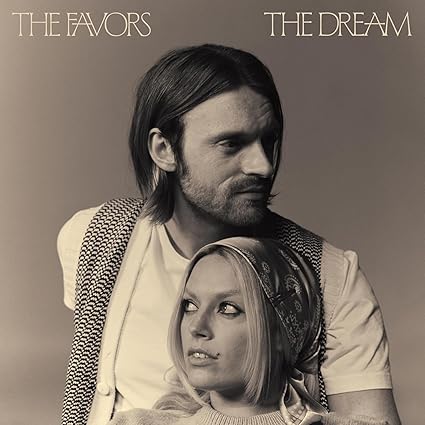
The Favors: The Dream (2025)

When Finneas and Ashe teamed up in 2025 for the duo project they called The Favors and the album The Dream, the results were pretty much what you’d expect from a Berklee-trained singer-songwriter and a guy with ten Grammys (and a couple Academy Awards for soundtrack work).

Finneas O’Connell is the older brother of Billie Eilish, and co-wrote and produced everything she released between 2019 and 2024. He’s also taken home awards for the Barbie movie and the James Bond film No Time to Die. All in addition to a successful solo career.

Finneas had previously produced and duetted with Ashe on some of her solo work, but The Dream is their first time recording as a proper duo.

The Dream‘s songs tell a linear story of a couple dealing with the aftermath of a breakup neither really wanted. I didn’t include its final song because…spoilers!

The album’s overall sound, recorded simply with electric piano, guitar, bass and drums, has a bit of a 70’s soft rock feel (in a good way) and the songs are well-written and drenched in harmonies.

If you hear a little Fleetwood Mac “Go Your Own Way”-type drama in the album’s subject matter and a little Stevie-Lindsey vibe in the vocal interplay, you’re not the only one.

Heartbreak and harmony are beautiful in combination.

Lead single “The Little Mess You Made” is a standout here, with Finneas and Ashe’s harmonies coming together in a simple but indelible chorus that’ll probably stick to you on first listen. The song blew up with over a million views on TikTok before it was even released.

The duo’s chemistry is on display in a 2025 Chicago Lollapalooza performance of the song:

Listen to: “The Dream”

Don’t miss: “The Little Mess You Made”

Listen to: “The Hudson”

Listen to: “Necessary Evils”

Listen to: “Times Square Jesus”

Bob Weir’s Guitar Playing was Even More Radical than You Think

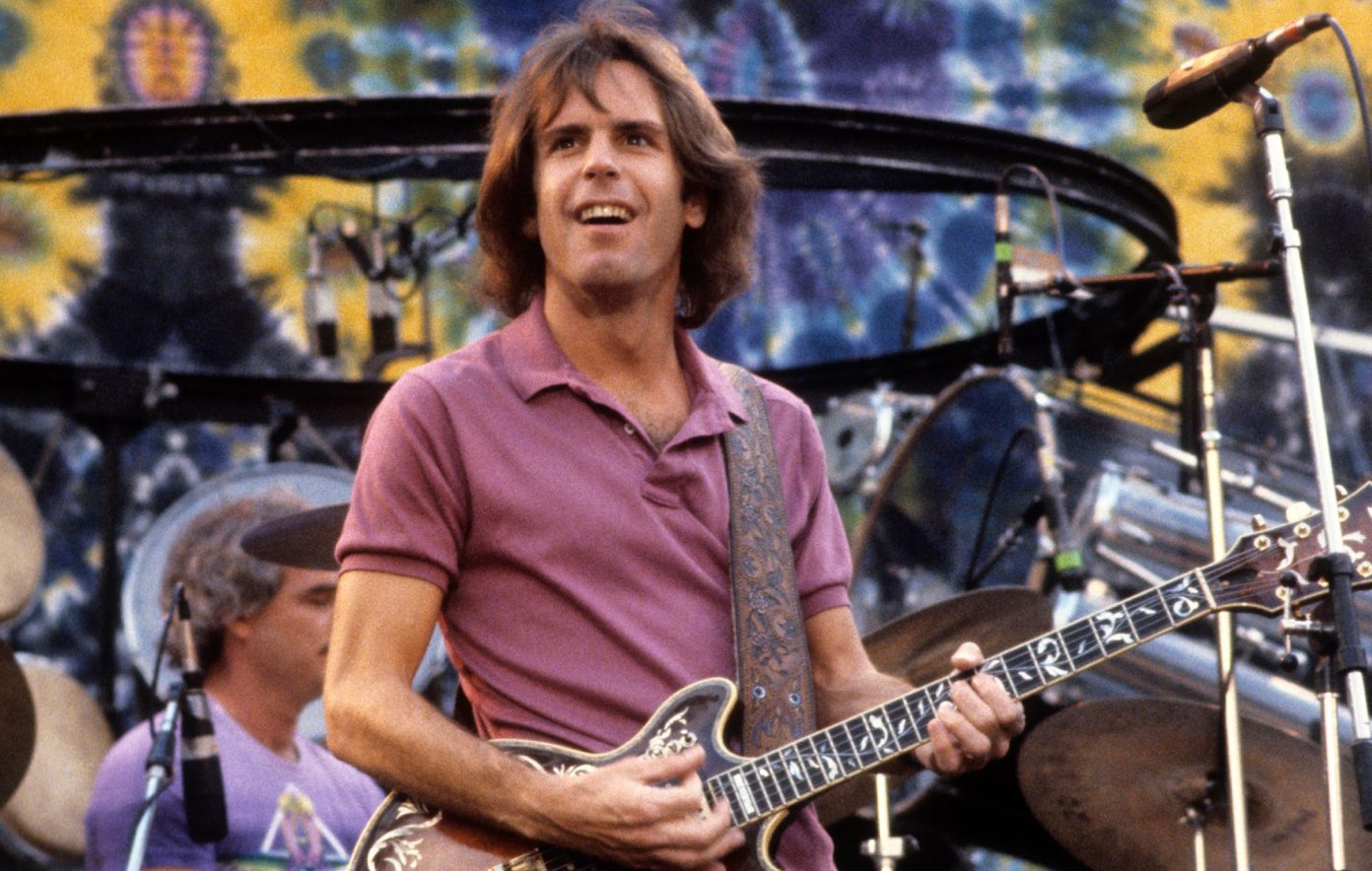
Bob Weir performing with the Grateful Dead, 1981. CREDIT: Clayton Call/Redferns

(Via Rolling Stone) by Alan Paul

Bob Weir is rightly being remembered as a transformative figure whose guitar playing made an indelible contribution to the Grateful Dead, and to improvisational rock & roll at large. In fact, Weir was such a pioneer that for many years his unique approach to rhythm guitar was often misunderstood, overlooked and underrated. 

The simple fact that Jerry Garcia chose Weir as his three-decade foil and wingman in the Grateful Dead speaks volumes. Garcia was never shy about expressing his appreciation for his partner, once calling him “an extraordinarily original player in a world full of people who sound like each other.”

Weir dedicated his musical life to forging a distinct style of rhythm playing that was essential to the Grateful Dead’s sound. Rather than playing consistent, repetitive chords to build a groove, his approach was based around counterpoint and riffs, filling the musical gaps between the band’s drummers and Phil Lesh’s similarly unconventional bass playing. 

Weir’s explanation for how he developed this approach — what he told me was his “dirty little secret” – was that instead of trying to copy other guitarists, he borrowed from pianists, specifically McCoy Tyner of the John Coltrane Quartet. “I just loved what he did underneath Coltrane’s work, so starting at age 17, I sat with that stuff for a long time and tried to absorb it,” Weir told me. “I got further and further toward it. I’m very fortunate that I found a perfect role for my approach at a very young age … Jerry was [also] very influenced by horn players, including Coltrane.”

Read more: https://www.msn.com/en-us/entertainment/news/bob-weir-s-guitar-playing-was-even-more-radical-than-you-think/ar-AA1U0Tn0?ocid=entnewsntp&pc=DCTS&cvid=6966421c7eeb45b5831681bbbf119364&ei=30

Recommended Albums #105

Pat Donohue: Back Roads (1996)

Fingerpicking guitarists are underrated generally–which is weird because guitars were invented to be picked with fingers. But unless you were Steve Howe wedging an acoustic number into a concert or progressive rock album, as a disciple of Chet Atkins your work has been worshipped in the commercial catacombs for decades.

Pat Donohue is the fingerpicking guitarist’s guitarist.  Chet Atkins called Pat “one of the greatest fingerpickers in the world today”.

In the liner notes of one of Donohue’s albums, Leo Kottke said:

“I first heard him on the radio and got upset. Then I heard him in concert somewhere and got more upset. He thinks harmonically, improvises beautifully, and writes. Disgusting.

Enjoy this record, but if you’re a guitar player, it’s going to haunt you.”

And if you’re not a guitar player, it may still haunt you. But in a good way.

If the sound of the strings vibrating in the hollow wood is your idea of real music; if the nimble runs and harmonics are something you appreciate; and if you like songwriting that’s well-crafted, with humor and authenticity, listen here.

The Master himself Mr. Atkins is Donohue’s guest on the mutually self-deprecating, chucklesome homage “Stealin’ from Chet”.

Pat’s facility for internal rhyme is especially evident in the love song “I Don’t Worry ‘Bout the Blues”.

“Touch ‘Em All” is a “touching” tribute to a ballplayer who was (at the time at least) a hero to all Minnesotans.

Things get heavy on the confessional “Love and Desire”, then lighthearted and frivolous on “Nothin'”.

“Stumblin’ Through” is archetypical Pat Donohue songcraft: injecting philosophical wisdom into charmingly rustic, toe-tapping folk music. It’s humorous. It’s chock full of internal rhymes. But it’s clearly real and from the heart of a writer–one with the gift of a relatable humanness.

Finally the instrumental “Summer’s End” showcases Donohue’s gift for a beautiful melody, with guitar harmonics adding a sublime radiance.

Back Roads is Pat Donohue at his best, which means fingerpicking folk guitar at its best.

Listen to: “Stealin’ from Chet”

Listen to: “I Don’t Worry ‘Bout the Blues”

Listen to: “Touch ‘Em All”

Listen to: “Love and Desire”

Listen to: “Nothin'”

Listen to: “Stumblin’ Through”

Listen to: “Summer’s End”

See also: https://edcyphers.com/2013/08/21/songs-you-may-have-missed-466/

See also: https://edcyphers.com/2013/02/02/songs-you-may-have-missed-317/

See also: https://edcyphers.com/2012/11/08/songs-you-may-have-missed-215/

See also: https://edcyphers.com/2012/06/18/pat-donohue-plays-maple-leaf-rag/

Songs You May Have Missed #815

Kany Garcia: “Aguita e Coco” (2022)

Of 6-time Latin Grammy Award winning Puerto Rican singer and songwriter Kany Garcia, Billboard Magazine said the following:

Her husky tone seems built for a sideways glance at breakups, sex, aging and human indifference. What has set Garcia apart from other pop divas on the charts, other than writing her own songs and ability to play guitar, is her blend of commercial melodies with lyrics that are sometimes bracingly personal, even if the story isn’t always about her.

In the same year of this song’s release, Garcia was recognized at the Latin Recording Academy’s annual Leading Ladies of Entertainment event, which recognizes “indelible impressions and contributions to the Latin entertainment industry”.

Sounds like serious stuff, but this particular song is just a bit of lighthearted (and damn catchy) fun.

The chorus, translated:

I’m going with you, swimming in the deep
Now they call me and I don’t answer
I take you like coconut water
Little by little, we go crazy

Songs You May Have Missed #814

Gary Louris: “By Your Side” (2025)

Gary Louris is best known as the front man and main songwriter of the Minnesota-based Jayhawks. Concurrently with his work in that band, he’s released albums as a charter member of Golden Smog, along with solo work.

He’s also recorded with Lucinda Williams, John Hiatt, The Wallflowers, the Black Crows, Counting Crows, and Uncle Tupelo among others, and written songs for Grammy-winning albums by Tedeschi-Trucks Band and the Dixie Chicks.

On his third solo outing, Dark Country, Louris sounds more reflective than ever.

The love song “By Your Side” is sung from an age-worn perspective while musically analogous to 1970-vintage Neil Young.

See also: https://edcyphers.com/2016/05/04/songs-you-may-have-missed-588/

See also: https://edcyphers.com/2012/10/25/songs-you-may-have-missed-206/

See also: https://edcyphers.com/2013/01/30/songs-you-may-have-missed-312/

See also: https://edcyphers.com/2015/06/24/recommended-albums-63/

See also: https://edcyphers.com/2025/06/11/songs-you-may-have-missed-782/

See also: https://edcyphers.com/2017/12/17/songs-you-may-have-missed-624/

Previous Older Entries Next Newer Entries