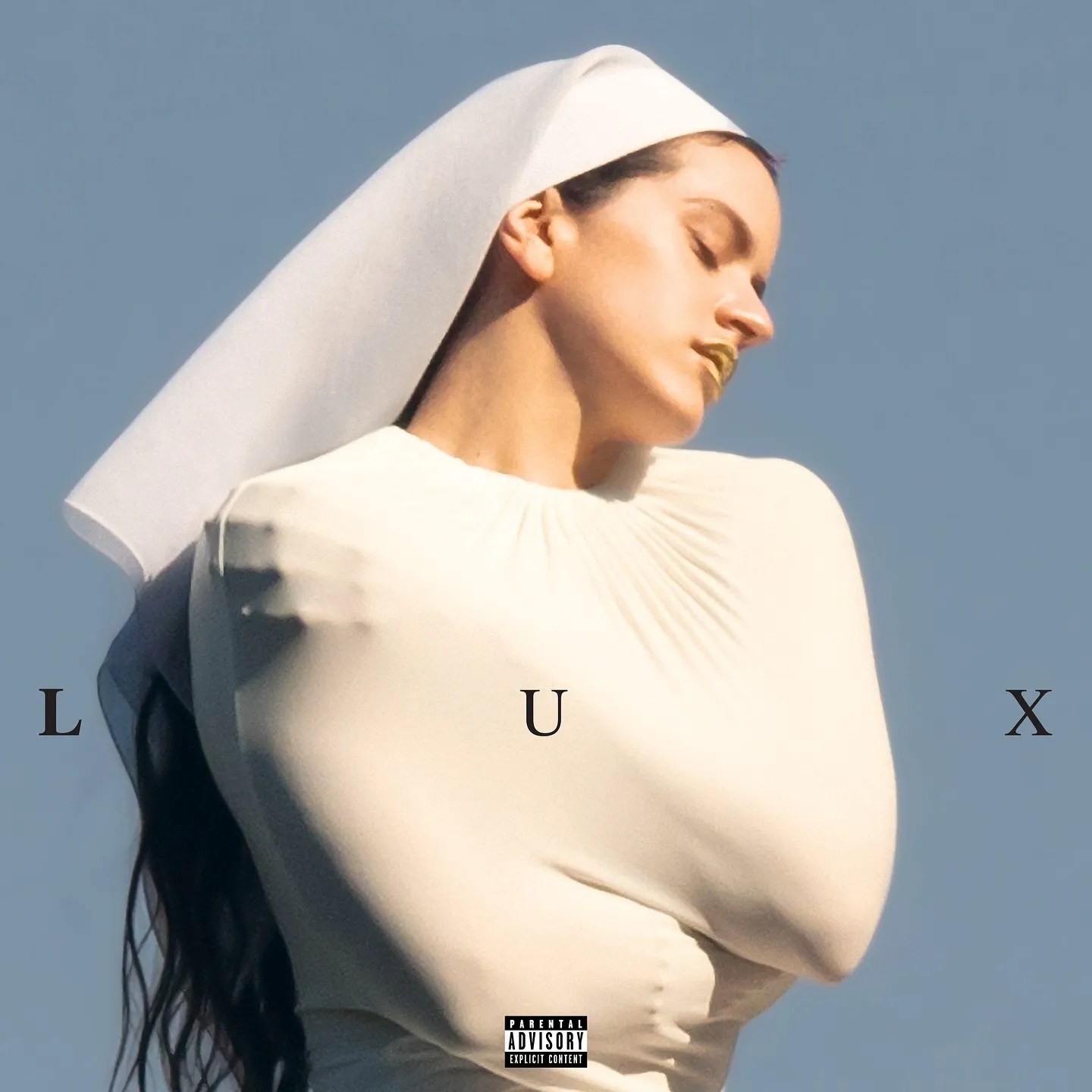
Spanish singer Rosalía’s momentous fourth album Lux is a trove of bold sounds and bold themes, with lyrics in 14 languages.
“La Perla” (“The Pearl”), featuring a collaboration with Mexican trio Yahritza y su Esencia, was a chart-topping single in Spain.
The song is presumed to be about the singer’s ex-fiancé Rauw Alejandro. Its title refers to a historic neighborhood of old San Juan, Puerto Rico, but also is a term used derisively to mock a sexually promiscuous person.
Classy instrumentation. Blunt message. Weren’t we just expressing out admiration for Lily Allen for a bold, confessional breakup record?
Thank God for men who suck at relationships and the women who keep making great art from it.
Lyric translation:
Hello, thief of peace minefield for my sensitivity Playboy a champion spends the money he has and also the money he doesn’t
He’s so charming star of unreason a mirage Olympic gold medal to the bastard you have the podium of great disappointment Local disappointment national
heartbreaker an emotional terrorist the world’s biggest disaster
It’s a pearl, no one trusts it, it’s a pearl
one of great care
The king of the 13, 14 does not know what it is to contribute he is the center of the world and then what else will matter?
You finally go to therapy you go to the psychologist and also a psychiatrist, but what good is it if you always lie more than you talk, they will make you a monument to dishonesty.
I don’t feel sorry for you who stays with you drains himself always invites himself if he can lives in someone else’s house Red flag walking tremendous disaster he will say that it was not him who was his doppelgänger
Well, of course not referring to him as an icon would be a reductionist narrative for him, you know what I mean? Never lend him anything, he won’t return it Being a loose cannon It’s his specialty
Loyalty and fidelity is a language that will never understand
His masterpiece his collection of bras if you ask him for help will disappear
Local Disappointment: National Heartbreaker: An Emotional Terrorist, The World’s Greatest Disaster
It’s a pearl, no one trusts it, it’s a pearl, one of great care
Richard Thompson: “Alexander Graham Bell” (Live) (2006)
Richard Thompson is known as a superb songwriter and a dazzling musician. But his secret weapon–his wry wit–is known mainly by those fortunate enough to have seen him live.
His between-song banter is dry, gently mocking–and intelligent. Basically, the polar opposite of Paul Stanley.
When asked by his child’s teacher to come into school and play some Egyptian songs “which is not as easy as it sounds”, he gave them “My Daddy is a Mummy”:
“Stylistically I place this somewhere between the two Memphis'”, he says, and…well damn if it isn’t an accurate description.
“Alexander Graham Bell”, stylistically closer to guitar jazz, is equally fun and actually quite enlightening.
Neither song is the type to be found on one of his studio albums, which are more serious-minded affairs.
It’s too bad this side of Thompson is relegated to concert performance and the “rarities” disc of a box set.
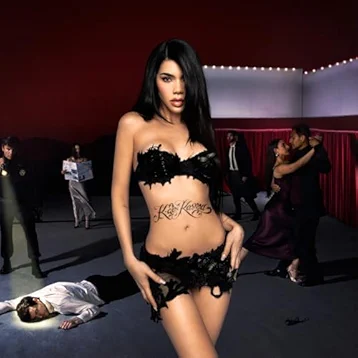
As the title of her latest album K de Karma (K for Karma) suggests, Kenia Os has come a long way from social media influencer dogged by body shaming and controversy to Mexican pop princess, and a reckoning is due.
Editors of the Wikipedia page of the actress/singer/superstar would be well served at this point to update its rather snarky introductory paragraph, which reads:
“Kenia Guadalupe Flores Osuna (born 15 July 1999), known professionally as Kenia Os, is a Mexican social media personality. She rose to “fame” as a content creator on YouTube…“
That “fame” now encompasses three and a half billion Spotify streams, over 26 million fans on TikTok, 18 million on Instagram, dozens of awards and nominations (including a Latin Grammy nomination for Best Long Form Video) and a record-breaking live streaming concert.
I think we can remove the quotation marks around the word.
Influencer-to-pop singer is a tough route to the top credibility-wise, more so in Mexico than the US. Kenia faced the additional challenge of dealing with weight fluctuations due to PCOS (polycystic ovary syndrome) and endometriosis. Some “fans” were cruel in their comments.
She says she has been able to “heal from within”, and that her struggles have only made her stronger.
Perhaps her experience has informed her videos, which regularly feature performers of a variety of body types:
Fans have responded positively to the fact that Kenia’s new music broadens the musical palette. Perhaps she carries enough weight as a musical “influencer” to signal something of a shift away from the recent dominance of reggaeton on the Latin scene.
Or perhaps not. But one thing is certain: the disco, rock and sensuous pop sounds are a welcome respite.
K de Karma is a titanic pop record with clean-sounding production and immediate vocal performances that go right for the corazón. It demands speakers, not earbuds. Vinyl, not mp3. Play it loud.
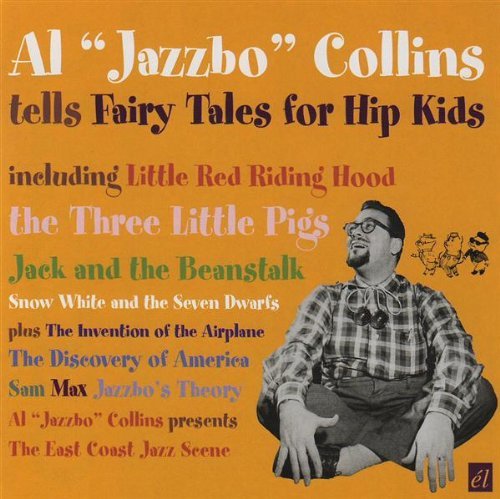
Al “Jazzbo” Collins: Tells Fairy Tales for Hip Kids (1952-1953/2008)
Al “Jazzbo” Collins, who was also known as “Jazzbeaux”, was a long time radio disc jockey who worked in Logan, West Virginia, Pittsburgh, Chicago, Salt Lake City and New York.
He appeared with Steve Allen on the Tonight Show and even took his place when Allen left the show, briefly bridging the gap between the eras of Allen and Jack Paar.
From 1952-54 or so he recorded a series of “bop-talk” records for Brunswick that were gathered into a CD compilation in 2008.
He also appeared as himself on NBC’s radio science fiction series X Minus One in 1957.
Jazzbo’s hipsterspeak tale telling is still a hoot.
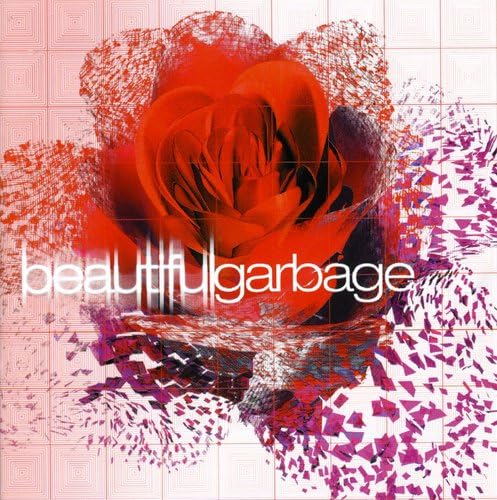
While Shirley Manson and company’s third album, 2001’s Beautiful Garbage, may have lacked a smash hit such as “Stupid Girl” from their debut or “Special” from Version 2.0 it may be their best record overall.
Though deep cut “Drive You Home” hasn’t been chosen for even multidisc “best-of” compilations, it says here the brooding, achingly melodic track deserves more love.





 Every Moment Has A Song