"There's a time in life for Hoagy Carmichael. There's a time in life for Claude Debussy. There's a time in life for Jerry Lee Lewis. There's a time in life for Destiny's Child. All these things have their moment." ~Elvis Costello
Alice Cooper, “shock rocker”. Alice Cooper, recovered alcoholic. Alice Cooper, chicken killer. You know all the usual portrayals.
What you’re about to learn–if you watch this 2005 Australian TV interview–is that Alice is a mild-mannered, articulate, cultured kinda guy. And quite humorous too.
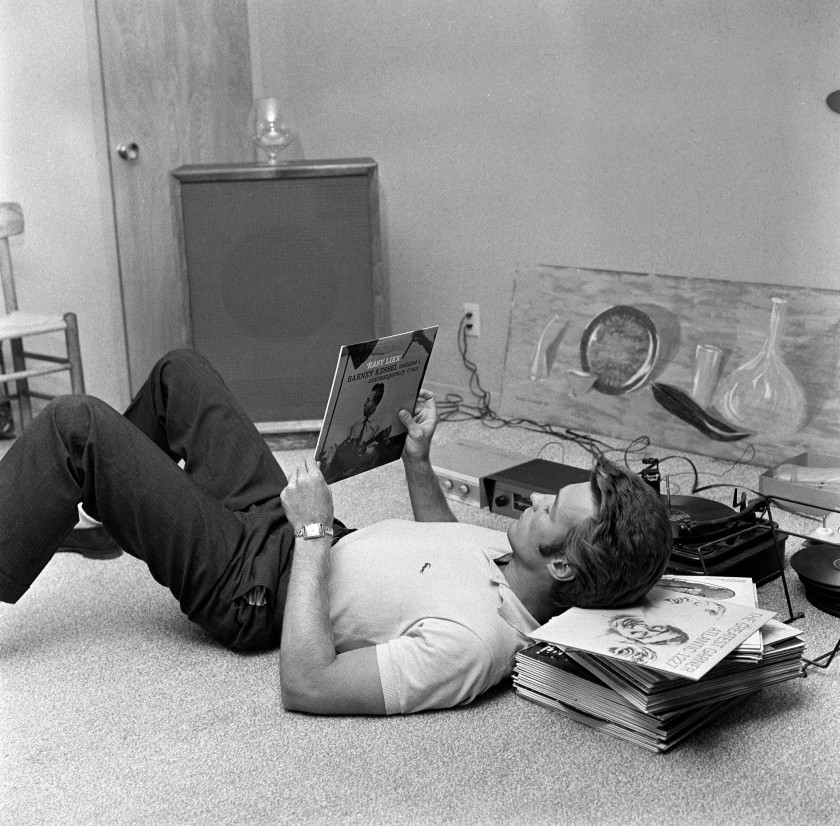
Clint Eastwood listens to records at his home in 1959. (CBS Photo Archive/Getty Images)
(via Los Angeles Times) By RANDALL ROBERTS
What’s your favorite album? When was the last time you listened — actually listened — to it from start to finish? With intention, like you were watching a movie or reading a novel.
Clear your schedule for the next three hours. Choose three full albums, whether from your collection or your streaming service of choice. Put them in an ordered queue as though you were programming a triple feature.
Because, listen:
Musicians spend years making their albums. They struggle over syllables, melodies, bridges and rhythms with the same intensity with which you compare notes on the “Forensic Files” reboot, loot corpses in “Fortnite” or pound Cabernet during pandemics.
But most of us are half-assed when it comes to listening to albums. We put on artists’ work while we’re scrolling through Twitter, disinfecting doorknobs, obsessively washing our hands or romancing lovers permitted within our COVID-free zones. We rip our favorite tracks from their natural long-player habitat, drop them into playlists and forget the other songs, despite their being sequenced to be heard in order…
Gene Simmons rocks. Uh, most of the time. Certainly that’s how he made his bones with his full time band.
But this Beatlesque nugget, like much of his 1978 eponomous solo album, must have taken fans a bit by surprise. “See You Tonite” brings to mind early Badfinger, or the Raspberries in one of their quieter moments. Strings and sweet harmonies from Dr. Love? Who’da thought?
Check out an unplugged Kiss performance of the song below:
Albumlinernotes.com is an absolute treasure trove of artist and album information intended to help fill the great information void brought on by the music download era.
Music has never before been so readily accessible. But liner notes–the band bios, song credits, and artfully written plaudits for the music you love–are sadly a thing of the past, unless you’re an avid collector of reissues like this writer.
This is the kind of site a music lover can get lost in. Check it out.
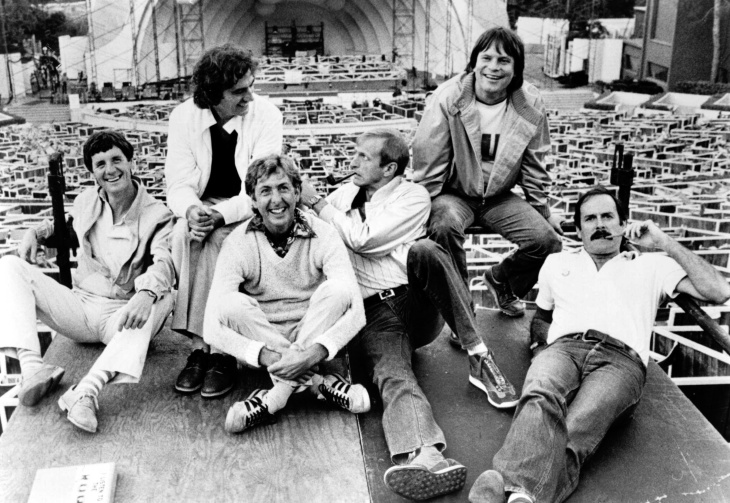
British comedy troupe Monty Python including (left to right) Michael Palin, Terry Jones, Eric Idle, Graham Chapman (1941 – 1989), Terry Gilliam, and John Cleese, lounge about at the site of their filmed live show at the Hollywood Bowl, Hollywood, California, 1982. Chapman and Cleese smoke pipes. (Photo by Hulton Archive/Getty Images)
(via LAist) By Marialexa Kavanaugh with Jonathan Shifflett & John Horn
Eric Idle co-founded legendary sketch comedy group Monty Python. While writing and rewriting his new biography, Always Look on the Bright Side of Life, Idle realized the story he was telling was much larger than just him.
“You don’t really know what part of your life is interesting,” Idle said. “I discovered finally after three or four drafts that the book was actually about my generation, people growing up in our post-war England, rationing and poor. And that these kids who were born in the end of the war invented rock and roll.”
Monty Python is widely considered to have the same level of influence on the comedy world that the Beatles and the Rolling Stones did on rock. British rock and comedy had their own symbiotic relationship through the ’60s and ’70s — including financing Monty Python and the Holy Grail.
“I mean it was Led Zeppelin, Pink Floyd, Genesis, Jethro Tull — they all pitched in money so we could make the film,” Idle said…