"There's a time in life for Hoagy Carmichael. There's a time in life for Claude Debussy. There's a time in life for Jerry Lee Lewis. There's a time in life for Destiny's Child. All these things have their moment." ~Elvis Costello
Kevin Gilbert: “Suit Fugue (Dance of the A&R Men)” (2000)
Talented songwriter and multi-instrumentalist Kevin Gilbert fronted such household name bands as Giraffe and Toy Matinee. He was a member of the songwriting collective known as the Tuesday Night Music Club–the very same referred to in the title of Sheryl Crow’s breakout debut album. Gilbert co-wrote much of that record, including the 1995 Grammy Record of the Year “All I Wanna Do”.
Gilbert died at age 29 and his second solo LP, The Shaming of the True, released posthumously, yielded this mind-blowing arrangement–a perhaps semi-autobiographical skewering of record execs and their treatment of up-and-coming acts.
The dizzying vocal collage can be hard to follow. If you wish to discern all the layers of lyric, here’s a mix that isolates the individual parts
p.s. Gilbert was briefly under consideration by Genesis when they were in search of a front man to replace Phil Collins.
Ragged vocals, un-subtle drumming, a sort of love song that lands just this side of too much sentimentality…power ballad hallmarks all. And a bit of the “power” comes from the fact that it’s sung by a band who’s avowed intent was to rock and roll all nite and party every day. Nothing in their mission statement about “letting feelings show” or “wiping tears from…eyes”.
I deliberately sourced the rarer Double Platinum version of the song because I prefer its slower-building arrangement at the beginning (drums and bass come in only after the first verse).
Another power ballad prototype would be the Rolling Stones’ “Angie”. When it came out I’d heard nothing of the kind from the Stones. Had they put one heart-wrenching ballad on each album, “Angie” would never have carried such weight.
Another song which possesses a degree of that power ballad magic, the Redwalls’ soulful “Thank You”. You can hear the muscles they aren’t flexing here.
I really like this band’s look, and was surprised to see they were from Chicago. Their Stones-inflected licks and snarled, Lennonesque vocals had me assuming they were British.
Everyone’s favorite socialite screw-up, Paris Hilton, has conquered reality television, acting and homemade porn — now she’s trying her hand at DJing. And boy, is it going so well! (I kid! I kid!)
In the words of Mixmag, the auditory “car crash” took place at the Pop Music Festival in Sao Paulo, Brazil where Hilton blasted an unsuspecting audience with juiced-up top ten’ers.
Let’s be honest here: Several mistakes were made. To start, during Gotye’s “Somebody I Used to Know,” the DJ-in-training accidentally shifts the pitch of the song, giving the mix a warble like a warped vinyl record.
Secondly, you’ll notice that the show’s smoke machine and pyrotechnics seem louder than the, erm, performer’s set. Despite her onstage “help,” it looks like Hilton could’ve turned up the volume.
But the best part of the evening is Paris’ failed attempt at playing her new single “Last Night.” Instead of blasting Brazil with her Afrojack cut, the “DJ” mistakenly cues Rihanna’s “We Found Love.” To make matters worse, she tries to sing her track over the top.
The phrase “power ballad” means something different to everyone who hears or uses it. For me the term is inescapably accurate for describing a type of music that holds an undeniable fascinating and appeal for me. The next several songs I’ll share have the traits I consider this type of song to possess.
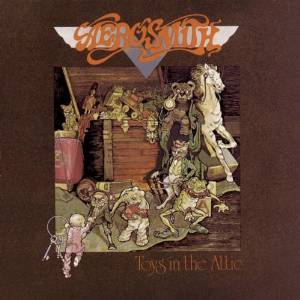
They would include something I can only describe as a latent-sounding power, a feeling of something held in reserve. Perhaps a lead vocal sung in a voice that’s clearly built for screaming rather than cooing to an audience. Or a mix that’s a little heavier on the drums or bass than the producer of a ballad-singing artist would have thought appropriate. And an overall rough-edged sound that gives you the feeling you’re hearing a band in a tender moment, but that it’s clearly a band who doesn’t often have tender moments–giving the song, of course, more “power”. “You See Me Crying”, from Aerosmith’s 1975 Toys in the Attic LP fits my definition at least of the term “power ballad” perfectly.
I must digress for a moment to say that Toys… is far and away Aerosmith’s greatest moment as a band. Not only does the album contain classics “Walk This Way” and “Sweet Emotion” but it’s loaded with great album cuts like “Adam’s Apple”, “No More No More”, title track “Toys in the Attic” and their cover of boogie-woogie blues chestnut “Big Ten Inch Record”, which surely would have been covered by David Lee Roth, with or without Van Halen, had Aerosmith not beat him to it.
“You See Me Crying” is the perfect closer to this classic album, and a nice contrast to everything that precedes it. Joining the melancholy piano figure opening the track are a pair of woodwinds–an oboe, of all things!–and Steven Tyler’s ragged voice is nicely offset by a gradually swelling orchestral arrangement.
Alice Cooper’s “Only Women Bleed”, which was released as a single in the same month of April ’75 and was the shock rocker’s first foray into power ballad territory, uses an almost identical formula. If you haven’t heard it recently, listen again to its breathtaking arrangement, which beautifully incorporates horns and strings alongside traditional rock guitar/bass/drums for maximum emotional impact. It’s a true rock masterpiece–perhaps the greatest “power ballad” of them all.
Frank Zappa: “Sexual Harrassment in the Workplace” (1988)
Zappa’s freaky side is well known even to the non-fan. But his versatility as a guitarist is an often overlooked facet of his artistry. Here he plays it straight on an instrumental blues solo. If you didn’t know who it was and had to guess, how many rockers would you have named before Zappa?