The great Hazel Scott (June 11, 1920 – October 2, 1981) Trinidad-born American jazz and classical pianist and singer, She was not only a gifted pianist and singer – a child prodigy who at only eight-years-old was given a scholarship from the Julliard School of Music to be privately tutored – Scott was also an outspoken critic of racial discrimination and segregation, She used her influence to improve the representation of Black Americans in film.
Video of the Week: Hazel Scott–Taking a Chance On Love
31 Jul 2023 Leave a comment
in Video of the Week Tags: hazel scott
Quora: Why is the band “Queen” called “Queen”? What is the story behind the choice of name?
02 Jul 2023 Leave a comment
in General Posts Tags: freddie mercury, queen
(via Quora)
Why is the band “Queen” called “Queen”? What is the story behind the choice of name?
The main reason was clever marketing and imagination on Freddie’s part. He had said he wanted a one-word name as it would have more impact. IMO he wisely fought off Brian’s determination to name their new group “Build Your Own Boat” and Roger’s idea to name them “The Rich Kids”. Also, he had talked about the need for bands to be a little bit outrageous in order to stand out and get noticed when they are trying to…..make a name for themselves. Sorry. Daring to call themselves Queen did just that. Surely there was some outrage at the cheekiness of commandeering the name Queen inside the British Monarchy. He loved the monarchy. He had seen suffering on the part of citizens in his former countries because of widespread corruption among government officials and greatly appreciated Britain’s legal system. He also loved the regal and grandiose connotation of the name. The gay connotation lent itself well to the glam rock and androgyny that became so popular during that period. He pointed out that King wouldn’t have had the same impact because it doesn’t have the same ring or aura as “Queen”. He was right. He was even thinking of the phonetic sound of the name in addition to the multiple meanings behind the word.
Here’s a great quote by Freddie: “It’s just a name, but it’s very regal obviously, and it sounds splendid. It couldn’t have been King, it doesn’t have the same ring or aura as Queen. It’s a strong name, very universal and immediate. It had a lot of visual potential and was open to all sorts of interpretations. I was certainly aware of gay connotations, but that was just one facet of it.”
“Visual potential” Freddie studied fashion and graphic design/advertising and was thinking ahead. “Queen” lent itself so well visually. It made for a distinctive and regal band crest that Freddie designed. They used a crown lighting rig at one point and if it weren’t for the name Queen we wouldn’t have the memories and images of Freddie wearing the crown and robe during his final appearances. That’s hard to imagine.
The icing on the cake for Freddie must have been the fact that he was gay and in the closet at the time they adopted the name. Freddie was a subversive wedge in a time of homophobia. You can’t tell me he didn’t relish the name Queen for this reason as well.
A Shelter in Time: John Berger on the Power of Music
02 Jul 2023 Leave a comment
in General Posts Tags: john berger, the power of music

“Songs are like rivers: each follows its own course, yet all flow to the sea, from which everything came.”
(via The Marginalian) by Maria Popova
“A rough sound was polished until it became a smoother sound, which was polished until it became music,” the poet Mark Strand wrote in his ode to the enchantment of music. Music is the most indescribable of the arts, and that may be what makes it the most powerful — the creative force best capable of giving voice and shape to our most ineffable experiences and most layered longings, of containing them and expanding them at once. It is our supreme language for the exhilaration of being alive.
I have come upon no finer definition of music than philosopher Susanne Langer’s, who conceived of it as a laboratory for feeling in time. Time, indeed, is not only the raw material of music — the fundamental building block of melody and rhythm — but also its supreme gift to the listener. A song is a shelter in time, a shelter in being — music meets us at particular moments of our lives, enters us and magnifies those moments, anchors them in the stream of life, so that each time we hear the song again the living self is transported to the lived moment, and yet transformed…





Video of the Week: Neil Diamond Reflects in 2011 Irish TV Interview
02 Jul 2023 Leave a comment
in Video of the Week Tags: neil diamond
Behind Warren Zevon’s ‘The Hula-Hula Boys’
02 Jul 2023 Leave a comment
in General Posts Tags: the hula hula boys, warren zevon
(via Beat) by Walter Rhein
I knew something was wrong from the moment he spoke. In fact, there had been a lingering wrongness for some time.
“C’mon son, let’s go on a trip,” Dad said.
He’d just taken my brother on a trip, and my sister. Now it was my turn. This struck me as unusual behavior, but what choice did I have in the matter?
“Okay,” I said, and we got on a plane and got off in Maine where we rented a car.
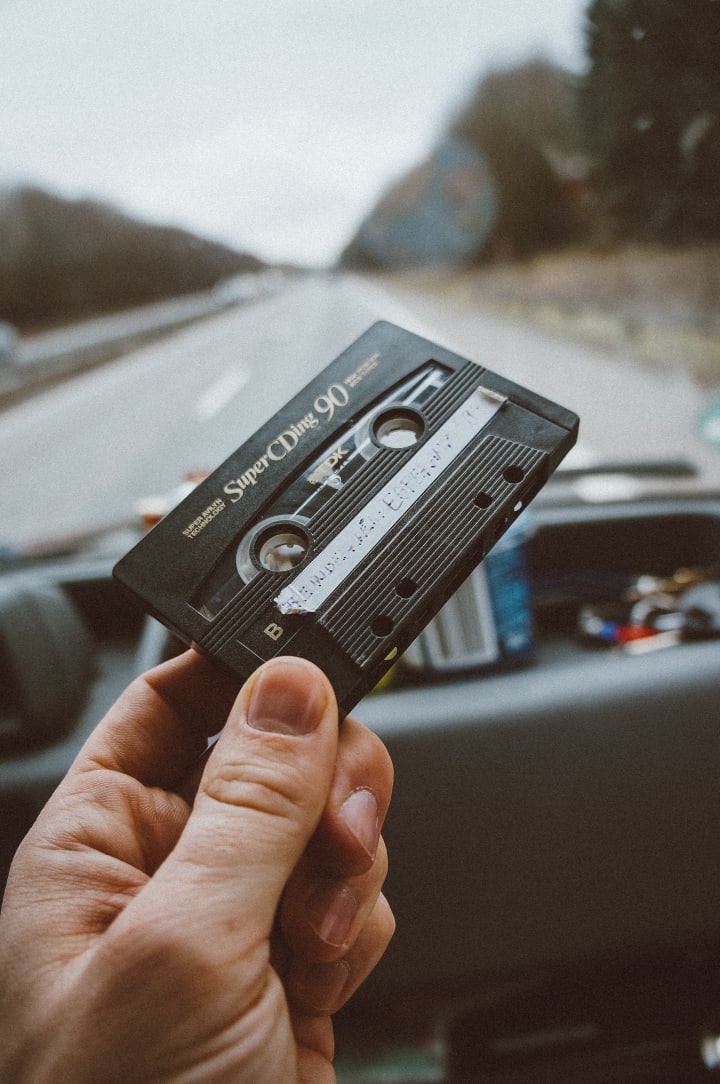
“What should we do?” Dad said as he started to drive. He fiddled with the radio. But before I could answer, he slammed his hands against the dashboard. “There’s no good radio stations in this state. Let’s go get a cassette.”
He started driving around looking for a record store. Dad was always a fanatic about music. He had a whole room dedicated to vinyl records. When CDs came out he had to replace them all. I don’t know what he does now, maybe he’s got a mainframe in his basement.
We found a little hole-in-the-wall place that claimed to be a record store even though it only had a selection of about thirteen cassettes. Dad looked through them, his face tight with fury. He could be scary when he got angry. I began to grow concerned, but the darkness cleared and he brightened up.
“Here we go, Warren Zevon!”
Read more: https://vocal.media/beat/behind-warren-zevon-s-the-hula-hula-boys

