Mumford & Sons “In a League With the Beatles”? Um, No.

Image of Mumford & Sons beatles

Fact: Mumford & Sons have six songs on Billboard’s Hot 100 singles chart this week.

Wild, misleading hyperbole, courtesy of Paste magazine:

Mumford & Sons Tie The Beatles for Most Hot 100 Hits in a Week

…The quartet is now in a league with The Beatles as the band with the most Hot 100 hits in a week. Lead single “I Will Wait” moves up to No. 57, and joining it are the debuts of five others including the title track (No. 60), “Lover’s Eyes” (No. 85), “Whispers in the Dark” (No. 86), “Holland Road” (No. 92) and “Ghosts That We Knew” (No. 94). (http://www.pastemagazine.com/articles/2012/10/mumford-sons-beat-the-beatles-for-most-hot-100-hit.html )

Reality check:

During the week of April 4, 1964 the Beatles not only occupied the top five slots on the Billboard Hot 100 chart (#1 “Can’t Buy Me Love”, #2 “Twist and Shout”, #3 “She Loves You”, #4 “I Want to Hold Your Hand” and #5 “Please Please Me”) but held twelve positions overall. Twelve. Twice as many as six.

Oh, and of the twelve songs the Beatles charted simultaneously, three topped the chart at some point. And others didn’t only because they were crowded out of the number one slot by other Beatles songs. (“Twist and Shout” and “Do You Want to Know a Secret” were #2’s and “Please Please Me” peaked at #3)

Oh, and that same week’s chart also included two singles that were tributes to the Beatles (“We Love You Beatles” by the Carefrees and “A Letter to the Beatles” by the Four Preps). Oh, and two more Beatle tribute songs charted just two weeks previous (“My Boyfriend Got a Beatle Haircut” by Donna Lynn and “The Boy With the Beatle Hair” by the Swans).

Oh, and the following week another Beatles number 1 , “Love Me Do” would debut on the American charts.

Also beginning the same month Billy J. Kramer and the Dakotas would chart three hits written and given to them by the Beatles, including top ten “Bad to Me”. Then starting in May a string of three Beatle-penned top twenty hits came from Peter & Gordon, including number 1 “A World Without Love”.

You see, the Beatles weren’t a flavor-of-the-month iTunes wonder–you know, like Kings of Leon, the last Next Big Thing? They were, and are, a cultural phenomenon. They owned not only the decade of the sixties but (let’s be honest) every decade since. In the less than seven years between their first chart hit and their breakup they established a record for most number 1 singles (20) that still stands. The great Rolling Stones, who made their chart debut within nine months of the Beatles and are still at it, remain at number fourteen on that list with 8.

The Beatles had 15 American million-selling records in 1964 alone. Their total worldwide record sales are in excess of 1 billion units.

Every conversation about the greatest rock and roll album of all time starts with one or another of their LPs.

The Beatles’ drummer has had seven more top ten singles as a solo artist than Mumford & Sons. In fact, Mumford & Sons have never had a top ten single. Or a top twenty single.

I could go on. The point is that calling a band like Mumford & Sons “in a league with the Beatles” is irresponsible hype. And saying they’ve tied them for the most chart hits in one week is factually incorrect. Correct your post, Paste. Post haste.

Will Neil Young Save the Sound of Music?

neil young pono

(Photo and article reprinted from Rolling Stone)

Neil Young Expands Pono Digital-to-Analog Music Service

By Patrick Flanary

Aretha Franklin had never  sounded so shocking, Flea decided last year, as “Respect” roared from the  speakers of Neil Young’s Cadillac  Eldorado. Stunned by the song’s clarity, the  Red Hot Chili Peppers’ bassist listened alongside bandmate Anthony Kiedis  and producer Rick Rubin while Young showcased the power of Pono, his  high-resolution music service designed to confront the compressed audio  inferiority that MP3s offer.

Beginning next year, Pono will release a line of portable players, a  music-download service and digital-to-analog conversion technology intended to  present songs as they first sound during studio recording sessions. In his book  out this week, Waging Heavy Peace, Young writes that Pono will help  unite record companies with cloud storage “to save the sound of music.” As Flea  raves to Rolling Stone, “It’s not like some vague thing that you need  dogs’ ears to hear. It’s a drastic difference.”

Pono’s preservation of the fuller, analog sound already has the ear of the  Big Three record labels: Warner Music Group, Universal Music Group and Sony  Music. WMG – home to artists including Muse, the Black Keys, Common and Jill  Scott – has converted its library of 8,000 album titles to high-resolution,  192kHz/24-bit sound. It was a process completed prior to the company’s  partnership with Young’s Pono project last year, said Craig Kallman, chairman  and chief executive of Atlantic Records.

In mid-2011, Kallman invested with Young and helped assemble a Pono team that  included representatives from audio giants Meridian and Dolby, according to  insiders. Once WMG signed on, Kallman said that he and Young approached UMG CEO  Lucian Grainge and Sony Music CEO Doug Morris about remastering their catalogs  for Pono distribution. Neither UMG nor Sony officially acknowledged those  conversations.

“This has to be an industry-wide solution. This is not about competing – this  is about us being proactive,” Kallman tells Rolling Stone. “This is all  about purely the opportunity to bring the technology to the table.”

The title of Waging Heavy Peace refers to the response that Young  gave a friend who questioned whether the singer-songwriter was declaring war on  Apple with his new service.

“I have consistently reached out to try to assist Apple with true audio  quality, and I have even shared my high-resolution masters with them,” Young  writes, adding that he traded emails and phone calls with Steve Jobs about Pono  before the tech king’s death last October. Apple declined to comment on whether  a collaborative or competitive relationship with Pono exists.

Apple’s Mastered for iTunes program, which launched last year with the  release of Red Hot Chili Peppers’ I’m With You, requires mastering  engineers to provide audio quality based on a listener’s environment – such as a  car, a flight or a club. Those dissatisfied with Apple’s AAC format argue that  it still represents a fraction of the high-resolution options that Pono promises  to deliver. Engineers have debated the value of sound quality for  years.

In early June 2011, after filing a handful of trademarks for his cloud-based  service idea, Young traveled to the Bonnaroo Festival to perform with Buffalo  Springfield. While he was there, he invited fellow musicians into his Cadillac  for a Pono demo, including members of Mumford & Sons and My Morning Jacket,  and videotaped their reactions for a potential marketing campaign.

“Neil’s premise is cool, and I think it’s exciting as a traveling musician,”  My Morning Jacket frontman Jim James tells Rolling Stone. However, he  adds a caveat: “I think that’s somewhere that he has to be careful: I’ve already  bought Aretha Franklin’s ‘Respect’ a lot of times. Do I have to buy it  again?”

While Young acknowledges in his book that existing digital purchases will  play on Pono devices, he points out that his service “will force iTunes to be  better and to improve quality at a faster pace.”

“His reasons are so not based in commerce, and based in just the desire for  people to really feel the uplifting spirit of music,” Flea said in defense of  Young. “MP3s suck. It’s just a shadow of the music.”


Katy Perry: Cheating Her Way to the Record

Teenage DreamTeenage Dream: The Complete Confection

I was rereading the previous post (just to experience the nausea one more time) and the claim that “Katy Perry holds the same record as Michael Jackson for most number one singles from an album” caught my attention. I think it’s only fair to point out Katy’s tally of number ones is manipulated, shall we say, by some unconventional tactics.

After her Teenage Dream album had peaked and was nearing the end of its run Katy recorded new material, including eventual number one single “Part of Me” and, instead of releasing it as an EP or part of a new album, she released Teenage Dream: The Complete Confection, a sort-of “deluxe edition” of the album with the additional material included.

So what was the original version of Teenage Dream–the “incomplete collection”?

Lady Gaga used the same strategy when her The Fame album was later expanded into The Fame Monster, which included additional hits “Bad Romance”, “Telephone” and “Alejandro”.

Are these ladies competing on a level playing field with the Michael Jacksons and Beatles of the world when using previously unknown record release methods to jack up the sales statistics of their records? When Madonna’s new album is offered by a major online retailer for 99 cents during the first week of its release and it shoots to the top of the pops, is its resulting number one status legit? In fact, in Madonna’s case, when the record sets a record for sales drop in its second week on the heels of said 99 cent offer, can we even legitimately say she deserves to call it a number one album? When Madonna runs out of body parts to flash (just one left) and her career finally sputters to an end, she’ll have some great statistics to affirm her greatness. But only close examination will reveal which ones are wholly valid. MDNA is not a number one album in my eyes.

This is how, in some cases, modern-day artists’ claims of exceeding the sales feats of pop music immortals are made–by moving the goalposts, as it were.

The FameThe Fame Monster [Deluxe Edition]

Were the Beatles so inclined, or had it foremost in mind to compete with the incredible sales feats of Elvis Presley, they would have avoided releasing EPs and non-album singles entirely. Songs like “I Want to Hold Your Hand”, “I Feel Fine”, “We Can Work it Out”, “Paperback Writer” and “Hey Jude” (all number ones, by the way) would never have been single-only releases. They could have been tacked onto albums to inflate the numbers, and who knows how many number ones an album like Magical Mystery Tour could have had? But since it wasn’t done that way back then, it just seems unfair to compare apples (or Apple Records) to oranges.

The History of Reverb: How Humans Conquered Echo

reverb 615 flickr user  Adriano Agulló weir.jpg

(Reprinted from The Atlantic)

When the Harmonicats’ “Peg o’ My Heart” was released in 1947, the harmonica instrumental would have been just another catchy tune on the radio were it not for the surreal, atmospheric reverberation that drenched it. Producer Bill Putnam’s use of an echo chamber (specifically, a microphone and loudspeaker placed in the studio’s bathroom) was probably the first artistic use of artificial reverb in music, and it lent an eerie dimension to the song. The record hit No. 1 on the charts 65 years ago today and stayed there for most of the summer.

No mere gimmick, Putnam’s innovation begat a new twist in humans’ ongoing effort to tame the forces of echo, a quest that has shaped the architecture of ziggurats, cathedrals, and concert halls. As it happened, the otherworldly reverberations of the lavatory at Putnam’s Universal Recording studio in Chicago fit nicely into this millennium-long tradition.

“My dad was really intrigued by artificial reverb,” says his son, Bill Putnam Jr., who took over his father’s business with his brother, James Putnam. “I would say haunted, but not in a bad way.”

Read more: https://www.theatlantic.com/entertainment/archive/2012/06/how-humans-conquered-echo/258557/

The Forgotten Hits: 70’s Rock and Pop

Every era and genre of music has songs that were popular in their day, but whose footprints have been washed from the sand over time. Our goal in this series of posts is to resurrect their memory; to help in a small way to reverse the process of the “top tenning” of oldies formats, which reduce hit makers from previous decades to their most popular song or two and then overplay them until you almost loathe an artist you used to enjoy (think “Sweet Caroline” or “Don’t Stop Believin’”).

I’ll be citing the Billboard pop charts for reference. Billboard Hot 100 charts of the 60′s and 70′s were a much more accurate reflection of a song’s popularity, before there were so many other ways for a song to enter the public consciousness (reflected by the number of pop charts Billboard now uses). It was an era when radio ruled–before a car commercial, social music sharing site, or Glee were equally likely ways for a song to break through.

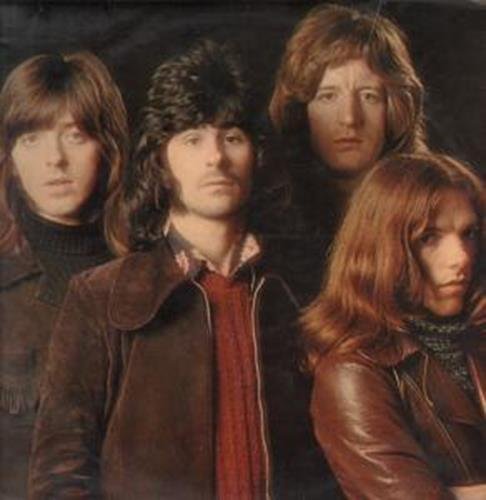
badfinger

Badfinger: “Baby Blue”

#14 in 1972

Badfinger were responsible for three of the decade’s classic pop songs, “No Matter What”, “Day After Day” and “Without You” (which Nilsson recorded a Grammy Award-winning version of). But “Baby Blue” from 1972 is a lost treasure and a classic case of pop oldies radio’s “top tenning” of its format. Give it a listen and see if you agree it deserves a better fate than its obscurity:

_____________________________________________________

I'm In You

Peter Frampton: “I’m in You”

#2 in 1977

Following the impossible-to-follow Frampton Comes Alive album, the LP credited with single-handedly bringing the record industry out of a mid-70’s slump, Peter Frampton was somehow talked into one of the most unfortunate cover shoots in pop music history. Where he’d looked like a badass guitar hero on the iconic live album’s cover, here he looked like kind of a pussy. And “I’m in You”, as a musical follow-up, was kind of a pussy song.

Don’t get me wrong, I love pussy rock songs. But when you’ve just established yourself as an FM radio god (we made the disctinction back then, because AM was still home to top 40 stations) and recorded the 14-minute “Do You Feel Like We Do” and brought the talk box into our collective consciousness and so on, “I’m in You” seemed like a concession to the female segment of your audience, and a betrayal of the pale young boys–you know, the ones who bought Frampton Comes Alive.

A career-killer if there ever was one. Frampton never really recovered from this.

Nice song, though.

_____________________________________________________

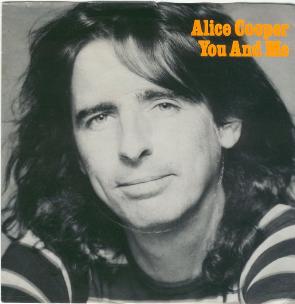
Alice Cooper Goes to Hell alice From the Inside

Alice Cooper: “I Never Cry”

#12 in 1977

“You and Me”

#9 in 1977

“How You Gonna See Me Now”

#12 in 1978

I know, I know. Alice Cooper, Shock Rocker. In your face, “No More Mr. Nice Guy”, “School’s Out” Alice. To the uninitiated he was one-dimensionally demented. But I’ll say this for the man Bob Dylan called the most underrated songwriter of his generation: he could write a pretty ballad. No less than three qualify as Forgotten Hits in my book. All date from a period when he was trying to kick the bottle and change (or at least broaden) his image.

His personal life needing to be put in order, Alice the man had to learn to keep Alice the character onstage, for the sake of his own sanity and longevity. Like Kiss a couple of years later, he even took the makeup off. Looks rather charming I think on the “You and Me” 45 sleeve above–though it’s hardly Peter Frampton in pink silk pants…

____________________________________________________________

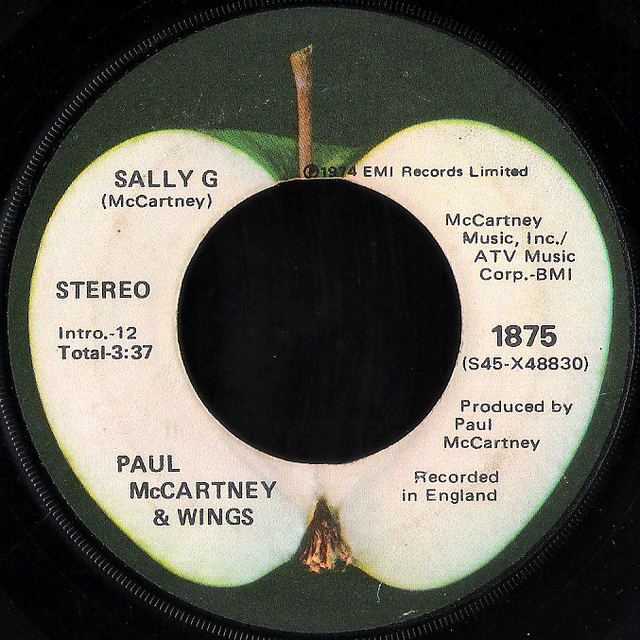
sally g

Paul McCartney: “Sally G”

#17 in 1975

Ever restless in the first post-Beatles decade, Paul seemed to record in a different location each time he worked on a record. The flip side of non-album single “Junior’s Farm” came from sessions he recorded in Nashville in 1974–and the fiddle and steel guitar didn’t exactly make it a country song. They made it a McCartney song with fiddle and steel guitar. But even as a stylistically atypical B-side it went top twenty on the pop charts. A cute, largely forgotten piece of Paul’s catalog.

____________________________________________________________

 Hearts

America: “Woman Tonight”

#44 in 1976

Although the guitar effect known as the “talk box” has a history dating back to 1939, Peter Frampton’s use of the effect on Frampton Comes Alive‘s “Do You Feel Like We Do” was the effect’s first exposure to many. But a few months earlier America (of all people) used it on the reggae-tinged single “Woman Tonight”. The song isn’t typical of America’s stuff–it’s neither the dour meditation of “A Horse With No Name” or a pretty harmony-laden ballad like “I Need You”. It sounds like a party song. And maybe it’s because it sounds so little like an America song that radio programmers have left it behind. Or maybe it’s because it never charted very high in the first place. Either way it deserves another listen.

___________________________________________________

Endless Wire

Gordon Lightfoot: “The Circle is Small”

#33 in 1978

“The Circle is Small” was the final top 40 hit in Gordon Lightfoot’s nearly 8-year run as a pop star. He’d never really followed up the success of the #2 “Wreck of the Edmund Fitzgerald” a year and a half earlier. Funny how you don’t really see the end of an artist’s run until a few years go by and you’re wondering whatever happened to… Such was the case with Lightfoot, at least as an American pop artist. He remains a Canadian folk music legend, though, to this day.

Gord’s hits like “Sundown”, “If You Could Read My Mind” and “Carefree Highway” fit the playlists of senior radio perfectly. But they’ve never found a place in the rotation for his final chart hit. The circle is small, indeed.

_________________________________________________________

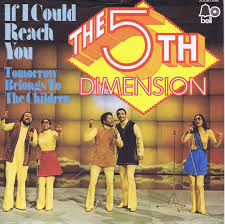
5th

The Fifth Dimension: “If I Could Reach You”

#10 in 1972

“If I Could Reach You” was the last top ten, or even top thirty, hit of the many the Fifth Dimension racked up between 1967 and ’72. The sophisticated, proto-Adult Contemporary ballad peaked at #10 and I don’t know why it doesn’t slot into the same radio formats that still keep “Wedding Bell Blues” and “One Less Bell to Answer” and “(Last Night) I Didn’t Get to Sleep at All” in the mix. Marilyn McCoo’s melancholy delivery nails it on this ode to unrequited love. Should be a classic. It’s a buried treasure instead. Dig it.

13 Mysterious Musician Deaths


(reprinted from Spinner)

May 29, 2012 marked the 15th anniversary of Jeff Buckley’s accidental drowning. For whatever reason, some people believe that the singer-songwriter’s death was “mysterious,” possibly suicide, but the facts don’t support this in any way: Buckley was there with a friend, had gone swimming there, wasn’t intoxicated, etc.
But that got us thinking about musicians who actually died under mysterious circumstances. Whether the deaths were murders, overdoses, suicides or accidents, all are connected by murky details. From Robert Johnson and Sam Cooke to Kurt Cobain and Elliott Smith, check out our list of the most perplexing deaths in music history.

Robert Johnson

The blues pioneer’s life and death is shrouded in myths, the most popular of which has Johnson selling his soul to the devil in return for musical talent. There are plenty of stories surrounding Johnson’s 1938 death at age 27, most of them involving a woman and her jealous boyfriend, who poisoned Johnson’s whiskey. In 2010, bluesman David “Honeyboy” Edwards repeated this account, claiming he was there, while blues historians maintain that Johnson probably died from an illness such as syphilis.

Sam Cooke

What is known about the soul legend’s death is that he died after being shot by Bertha Franklin, the manager of Los Angeles’ Hacienda Motel. Cooke allegedly burst into Franklin’s office wearing only a sport jacket and underwear then attacked her. The events leading up to the shooting are even murkier: Cooke was at the motel with Elisa Boyer, who claimed that the singer tried to rape her. She fled, taking some of Cooke’s clothes with her, leading to Cooke to chase her and run into Franklin’s office. Boyer was later arrested for prostitution, and Cooke’s thousands in cash were never recovered, lending credence to the theory that he was the victim of robbery. Either way, Franklin was exonerated in the shooting and Boyer was never charged.

Bobby Fuller

The “I Fought the Law” singer was found dead in his mother’s car in Los Angeles, facedown in the front seat next to an open container of gasoline. The death was ruled an accidental asphyxiation, but members of Fuller’s band claim he was covered in wounds and that the car showed up in the lot where it was found several hours after Fuller’s body went into rigor mortis. Some of the wild claims involve the 23-year-old rocker taking LSD the night before, leading to speculation of suicide, or that he was murdered because of a romance with a local mobster’s girlfriend. The true story remains unknown.

Brian Jones

The Rolling Stones guitarist was discovered unconscious in his pool in 1969 and died before doctors arrived at his home, Cotchford Farm. Though Jones’ death was ruled “death by misadventure,” others — including people who were there that night — claim that Frank Thorogood was responsible, either maliciously or by accident. Thorogood, who died in 1994, worked as a contractor on Jones’ home and was allegedly fired by the former Stone the day of the incident. After reviewing new evidence, including allegations that police altered witness statements, the police declined to reopen the case in 2010.

Jim Morrison

In 1971, the Doors singer was found dead in the bathtub of his Paris apartment and was buried without an autopsy. His longtime girlfriend, Pamela Courson, said that he died of a heroin overdose while in the tub, though she gave several contradictory statements. In 2007, a “friend” of Morrison’s said the singer actually overdosed in the bathroom of a nearby club and was carried back to the apartment by drug dealers to avoid police attention. And, of course, there are those who believe that Morrison is still alive.

Marvin Gaye

Struggling with his finances, depression and addiction, Marvin Gaye moved in with his parents in 1983 in an attempt to get healthy. He and his father, Marvin Gay Sr. (Marvin Jr. added the “e” to his last name), argued constantly, and on the day in question, things got physical after Marvin Sr. had a heated fight with his wife. After the confrontation between father and son, Marvin Sr. grabbed a gun and shot his son in the chest, then fired again, killing the Motown legend. Thanks to the bruises found on Marvin Sr. and the drugs found in his son’s system, the 70-year-old avoided a first-degree murder charge and pleaded no contest to voluntary manslaughter, though family members claimed it was a cold-blooded killing. When Marvin Sr. was asked if he loved his son, he reportedly said, “Let’s say that I didn’t dislike him.”

Kurt Cobain

Kurt Cobain’s death was ruled a suicide by self-inflicted gunshot wound to the head, but that hasn’t stopped plenty of people from claiming it was a murder. The proponents of this theory — who often place blame on the grunge icon’s wife, Courtney Love — claim that Cobain’s suicide note was finished by someone else, that he had too much heroin in his system to commit the act, that Cobain was going to cut Love out of his will, and so on. The theory seems to have died in popularity in recent years but still persists, with Cobain’s grandfather even admitting he believes Kurt was murdered.

Richey James Edwards

British rocker Richey Edwards disappeared on Feb. 1, 1995, the day he was due to fly to the U.S. for a press tour. The Manic Street Preachers guitarist’s car was found abandoned a couple weeks later, and there were plenty of purported sightings during that period. To this day, Edwards has never been found, and many speculate he committed suicide after years of battling depression. Even though fans still claim to have seen him, Edwards was declared “presumed dead” in 2008.

Tupac Shakur | Notorious B.I.G. | Jam Master Jay

Three hip-hop legends, three unsolved murders. All three are interconnected, with Tupac Shakur and Notorious B.I.G.’s deaths coming as the result of the much-hyped coastal hip-hop rivalry. Many conspiracy theories abound, with Marion “Suge” Knight and LAPD officers being named, with somewhat convincing evidence. In the case of Run-DMC’s Jam Master Jay, prosecutors named Ronald “Tenad” Washington as an accomplice of the shooter. Washington was previously associated with the 1995 murder of Randy “Stretch” Walker, a collaborator of Shakur’s.

Michael Hutchence

INXS singer Michael Hutchence’s body was discovered in a Sydney hotel by a maid in November 1997. The initial ruling was suicide, as he was found naked, hanging from a doorway in the room, which was reportedly filled with alcohol and prescription drugs. The 37-year-old had been involved in a custody battle over his daughter, Tiger Lily, with girlfriend Paula Yates, which led the coroner to determine that Hutchence was distraught at the time of his death. Yates, for her part, later claimed that Hutchence died while practicing autoerotic asphyxiation, the self-deprivation of oxygen to increase sexual pleasure. Yates died in 2000 of a heroin overdose.

Elliott Smith

On Oct. 21, 2003, singer-songwriter Elliott Smith died of two stab wounds to the chest inside his L.A. apartment. His girlfriend Jennifer Chiba claimed that, following an argument, Smith — who battled addiction and depression — stabbed himself in the chest, puncturing his heart, and left a note that read, “I’m so sorry-love, Elliot God forgive me.” Chiba claimed she was in the bathroom when she heard a scream, then found Smith with the knife in his chest. She admitted to removing the knife, and the autopsy notes a lack of hesitation wounds and the fact that the stabbing occurred through clothing, which are both “atypical” in suicides of this nature. The report also notes possible defensive wounds on Smith’s right arm and left hand, and that there was no alcohol or illegal drugs in his system. Chiba later sued Smith’s family for 15% of his estate, claiming to be his wife and manager, but eventually lost.

Extra:

Mama Cass’ Ham Sandwich

This sad, somewhat offensive rumor doesn’t just stem from the Mamas and the Papas’ singer’s weight nor does it come from “Austin Powers.” The first doctor on the scene — a London flat on loan from Harry Nilsson — noticed a partially eaten sandwich on Cass’ bedside table, and thought she may have choked on it. Upon further inspection, it turned out that a heart attack did the singer in at just 32 years old. Coincidentally, Who drummer Keith Moon died in the same apartment four years later — also at age 32.

Previous Older Entries Next Newer Entries