The Forgotten Hits: 70’s Soul

Every era and genre of music has songs that were popular in their day, but whose footprints have been washed from the sand over time. Our goal in this series of posts is to resurrect their memory; to help in a small way to reverse the process of the “top tenning” of oldies formats, which reduce hit makers from previous decades to their most popular song or two and then overplay them until you almost loathe an artist you used to enjoy (think “Sweet Caroline” or “Don’t Stop Believin'”).

I’ll be citing the Billboard pop charts for reference. Billboard Hot 100 charts of the 60’s and 70’s were a much more accurate reflection of a song’s popularity, before there were so many other ways for a song to enter the public consciousness (reflected by the number of pop charts Billboard now uses). It was an era when radio ruled–before a car commercial, social music sharing site, or Glee were equally likely ways for a song to break through.

Malo

Malo: “Suavecito”

#18 in 1972

Malo were a Latin rock group from San Francisco which featured Jorge Santana (brother of Carlos) on guitar. Their signature hit, “Suavecito”, has been called the “Chicano National Anthem”, but the track was so forgotten that when Sugar Ray sampled it in their 1999 hit “Every Morning” most people didn’t realize it was a sample.

_________________________________________________________

Roberta Flack & Donny Hathaway

Roberta Flack: “If Ever I See You Again”

#24 in 1978

Roberta Flack’s number one singles are household names: 1972’s “The First Time Ever I Saw Your Face” won Grammys for Record and Song of the Year and “Killing Me Softly With His Song” repeated both honors the next year and added a third Grammy for Pop Female Vocal. 1974’s “Feel Like Makin’ Love” also topped the chart.

But I want to mention a 1978 song that’s criminally overlooked for a couple reasons. First, although it appeared on her 1981 Best of Roberta Flack compilation, it was excluded from the three subsequent Greatest Hits packages issued in the CD era. And the album it’s from, her 1978 record simply titled Roberta Flack, was the lowest-charting of her first eleven albums and remains unissued on CD while most of her 70’s catalog has been issued in remastered editions. In other words, no CD currently in print contains the song (including the soundtrack of the movie that featured the song and shared its name).

And it’s a pity because “If Ever I See You Again” is one of Flack’s most beautiful–and certainly saddest–songs. See if you remember it.

__________________________________________________________

In Heat (Dig)

Love Unlimited: “I Belong to You”

#27 in 1975

“Walkin’ in the Rain With the One I Love”

#14 in 1972

Love Unlimited was a female trio managed and produced by Barry White, who was married to one of the three singers, Glodean James, from 1974-88. Their smooth, shimmering vocal blend calls to mind the Three Degrees or the Emotions. You can take your pick of two top 30 hits, both of which are lost to time.

One is the classy “I Belong to You”, from 1975. The other is the bigger hit but is also somewhat more dated (and a little silly in places): “Walkin’ In The Rain With the One I Love” from three years earlier.

____________________________________________________________

Portrait of the Originals

The Originals: “The Bells”

#12 in 1970

The Originals seem so obscure today that their name might be more familiar to you as one of the former names of the band Spinal Tap than that of a hit making 70’s soul act. But hit makers they were, at least for a proverbial 15 minutes.

Their two biggest songs, “Baby I’m For Real” and “The Bells” both had a throwback, pseudo doo-wop ballad sound. They sounded a little out of time even in their time. And both just missed that top ten cutoff point that’s often the bar of performance for an oldies playlist. Anyway, does this ring a bell?

______________________________________________________

The Top and Bottom Singles Collection 1969-1971

Brenda & The Tabulations: “Right On the Tip of My Tongue”

#23 in 1971

“Right On The Tip of My Tongue”, which should be familiar to you if the above songs are. And #23 wasn’t good enough to carry it through the ensuing decades’ radio playlists. But it sounds like classic 70’s R&B to me.

____________________________________________________________

S/T LP (VINYL) US UNITED ARTISTS 1972

Cornelius Brothers & Sister Rose: “Treat Her Like a Lady”

#3 in 1971

Cornelius Brothers & Sister Rose had two massive hits, only one of which has become a perennial. 1972’s silky, string-laden “Too Late to Turn Back Now” went to #2 and is an oldies staple. The grittier, more rhythmic “Treat Her Like a Lady”, which climbed to #3 one year previous, sounds a little fresher today due to that whole “absence makes the ears grow fonder” thing. See if you agree…

_____________________________________________________________

I'm Doin' Fine Now

New York City: “I’m Doin’ Fine Now”

#17 in 1973

New York City is probably the least familiar name of this bunch. But their only top 40 hit and its smooth proto-disco sound perfectly evoke the summer of ’73. It’s also as good a Spinners impersonation as I’ve heard, which is high praise indeed.
The Forgotten Hits: 70’s Soft Rock 2

Every era and genre of music has songs that were popular in their day, but whose footprints have been washed from the sand over time. Our goal in this series of posts is to resurrect their memory; to help in a small way to reverse the process of the “top tenning” of oldies formats, which reduce hit makers from previous decades to their most popular song or two and then overplay them until you almost loathe an artist you used to enjoy (think “Sweet Caroline” or “Don’t Stop Believin'”).

I’ll be citing the Billboard pop charts for reference. Billboard Hot 100 charts of the 60’s and 70’s were a much more accurate reflection of a song’s popularity, before there were so many other ways for a song to enter the public consciousness (reflected by the number of pop charts Billboard now uses). It was an era when radio ruled–before a car commercial, social music sharing site, or Glee were equally likely ways for a song to break through.

We continue our little tour of the vanished Soft Rock hits of the 70’s, hoping to jog a few pleasant memories…

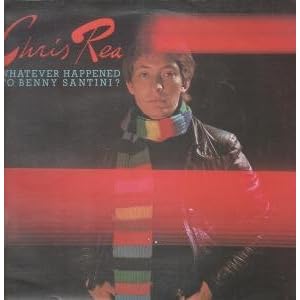
WHATEVER HAPPENED TO BENNY SANTINI LP (VINYL) UK MAGNET 1978

Chris Rea: “Fool (If You Think it’s Over)”

#12 in 1978

Chris Rea was a much more prominent figure at home in England than he ever became in the U.S. Here, he was a true one-hit entity, that hit being 1978’s #12 charting “Fool (If You Think It’s Over)”. Even if you recall the song, I’m guessing you didn’t attach Rea’s name to it.

_______________________________________________________________

Angel Baby

Toby Beau: “My Angel Baby”

#13 in 1978

Toby Beau isn’t a dude, it’s a band from Texas. They were already touring with heavyweights like the Doobie Brothers, Steve Miller Band and Bob Seger when this song became a smash hit. But the lack of a follow-up put a strain on the band that began to tear it apart even before a second album was released. A sad and too familiar tale. This three and a half minutes is the difference between one-hit wonder and band you probably never would have heard of. At least they had their moment.

_____________________________________________________________

Midnight Light

LeBlanc & Carr: “Falling”

#13 in 1978

LeBlanc & Carr. I’ll say that once again: LeBlanc & Carr. Anything? 1977’s “Falling” was their sole foray into the top 40, their three minutes, twelve seconds of fame. Lenny LeBlanc later went into the Contemporary Christian field, sealing their fate as one of many 70’s one-hit wonders no one seems to remember by name. This particular bit of wimpy pop was and is a favorite of mine.

____________________________________________________________

dialogue LP

Michael Johnson: “This Night Won’t Last Forever”

#19 in 1979

Michael Johnson hit the top twenty twice in the decade of the 70’s. One song will likely be fresher in your memory than the other, although come to think of it I can’t remember the last time I heard either on the radio. Still, the man has his fans, even if programming directors don’t appear to be among them. His out of print hits compilations are priced between 50 and 150 dollars on Amazon.com.

I’m guessing that if you’re old enough, “Bluer Than Blue” (#12 in ’78) is very familiar:

But I bet it’s been a while since “This Night Won’t Last Forever” floated through your transom. Its #19 chart peak doesn’t qualify it for the top ten-only formats of many oldies radio stations, like so many other nice tunes.

______________________________________________________

Takin It Easy One on One

Seals & Crofts: “My Fair Share”

#28 in 1977

“You’re the Love”

#18 in 1978

Seals & Crofts made the airwaves a softer, more tuneful place between the years of 1972 and 1976 with such top ten hits as “Summer Breeze”, “Diamond Girl” and “Get Closer”. But a greatest hits collection followed at that point, dooming any subsequent hits to obscurity, a phenomenon I refer to as “premature compilation”. Since their “Greatest Hits” is one of the very few compilations from the days of vinyl that hasn’t to this day been updated and expanded for the CD era, two forgotten Seals & Crofts hits are topic for this post.

“My Fair Share” was the love theme from the Robby Benson movie One On One. (Admit it: you saw it and you loved it. You also dug The Blue Lagoon, didn’t you? DIDN’T YOU?) Anyway, the song went to number 28 in 1977.

“You’re the Love” was a bit of a disco thing from early 1978, and it made its way to #18 during the height of Saturday Night Fever um, fever. Good strategy? Hard to say: it was the last time Seals & Crofts cracked the top 40. Maybe if they’d come up with a punk single…

_____________________________________________________________

Dowdy Ferry Road

England Dan & John Ford Coley: “Gone Too Far”

#23 in 1977

England Dan & John Ford Coley were kings of mid- to late-’70’s soft-serve pop; they defined the genre–like Bread did the first half of the decade. And for fans of that flavor of music it’s a damn shame that in subsequent years radio effectively made one-hit wonders of them, choosing to give their number two hit, “I’d Really Love To See You Tonight” virtually all the spins and ignoring other top 40 hits such as: “Nights Are Forever Without You”, “It’s Sad To Belong”, “We’ll Never Have To Say Goodbye Again”, and Todd Rundgren’s “Love is the Answer” (which features a strange John Hiatt cameo at about 2:49, by the way).

But probably the most “forgotten” of their hits is “Gone Too Far”. This one really didn’t survive the decade that gave it to us.

“England” Dan Seals (who passed away of cancer in 2009) was the brother of Jim Seals of Seals & Crofts, and I wish I could say I’d thought through this article thoroughly enough that it’s anything but a coincidence his entry falls below theirs. Dan became a hit country artist in the 80’s, like so many other pop acts of the ’70’s (Exile, the Bellamy Brothers, Michael Johnson, Michael Murphey…)

___________________________________________________________

SHOPPING BAG LP (VINYL) US BELL 1972

The Partridge Family: “It’s One of Those Nights (Yes Love)”

#20 in 1972

The Partridge Family, if they’re played on radio at all anymore, are represented by the Tony Romeo-penned 1970 pop gem “I Think I Love You”. And that’s really about it. Except it wasn’t. Because if you were there you know that they hit the top 40 more than once (seven times actually) with well-crafted, well-performed, well, okay, bubblegum during the run of their hit TV series. But this bubblegum was performed and arranged by the best session aces in the business–the famed L.A. Wrecking Crew (sorry to disappoint you if you thought that was really Tracy on tambourine and wood block). And even as the Partridge Family TV show lost its ability after a couple of seasons to push singles up the chart, it wasn’t because the singles diminished in quality. In fact, they even evolved somewhat into the more sophisticated adult contemporary sound you hear on “It’s One of Those Nights (Yes Love)”, which was also written by Tony Romeo.

Listen to the interplay of the woodwinds and horns…the “Aaahh” harmonies after each chorus that swell like the “waves upon the shore” of the lyric…and Lori gets the best acoustic guitar tones from that little piano…

Seriously, anything the Wrecking Crew recorded is worth three minutes of a pop fan’s time, even if it’s from a TV show featuring the lead singer equivalent of Captain James T. Kirk.

The Forgotten Hits: 70’s Soft Rock

Every era and genre of music has songs that were popular in their day, but whose footprints have been washed from the sand over time. Our goal in this series of posts is to resurrect their memory; to help in a small way to reverse the process of the “top tenning” of oldies formats, which reduce hit makers from previous decades to their most popular song or two and then overplay them until you almost loathe an artist you used to enjoy (think “Sweet Caroline” or “Don’t Stop Believin'”).

I’ll be citing the Billboard pop charts for reference. Billboard Hot 100 charts of the 60’s and 70’s were a much more accurate reflection of a song’s popularity, before there were so many other ways for a song to enter the public consciousness (reflected by the number of pop charts Billboard now uses). It was an era when radio ruled–before a car commercial, social music sharing site, or Glee were equally likely ways for a song to break through.


The genre of 70’s so-called “Soft Rock” is particularly littered with these “forgotten” songs–perhaps because many people would like to forget the genre entirely. Be that as it may, let’s exhume some hit songs…

Player

Player: “This Time I’m in it For Love”

#10 in 1978

Player are, in the perception of most, one-hit wonders. Clearly this is an ignorant and dismissive view of this talented California band. They were actually two-hit wonders.

Their 1977 number one single “Baby Come Back” is often mistaken for a Hall & Oates song because of its similarity to their hit “She’s Gone”. “Baby Come Back” is not only an oldies perennial, but has been sampled in at least nine R&B and rap songs from the 80’s to the present day.

“Baby Come Back”:

“This Time I’m in it for Love” is Player’s #10 follow-up from ’78. Is it familiar?


Ambrosia

Ambrosia: “Holdin’ On to Yesterday”

#17 in 1975

Radio has tossed aside, somewhat ironically, this 1975 paean to nostalgia and #17 hit.

Ambrosia are best known for two songs that both reached the number three position, 1978’s “How Much I Feel” and “Biggest Part of Me”, which peaked in early 1980.

“How Much I Feel”:

“Biggest Part of Me”:


Elan

Firefall: “Strange Way”

#11 in 1978

Firefall similarly had three major singles, only two of which seemed to survive the decade, 1976’s “You Are the Woman” (#9) and 1977’s “Just Remember I Love You” (#11).

But they were followed by another hit in ’78, that being “Strange Way”. Like Ambrosia’s “Holdin’ On to Yesterday” it’s a slower-paced ballad than the others. Perhaps music programmers prefer to stick more to uptempo oldies, figuring their listeners have enough trouble staying awake at their advanced age…

“You Are the Woman”:

“Just Remember I Love You”:


FOREVER LP (VINYL) UK INFINITY 1979

Orleans: “Love Takes Time”

#11 in 1979

“Love Takes Time” is one you may not have heard in a while. Crack it open like a vintage wine.

Orleans also hit the top 40 three times, with one of the three qualifying as a forgotten hit. “Dance With Me” (#6 in ’75) and “Still the One” (#5 in ’76) are still staples of oldies radio, the latter in particular having found a cultural niche as an anthem of relationship permanence.

“Dance With Me”:

“Still the One”:


Gary Wright: “Love is Alive”

#2 in 1976

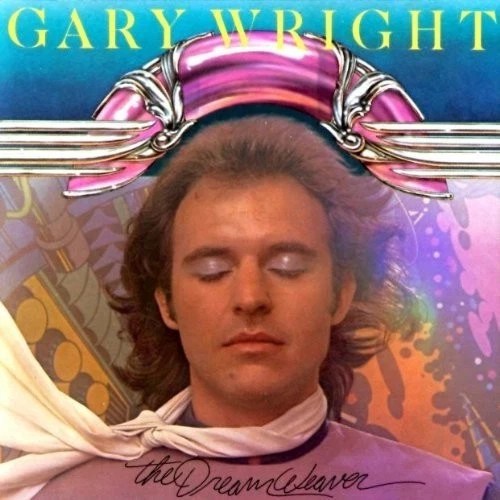
Gary Wright had one timeless classic, that being 1976’s #2 hit “Dream Weaver”. Its immediate follow-up, “Love is Alive” also charted at #2, but hasn’t fared as well on oldies playlists, despite some mean cowbell and a bass line that you’d think rappers would find sample-rific.

“Dream Weaver”:


Epic Willie

Wet Willie: “Street Corner Serenade”

#30 in 1978

Wet Willie had one top ten moment. “Keep On Smilin'” charted at #10 in 1974 and survives not only on oldies radio but classic rock formats, due to the band’s status as a southern rock band (I’m like whatever). Anyway, it’s a nice bit of positive philosophy in a soft rock package, and deserves its continued popularity.:

“Keep On Smilin'”:

Mostly forgotten by radio but not by graying pop fans is their 1977 hit “Street Corner Serenade”, which is one of those songs whose modest chart performance (#30) belies its beloved status. It blends its arrangement and subject matter perfectly in a tribute to doo wop street corner singing, and has one killer chorus–right up there among such 70’s hits as “Drift Away” and “Thunder Island”.


Goodbye Girl

David Gates: “Took the Last Train”

#30 in 1978

David Gates, lead singer and songwriter of so many soft rock classics with Bread, had one enduring hit as a solo artist. 1977’s #15 “Goodbye Girl”, from the movie of the same name, is assured of everlasting popularity, mainly because the song is just so sad.

“Goodbye Girl”:

Not so Gates’ follow-up single, from the same LP, the #30 “Took the Last Train”. This tale of a one-night stand on the French Riviera almost sounds like a Michael Franks tune–pretty jazzy for Mr. Gates. I’m sure I never heard it on the radio once the 70’s ended. Hopefully you’ll recall it fondly.


If you’ve read this far you probably share to a degree my fascination with the syndrome of the forgotten hit. I don’t know why some hits endure and others fade away. But I do know oldies radio would be much more interesting if programmers dared to play top 40 that really went as deep as the #40 position, because some great songs lay between numbers ten and forty. Yet formats are fixed in top ten-only cement. This is a financially driven decision, of course: it’s a risk to play a song that doesn’t quite have the same proven (top ten) track record. Out of fear of you the listener (in 70’s terms) turning the dial, they bore you to death.

This “top-tenning” of oldies radio also skews the perspective of younger listeners, who may never come to realize that the Temptations had thirty-eight top 40 hits, while the Four Tops had twenty-three. Why play “Hey Girl (I Like Your Style)” when you can play “My Girl” again? Why play “You Keep Running Away” when you can play the unofficial anthem of oldies radio, “It’s the Same Old Song”?

Christian Rock For People Who Hate Christian Rock

Take this test: watch the following video:

…and note your response. I happen to believe “I Can Only Imagine” by MercyMe, a massive Christian pop hit by the way, is one of the most polarizing songs ever in the history of polarizing songs. Some feel it is a beautiful, inspiring, thought-provoking piece of praise music, worthy even of inclusion in Christian liturgy.

I think listening to this song is what death by stoning must feel like.

Musically, it’s more mantra than melody. Lyrically, well…I have a problem with being bludgeoned by one four-word phrase twenty (count ’em yourself) times in four minutes. This song feels like an indecent assault on my musical sensibilities, and assault isn’t a very Christian thing to do.

So is there so-called “Christian Rock” out there that is of significantly higher quality than pap like this? Beats me–I don’t listen. But there’s a little chicken-and-egg caveat to that statement: I don’t know if there’s better because I don’t listen to “Christian Rock”. But I don’t listen to “Christian Rock” because what little I have heard is, musically, an insult to someone who demands a little creativity and imagination in whatever music they listen to.

And I’m not willing to sacrifice that for weak songs with a Christian message. In other words: being a Christian, I’m willing to give any sacred music the same chance as any other kind of music. But–I’m sorry–it has to meet me on my terms. If it’s truly creative–if it truly inspires me somehow, I’m in.

If it’s MercyMe, I feel like I’m looking at the stained-glass windows from the wrong side.

I’m not going to go in the direction here of saying there’s more religion in a Marvin Gaye song than any church hymn or whatever. That’s BS and we both know it; besides, the truth is I’m a churchgoer who wishes he could find more music that truly does inspire and bring me closer to my creator.

On the other hand, any extraordinarily beautiful music, or voice, or performance…and any song which shows wondrous talent or insight into the nature of life and isn’t needlessly depraved or cynical can inspire me, can bring me to see a little more of my God.

Yes, I know about Creed. They sound like the Nickelback of Christian Rock to me. Not buying it. I share the opinion of the reviewer on Amazon.com who commented: “Warning!! If you listen to this CD backward, you’ll hear Satanic messages. Even worse, if you play it forward, you’ll hear Creed.”

No, I don’t think there’s much good “Christian Rock” out there, or at least I haven’t heard evidence of it. But what I do occasionally discover is openly Christian artists who make rock and pop that isn’t insulting to someone of reasonably discerning musical taste (not a catchy genre name, I realize). So I’ll name some names, just in the interest of evangelization…

LeftovertureKansas. Yeah, midwest America Prog rock, “Dust in the Wind” Kansas. I realize I’m talking about oldies here, but if you only listen to “praise music” go back to Leftoverture and Point of Know Return and it’ll be new to you as you listen like the deaf man whose ears have been touched by…Kerry Livgren.

Kerry actually left Kansas to make Christian rock. But he had already been doing so within the band, only in clever, covert fashion.

When you’re in a platinum-selling arena rock outfit and you feel the need to write about your search for Christian truth, you have to make platinum-selling Christian rock–you just can’t call it that. Kerry Livgren was a great songwriter who happened to be a devout Christian, not a devout Christian who happened to be a songwriter. “Stealth Christian rock”, Kansas-style, sounds like this:

“The Wall”:

“Carry On Wayward Son”:

“Hold On”:

Much of Livgren’s writing with Kansas was artful and ambiguous enough to fool the part of his audience who would have preferred not to think they were listening to rock with a Christian message. “Hold On”, for example, sounds like a common power ballad, but was actually written by Livgren to his wife “as a plea for her to come to Christ”. It was also a Top 40 single. And if I may say so, one big difference between “Hold On” and “I Can Only Imagine” is a monster arena rock hook for a chorus–the kind that can make you shout along in your car, and maybe even bring you to tears.

Big Horizon

David Wilcox. This mostly-acoustic, folk singer-songwriter has a rare lyrical gift, as well as the type of guitar virtuosity that has landed him on the cover of guitarist magazines. His writing has grown more overtly Christian seemingly with each album, but without sacrificing his lyrical edge and a truly superior gift for metaphor:

“Show the Way”:

“Farthest Shore”:

“Metaphorical Reasons”:

Flying Colors (Limited Edition Digipak)

Flying Colors. This band’s brand-new debut album was reviewed on this site just a week ago (see: Recommended Albums #13). Kerry Livgren almost became a member of the band, and he’d have fit perfectly: Flying Colors makes the kind of uplifting, positive-message “stealth Christian rock” Kansas made years ago, with a pinch less of the 70’s Prog grandeur and profundity. This is Christian rock for people who hate Christian rock:

“The Storm”:

“Better Than Walking”:

“Everything Changes”:

Grave New World

Strawbs. This British Folk-Prog band whose popularity peaked in the 70’s can’t be adequately described (or lauded) in a paragraph. But Christian themes certainly permeated their music, and more uncompromisingly so than any of the aforementioned artists. Though the voice of David Cousins may be something of an acquired taste to some (and to others it will remain unacquired), his expressive and compelling songwriting is simply a treasure. Strawbs still attract enough religiously devoted admirers to tour both as an acoustic trio and as a full electric band across several continents. They’re truly one of Prog rock’s (and pseudo-Christian rock’s) best-kept secrets. The anthemic “Lay Down”, based loosely on the 23rd psalm, is the kind of song that would certainly inspire me in a liturgical setting!

“Benedictus”:

“Lay Down”:

“A Glimpse of Heaven”:

Bands Out of Character: Artists Who Threw Us a Musical Change-Up

I’ve collected a baker’s dozen of examples of bands or artists who inexplicably took on another identity for 3 to 5 minutes. In some cases both song and artist are both well-known enough that time and familiarity have dulled the shock of the sharp break from their usual sound. But a few may induce that “I never knew that was them” type of reaction. The common thread, though, is that for just one song each of these artists sounded more like another artist’s work than their own–sort of like that Star Trek episode where Captain Kirk was really a girl.

Elton John: “Saturday Night’s Alright For Fighting” …sounds like classic-era Rolling Stones–just like Elton intended.

The Doobie Brothers: “Black Water” …The “China Grove” guys did…bluegrass? Who did they think they were, some Jerry Garcia side project?

Robert Palmer: “Every Kinda People” …is pure What’s Going On-era Marvin Gaye.

Chicago: “Flight 602”  …is more Crosby, Stills & Nash than it is Chicago.

Kiss: “Hard Luck Woman” …C’mon, admit it: If you weren’t a Kiss fan in the 70’s you thought it was Rod Stewart.

Santana: “Winning” …came out within months of Steve Winwood’s first solo album. Hmm…

Foreigner: “Starrider” …brings to mind one of Greg Lake’s flights of fancy from his days with King Crimson or ELP. Light years (one might say) removed from “Hot Blooded” or “Double Vision”.

Frank Zappa: “Sexual Harassment in the Workplace” …just isn’t what I think of when I think of Zappa.

The Beach Boys: “Sail On Sailor” …I had no idea who sang this when I was a kid. Probly would’ve guessed Stevie Wonder. Now Jimmy Buffet does it live, making everyone think it’s his song. He does that.

Robert Palmer: “Bad Case of Loving You (Doctor, Doctor)”  …Palmer again. Took him a while to find those backup babes and settle into his tuneless synth-pop niche. He’s trying on an 80’s ZZ Top sound here.

The Who: “The Kids Are Alright” …evokes the Byrds, the Hollies, the Turtles, maybe the Easybeats. This isn’t typical Who material. And Roger seems to know it in this video.

The Guess Who: “Clap For the Wolfman” …The Guess Who had given us so many great singles by 1974 they deserved to foist on us this tribute to Wolfman Jack…I guess. But I don’t suppose many who’d heard “These Eyes”, “No Time” and “American Woman” would have guessed who was singing this one.

Grand Funk: “Bad Time” http://www.youtube.com/watch?v=lsDMxWgPQcg …contains no hint of the “footstompin’ music” of previous Grand Funk Railroad tracks (see what I did there?). This single took them back to the Top 40 for the last time, proving definitively that sweetening their sound was either the right or the wrong move.

The “Atemporality” of Pop: What is Post-2000 Music’s Defining Sound?

New York Times

The Songs of Now Sound a Lot Like Then

ONCE pop music was something by which you could tell the decade, or even the year. But listening to the radio nowadays is disorienting, if you’re searching for a sound that screams, “It’s 2011!”

Take the biggest hit of the year, Adele’s “Rolling in the Deep.” The song is basically 1960s rhythm-and-blues tightened up with modern production. Everything about “Rolling” — its melody and lyrics, Adele’s delivery and timbre, the role played by the backing vocalists — gestures back to a lost golden age of soul singers like Etta James and Dusty Springfield. Then there’s Cee-Lo Green’s “Forget You,” a hit from last year that’s still on the radio, and which moves a decade nearer the present through being steeped in the ’70s soul of acts like the Staple Singers.

Elsewhere on Top 40 radio you’ll hear a lot of brash, pounding songs that sound like ’90s club music. Recent smashes by performers like Black-Eyed Peas, LMFAO, Kesha, Pitbull, Taio Cruz, Jennifer Lopez and Britney Spears recall the “hip house” sound of hitmakers like Technotronic and C&C Music Factory, or mid-’90s trance anthems by Paul Van Dyk and B T. It may require a mental exercise to bring out the true weirdness of this development: Imagine how peculiar it would have been if in the early ’90s the charts were suddenly flooded with music that sounded exactly like ’70s disco.

Figures like Lady Gaga and groups including the Black Eyed Peas reach even further back and throw ’80s flavors into the ’90s Eurohouse mix: the resemblance between Madonna’s “Express Yourself” and Lady Gaga’s “Born This Way” was widely noted on its release this year. “Just Can’t Get Enough” by the Black Eyed Peas references Styx’s “Mr. Roboto,” while their song “The Time” borrows its chorus from Bill Medley and Jennifer Warnes’s “(I’ve Had) the Time of My Life.”

Much of this déjà entendu dancepop is exciting in its crass, energy-drink-blast kind of way. So why does the aural overfamiliarity matter? Well, up until the 2000s pop decades always had epoch-defining sounds. Two or three (sometimes more) genres would emerge to achieve dominance or, at the very least, prominence in the mainstream. Musical styles usually build on the past to some degree, but these genres always took their sources in striking and fresh directions, and they often wrapped the music up in subcultural garb, with a distinct fashion element, new rituals and dance moves, and so forth.

The ’70s generated heavy metal, punk, disco, reggae and more. The ’80s spawned hip-hop, synthpop and Goth. The ’90s had grunge and the techno/rave/electronic explosion. But the decade and a bit that followed the turn of the millennium has produced — well, what exactly? Hip-hop and R&B have built incrementally, at times imperceptibly, on where they were at during the ’90s. Emo is a tuneful and melodramatic merger of pop-punk and Goth. True, if you venture into the musical left field, you will find various underground genres that can claim at least relative freshness: grime and dubstep in Britain, the post-indie sounds of Animal Collective and similar bands in America. But their effects on mainstream pop music has been minimal.

Those who don’t have much personal investment in the idea that popular music should always be pushing forward probably won’t be especially troubled by the current pop scene’s muddled mix of stasis and regression. But those whose expectations have been shaped by growing up during more fast-moving and ever-changing pop decades — which is basically all of them to date except for the 2000s — are likely to be perplexed and disheartened by these developments. In particular the innovation-obsessed ’60s and the cyber-optimistic ’90s instilled an ideal of pop music as herald of the future, a vanguard sector of the culture that was a little bit ahead of the rest of society.

The fading of newness and nowness from pop music is mystifying. But in the last couple of years a concept has emerged that at least identifies the syndrome, even if it doesn’t completely explain it. Coined by the co-founders of cyberpunk fiction William Gibson and Bruce Sterling, “atemporality” is a term for the disconcerting absence of contemporaneity from so much current pop culture. This curious quality can be detected not just in pop music but in everything from fashion to graphic design to vintage chic.

A prime example of atemporality is the fad for photography apps like Hipstamatic and Instagram, which digitally simulate the period atmosphere of pictures taken in the ’70s or ’80s, using the cameras and film stock of the time. Instant-nostalgia snapshots are part of a culture-wide fascination with outmoded technology and “dead media” (Mr. Sterling’s term) that encompasses everything from the cults for manual typewriters and cassettes to the steampunk movement’s fetish for Victoriana to the recent movie “Super 8.”

Mr. Sterling sees the time-out-of-joint nature of today’s pop as a side effect of digiculture. One of the curiosities of the futuristic-seeming information technology that we now enjoy is that it has dramatically increased the presence of the past in our lives. From YouTube to iTunes, from file-sharing blogs to Netflix, the sheer volume and range of back catalogue music, film, TV and so forth that is available for consumption is astounding.

We can access all this stuff with incredible speed and convenience, share it and store it with minimal effort. But a potential downside of this sudden “affluence” is a flood of influences that can overwhelm the imagination of young musicians, who are absorbing five decades of pop history in a frenetic jumble. Their attention is also being competed for by music from outside the Anglophone rock and pop traditions, everything from West African guitarpop to Soviet New Wave music to Ethiopian electronic funk from the 1980s.

The musical omnivorousness that the Internet has encouraged and enabled is one reason atemporality is even more pronounced when you listen to alternative radio stations, which specialize in music by bands that consciously aim to have broad taste and to develop unusual portfolios of influences. Listen to KCRW (89.9 FM), the NPR-affiliated station in Los Angeles whose programming often wanders between genres and decades, leaving listeners to wonder if a particular track was recorded in 2011 or in 1981, or in 1971.

A few weeks ago the station played a gorgeously dreamy tune whose rippling, dewy-with-reverb keyboard part and yearningly melodic bass line seemed uncannily redolent of late ’70s Fleetwood Mac. Was this actually a lost Mac song circa 1977’s “Rumours”? Or was it an offering from one of the growing number of contemporary indie bands influenced by ’70s soft rock? The song turned out to be “Roscoe” by Midlake, a group of 21st-century soft-rockers from Denton, Tex. But it was a remixed version made by the British outfit Beyond the Wizard’s Sleeve with clear intent to bring out further the Fleetwood Mac-iness of the song. And then, to show they were in on it, the programmers at KCRW followed “Roscoe” by playing “Rhiannon.”

That 1976 Fleetwood Mac hit is the kind of staple tune you’d normally hear on a classic rock station rather than KCRW, whose sensibility is like a slightly more adult version of the online hip music magazine Pitchfork. And this shows how atemporality has not just jumbled up the decades, it’s eroded the barriers between genres. The iPod shuffle is the era’s defining music technology. One result on the radio dial is the rise of formats like Jack FM that seemingly mimic a middle-aged man’s iPod in shuffle mode: a restless drifting that nevertheless stays within defined taste limits.

The iPod shuffle and similar digital platforms for music listening have a contradictory result: on the one hand it serves to erode the historical divisions between kinds of music by its decontextualizing effect, on the other hand it enables fans to avoid entirely music they don’t like. So the programming on Jack FM (whose slogan is “Playing what we want”) slips back and forth between ’70s and ’80s, Old Wave and New Wave, with occasional excursions into the late ’60s (Hendrix, Creedence) or the ’90s (Sublime, Smashing Pumpkins). It’s a world where hip-hop and techno-rave never happened, but also where ZZ Top and the Clash are no longer on opposing sides.

Does the atemporality of so much modern pop music mean that when in the future we listen back to early-21st-century pop, we won’t be able to identify a sound that characterizes the period? Fans often identify periods of pop by their production hallmark. So they’ll talk (usually to complain) about ’80s drum sounds. If there’s a modern equivalent, it’s the superhumanly perfect vocals featured in so much current pop and rock thanks to Auto-Tune, the pitch-correction processor made by Antares Audio Technologies.

The slickness of Auto-Tuned singing seems to have a similar aesthetic quality to the design of smartphones and MP3-players and other hand-held gadgets, or to the C.G.I. effects in modern Hollywood blockbusters and the glossy hyper-real imagery in video games. Auto-Tune vocals even seem a bit sci-fi. Which is why in one Black Eyed Peas song Will.i.am sings, in heavily processed tones, about how he’s got “that future flow/that digital spit” (not a reference to saliva, but to rapping). Take away the Auto-Tune sheen, though, and there’s little about Black Eyed Peas records to indicate they weren’t made in the ’90s. The same applies to other recent dance pop smashes by the likes of Taio Cruz, Kesha and Lady Gaga.

Pop music in the 2000s may not have made any huge strides on a formal level (the way songs are written, grooves constructed and so forth), but on this cosmetic level of the digital gloss that’s been applied to the vocals you could say that it does sound of its time. (Which is also why the rasp of Adele and Cee-Lo Green is a deliberate throwback to the era of vocal grit and grain, a bid for “timelessness.”)

For better or worse Auto-Tune is the date stamp of today’s pop: it will date badly, and then it will go through all the stages of starting to see charmingly quaint, cute, cool. Who knows, at some point in the near future it might well become a revivable sound, embraced first by early adopter hipsters who will hunt down “vintage” Auto-Tune plug-ins in the same way that they currently collect antique synthesizers and old-fashioned valve amplifiers.

Reprinted from the New York Times.

Previous Older Entries Next Newer Entries