The Loudness Wars: Is Music’s Noisy Arms Race Over?

High-volume sound engineering may finally be falling out of fashion

(Article reprinted from The Atlantic)

Sleigh Bells flickr userErica Cassella.jpg

Sleigh Bells

The loudest album of 2010 was almost certainly Sleigh Bells’ acclaimed Treats, a collection of songs with the volume and distortion of nearly every element pushed into the red. Drums became blasts of noise, the lyrics were nearly impossible to decipher, and even though it was very much a pop album, it was almost painful to listen to. That, of course, was precisely why it thrilled.

Sleigh Bells had designed the album to sound that way. “I love the physical aspect of music,” guitarist Derek E. Miller said in an email to The Atlantic. “I want people to have that experience of standing in front of a rack of sub-woofers, being blasted with air and feeling the center of your chest crush a little. I usually blur the vocals so people spend less time thinking about the lyrics and more time responding on a purely emotional level. Overdubs, hard pans, extremely short delays.”

Then one day, his own music took him by surprise. “Our song ‘Tell ‘Em’ came on a friend’s playlist once sandwiched between a few songs, and I jumped,” he said. “It kind of annoyed me.”

The phenomenon Miller experienced with his own song is familiar to anyone who’s put their iPod on shuffle. You turn the volume up for an older song like Bruce Springsteen’s “Thunder Road,” but then you have to turn it way down again if, say, Cee-Lo Green’s “Fuck You” comes on next. That effect is the outcome of what’s been called “the Loudness Wars,” a phenomenon that NPR saw fit to include as one of the major stories of music in the ’00s. Through a technique called brick-wall limiting, songs are engineered to seem louder by bringing the quiet parts to the same level as the loud parts and pushing the volume level of the entire song to the highest point possible.

“I’m done blowing things out,” Sleigh Bells’ Derek Miller says. “Not a single thing is in the red, and I couldn’t be more excited about it.”

Think of a song like the Beach Boys’ “Good Vibrations.” Without limiting, the volume of the loud parts in the chorus would be at a 7 and the volume of the quiet parts in the breakdown would be at a 4. With limiting, it’s like someone’s sitting next to your stereo, playing with the volume knob so that both the quiet and loud parts are at 10. They still have the same emotional feel—Brian Wilson isn’t playing the piano any differently—but everything sounds louder.

This dynamic limiting both tires the ears and makes instruments sound worse, turning bright drums into dull thuds and letting small details get lost in a blaring wash of sound. But because of the need to stand out on radio and other platforms, there’s a strategic advantage to having a new song sound just a little louder than every other song. As a result, for a period, each new release came out a little louder than the last, and the average level of loudness on CDs crept up to such a degree that albums actually sounded distorted, as if they were being played through broken speakers. It’s a phenomenon that began with the advent of CDs and digital sound processors in the early ’90s, and only got worse as time went on. (This is the sort of thing that’s better explained through sounds than words, so you may want to give a quick watch to a good YouTube video on the subject before moving on.)

For genres like pop and rap that already used heavily-processed sounds, this wasn’t a big problem, and some say limiting has been a productive tool. For music that uses live recordings of drums, guitars, and piano, however, such processing arguably ruins the experience of listening to music made by humans. The biggest furor surrounding loudness centered on Metallica’s 2008 album Death Magnetic, a piece of music so loud that some fans called it “barely listenable” and prompted one person to complain that “to hear this much pure damage done to what was obviously originally a decent recording, in the mistaken belief that it sounds good, is hard to stomach.” At the time, the outlook seemed bleak. If there was no impetus to get quieter but every advantage to pushing volume to the maximum level technology could achieve, why wouldn’t the trend toward increased loudness continue forever?

To counter this seeming economic inevitability, some critics of loudness turned to legal remedies. Audio engineer Thomas Lund has been working in Europe to lobby for governmental regulations on a standard loudness limit on all CDs and digital music. (The limit has so far been adopted as a universal standard by the International Telecommunications Union, which describes itself as “the UN agency for information and communication technologies.”) You already have something like this at home if you use iTunes: Just check the box that says “Sound Check” in the preferences menu and the volume level on all of your songs will be equalized. Lund’s proposal would do the same thing for any music you could buy.

Taking advantage of the trend towards listening to music from the digital “cloud”—via services like Pandora, Spotify, and Apple’s forthcoming iCloud—the proposal would institute a volume limit on any songs downloaded from the cloud, effectively removing the strategic advantage of loudness. “Once a piece of music is ingested into this system, there is no longer any value in trying to make a recording louder just to stand out,” said legendary engineer Bob Ludwig, who has been working with Lund, in an email. “There will be nothing to gain from a musical point of view.  Louder will no longer be better!”

But while the proposal has seen some success in the EU, it seems unlikely that audiophiles could rely on the US government to take a similar stand, in large part because it isn’t a matter of public concern. “I don’t see it happening,” wrote Greg Milner, author of Perfecting Sound Forever: The Aural History of Recorded Music, in an email. “I think the general increase in awareness regarding the issue is more than counter-balanced by the fact that, by and large, nobody (in a sweeping, generalized sense) cares about music sounding ‘good’ in some sort of rarefied way. It’s more important that it be heard above the noise of everyday life, since we hear so much of our music on the go.”

Tom Coyne, a mastering engineer at Sterling Sound who has most recently worked on Adele’s 21, Beyoncé’s I Am….Sasha Fierce, and Britney Spears’ Femme Fatale, also saw little push-back to loudness on the part of the industry. For labels, he said, “It’s always louder,” adding, “it should be something the public’s concerned about, but I don’t think it is.”

Despite this, many say that the tide seems to have turned. “In the past year I have had more requests for the final mastering to be dynamic than I have in a long time,” said Ludwig. “This has been very encouraging as before the only instruction was to ‘make it hot'”—which is to say, loud. Milner has observed a similar phenomenon, and said that “mastering engineers have eased off the hyper-compression.” While the industry might not be taking concerns about loudness into account terribly much—even Ludwig notes that “not much has changed in the best-practices department”—the race to the noisy top seems to have stopped, and maybe even turned back. A recent article in Mix Magazine even declared that “the Loudness War is over.”

What might have caused this reversal of fortune? Experts say that while record companies and the public are still part of the problem, all the media attention last decade to loudness may have made artists more aware of the destructive effects of dynamic compression. And though labels and fans may have a say in how music sounds, the ultimate decision is still the musician’s. Metallica, for instance, wasn’t in need of any competitive advantage when they pushed Death Magnetic into the red; they just liked how it sounded. “It was the artist’s choice to make it that level,” Coyne points out. “If you don’t like it, don’t buy it. But don’t tell them what they can or can’t do. It’s the sound they wanted—you can’t fault them for that.”

But if artists can decide to make their music sound loud, they can also decide to make it sound quiet. There are some scattered examples of this happening already. Indie songwriter Owen Pallett went so far as to record all of the vocals for his 2006 Polaris Prize-winning album He Poos Clouds without compression, a step not taken since the early days of sound recording. Compression has come to have a negative connotation. Jack White recently posted a lengthy response to fans’ concerns that some releases from his record label, Third Man, were mastered too loud.

That’s where Sleigh Bells comes in. Treats might be the best thing to listen to if you want to know what compression sounds like, since there it’s used not as a way of tricking the listener’s ears but as a deliberate technique. Miller said that the band’s earliest tracks achieved the effect “by pushing the master fader up until the entire mix clips, literally brick walling it.” They subsequently applied compression all to the tracks, and Miller said he “used it to make everything sound like it was fighting for the surface,” the very effect that made Treats such an exciting experience.

Things will be different for Sleigh Bells’ second album, though, Miller said. “I’m done blowing things out. Not a single thing is in the red, and I couldn’t be more excited about it,” he said. Asked about the loudness wars, he expressed the same concern about increased loudness as Ludwig and other critics of the technique. “Coming from me that sounds absurd, especially considering how loud Treats is, but at the time I didn’t really compare it to any other records or know what I was doing, ” he said.

Miller’s comments speak to why loudness, for all its problems, is here to stay. Coyne reported that clients have begun to ask for a “gritty” sound somewhere between distorted and not-distorted, a sound that has its origins in pop production. “That’s where it started, in the older days, making it sound a little dirty or a little raw. And now it’s accepted, so much so that if a record doesn’t have that little bit of grit, it seems like it’s missing something,” he said. (Think of, say, the production on Bobby Brown’s “My Prerogative.”) Miller, too, said that compression is satisfying because of its particular effect on the music, and said he originally used the technique because it “makes the songs sound more intense.” And, as Milner pointed out, “compression is basically a musical instrument at this point in a lot of genres. The ‘sizzle’ of percussion in hip-hop and R&B depends on that hyper-compressed sound.”

At the same time, Miller’s comments also explain why noisiness may be on the wane. Ludwig pointed out that loudness makes an album sound dated, “like a bad drum machine from the 1980’s.” Coyne, too, saw a growing awareness of the phenomenon, and reported that two recent electro-pop albums he worked with were created with a very deliberate avoidance of loudness. “Everything comes full circle, so I think at some point things will calm down and people will be more into extreme dynamic ranges.”

That, then, may be the end of the Loudness Wars: As brick-wall limiting became more popular and attracted more attention, it became something gauche, ugly, uncool. And there’s no better way to keep something out of music than to make it seem uncool.

Listen to Sleigh Bells’ “Treats” here: http://grooveshark.com/#!/s/Tell+Em/4uHa4D?src=5

What does the distorted sound of the extreme volume and compression do for you? Is it “an exciting experience” or “almost painful to listen to”?

6 Bankrupt Music Legends

From the website Bankrate.com:

6 Music Legends Who Filed For Bankruptcy

Jerry Lee Lewis David Crosby Tom Petty

Many music legends are known for crazy partying and wild living — along with  their compelling way with melody. What they have not always been known for —  especially those from earlier generations — is successfully navigating their  financial lives. Here are a few musicians who have filled our lives with song  while sometimes dealing with far emptier bank accounts:

1. Jerry Lee Lewis

Creative success: Known as “The Killer,”  the “Great Balls of Fire” singer was famous for wild theatrics, making “Whole  Lotta Shakin’ Goin’ On” an understatement as he played his piano like a man  possessed, kicking over benches and slamming the keys with his feet. And as wild  as he was on stage, he was wilder off. He courted controversy as a 22-year-old  by marrying his 13-year-old cousin.

Financial failure: By the  late ’80s, Lewis, spurred on by trouble with the Internal Revenue Service and $3  million in debt, filed for Chapter 7 bankruptcy. His manager later told Fortune  magazine this gave him a “new lease on life.” Lewis, one of the subjects of the  hit Broadway musical “Million Dollar Quartet,” recovered quite nicely. He still  tours, and his latest album, “Mean Old Man,” was released in September 2010. It  reached No. 30 on the Billboard album charts.

2. David Crosby:

Creative success: A legendary member of  The Byrds and Crosby, Stills & Nash — and a member of the Rock & Roll  Hall of Fame with both bands — Crosby wrote or cowrote classic songs including  “Wooden Ships,” “Eight Miles High,” “Long Time Gone” and “Guinnevere.”

Financial failure: Back in 2003, Crosby  estimated to Bankrate that he had earned — and burned through — around $25  million over the course of his career. But by 1984, he was broke, in debt for  hundreds of thousands of dollars, and on his way to prison for drug and weapons  charges. He filed for bankruptcy in 1985. When he got out of jail, he lived in a  friend’s spare bedroom and wore his friend’s old clothes. Crosby righted his  financial ship by getting back to work. He’s toured with Crosby, Stills &  Nash over the years and plays regularly these days with band mate Graham Nash.  As political as ever, Crosby recently contributed to an album to support the  Occupy Wall Street movement.

3. Tom Petty:

Creative success: How many music legends  can inspire a major director, such as Peter Bogdanovich, to direct a documentary  about them — that’s almost four hours long? Between solo albums, records with  his band the Heartbreakers and the scratchy-voiced guitarist supergroup The  Traveling Wilburys, Petty has sold more than 60 million albums with hits such as  “Don’t Come Around Here No More,” “Runnin’ Down a Dream” and “Free Fallin’.”

Financial failure: By 1979,  Petty had several hits, including “American Girl,” but not much money to show  for it. When his record label was sold, Petty had a major problem with his  contract simply being transferred from one label to another without his having  any say in the matter. Not wanting to be “bought and sold like a piece of meat,”  Petty self-financed his next album for around half a million dollars, then  refused to let the label put it out. He declared bankruptcy to help get released  from his contract, got his release, and then re-signed to the same label, MCA,  for considerably better terms. In taking this shrewd tactic, he set an example  many musicians have since followed.

4. Wayne Newton:

Creative success: While a recording artist  early in his career, Newton’s real success came in his role as “Mr. Las Vegas.”  With regular headlining stints at various Vegas hotels over the years, Newton  has earned as much as $25 million a year, with his net worth once estimated at  around $100 million.

Financial failure: Newton  declared Chapter 11 bankruptcy in 1992 with an estimated $20 million in debt,  including an IRS lien of more than $300,000. While he was in (much) better  financial shape within several years, he was sued by the IRS in 2005. The agency  alleged he and his wife owed around $1.8 million, partially for failing to  report the sale of a horse. Since then, Newton has been sued several times,  including a successful 2009 suit for back wages that earned a former pilot a  judgment of more than $500,000 — leading to the garnishment of Newton’s wages  — and a 2010 suit for more than $3 million over a loan.

5. Marvin Gaye:

Creative success: Known as one of the  greatest rhythm-and-blues/soul singers of all time, Gaye’s seductive impact on  the music world came from such hits as “I Heard It Through The Grapevine,”  “What’s Going On” and “Let’s Get It On.” Gaye had 41 Top 40 singles including  three No. 1 pop hits and 67 singles on the Billboard charts overall.

Financial failure: The  master of the sexy single was taken down financially by divorce. Gaye filed for  bankruptcy in 1976 after failing to keep up with alimony payments, as he  reportedly owed his ex-wife in the neighborhood of $600,000. To get out from  under her thumb, he promised his ex the royalties to his next album — which  ironically dealt with his feelings about the divorce. Gaye continued performing,  but he still faced financial troubles and a drug addiction. He seemed to be  making a comeback from 1982’s “Sexual Healing” until, following a heated  argument, he was killed by his father in 1984, the day before turning 45.

6. Mick Fleetwood:

Creative success: When not hopping from  bed to bed and enduring tumultuous breakups that would have even the “Jersey  Shore” cast quaking in their tans, the members of Fleetwood Mac, including  drummer and namesake Fleetwood, were creating some of the biggest hits of the  ’70s. Their 1977 album “Rumours” remains one of the best-selling albums of all  time.

Financial failure: While  Fleetwood should have, by all rights, been a millionaire many times over  throughout the ’80s, he was done in by two oddly juxtaposed desires — cocaine  and real estate. His love for the former and bad judgment on the latter led him  toward bankruptcy in the middle of the decade. By the ’90s, though, he had  reportedly turned his life around, including quitting drugs and developing a  trusted team of financial advisers. He’s toured and recorded in recent years  with Fleetwood Mac and his own Mick Fleetwood Blues Band.

Wayne Newton   Marvin GayeMick Fleetwood

Adele Is Queen…What Will It Mean?


As we’ve seen in the news in recent years, regime changes can be bloody affairs. And Adele’s takeover of pop music, confirmed by her Grammy Awards coronation in February, won’t be without its collateral victims.

Take a look at the following two lyric excerpts:

L-U-V Madonna!/Y-O-U You wanna?/I see you coming and I don’t wanna know your name/L-U-V Madonna/I see you coming and you’re gonna have to change your game/Y-O-U You wanna?…Give me all your lovin’ give me your love give me all your love today/Give me all your lovin’ give me your love Let’s forget about time and dance our lives away

and:

You know how the time flies/Only yesterday was the time of our lives/We were born and raised in a summer haze/Bound by the surprise of our glory days…Nothing compares, no worries or cares/Regrets and mistakes, they’re memories made/Who would have known how bittersweet this would taste?/Nevermind I’ll find someone like you/I wish nothing but the best for you, too/Don’t forget me, I begged, I remember you said/Sometimes it lasts in love, but sometimes it hurts instead

How bizarre that of the two sets of lyrics, one sung by a 21-year-old, the other by a 53-year-old, the lyric of greater depth, gravitas and authenticity belongs to the kid singer. How strange to see a woman well over twice that kid’s age try to stay in the game with a fluff piece that evokes Toni Basil’s mock-cheerleading novelty “Mickey”? And how supremely ironic that Madonna’s lyric taunts: you’re gonna have to change your game. Well, Adele currently holds three of Billboard’s top ten pop slots, with songs that have spent a collective 117 weeks on the chart. Madonna’s “Give Me All Your Luvin'”, aided by massive Super Bowl halftime exposure, peaked at number ten last week, then sank like a proverbial stone to 39 in this, only its third week on the chart. Game over.

And it’s not only, or even primarily, Adele’s songs that have sounded the call of this revolution. Although it helps to be writing and singing songs that stand with pop classics of bygone eras–like “Rolling in the Deep” certainly does and will–it’s that voice that’s the real game-changer. People have already gone under in the wake of it. Like Lana Del Rey.

It seems like just late this morning that a “new” model of pop success was emerging: the DIY approach of uploading your guitar-and-software arrangements onto social media sites and (hopefully) going viral, then getting signed. Instant career. And instant cred–nothing seems more authentic than an artist who was discovered by fans before being discovered by a record label.

Then of course, labels started to see that cred as one more marketable commodity, and muddied the waters. Take the example of Lizzy Grant. She was renamed Lana Del Rey by her manager and her signing to Interscope Records went unannounced for 3 months to keep that “indie” cred intact while she was hyped as the next big thing. That part isn’t uncommon. Her currently ongoing flame-out, though, is atypical, and due in part to the aforementioned regime change. Cred is not as respected a currency as talent all of the sudden. Being a millionaire’s daughter probably hasn’t helped Del Rey in that regard, especially when she’s tried to present herself as a self-made artist who used to live in a trailer park. Regardless, she wasn’t ready prime time. She bombed on SNL in her national TV debut and subsequently postponed a 30-date tour.

In single-handedly raising the bar for talent and substance in pop music, even Adele’s less-than-supermodel-svelte appearance might be to her advantage. In a strange way it just drives home the point to fans that the music’s the thing. The quality of the music matters now–it’s depth, meaning and authenticity of performance–over style, image, artifice. And some artists who have gotten by without those qualities the past few years won’t in the next few. Having been given a whiff of something more real, fans will be sniffing around for fakes.

It will be interesting to see who’s left without a chair when the song stops.

Lady Gaga is safe: despite sharing with Del Rey a fake name and a reliance on a look, she actually has enough musical and especially songwriting talent to remain a mega-star. Plus she actually makes art out of the artifice. It’s actually part of her message, and although only her fans seem to understand she has a message, that’s not a real problem when your fans number in the millions. Britney Spears is more a product of writers and producers, but as long as she continues to work with the best ones in the business she’ll probably keep dropping great dance tracks and making videos people want to see. Ke$ha? She’s shown the ability to at least co-write hit songs time and again, even if she is sort of writing the same song every time. I guess we’ll see if the public tires of that shtick, or if her artistic vision reaches beyond songs about clubbing. If not, in twenty years’ time she might be this era’s KC & The Sunshine Band.

If Adele’s reign marks a shift toward music of greater resonance and meaning, I welcome it. Long live the queen.

And I did it all without shooting fireworks from my boobs!

Rockers Singing Standards: The Overdone, The Overdue, and The Overlooked

The Great American Songbook Collection (4CD/DVD)

The Overdone: Rod Stewart’s Great American Songbook was the album series that wouldn’t go away. It spawned five volumes (with Roman numerals, no less–like the Super Bowls), a four-disc box set and even had its own best-of. As Rod points at you in the above photo he’s thinking: I’m glad YOU don’t realize how much better Bobby Darin could do this.

Rod, write some songs now. Or…retire?

Kisses on the Bottom

The Overdue: Paul McCartney’s first-ever standards album is Kisses On The Bottom. It’s badly titled but tastefully arranged and given a pleasant, relaxed vocal treatment by one of the all-time great songwriters, who ironically seems to bring some of his best performances to others’ material. (Entered into evidence: his “It’s So Easy”, by all accounts a fiery highlight of a 2011 Buddy Holly tribute album:

Paul even includes two new originals which fit in quite well among the all-time standards. A nice trick, that.

On the downside, these arrangements are quite spare at times, and the vocals “in close”. The 69-year-old McCartney, despite having amazingly well-preserved vocal range, is not always ready for his closeup. Just a little breathy or rough around the edges here and there. It’s a small distraction, especially when I consider how much I love Jimmy Durante doing the same kind of material. My only real complaint for Sir Paul is that he didn’t do this sooner. His reason? Had to wait for Rod to finish. (No, really!)

Little Touch of Schmilsson in the Night 

The Overlooked: Harry Nilsson’s A Little Touch of Schmilsson in the Night came, in 1973, at a point in his career when he should have been consolidating the mainstream success he’d found with the hit Nilsson Schmilsson album. Instead he insisted on singing an album of standards with Sinatra’s arranger Gordon Jenkins. Not the best career move perhaps. But in hindsight we’re probably just as lucky to have this collection of timeless songs, impeccably arranged and sung by one of the great voices of his era, as we’d have been to have another Nilsson Schmilsson. This one’s a comparatively little-known gem today, but worth seeking out. Of all the rock musicians who moonlighted singing the standards, no one could touch the voice of Nilsson.

The Ten Most Accurately Rated Artists In Rock History

I’m reprinting an article from the Dec. 10, 2004 issue of Spin magazine that I think is genius:

Give Me Centrism or Give Me Death!

In a world where music is either overrated or underrated, these ten artists got exactly what they deserved

By Chuck Klosterman on December 10, 2004

If you are the kind of person who talks about music too much, there are two words that undoubtedly play an integral role in your workaday lexicon: “overrated” and “underrated.” This is because those two sentiments pop up in 90 percent of all musical discussions.

What’s interesting about this phenomenon is that no one uses the same criteria when applying either of those terms. For example, bands can be overrated because certain rock critics like them too much (Sonic Youth, Wilco, Yo La Tengo), or underrated if they sell a lot of records but aren’t widely regarded as brilliant (Thin Lizzy, Duran Duran), or underrated because barely anyone seems to know who they are (Tortoise, Sloan, Lifter Puller). Bands can be overrated because they’re good-looking (the Lemonheads in 1992), or they can be underrated because they’re good-looking (the Lemonheads in 1994). Some groups can be overrated and underrated at the same time (Radiohead). Some groups seem overrated on purpose (Oasis). Some groups seem eternally underrated because-no matter how hard they try-they’re just not as interesting as groups who are overrated on purpose (Blur). It is very easy to be underrated, because all you need to do is nothing. Everyone wants to be underrated. It’s harder to become overrated, because that means people had to think you were awesome before they thought you sucked. Nobody wants to be overrated, except for people who like to live in big houses.

However, I am not interested in overrated and underrated bands.

It’s too easy, and all it means is that somebody else was wrong. I’m obsessed with bands that are rated as accurately as possible-in other words, nobody thinks they’re better than they are, and nobody thinks they’re worse. They have the acceptable level of popularity, they have attained the critical acclaim their artistry merits, and no one is confused about their cultural significance. They are, in fact…

THE TEN MOST ACCURATELY RATED ARTISTS IN ROCK HISTORY!

10. The Black Crowes: Their first album sold more than five million copies, which is precisely the right number. Stoned people like this band, drunk people think they’re okay, and sober people hate the overwhelming majority of their catalog. This all makes perfect sense.

9. Madness: This is one of only two ska bands admired by people who hate ska (the other being the Specials, who are somewhat overrated). No one disputes this admiration. “Our House” was a pretty great single, but it’s nobody’s favorite song. Nobody seems to dispute that assertion, either.

8. Triumph: Always associated with Rush and/or the nation of Canada, but not as good as either.

7. Tone Loc: Nobody really takes Tone Loc seriously, except for frivolous pop historians who like to credit him for making suburban white kids listen to rap music that was made by black people (as opposed to the Beastie Boys, who made white suburban kids listen to rap music that was made by other white people). This lukewarm historical significance strikes me as sensible. Neither of Mr. Loc’s hits are timeless, although “Wild Thing” samples Van Halen’s “Jamie’s Cryin'” (which I like to imagine is about M*A*S*H star Jamie Farr, had Corporal Klinger pursued sexual–reassignment surgery in an attempt to get a Section 8) and “Funky Cold Medina” samples “Christine Sixteen” (at a time when Kiss were making records like Hot in the Shade and nobody in America thought they were cool except for me and Rivers Cuomo). Those two songs were actually cowritten with Young MC, whose single “Bust a Move” is confusing for the following reason: Its last verse states, “Your best friend Harry / Has a brother Larry / In five days from now he’s gonna marry / He’s hopin’ you can make it there if you can / Cuz in the ceremony you’ll be the best man.” Now, why would anybody possibly be the best man in a wedding where the groom is their best friend’s brother? Why isn’t your best friend the best man in this ceremony? And who asks someone to be their best man a scant five days before they get married? This song is flawed. And while I realize the incongruities of “Bust a Move” have absolutely nothing to do with Tone Loc, the song somehow seems more central to Tone Loc’s iconography than his role in the movie Posse, which was the best movie about black cowboys I saw during the grunge era.

6. My Bloody Valentine: On the surface, My Bloody Valentine should be underrated, but they’re not; everyone who aggressively cares about alt guitar music considers Loveless to be a modern classic, and everyone who is wont to mention “swirling guitars” during casual conversation always references this specific album. Loveless sold about 200,000 copies. This is the correct number of people on earth who should be invested in the concept of swirling guitars.

5. Matthew Sweet: Every Matthew Sweet album has only one good song, and this good song is inevitably the first single, and this single is always utterly perfect (“Sick of Myself” off 100% Fun, “Where You Get Love” off Blue Sky on Mars, “Girlfriend” off Girlfriend, etc.). He sells enough albums to live comfortably, and that seems reasonable.

4. The Beatles: The Beatles are generally seen as the single most important rock band of all time, because they wrote all the best songs. Since both of these facts are true, the Beatles are rated properly.

3. Blue Öyster Cult: The BÖC song everyone pays attention to is the suicide anthem “Don’t Fear the Reaper.” However, that song is stupid and doesn’t use enough cowbell. The BÖC song almost no one pays attention to is the pro-monster plod-athon “Godzilla,” and that song is spine-crushingly great. So, in the final analysis, Blue Öyster Cult is accurately rated-by accident. This happens on occasion; look at Scottie Pippen.

2. New Radicals: There are only five facts publicly known about this entity. The first is that 1998’s “You Get What You Give” is an almost flawless Todd Rundgren-like masterwork that makes any right-thinking American want to run through a Wal-Mart semi-naked. The second is that nobody can remember the singer’s name. The third is that the singer often wore a profoundly idiotic hat. The fourth is that if this anonymous, poorly hatted singer had made a follow-up album, it would have somehow made his first record seem worse. The fifth is that his album didn’t quite deserve to go gold, and it didn’t.

1. Van Halen: This band should have been the biggest arena act of the early 1980s, and they were. They had the greatest guitar player of the 1980s, and everyone (except possibly Yngwie Malmsteen) seems to agree. They switched singers and became semi-crappy, and nobody aggressively disputes that fact. They also recorded the most average song in rock history: “And the Cradle Will Rock.” What this means is that any song better than “And the Cradle Will Rock” is good, and any song worse than “And the Cradle Will Rock” is bad. If we were to rank every rock song (in sequential order) from best to worst, “And the Cradle Will Rock” would be right in the fucking middle.

And that is exactly what I want.

The Best (And Worst) Reissue Labels

If you happen to be a collector of the music of years past, you’ll find CD compilations to be a mixed bag, quality-wise.

In the days of vinyl, a record’s sound quality usually didn’t vary discernibly from label to label (with the possible exception of K-Tel, which often crammed too many songs on a vinyl record at the expense of sound quality). But in the world of CD-reissued music things can be much different. Many labels (such as Rhino, Shout Factory, Taragon and Sundazed) were created solely or mainly to re-release music that originally appeared on another, long-established label (Capitol, Columbia and Decca to name a few of the “majors”).

Trouble is, the reissue labels, who are targeting different market niches, have different levels of commitment to sound quality as well as presentation. The best reissue labels lovingly restore original artwork and commission new liner notes when re-presenting an artist’s original album. When it’s a compilation, you’ll find color photos and a booklet of liner notes several pages long, rather than a single fold-over page. And the difference in sound quality comes from the use of source tapes which can be either the original, decades-old studio masters or tapes any number of generations removed from those true originals.

This isn’t meant to be an exhaustive treatment of the subject or a complete listing and appraisal of all reissue labels (lucky for you). I’ll just mention some of the very best, then list a few to avoid.

My personal favorite CD reissue label is Ace of London (not to be confused with a small 1960’s label named Ace Records in Jackson, Mississippi, whose music was actually reissued on the English Ace label just to make things more confusing). No label in America has shown greater care–love even–in presenting American “oldies” than this English imprint. Series such as their Golden Age of American Rock ‘n’ Roll truly set the standard:

http://www.amazon.com/s/ref=nb_sb_ss_i_1_13?url=search-alias%3Dpopular&field-keywords=golden+age+of+american+rock+and+roll&sprefix=golden+age+of%2Cpopular%2C130

Pristine sound (Ace always, always uses the best available source tapes) and chart information for each song, as well as lavish full-color booklets show a dedication that music collectors appreciate. If you want to see how good music from the 50’s and 60’s can sound, buy it on an Ace compilation.

Eric Records is another outstanding reissue label dedicated to high-quality sound from original master tapes. Their Hard To Find 45s On CD series is the equal, or near-equal, to the Ace series mentioned above in terms of sound reproduction, with the additional appeal of its focus on songs you may have had a fondness for but a difficult time locating elsewhere:

http://www.amazon.com/s/ref=nb_sb_ss_i_1_13?url=search-alias%3Dpopular&field-keywords=golden+age+of+american+rock+and+roll&sprefix=golden+age+of%2Cpopular%2C130#/ref=nb_sb_noss?url=search-alias%3Dpopular&field-keywords=eric+hard+to+find&rh=n%3A5174%2Ck%3Aeric+hard+to+find

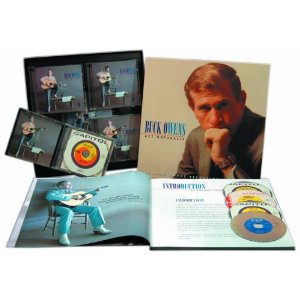
Germany’s Bear Family Records claim to specialize in premium quality reissues. It’s an understatement. This label is simply off the charts for painstakingly-researched deluxe reissue packages, with a special focus on classic Country, Folk, Blues and Rockabilly. Like Jim Reeves? Bear Family has a 16-CD box set complete with a 124-page book. A Johnny Cash fan? You can choose from at least five different deluxe box sets (one of which is just outtakes). Everybody loves the Beatles. But not everybody loves them enough for the Tony Sheridan-era Beatles Bop Hamburg Days 2-disc box with 120-page hardcover book. Bear Family caters to the music collector, not the guy who’ll keep his CDs in the visor of his jeep. Even a single-disc compilation on Bear Family might come with a 78-page booklet with complete session information for each of its 36 songs (like this one does: http://www.amazon.com/Country-Music-Odyssey-Favorite-Songs/dp/B002NXX7PM/ref=sr_1_1?s=music&ie=UTF8&qid=1328131339&sr=1-1 ). (I was wondering if that was Floyd Cramer on piano on track 22. It was.)

Of these three great reissue labels, Ace, Eric and Bear Family, only Eric is based in America. Their CDs cost the least of the three on average, although still a little more than you might pay for a typical CD. Ace CDs cost more still, and Bear Family, of course, are the most expensive–and the expense is well-justified by premium packaging and sound quality, if those things are important to you.

I’d also give high marks to three other English labels, BGO (Beat Goes On), Salvo, and Repertoire. Each of these labels has a niche, a specialty, so don’t go looking for a nice James Taylor best-of here. But if you are looking for something by Amazing Blondel, Marmalade or The Nice, or if you want that first Genesis album no other label wants to bother keeping in print because it won’t sell in big numbers, these are the companies that keep lower-selling product and artists in print with deluxe editions aimed at serious fans.


Now a word about labels to avoid:

Don’t buy anything on labels like Madacy Entertainment: http://www.amazon.com/Golden-Legends-R-B-Ballads/dp/B000UWWLK0/ref=sr_1_3?s=music&ie=UTF8&qid=1328123232&sr=1-3  or Purple Pyramid: http://www.amazon.com/Fallin-In-Love/dp/B001BVY724/ref=sr_1_5?s=music&ie=UTF8&qid=1328248995&sr=1-5 Whereas quality reissue labels will make compilations by leasing the master tapes from the label who owns the rights to the recordings, labels like these see fit to fool the consumer by selling re-recorded versions of the original hits. Even if they are the original artists, they are not always the definitive versions of the songs. “Original artists” well past their prime re-record their hits years or decades later, backed by a hack studio band. It’s a quick cash-in for them and a bush-league label. Beware the bargain!

Collectibles is a record label that seems to cater to the collector and the completist. Like Repertoire and BGO they put out the niche product that the major labels don’t see enough profit in bothering with. And some of their product has been mastered from the original master tapes. But mostly not. And in fact the label has a terrible reputation for sound quality, and is regularly accused of mastering CDs from old vinyl records (sometimes the pops and scratches are still there). I only buy a CD on this label if it’s something I really want and it can be found on no other label. Typically a Collectibles CD will receive rave reviews from many Amazon.com customers who are grateful for an album’s reissue, and several low marks from more knowledgeable fans who are ticked off by careless mastering. It’s a shame, for example, that RCA turned over Perry Como’s back catalogue to Collectibles for reissuing. Perry’s voice and beautifully arranged music deserved better treatment. By contrast, Capitol’s parent EMI Records reissued Nat Cole’s music themselves, and the sound is startlingly clear, warm and immediate.

One Way Records is another label which has the reputation for mastering CDs from tapes several generations removed from the original masters. Again, I only buy it on One Way if it is available nowhere else. Which is usually the case. Which is how they sell CDs.

The bottom line is if you’re looking to revisit your past in the form of reissued music, it’s actually worth checking to see whether it’s available on one of the better labels. The difference in sound quality alone makes their product worth seeking out. Before buying, look for the label!

Bear Family: The ultimate deluxe treatment

Next Newer Entries