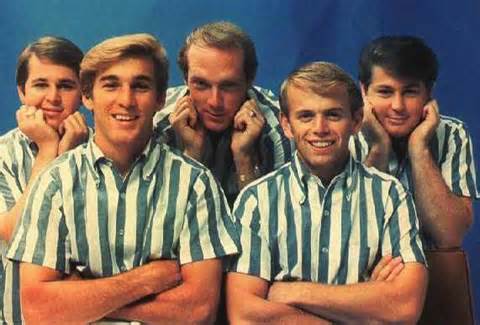
Bad Vibrations: The 6 Worst Beach Boys Tracks

Beach Boys

The Beach Boys have a justified place among pop music’s pantheon of all-time greats, and Brian Wilson is one of the few songwriters of the past half-century who can be mentioned in the same breath as Lennon and McCartney and Burt Bacharach.

However…

Like most pop acts of the era (the Beatles being the notable exception) the Beach Boys were also a product of their time in that their early albums contained “filler” tracks. You see, until albums like Revolver began to focus listeners’ attention more on the long-play album as a potentially more significant pop music canvas, it was all about the 45″ single. The little records with the big holes were the measure of an artist’s success; albums were mostly an afterthought–a hit song, maybe two, served up along with a batch of sub-par, often rush-recorded tunes to take a little more cash from the more dedicated fans.

This is not to mention Capitol Records’ proclivities for packaging (and re-packaging, and re-re-packaging) the work of their roster of artists in the most egregious and artistically-demeaning ways to make an extra buck or three. One Beach Boys bootleg box set acknowledges this in its title, Capitol Punishment. That’s why they call it the record business I guess.

The Beach Boys recorded a staggering five albums within an eighteen-month span in the early-to-mid 60’s. Looking back, the results would have been better had it been four. Nestled between the “Don’t Worry Baby”s and the “Surfer Girl”s were some first class turds. They weren’t all songs per se, which is why the word “tracks” is used in this post’s title.

The excellence of their classic material has been justifiably lauded at length. It’s time someone focused on the lowest low points.

So, to borrow a phrase from Elvis Costello, let’s take a look at the other side of summer:

1) “‘Cassius’ Love Vs. ‘Sonny’ Wilson”

A mock studio battle breaks out between Mike Love and Brian Wilson. Nothing here sounds staged at all–just a little behind-the-curtain snapshot of a Beach Boys session.

This one’s positively painful to hear.

mike love

2) “Denny’s Drums”

Yeah, the Beach Boys had a drumming sibling. But there’s a reason Brian tended to employ ace Wrecking Crew drummers for sessions instead. This two-minute solo (thought to be the first recorded by a member of a vocal group) is something you’ll hear bettered by some 12-year-old the next time you walk through the drum section of your neighborhood music store.

3) “Our Favorite Recording Sessions”

Not half as embarrassing as “‘Cassius’ Love Vs. “Sonny” Wilson”, this track seems to depict actual candid studio banter. But that doesn’t mean it was a good idea to put it on an album. The Beatles kept the banter private, and so were able to heighten the mystery as to what the process of recording legendary albums was really like–and Capitolize (sorry) by releasing six CDs worth of the Anthology series to fans starved for anything unfamiliar. Oh, and the ‘Cassius’ Lennon Vs. ‘Sonny’ McCartney stuff was infused into really good songs like “Too Many People” and “How Do You Sleep”.

4) “Louie, Louie”

It was simply ill-advised and supremely unnecessary to cover a song that had been done in such definitive, ragged glory by the Kingsmen, not to mention a hundred other garagier bands than the ‘Boys.

5) “Bull Session with Big Daddy”

boys

Taken in context, this unfocused, rambling semi-interview with Teen Set magazine editor Earl Leaf–with food delivered mid-discussion apparently–is the most wince-inducing of all. The reason is that it closes what was side two of the Beach Boys Today album and follows five of the more sublime ballads in the band’s cannon. Whatever mood Brian’s gorgeous crooning and aching lyrics have induced is pulverized in about 2.5 seconds.

6) “County Fair”

With lines like “the most specialist girl I knew”, an annoying fair barker and a more annoying girlfriend whining about winning her a koala bear “Oooohh! Come on, baby!”, this is the opposite of “Fun, Fun, Fun” and serves to make a county fair sound like a teenage boy’s worst nightmare. Oddly enough, this one’s not a concert encore.

Don’t Go Breaking My Heart: Pinpointing When Great Artists Jumped the Shark

sticker

Is there an artist you’ve followed loyally for most or all of their career despite diminishing returns in terms of listening pleasure?

Whether it’s athletics, art, or any other endeavor, one does not peak forever. Name your favorite musician or band and chances are you can easily pinpoint their (probably too brief) peak of creativity. And if your rose-colored glasses prevent you from doing so, I’ll be happy to do it for you.

It’s something you feel in your gut despite your devotion as a fan. It’s the moment Kiss recorded a disco song, the time Peter Frampton slipped on pink satin pants for an album cover shoot. It was the day Barenaked Ladies parted company with Steven Page, and it was Carole King’s decision to release any more records after Tapestry.

It’s just a fact of life: an artist is young and hungry, works hard and finds success, then becomes happy and complacent–and usually fat.

I suspect it’s been a while since Sir Elton sat on a roof picking off the moss…

And now we pay homage to great artists who lost the thread as we apply the timeworn Arthur Fonzarelli-inspired metaphor to pop and rock music icons and ask the question: exactly when did they “jump the shark”?

1. Elton John: “Don’t Go Breaking My Heart” (1976)

A perusal of Sir Elton’s chart history shows two distinct and dissimilar eras bordered by a somewhat gray area between. His early career is marked by essential albums and stone classic songs; by the 1980’s he’d lapsed into Adult Contemporary territory such as “Sad Songs Say So Much” and “I Guess That’s Why They Call it the Blues.” Quality pap, and popular songs, but pap nonetheless.

elton 1

The Madman Across the Water

The gray area is the year 1976, just after the release of perhaps his last great single, “Someone Saved My Life Tonight” in 1975. The #1 “Island Girl”, certainly nothing to be ashamed of as pop hits go, followed next. Then he lost traction with the #14 “Grow Some Funk of Your Own” before pairing with Kiki Dee (known at the time as Kiki who?) for “Don’t Go Breaking My Heart”.

elton 2

Just a madman

Now I’m not calling “Don’t Go Breaking My Heart” a bad song by any means. It’s undeniably catchy, and would have made for a fine 15 minutes of fame if recorded by a lightweight one-hit wonder. But shark-jumping criteria demands that we judge by the standard of what came before, just as Fonzie in a leather jacket and swimsuit must be compared with Fonzie in leather jacket, jeans, shades and slicked-back hair.

shark

The guy singing with Pauline Matthews (a.k.a. Kiki Dee) had recorded “Rocket Man”, “Tiny Dancer” and “Goodbye Yellow Brick Road” just a few years prior.

After “Don’t Go Breaking My Heart” the legacy erosion continued with “Part-Time Love” and “Mama Can’t Buy You Love”, songs William Shatner would never have felt compelled to cover. And I don’t even need to mention Disney Elton, do I?

Again, nothing wrong with “Don’t Go Breaking My Heart” as a cheesy 70’s pop song (it’s no secret I like plenty of them) and I’m not the slightest bit bothered by the fact that it features a gay man promising his love to a woman–Johnny Mathis and George Michael sang “in character” too–but I do think the song was the clear harbinger of the musical tofu of John’s later career. A Tumbleweed Disconnection, if you will.

2. Neil Diamond: “You Don’t Bring Me Flowers” (with Barbra Streisand) (1978)

neil 2

Young Neil even looks like early Fonz

Neil Diamond is in the Rock and Roll Hall of Fame. But Willie Mays is a Hall of Famer too, and did you happen to see the sad spectacle of his final years with the Mets?

The man who wrote “Solitary Man”, “Girl, You’ll be a Woman Soon” and, yes, “Sweet Caroline” was a bit of a badass. At least compared to the schlocky “Love On the Rocks” guy. And this duet with big-beaked songbird Streisand rather neatly divides the two eras of Neil’s great career.

neil

After Diamond discovered the emotionally-unfulfilled housewife segment of his audience, it was on. “Love on the Rocks” and “Hello Again” followed soon after. And the hits kept coming for a while, even if the respect didn’t.

As an interesting sidebar, Neil Diamond’s real name is…Neil Diamond. Born with the perfect pop music name, he nearly decided to take the stage name Noah Kaminsky early in his career for reasons that could only have made sense to Neil–like the decision to duet with Barbra Streisand.

3. Chicago: “If You Leave Me Now” (1976)

If you want to make the argument that the loss of Terry Kath by a self-inflicted gunshot in 1978 was also the evisceration of a great band, I’m listening. Kath was, in every figurative sense of the word, the soul of the band.

kath

But Kath was around for the recording of albums X and IX, and was therefore still present as the band began to veer off course. By this time, Kath was already a) being de-emphasized in the band’s sound, b) losing interest to some degree (he was working on a solo record and band members later said he would have been the first to leave the band) and/or c) unfocused due to heavy drinking.

So it wasn’t the death of Terry Kath that took a great band from us, it was more accurately Kath’s personal and musical decline which immediately preceded it.

All I know is “Another Rainy Day in New York City” , despite its faux-Jamaican vocals, sounds to my ears like the last really organic single the band released. “If You Leave Me Now”, which followed, and was from the same album, began the decline in respectability which is probably directly responsible for the length of time it took the band to be inducted into the Rock Hall.

There’s no doubting their credentials for induction based on their early albums: No rock band previous to Chicago boasted as many horn and woodwind players as fulltime members, nor brought horn charts into greater prominence in album rock. Not to mention the bold political statements they consistently made on their first three albums. These guys were (at least part-time) protest rockers. And songs like “Make Me Smile”, “Does Anybody Know What Time it Is” and “25 or 6 to 4” are classic rock, uh…classics.

Post-“If You Leave Me Now”, however, it was “Hard to Say I’m Sorry”, “Hard Habit to Break”, and “You’re the Inspiration”. Again, popular songs, and certainly part of the fabric of the 80’s pop tapestry. But also brimming with aromatic suck.

Silence: A Music Lover’s Second-Favorite Sound

rest

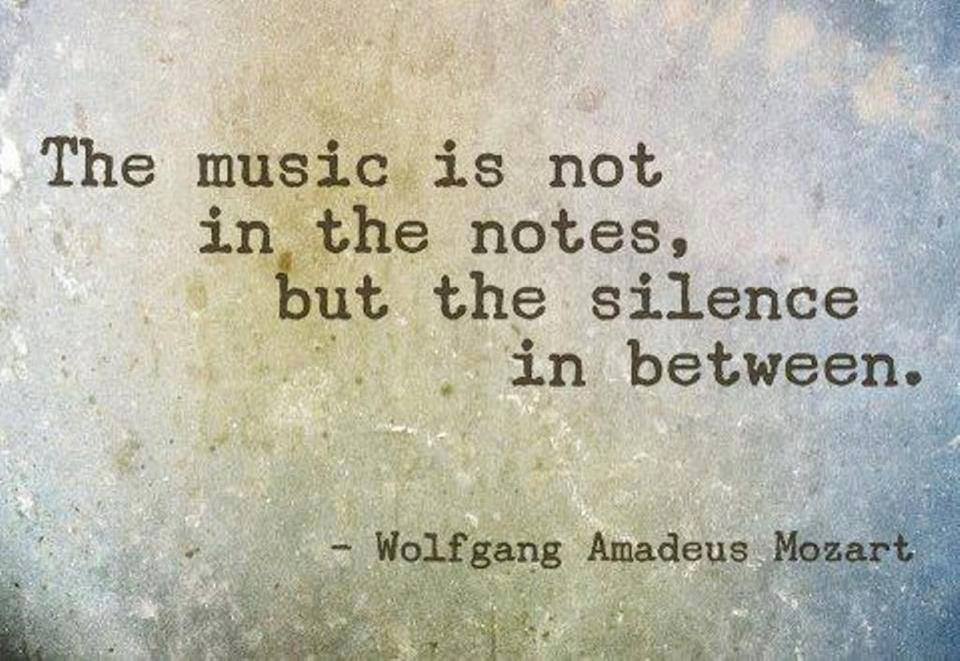
The sound of music is invariably made richer by the silence which precedes it.

This is true in so many ways. I’m reminded of the scene from Amadeus and Salieri’s words as he describes the sublimity of the scene he envisioned for Mozart’s funeral:

And then, in that silence…music!

And just as the great F. Murray Abraham knew to pause for effect before delivering the last word of the line, his character was describing the greater profundity music gains when it follows profound silence. It’s another type of “pause for effect.”

Since as a mobile DJ my job entails several consecutive hours of inundation by loud music, my routine of preparation includes, when time and circumstances permit, either a short nap or at least a period of time spent lying in a quiet room. I may have been listening to music in some form for most of the day, but I try to fast from it for at least an hour or two so I can come to the main course hungry. I can’t say that it makes the music I subsequently play sound any better to anyone else. But certainly seems to sound better to me, as I’m listening with “fresh ears”. And if I’m into what I play, I think that does somehow transmit.

mozartSilence within a song’s arrangement is an often overlooked artistic device. And even relative silence is an effective tool in the hands of a skilled songwriter. John Hiatt is one of the true masters of “breaking down” a song. As his “Thing Called Love” demonstrates, he usually gives you a few bars of sparely-arranged reprieve just prior to the final chorus, thus giving the song its most powerful climax near its ending–just like a well-written piece of fiction (which by the way most good songs happen to be).

In fact, on Hiatt’s classic Bring the Family album song after song follows the same breakdown-before-final-chorus template. Two more excellent examples, “Thank You Girl” and “Your Dad Did” can be heard here.

lou gramm

In more hit songs than you may realize, intermittent silence is foundational to the hook. Guitar bands of the “classic rock” era knew the value of dynamics, even if the average listener didn’t give a conscious thought to the fact that what made many of those riffs so gnarly was what Lou Gramm has described as the “air in between” the notes. From earlier hits such as Free’s “All Right Now”, Gramm and songwriting partner Mick Jones of Foreigner certainly absorbed the lesson that it’s silence that gives the power chords their power, and the pause that lends drama to what follows.

And although fewer artists are building hit singles with guitar power chords in the 21st century, the dynamic interplay of sound and silence is still a major ingredient in the top 40 sound. Synth samples have never been more pervasive in the pop charts as electronic dance music enjoys its golden era. And nothing incorporates silence better than a synthesizer, since generally synth sounds don’t ring or resonate like a piano key or guitar string.

The distinctive sound of “Techno” and other electronic dance music styles is more than a sound–it’s also a feel. Namely, the feel of sharp variations of the pressure on your eardrums several times per second. It can be part of an exhilarating listening experience…or persuade you to dance…perhaps it can even convince you that a song is good when it’s rubbish…

And I can think of no better example of the power of “musical silence” than what happens at :15 here. I can’t help thinking even Salieri would have wanted to shake his butt a little.

Music Stew: Ten 70’s Songs Played Simultaneously–How Many Can You Identify?

confusion

What is Music Stew? It’s ten songs–in this case, all from the 70’s to narrow things down a bit–all bundled together into one ball of confusion. (No, that one’s not in the mix.)

All ten songs start from their beginning.

The clip’s length (about 2:57) was dictated by the length of the shortest of the songs (although it would have been interesting to let the full clip play out as the songs were eliminated from the mix one by one, but that would have been too easy).

List whatever songs you can identify in the comments section. I’ll help by weeding out any wrong answers, and eventually by a group effort maybe all ten will be named.

Here’s a tip: Each of these songs has parts that stand out from the other tracks. Identifying most of them should be a matter of simply listening for the moments when a particularly distinctive musical tone stabs through the cacophony. From then on it’s easy to pick up a single song’s thread. And almost every one of the ten has a very distinctive beginning. Listening to the first few seconds a few times should help you to name several of the songs. Good luck!

p.s. This also makes great background music at work. Play loud!

Songs You May Have Missed #395

tir

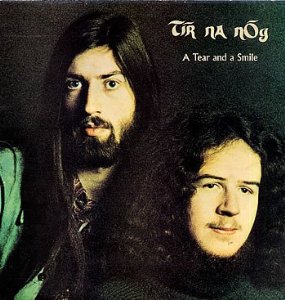
Tir Na Nog: “So Freely” (1972)

Music is life. Or a reasonable facsimile thereof. It’s like a tinted piece of glass we look through to see the reality of our lives more colorfully, more richly.

We need a wide variety of music to accompany the diversity of our life experiences, and to complement all of our many moods. This is something I’ve repeated so often that I sound like a corrupted digital music file (another good metaphor sacrificed to modern technology…) And in fact I have trust issues when it comes to people who like only one type of music; they’re usually less in touch with themselves.

When my ears still ring with Saturday night’s thumpa-thumpa I usually want Sunday morning to sound like a soft sigh. Something acoustic, something organic makes for the ideal aural/attitudinal palate cleanser.

For a period of several weeks as a teenager, my Sunday morning routine began with side two of Tir Na Nog’s Strong in the Sun LP (see link below, and in particular the song “In the Morning”). The previous week washed away and I gathered myself for the one upcoming. There was an ebb and flow to my week, and to my year. And music marked every swelling and falling, and the passing of every season–literal or emotional. Because music is life.

I recommend Tir Na Nog to anyone who likes Nick Drake.

See also:  

https://edcyphers.com/2012/11/27/recommended-albums-30/

See also: 

https://edcyphers.com/2017/09/12/songs-you-may-have-missed-617/

The Beach Boys–Minus the Autotune


Did you know the Beach Boys relied heavily on autotune? Here’s how they sounded without it…

Previous Older Entries Next Newer Entries