Quora: Why is the band “Queen” called “Queen”? What is the story behind the choice of name?

(via Quora)

Why is the band “Queen” called “Queen”? What is the story behind the choice of name?

The main reason was clever marketing and imagination on Freddie’s part. He had said he wanted a one-word name as it would have more impact. IMO he wisely fought off Brian’s determination to name their new group “Build Your Own Boat” and Roger’s idea to name them “The Rich Kids”. Also, he had talked about the need for bands to be a little bit outrageous in order to stand out and get noticed when they are trying to…..make a name for themselves. Sorry. Daring to call themselves Queen did just that. Surely there was some outrage at the cheekiness of commandeering the name Queen inside the British Monarchy. He loved the monarchy. He had seen suffering on the part of citizens in his former countries because of widespread corruption among government officials and greatly appreciated Britain’s legal system. He also loved the regal and grandiose connotation of the name. The gay connotation lent itself well to the glam rock and androgyny that became so popular during that period. He pointed out that King wouldn’t have had the same impact because it doesn’t have the same ring or aura as “Queen”. He was right. He was even thinking of the phonetic sound of the name in addition to the multiple meanings behind the word.

Here’s a great quote by Freddie: “It’s just a name, but it’s very regal obviously, and it sounds splendid. It couldn’t have been King, it doesn’t have the same ring or aura as Queen. It’s a strong name, very universal and immediate. It had a lot of visual potential and was open to all sorts of interpretations. I was certainly aware of gay connotations, but that was just one facet of it.”

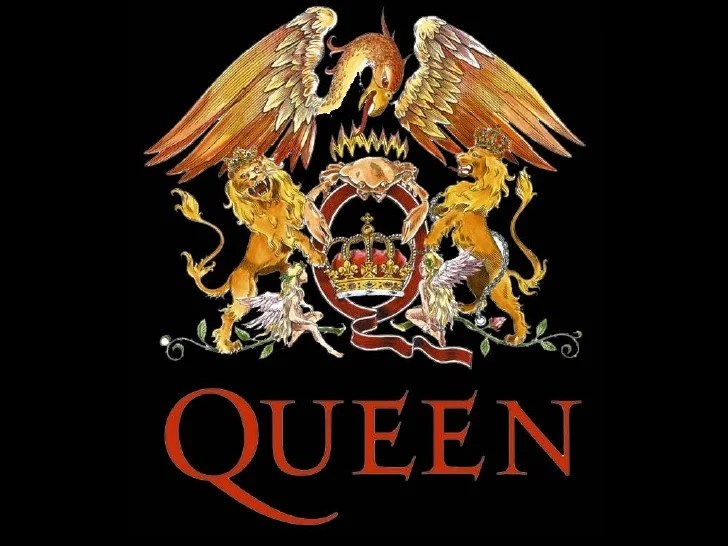
“Visual potential” Freddie studied fashion and graphic design/advertising and was thinking ahead. “Queen” lent itself so well visually. It made for a distinctive and regal band crest that Freddie designed. They used a crown lighting rig at one point and if it weren’t for the name Queen we wouldn’t have the memories and images of Freddie wearing the crown and robe during his final appearances. That’s hard to imagine.

The icing on the cake for Freddie must have been the fact that he was gay and in the closet at the time they adopted the name. Freddie was a subversive wedge in a time of homophobia. You can’t tell me he didn’t relish the name Queen for this reason as well.

A Shelter in Time: John Berger on the Power of Music

“Songs are like rivers: each follows its own course, yet all flow to the sea, from which everything came.”

(via The Marginalian) by Maria Popova

“A rough sound was polished until it became a smoother sound, which was polished until it became music,” the poet Mark Strand wrote in his ode to the enchantment of music. Music is the most indescribable of the arts, and that may be what makes it the most powerful — the creative force best capable of giving voice and shape to our most ineffable experiences and most layered longings, of containing them and expanding them at once. It is our supreme language for the exhilaration of being alive.

I have come upon no finer definition of music than philosopher Susanne Langer’s, who conceived of it as a laboratory for feeling in time. Time, indeed, is not only the raw material of music — the fundamental building block of melody and rhythm — but also its supreme gift to the listener. A song is a shelter in time, a shelter in being — music meets us at particular moments of our lives, enters us and magnifies those moments, anchors them in the stream of life, so that each time we hear the song again the living self is transported to the lived moment, and yet transformed…

Read more: https://www.themarginalian.org/2023/06/27/john-berger-some-notes-on-song/?mc_cid=8d3eb0e4c4&mc_eid=3d582d0f9a

Behind Warren Zevon’s ‘The Hula-Hula Boys’

(via Beat) by Walter Rhein

I knew something was wrong from the moment he spoke. In fact, there had been a lingering wrongness for some time.

“C’mon son, let’s go on a trip,” Dad said.

He’d just taken my brother on a trip, and my sister. Now it was my turn. This struck me as unusual behavior, but what choice did I have in the matter?

Photo by Tobias Tullius on Unsplash

“Okay,” I said, and we got on a plane and got off in Maine where we rented a car.

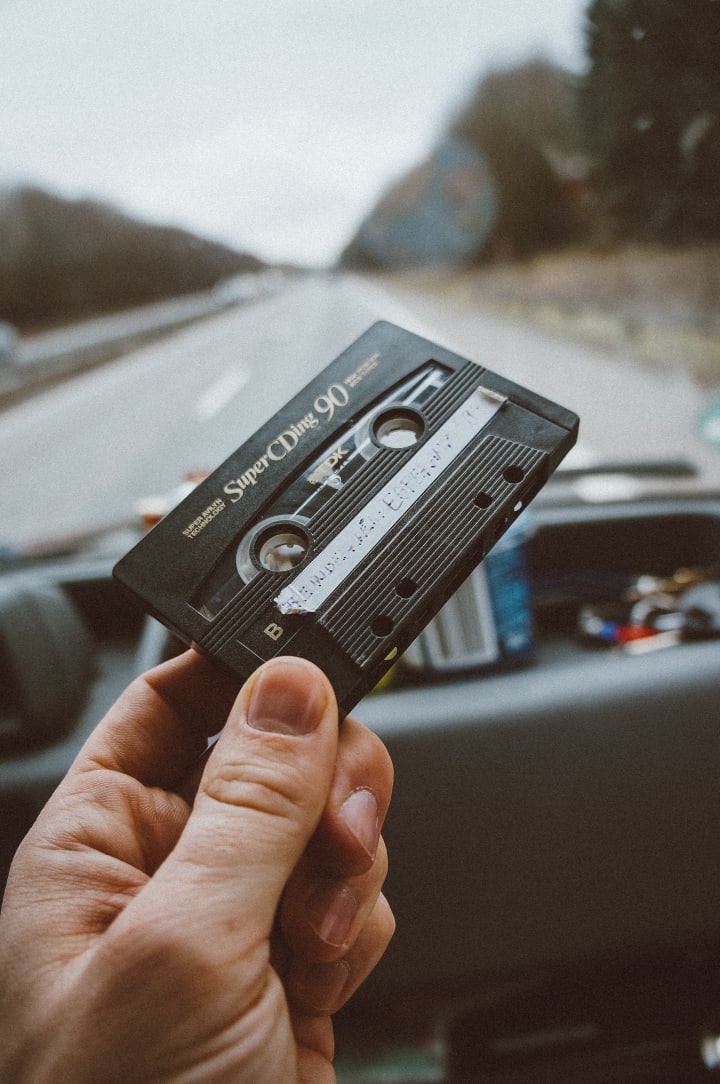
“What should we do?” Dad said as he started to drive. He fiddled with the radio. But before I could answer, he slammed his hands against the dashboard. “There’s no good radio stations in this state. Let’s go get a cassette.”

He started driving around looking for a record store. Dad was always a fanatic about music. He had a whole room dedicated to vinyl records. When CDs came out he had to replace them all. I don’t know what he does now, maybe he’s got a mainframe in his basement.

We found a little hole-in-the-wall place that claimed to be a record store even though it only had a selection of about thirteen cassettes. Dad looked through them, his face tight with fury. He could be scary when he got angry. I began to grow concerned, but the darkness cleared and he brightened up.

“Here we go, Warren Zevon!”

Read more: https://vocal.media/beat/behind-warren-zevon-s-the-hula-hula-boys

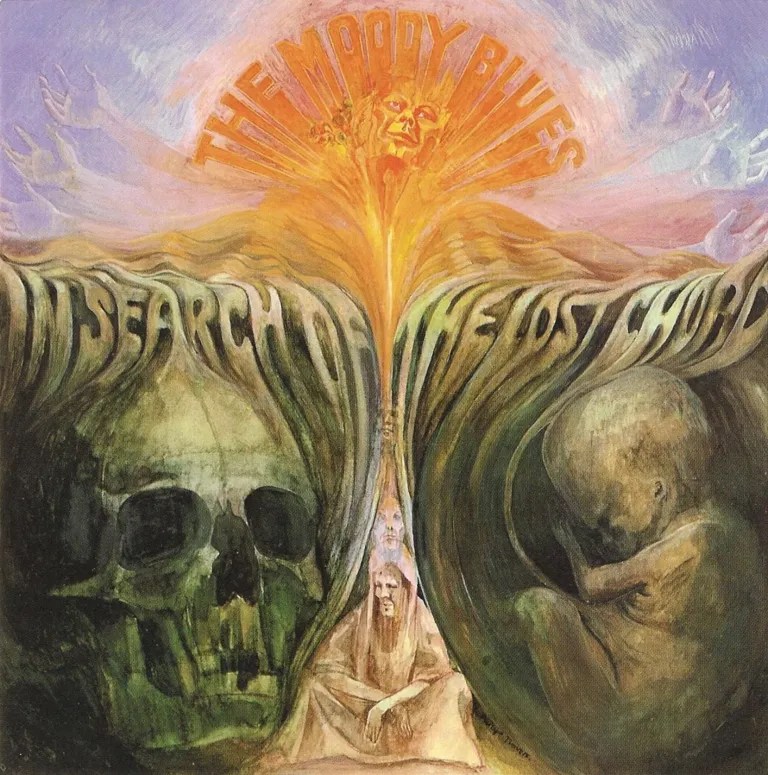
The Moody Blues Album Covers by Phil Travers

(via The Music Aficionado)

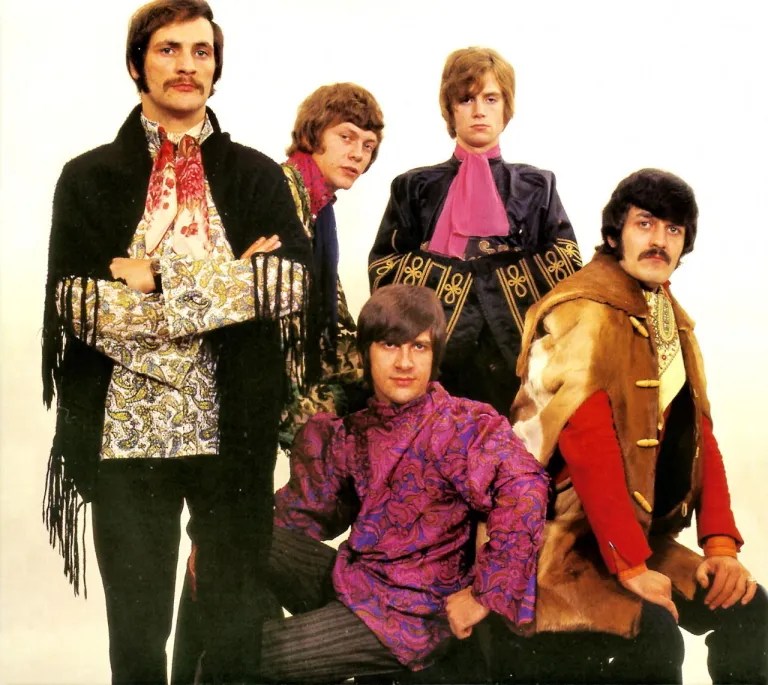
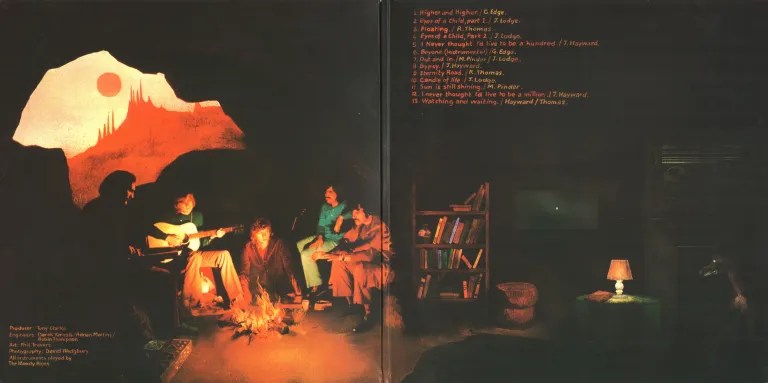
The golden age of progressive rock music in the early 1970s saw a number of collaborations between adventurous musical acts and visual artists who complimented the music with striking and imaginative album covers. Many of the major acts had a go-to artist or design firm that supplied them with creative imagery. For many record buyers the appeal of the album sleeve was a major factor in a decision to buy a record. The 12-inch square size of an LP album cover quickly doubled as gate folds became the norm. Artists started to take advantage of the newly found extra real estate and expanded their canvas. Yes, Genesis, Pink Floyd and others had their Roger Dean, Paul Whitehead and Hipgnosis. This article focuses on The Moody Blues and the six albums featuring the artwork of Phil Travers. We shall talk about those covers and play a favorite piece of music from each album…

The story of these albums begins after the Moody Blues released their breakthrough album Days of Future Passed at the end of 1967. On that album the band quickly abandoned the original idea of a rock realization of Dvorak’s 9th Symphony and wrote their own music. The album, a milestone symphonic rock production that utilized a full orchestra, produced the hit Nights in White Satin. Its success gave the band a new freedom in making artistic decisions about their music and how it is packaged. Enter artist Phil Travers…

Read more: https://musicaficionado.blog/2020/11/18/the-moody-blues-album-covers-by-phil-travers/?fbclid=IwAR1Yac8h-Vj3pRnuQXvNBKMmTM-QHysaewpV2h7BjGCEsU_rHb8OXNmzXtU

Quora: Why is Jethro Tull not in the Rock and Roll Hall of Fame?

Why is Jethro Tull not in the Rock and Roll Hall of Fame?

(Answered by Sandro Kovalev)

Mostly it’s because of politics…the nominating commitee (or inner circle, if you will) of this institution doesn’t like Jethro Tull, or any other band who went above and beyond what they consider to be rock and roll. That weirdo Jann Wenner (who I believe is the president of the HOF, or chairman or whatever), has made his bias against certain genres quite clear…him and his HOF committee generally do not like the more complex, esoteric rock offshoots such as prog rock, electronic, or heavy metal.

Most rock journalists like Wenner and Robert Christgau believe those styles are a betrayal of what true rock and roll is meant to be, which in their minds means working-class, rebellious, danceable, and unintellectual. With that said, Genesis, Yes, Rush, and the Moody Blues have all been inducted in recent years – probably not because Wenner and his cronies have newfound respect for prog, more likely it’s because these bands have topped fan polls year after year, to the point where the committee realized how out-of-touch they were by continuing to weaponize their personal biases in order to keep these groups from being inducted.

Tull have been eligible for decades and haven’t even ever been nominated, but along with King Crimson and possibly Kansas, they are the only other big name holdovers from the prog era that still has an outside shot (unfortunately I don’t see ELP getting the nod even though they deserve it, and most of the other acts like Gentle Giant and Van Der Graaf Generator are not well-known outside of prog circles).

Anyway, while I’m sure Ian, Martin and Co would appreciate the temporary boost in interest that comes from being inducted, and many fans want their favorite band to be recognized, does it really matter if Tull has the seal of approval from that group of dunces over at the HOF? With some of the nonsense they’ve been inducting in recent years, it might be better to not be inducted.

These Are the Songs a High-End Audio Company Uses to Test Its Speakers

From Leonard Cohen to Eva Cassidy, here’s how the audio experts at Sonus faber ensure the best sound for their line of speakers

(via Rolling Stone} by Tim Chan

WHEN PAOLO TEZZON puts his Sonus faber speakers through the paces at the company’s headquarters in Italy, he has a very specific checklist of things he’s looking for, to make sure they’re sounding their best.

“There are many things I try to address any time I test a loudspeaker system,” Tezzon tells Rolling Stone, on a recent visit to the Vicenza factory where all Sonus faber audio systems are still designed and manufactured today. “First and most importantly, at least to me,” he says, “is the overall ‘tonal balance,’ meaning all the frequencies must be present and well-harmonized.”

“Sonus faber tailors the sound of our creations,” Tezzon explains, “so that our speakers will never sound artificial to human ears, but rather replicates natural sound as best as possible.”

Other things that can affect the way your speakers sound: “transparency,” a.k.a. “a speaker system’s ability to reveal every detail, down to the smallest ones, contained in the recording,” Tezzon says. To wit: during a listening session, Tezzo demonstrates how a speaker should reflect not just the main voice, but every background vocal and harmony too. Listening to a rock or jazz track? A good pair of speakers should let you hear the drum beat down to the distinction between hi-hats and snare…

Read more: https://www.rollingstone.com/product-recommendations/electronics/sonus-faber-speakers-review-1242267/

Previous Older Entries Next Newer Entries