Nightmares on wax: the environmental impact of the vinyl revival

Photograph: John Stillwell/PA

From toxic wastewater to greenhouse gas emissions, the boom in vinyl has dangerous effects – but streaming isn’t as clean an alternative as it looks

(via The Guardian) by Kyle Devine

Inside a US vinyl pressing plant – its owners have asked that I do not give its location – dozens of hydraulic machines run all day and night. These contraptions fill the building, as long as a city block, with hissing and clanking as well as the sweet-and-sour notes of warm grease and melted plastic. They look like relics, because they are. The basic technological principles of record pressing have not changed for a century, and the machines themselves are decades old.

While it is far exceeded by revenues from streaming, the vinyl market keeps growing – Americans now spend as much on vinyl as they do on CDs, while there were 4.3m vinyl sales in the UK last year, the 12th consecutive year of growth. So, if you’re one of the millions of people to re-embrace vinyl records, it’s worth knowing where they come from and how they’re made. There are containers called hoppers at each pressing station, brimming with the lentil-like polymer pellets that get funnelled down into the machinery, heated and fused to form larger biscuits that resemble hockey pucks, and squashed to make records…

Read more: https://www.theguardian.com/music/2020/jan/28/vinyl-record-revival-environmental-impact-music-industry-streaming

Sesame Street Brainwashed A Generation Into Psychedelia!

(via iridium) by Grand Poobah

Warning: If you were born between 1962-1978, there’s a good chance your soul was psychedelicized early on in your childhood years.

Evidence points to this 1969 Sesame Street clip that helped children learn to count to 10. Seems pretty innocent, but there is something much more sinister here in order to brainwash a generation of kids into being “groovy”. After being fed bowls of Honeycombs and plopped in front of the television on a massive sugar high, kids across America were bouncing off the walls in their footie-pajamas to this segment called “Jazzy-Spies”, which included free jazz, Yellow Submarine-style surrealistic animation, and vocals by Grace Slick of Jefferson Airplane! And then your family wondered why you went on tour with the Grateful Dead… (yes, you do want to click on that link!)

“Slick got involved through her first husband, Jerry Slick, who produced the segments for San Francisco-based animation studio Imagination, Inc. Headed by animator Jeff Hale, the company also produced the Pinball segments, as well as the famous anamorphic Typewriter Guy, The Ringmaster, and the Detective Man. (Hale, by the way, has a cameo as Augie “Ben” Doggie in the well-loved Lucas parody Hardware Wars.)

Read more: https://www.theiridium.com/post/sesame-street-brainwashed-a-generation-into-psychedelia

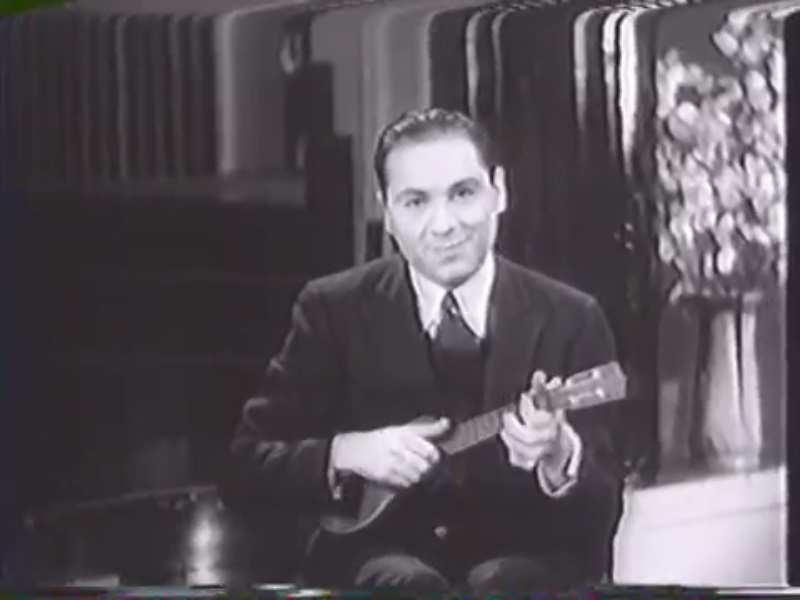
Roy Smeck: An Appreciation

Born in 1900 in Reading, Pennsylvania, Roy Smeck was a star of 1920’s and 30’s stage, screen and studio, and musical godfather to Eddie Van Halen.

From vaudeville to radio to theater appearances across the country to appearing in Hollywood films to inventing musical instruments to publishing music instruction books, this genius of the ukulele and lap steel guitar has literally done it all.

I’ll let the following videos further elucidate:

See also: https://edcyphers.com/2024/01/29/video-of-the-week-roy-smeck-shreds-on-the-ukulele/

Why Do We Love the Music We Love?

(via Gizmodo) by Isaac Schultz

If you’ve ever made a playlist — for yourself or someone else — you’ve done the delicate dance of music curation. By what logic did you order the songs? What nearly made it on, but got left out, and why?

In This Is What It Sounds Like: What the Music You Love Says About You, storied sound engineer and cognitive psychologist Susan Rogers and mathematical neuroscientist Ogi Ogas explore the fundamental experience of music listening.

With surgical care, they walk the reader through the components of music, from technical aspects of music theory to abstract elements like intention and performativity, to get at the heart of where our music taste comes from.

When music gives us that special feeling — the “oh yes, THAT’S what I’m talking about” — it can be difficult to describe exactly why it spurs that emotion. We may lack the vocabulary to explain which elements of the music really worked for us. Sometimes, when music does its job perfectly, it transcends explanation entirely…

Read more: https://www.gizmodo.com.au/2022/11/why-do-we-love-the-music-we-love/

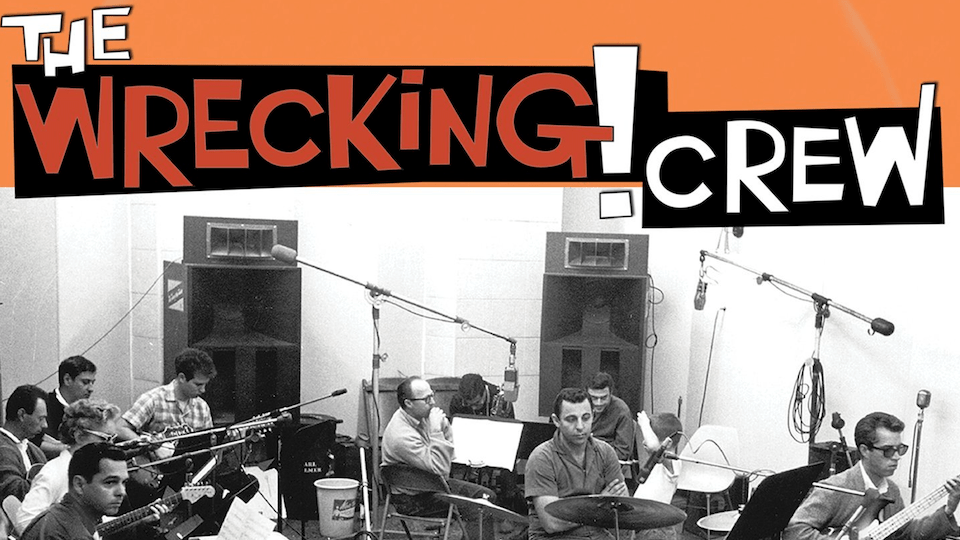
Don Randi of The Wrecking Crew

(via CultureSonar) by Mark Daponte

In 1974, the Righteous Brothers sang about a rock ‘n’ roll heaven reserved for rock stars. Peter Tork landed there in 2019 and let’s hope he actually gets to play guitar, unlike his Monkee days when the Wrecking Crew played on their albums instead of him.  These masters included Glen Campbell (“Mary, Mary,” and “The Kind of Girl I Could Love”), Al Casey (“Papa Gene’s Blues,” “Laugh”), and Bill Pitman (“The Monkees Theme Song”).  But Crew member Don Randi recalled: “Peter Tork was a great musician. He was the only one that could have held his own, as far as I’m concerned, with any of us.  And he wondered, “’Why the hell am I not on these records?’ He always came ready to play.”

At the age of 88, pianist Don Randi still comes ready to play the occasional club date with his two children, Leah and Justin, and to share anecdotes from his 2015 book You’ve Heard these Hands: From the Wall of Sound to the Wrecking Crew and Other Incredible Stories.  The book tells of his days of backing up the bigwigs like his good friend, Nancy Sinatra ( “These Boots Were Made for Walking”), Buffalo Springfield, the Association, Frank Zappa, Frank Sinatra, Lee Hazlewood, and many more…

Read more: https://www.culturesonar.com/don-randi-of-the-wrecking-crew/?mc_cid=9d3e9f81eb&mc_eid=b43e532c6f

Video of the Week: The Perfectionism of Steely Dan’s Genius Engineer Roger Nichols

Previous Older Entries Next Newer Entries