Recommended Albums #69

picar

The Decemberists: Picaresque (2005)

Picaresque was the Decemberists’ final indie label album before they signed with Capitol records, released the rock opera masterpiece The Hazards of Love and followed it with a number one album, The King is Dead, among other accomplishments.

And although I just referred to the 2009 folk/prog conceptual Hazards as a masterpiece, I would call Picaresque their best collection of songs–perhaps the best any band produced in the decade of the 2000’s.
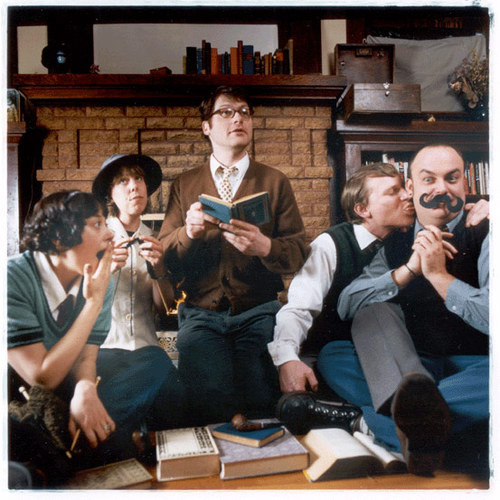
bookLit rock…geek rock…British folk-infused Dickensian rock…whatever label you apply to this iconoclastic assembly’s music, songwriter Colin Meloy’s hyper-literate, hyper-imaginative tunes set them apart, and earn them more fans and critical acclaim with each release.

Meloy has always liked a good murder ballad, and death and tragic circumstance are staples of his dark-yet-alluring tunes. Put across with appealing melodies in a dialect seemingly all his own, his lyrics typically are as cheerful as the black plague, as exemplified by “We Both Go Down Together” and the epic “Mariner’s Revenge Song” here.

But unlike most bands who specialize in dark, sulky angst it’s clearly a vaudeville here. Of course, the character traits may ring familiar and the harsh lessons may apply in real life. But the songs themselves, constructed out of archaic language and given a veneer of Thespian melodrama, are like the rock music equivalent of unsanitized Brothers Grimm fairy tales. There’s danger, but it’s all ultimately charming, fanciful, bewitching.

If this album appeals to you, the good news is that there is a whole lot more Decemberists catalogue to explore. This band has yet to make a dud album. And my recommendation if you tackle The Hazards of Love next is to listen to the entire 60-minute piece uninterrupted and undistracted, with both lyrics and a concordance at hand. Then listen again. It’s jaw-droppingly brilliant and the best evidence one could cite to make an argument that the era of the ambitious art-rock concept album isn’t quite a thing of the past.

Listen to: “We Both Go Down Together”


Listen to: “The Engine Driver”


Listen to: “The Sporting Life”


Listen to: “16 Military Wives”


Listen to: “The Mariner’s Revenge Song”

Recommended Albums #68

tornados 1 tornados 2

Texas Tornados: Texas Tornados (1990)

Texas Tornados: Zone of Our Own (1991)

Given country music’s current state of relative stagnation, when a hundred bro-country clones churn out assembly-line anthems to beer, ladies in tight jeans, and the dubious unrefined charms of rural life, it’s hard to imagine there was a time it was all so different, so diverse, and so fun.

From the mid-1980’s to the early 1990’s country music introduced us to such iconoclastic acts as Lyle Lovett, Alison Krauss, Dwight Yoakam, The Mavericks, k.d. lang, Los Lobos, Steve Earle…and a Tex-Mex supergroup who blended country with rootsy Texas rock and blues as well as Mexican folk and conjunto, mashing it all seamlessly, effortlessly into one great party.

f724825836cdad29ab88e7fd20221294

Doug Sahm and Augie Meyers had previously worked together in the Sir Douglas Quintet, whose band name was chosen in the hopes of competing for live bookings at the height of 60’s British Invasion Anglomania.

Freddie Fender made a living recording Spanish-language versions of American hits, then penning a few of his own, including “Before the Next Teardrop Falls” which was a breakthrough #1 pop hit in America in 1975.

Flaco Jimenez took the mantle of conjunto accordion king from his father Santiago, at first enjoying regional success in and around his native San Antonio before breaking through to wider success, appearing on records by Buck Owens, Ry Cooder, the Rolling Stones and others.

In something of a parallel to another supergroup, the Traveling Wilburys (who’d released their first album just a year previous) the individual careers of all four had cooled off when they joined forces for the first time in 1989. Their self-titled debut, released the following year, was a resounding critical success and performed well on the country charts despite the lack of a single to propel sales.

txThough some of the songs had seen previous release by the Sir Douglas Quintet or Augie Meyers, none had enjoyed major-label nationwide distribution, so when Reprise released Texas Tornados it may as well had been an album comprised of newly-written originals. The band released a Spanish-language version of their debut album as well.

Zone of Our Own, their 1991 follow-up, continues the same glorious collision of Tex-Mex styles with nearly equal success. From song to song, whether bandleader Sahm takes the lead, or Fender, or Meyers, and whether it’s a Texas blues rave-up or soulful ballad or accordion workout, an unabating party atmosphere pervades.

The Texas Tornados are no more, and with the death of Doug Sahm in 1999 it’s assured that one of music’s most original and distinctive bands ever is lost for good.

But their exuberant, celebratory mashup of styles is preserved on two albums that transport one to a musical border town whose magic stems from the fact that it is really a town without borders.

Listen to: “Who Were You Thinkin’ Of”

Listen to: “(Hey Baby) Que Paso”

Listen to: “La Mucura”

Listen to: “(Is Anybody Going to) San Antone”

Listen to: “Dinero”

Listen to: “Bailando”

Listen to: “Did I Tell You”

Recommended Albums #67

von

Von Hertzen Brothers: New Day Rising (2015)

As prog albums go, this is one “from the heart”.

Finland’s Von Hertzen Brothers are at their melodic best on New Day Rising, an ebullient, heartfelt pop prog collection that displays a diversity of musical influence from AC/DC to Pink Floyd.

hertzen

The band are big fish in little Finland, where they’ve topped album charts and won that country’s Grammy equivalent (2006 Best Rock Album). Neighboring Denmark has embraced them as well. But in this country they are mainly known to fans of progressive rock, some of whom have given this latest effort a tepid reception on the basis of it not being “prog enough” and containing too many songs with love as the theme.

That’s their problem.

The job of this site, I’m happy to say, is simply to identify recommendation-worthy music regardless of genre. So whether the VHB’s have lived up to their “prog” credentials or merely created a very good pop rock album, it’s music worth a vetting if you’re a fan of well-made rock music, which is becoming more of a niche genre every year that rap and bad electronic dance music dominate the stateside charts.

Check out the video for the uplifting and anthemic “Hold Me Up”. While many of the best prog bands can leave you spellbound with great musicianship or epic songs, the Von Hertzens (also known as an impressive live band) clearly demonstrate a charismatic knack that seems to come from not taking it all–or themselves–too seriously.

As drummer Mikko states, “Von Hertzen is German and means ‘from the heart’. That’s what we try to always keep in mind when writing or performing. We feel the music is pretty much useless, if it doesn’t come from our hearts. The point of music, any kind of music, is to create wonderful experiences that are somehow elevating and encouraging. That’s our mission. The music is our instrument”.

Mission accomplished.

Listen to: “Hold Me Up”

Listen to: “Dreams”

Listen to: “The Destitute”

Recommended Albums #66

apache

The Apache Relay: The Apache Relay (2014)

apache

The Apache Relay’s self-titled third album finds the band somewhat eschewing the more countrified aspects of their previous sound for a wall-of-reverb pop sheen more characteristic of Fleet Foxes or Yukon Blonde.

Fittingly, they recorded in L.A. rather than Nashville this time around. And while the rustic roots still show, the more lush sound suits their more pronounced melodic pop leanings.

A few of these choruses are the real stick-in-the-head type.

Listen to: “Katie Queen of Tennessee”

Listen to: “Dose”

Listen to: “Valley of the Fevers”

Recommended Albums #65

nightmare 2

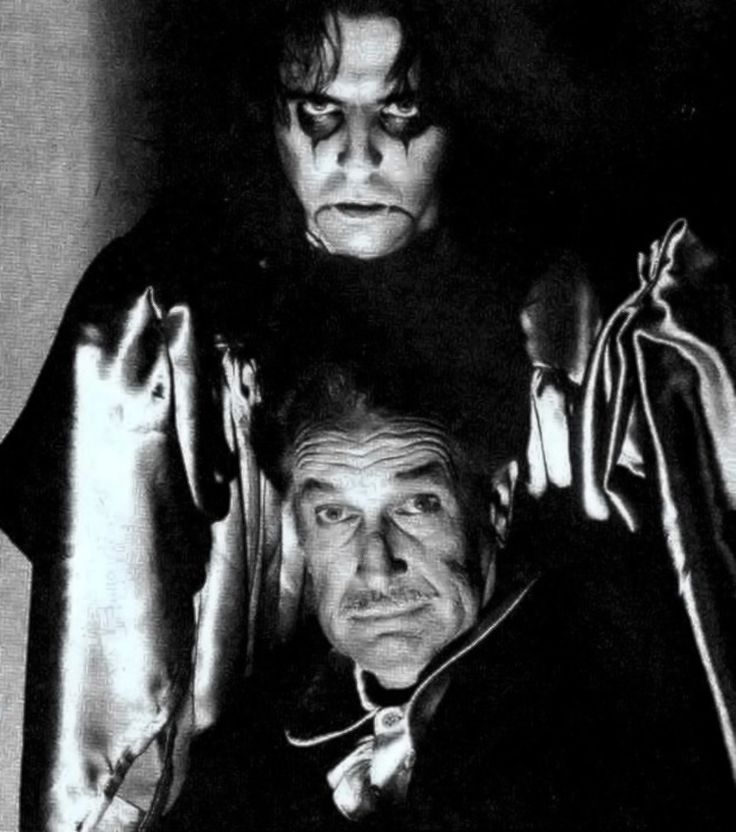
Alice Cooper: Welcome to My Nightmare (1975)

alice 1Welcome to My Nightmare is so many things.

This is the album that ushered in Alice’s solo career after the Alice Cooper band’s half-decade of success with hits such as “I’m Eighteen”, “No More Mr. Nice Guy” and “School’s Out”.

This is Alice’s only top ten album as a solo artist (it peaked at #5). He never again equaled its success or its excellence.

This is a concept album and the template for several other conceptual records Alice would release over the years–but Nightmare is by far the best in terms of execution.

Speaking of execution, Nightmare was tied in with a new live show that essentially brought Halloween and Rock music together onstage and culminated with the protagonist’s grisly nightly demise, a concert format that continues to this day.

Welcome to My Nightmare exchanged the musical gut punch of the Alice Cooper band for a more polished, fully-orchestrated Bob Ezrin-produced sound. The strings, horns and harmonies gave the album a broader palette and a deeper resonance; the creepy bits were creepier and the weepy bits weepier. Listen to a sample of Ezrin’s orchestration from “Steven” and note its similarity in feel to “Beth” by Kiss, released the following year and also co-written and produced by Ezrin:

“Devil’s Food” features a cameo by horror legend Vincent Price, who lends just the right element of creepy camp to the proceedings.

alice 2“Some Folks” takes things into cabaret territory, adding one more flavor to a record more diverse than anything the Alice Cooper band had done.

“Only Women”, with its acoustic guitars and muted horn charts reaches an emotional crescendo Alice had never before been able to achieve with his old band. The #12 hit added a new dimension to Alice’s career as a singles artist, that of credible balladeer; his next three albums would feature a love song as a hit single (“I Never Cry”, “You and Me” and “How You Gonna See Me Now”).

“Cold Ethyl” is just your everyday run-of-the-mill paean to, um, necrophilia.

But it’s with “Years Ago”, “Steven” and “The Awakening” that things get really dark. The overarching concept of the album is the ongoing nightmare of Alice’s protagonist character, but here on what used to be the vinyl album’s side two (as it happens) Alice delves into a world of schizoid delusion. Terrificly horrific stuff, well conceived and arranged. Where “Cold Ethyl” is a comic lark, these songs are truly chilling.

Producer/co-writer Bob Ezrin and guitarist/co-writer Dick Wagner are the unsung heroes of this album, the greatest of Alice Cooper’s long solo career. Without them this record wouldn’t be what it is: a true classic.

Listen to: “Devil’s Food/The Black Widow”

Listen to: “Some Folks”

Listen to: “Cold Ethyl”

Listen to: “Years Ago/Steven”

Listen to: “The Awakening”

Recommended Albums #64

arlo

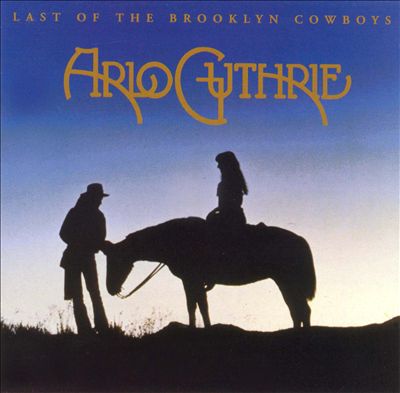
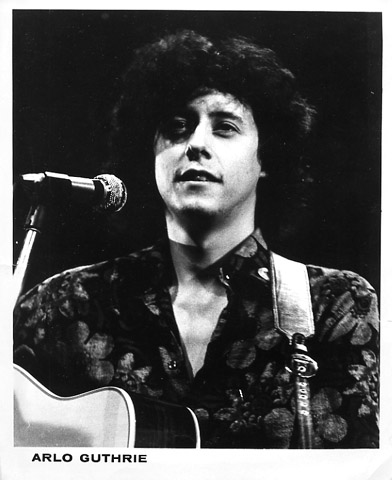
Arlo Guthrie: Last of the Brooklyn Cowboys (1973)

Arlo Guthrie’s follow-up to 1972’s Hobo’s Lullaby didn’t produce a hit single to follow his sole top 20 “City of New Orleans” but it’s as fine a collection of covers and originals as he ever released.

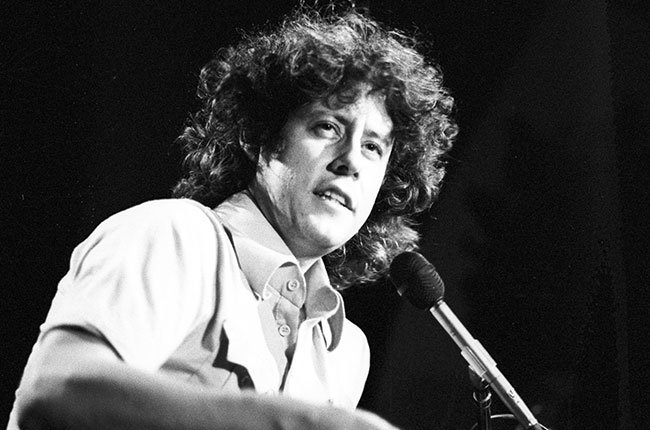
arloFortunately his somewhat fluky 1972 hit didn’t convince Arlo to steer his career toward a more contemporary and chart-friendly style, or even the prevailing James Taylor singer-songwriter sound of the time. Woody Guthrie’s son was far too steeped in authentic folk, cowboy ballads and old time Country & Western music.

If the late 60’s/early 70’s British folk movement of Pentangle, Steeleye Span and Fairport Convention revived centuries-old folk songs and murder ballads and introduced them to another generation, Arlo’s work in this era did the same for American folk chestnuts of decades past.

But his great talent was to make these tunes his own. Just as Steve Goodman’s original version of “City of New Orleans” disappoints after hearing Arlo’s masterful cover, so Guthrie’s versions of songs previously recorded by Ernest Tubb (“This Troubled Mind of Mine”) and Hank Williams (“Lovesick Blues”) sound definitive–more so to my ears in fact than the original versions.

And speaking of originals, Arlo sprinkles in his own compositions here too (“Last Train”, “Uncle Jeff”) and they blend seamlessly with the standards to form the tapestry of one of the 70’s strongest folk albums.

Incidentally, do you think Arlo’s “Uncle Jeff” may have inspired a certain John Denver hit of two years later?

guthrie


Listen to: “This Troubled Mind of Mind”


Listen to: “Lovesick Blues”


Listen to: “Last Train”


Listen to: “Uncle Jeff”


See also: https://edcyphers.com/2013/11/13/songs-you-may-have-missed-502/

Previous Older Entries Next Newer Entries