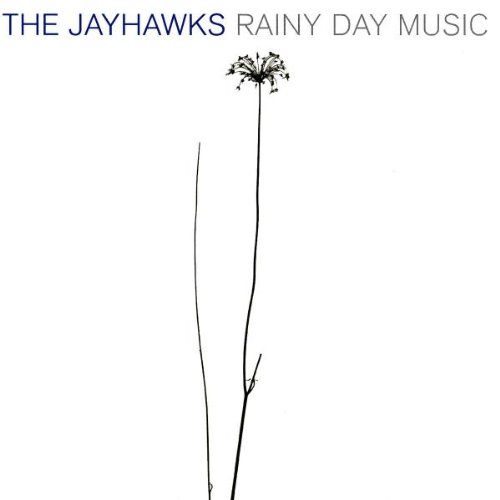
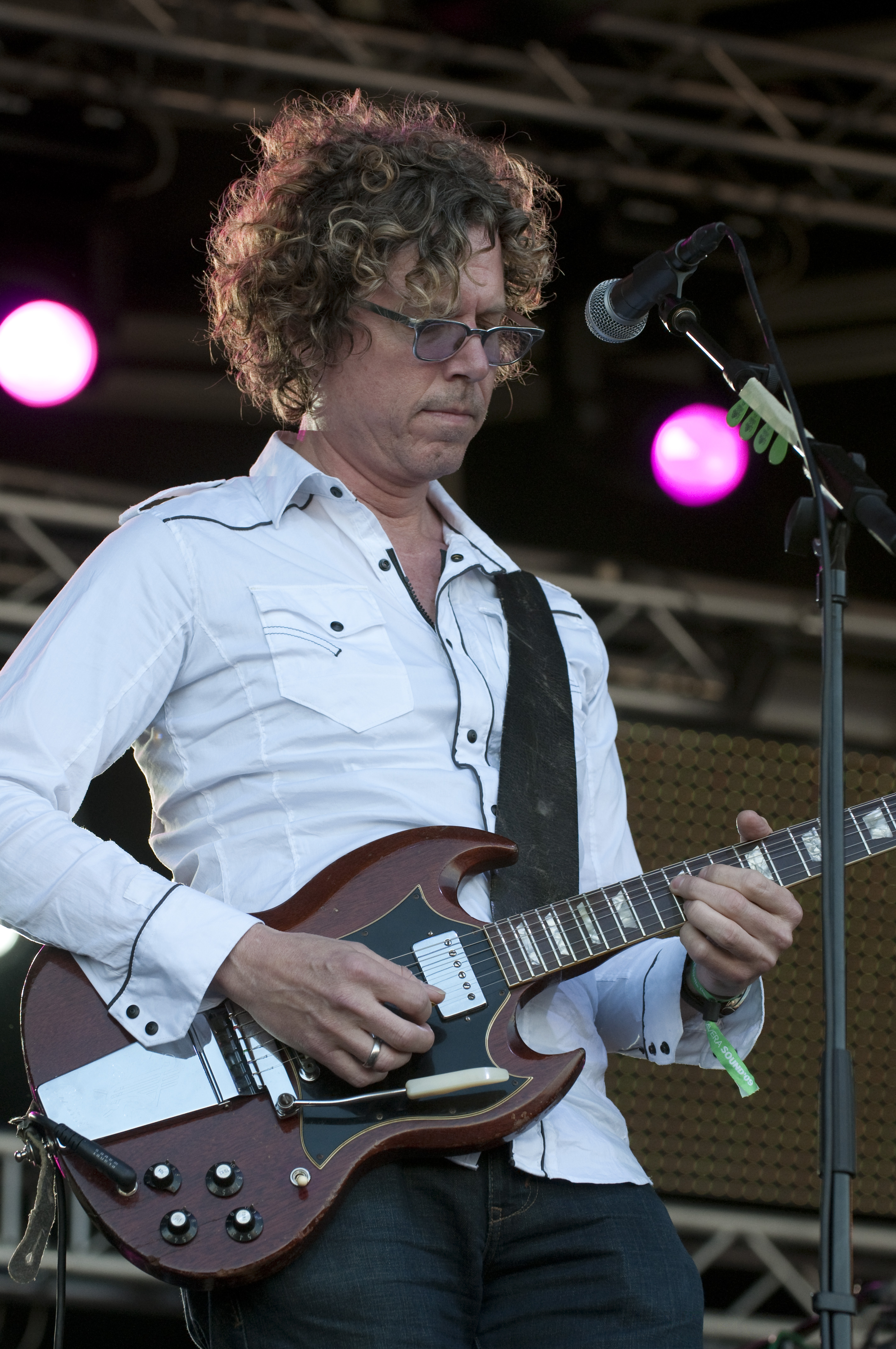
Alt-country pioneers the Jayhawks, led by front man and main songwriter Gary Louris, released perhaps their defining statement with their seventh album, 2003’s Rainy Day Music.
The Ethan John’s-produced record was a return to the band’s core country-rock and jangle-pop musical sweet spot after their previous album Smile, produced by Bob Ezrin, experimented with drum loops, electronic sounds and other decidedly un-Americana touches.
Fortunately the sweet melodies and pop hooks remained intact. Bands like the Byrds, Buffalo Springfield and even Crosby, Stills and Nash are regularly cited as points of reference to describe the Jayhawks’ sound, but it’s the songwriting of Louris that elevates the band above mere imitation of the styles and sound of those bands.
If the pop music landscape still allowed room on the radio for bands like the above-mentioned, Louris and the Jayhawks would be giants.
But the heyday of country rock, when Poco, Marshall Tucker Band, Pure Prairie League and the Eagles sent sweet harmonies wafting over steel guitar licks across top 40 radio waves, is long gone. Country radio is as subtle as a flying hammer, and as refined as a red Dixie cup of Pabst Blue Ribbon.
The Jayhawks stand as perhaps the best of the bands who still trade in this, one of many out-of-fashion genres.
Pink Floyd fans starved for good new material, rejoice!
American producer/songwriter/keyboardist Dave Kerzner has given you the next best thing to a decent new Pink Floyd record that you’re likely to hear, and a work far more engaging than Floyd’s mostly-instrumental Endless River, also released in 2014.
The co-founder of progressive rock band Sound of Contact, Kerzner has produced a solo debut prog concept album that tells a story, set in the future, of a man making his way from desert isolation back to the domed city from which he came. But as with all good progressive rock, the music stands on its own merit, regardless of whether the listener takes any notice of the overarching plotline.
The level of craftsmanship and the roster of top-notch collaborators brings to mind Brit Steve Thorne, whose excellent Into the Ether album is examined here.
Among the prog rock notables making appearances on New World are Steve Hackett (Genesis), Nick D’Virgilio (Spock’s Beard), Keith Emerson (ELP), Francis Dunnery (It Bites), David Longdon (Big Big Train), Billy Sherwood (Yes) and Heather Findlay (Mostly Autumn).
While Kerzner’s no household name, he’s worked with many who are: Madonna, Tom Waits, Smashing Pumpkins, Jon Anderson, Steven Wilson, Alan Parsons, and Neil Peart. And he’s created custom sound programming for Beyoncé and Rolling Stones tours.
The excerpt from “Stranded” is an almost too-perfect reproduction of Dark Side-era Floyd. “Ocean of Stars” is reminiscent of Porcupine Tree. And “New World” with its smooth prog-lite arrangement and achingly melodic chorus harkens to the heyday of Alan Parsons Project. It’s okay to sound like someone else, as long as it’s the right someone else, and the music isn’t merely derivative, lacking the quality of the original.
Kerzner isn’t simply copying–each of these songs sounds like it could have been found in the tape vaults of one of these great bands of past years–that one track left off a multiplatinum-selling classic rock record.
New World is one more example of quality work largely missing its audience due to a combination of radio’s prevailing tastes and the taste-lock of fans of classic rock, who reason that since all the great rock music was created in decades past, there’s no point looking.
Bands and artists like Riverside, Steve Thorne, Blackfield and Dave Kerzner prove that if you never lost your taste for rock with a touch of class, complexity and integrity, it is worth looking.
Southern Culture on the Skids: Countrypolitan Favorites (2007)
In 2007 Southern Culture on the Skids took a break from recording their distinctive brand of hillbilly surf rock originals to have a go at some of Nashville’s chestnuts from decades past, as well as a few straight rock artifacts.
Now, not only am I typically not big on cover songs, but I happen to be a particular fan of the original versions of songs like Lynn Anderson’s “Rose Garden”, the Byrds’ “Have You Seen Her Face” and Roger Miller’s “Engine Engine #9”.
But Rick Miller’s guitar work, Mary Huff’s vocals, the ripping arrangements and the band’s winsome charisma only add more layers to love.
Yeah, it would be easy to say this isn’t your bag, because chances are you’re not in the habit of listening to “toe-sucking geek rock” as Miller and company describe themselves. But whether you remember the original versions or not, these are deservedly timeless tunes and Southern Culture’s versions are not only credible, they are a blast.
The fact that private sellers on Amazon.com price British singer-songwriter Shelly Poole’s out-of-print debut album at around $200 speaks to the injustice of its current lack of availability.
Poole, who was previously one half of sister duo Alisha’s Attic, hasn’t been heard from since this single solo release. But what a rare gem of genre-slipping pop it is. Falling between the cracks of chillwave, trip hop, R&B and introspective country-folk, the unforced vibe and appealing melodies remain the constant as steel guitar, flute, and electronic sounds sneak in and out of breezy, understated arrangements.
Irish-Italian David J. Caron released a double CD album, Thru Never Ending Black, in 2013–a move usually made by an artist with an established following. The unusual thing here is that the mammoth 28-track work is his debut. Caron wrote, performed and produced one of the best rock debut albums in recent years, a work that lives up to its own ambition with solid consistency over its abundant length.
Categorizing the music is more difficult than appreciating it. Caron seems to straddle the worlds of progressive rock (the genre suggested by the album’s cover, artwork and, at times, lyrics) modern rock and AOR. Caron’s work has echoes of 80’s neo-prog, but with a fresh, modern rock-informed sound. It really defies easy categorization.
But while it doesn’t fit neatly into a particular genre, any fan of modern melodic rock with intelligent, captivating lyrics and infectious choruses will find something appealing here–and a generous helping thereof.
The New Christy Minstrels: Merry Christmas! (1963)
The liner notes from a brand new 2013 reissue of this classic Christmas album begin as follows:
During the holidays, in most homes there are a few Christmas albums–even old scratchy LP’s–that have become such a treasured part of family tradition that…well, the season just wouldn’t be the same without them.
This precisely describes my own family’s relationship with Merry Christmas! by the New Christy Minstrels. For so many Decembers, when it was time for my dad to pull a pile of immaculate Christmas records from his Immaculate Collection, this was one of the albums removed first from the shelf, then from a plastic sleeve, then from the cover, then from the album’s inner sleeve, then cleaned with a soft, round red pad specially designed for the purpose, and only then placed onto a stack on the spindle above the turntable. (Had he only known how counterintuitive the stack-on-spindle turntable was to the fanatical level of care he gave his record collection…but I digress).
At the height of both the 60’s folk music boom and the Christies’ own popularity (fresh off a stint as regulars on Andy Williams’ NBC TV Show and a Grammy win for their debut album) the group, under the direction of founder Randy Sparks, entered the recording studio for just three days in July 1963 to record what many consider their crowning achievement.
A smoggy Los Angeles summer not being entirely conducive to the holiday spirit, an all-out Christmas party was arranged in the studio to put the group in the mood. Member Barry McGuire was elected from the ranks to play the role of Santa, costume and all. But mock-holiday frivolity in no way blunted the professional performances delivered by a talented, well-rehearsed group of vocalists and musicians. As the finished product attests, the blend of carefully chosen voices and bold arrangements of mostly original holiday material makes up a Christmas classic that remains a favorite of families lucky enough to have owned a vinyl copy back in the 60’s. In fact former Christy soprano Gayle Caldwell, who went on to become a music teacher, would recount that many of her students told her the album was a favorite and that their parents owned a copy.
Randy Sparks, the group’s founder and main songwriter, had backed off from performing with the Christies prior to the Merry Christmas album, preferring to stay home in L.A. to develop the group’s material, in a role similar to that of Brian Wilson in the mid-60’s Beach Boys. Sparks presented new songs as they were completed, and intense rehearsals ensued in hotel rooms during the group’s performance tour in the weeks leading up to their studio dates. Then co-arranging members Nick Woods and Art Podell would add their input, with Sparks usually arguing for simplicity and the other two for more complicated musical flourishes, until the finished arrangements were fleshed out.
Sparks’ instincts for keeping it simple often won out, as is obvious in such pieces as “One Star”, “Christmas Wishes” and “Christmas Trees”, which are things of simple yet heartrending beauty. And yet, the rousing, full-throated ensemble pieces like “Beautiful City” and “Sing Hosanna, Hallelujah” are perhaps the best remembered gems here.
“Sing Hosanna, Hallelujah” encapsulates the way this album, and Sparks’ writing, neatly straddles the boundary between sacred and secular holiday sentiments. Lines like “we observe a holy celebration” and “we sing in praise in adoration” alongside “we raise our glasses of the mulled winter wine” and “we’ll glide through snowy winter weather”? Somehow it works. “Santa” isn’t mentioned here, but “St. Nicholas” is. It’s a seamless blend of festive and holy. And it’s beautifully rendered.
It’s this full band sound with multipart harmony and distinctive voices singing in turn that inspired the spot-on yet loving lampoon treatment of A Mighty Wind, in which the New Christy Minstrels were the template for the New Main Street Singers.
The Christies’ classic lineup didn’t last long. Three years later they released another Christmas album with an almost completely different group of singers. That album, a collection of covers of traditional holiday tunes with less folky, more (60’s) contemporary arrangements, pales in comparison with Merry Christmas!
Yet this revolving door of lineup changes (this site lists a roster of 298 alumni!) also meant the Christies were the ideal place for up-and-coming talents to hone their chops. Emerging from the group to go on to stardom elsewhere were such luminaries as Kim Carnes, Roger McGuinn and Gene Clark of the Byrds, Barry (“Eve of Destruction”) McGuire, Larry Ramos of The Association, and at least three members of the First Edition including Kenny Rogers. That’s not to mention two members who went on to notoriety as Broadway singers and another who became a Miss America.
Merry Christmas! is a singular success of a holiday album–a collection of mostly original Christmas songs of high quality, with a blend of sacred and secular sentiments, all wrapped up in a warm folksy sound that suits the material like a red fur-lined coat on an old jolly fat guy.
And it sounds like all the Christmases of my youth.