"There's a time in life for Hoagy Carmichael. There's a time in life for Claude Debussy. There's a time in life for Jerry Lee Lewis. There's a time in life for Destiny's Child. All these things have their moment." ~Elvis Costello
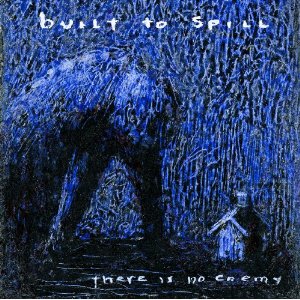
Singer/songwriter/vocalist Doug Martsch took the indie guitar hero baton from Dinosaur Jr.’s Jay Mascis sometime in the last decade. His layered guitar arrangements and live soloing pyrotechnics draw comparisons to Neil Young, while his loose, freeform songwriting style reminds some of Pavement.
Nikki was a small, noisy dog. The hibachi was…a hibachi. The band name derived from the threat of introducing dog to cooking appliance at a party…or something like that.
So, to the music: The folk duo (Elaine Tola and John Gillespie) released one cult favorite album, 1991’s out of print The Bluest Sky, which fetches sky-high prices for used copies online. Back Around was their next album, released a full fifteen years later.
They have a bit of that Robin and Linda Williams, Richard and Linda Thompson thing going on. Melodic, acoustic, harmonic…and therapeutic.
When you think about it, a lot of hugely successful pop and rock acts actually have a very short heyday. In the 60’s the Mamas & the Papas charted all their top 20 hits over a period of about a year and a half. Ditto the Lovin’ Spoonful. The top 20 window for Creedence was less than three years.
The same held true in the 70’s. Most of Steve Miller’s greatest songs came from two albums, Fly Like an Eagle and Book of Dreams. All of Elton John’s great albums came between 1971-73, unless you’re going to argue for Caribou‘s classic status. Carole King? Tapestry.
Kansas was no exception. The Leftoverture album in 1976 propelled them into the realm of arena headliners. Then they eclipsed it with the next year’s Point of Know Return, an album that was among the decade’s finest and, as it turns out, the best the band was capable of creating.
Following it up was probably a little like trying to follow up Boston or Frampton Comes Alive. Predictably, Kansas put out a very respectable album with 1979’s Monolith and, predictably, it was called a disappointment.
If songwriter Kerry Livgren’s lyrics are any indication (and they always are–he writes more autobiographically than most) ’79 finds him already beginning to ask himself ‘is that all there is?’. This song sounds like a thematic companion to 1982’s “Play the Game Tonight”, with Livgren questioning the meaning of rock star life in the bigger scheme of things. The bigger scheme in question was a spiritual search that eventually led him to leave the band to make Christian music.
But while he pulled off the balancing act of pondering the big questions while making gold and platinum records, Livgren created some of the best progressive rock songs of the era (see: ‘The Wall’, ‘Carry On Wayward Son’, ‘Dust in the Wind’, ‘Sparks of the Tempest’, ‘Portrait’).
Some casually rendered yet solid wisdom from the front porch of the Gourds:
Those that know don’t close the door on those that don’t know
If ya been t’ college, ya got some special knowledge
Ya can share it with some children or some old folks too Go ahead and share it, with all the people That’s the best thing that you can do.
If you a mama, ya teach yer children How to walk and talk, how to read and write It’s fundamental, but ya must be gentle You don’t wanna teach ’em up to fuss and fight
Those that have should not hide what they have from those that don’t have
Those that need should not seek to succeed in the stealing the seeds
If you need some help, just ask for help You can’t know everything all the time Just ask somebody, they should be willing Address the ignorance and lose the pride
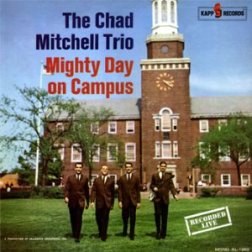
Think of the Kingston Trio (if you’ve heard of ’em) but with a better sense of humor. Three years after this #44 hit, Mitchell left the trio, which kept his name, though like Florida polling places, they dropped the “Chad”. His replacement was a young, unknown John Denver.
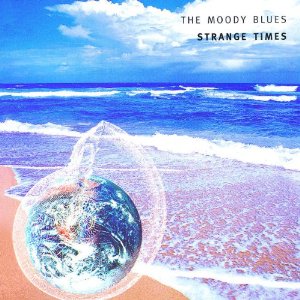
From the last studio album the Moody Blues released, excepting their very good 2003 Christmas release, December. This is an overlooked little Justin Hayward jewel, and understandably so: Strange Times is one of the weakest records of the band’s long and distinguished career.