One great byproduct of being a wedding DJ is meeting the couples who don’t just care about the music at their wedding, but care about music. They frequently turn me on to an artist I’d never otherwise come across.
One such couple introduced me to The Devil Makes Three. What’s more, their guests actually danced to this band, which was even cooler.
When I was a lad my dad’s living room stereo was generally off-limits to us kids. The sounds of the Tijuana Brass or Bert Kaempfert or Olivia Newton-John would play from this, our home’s “main stage” music source, while if I wanted to listen to my Steely Dan and Elvis Costello albums I usually had to–and preferred tolistenfrom the “second stage” of my bedroom record player.
But the day in ’78 when I came home with Jefferson Starship’s Earth LP, I felt that I was holding a record that deserved main stage status. Maybe the lush, classy, textured cover art made it feel living room-worthy. Or possibly I knew the music (I’d already heard the rich harmonies of “Count On Me” and “Runaway” on the radio) might actually appeal to my dad’s almost-AOR sensibilities. Or maybe I just knew the lyrics wouldn’t offend him (My Aim is True was the previous album I’d brought home–it went straight second stage, closed bedroom door).
But for whatever reason, for the first time I asked my dad if he’d mind me playing my latest music purchase on his prized 4-speaker system, and to my mild surprise he consented.
Grace Slick, Marty Balin, Paul Kantner and company didn’t let me down. The first notes out of those speakers were every bit as classy as the album art had hinted. Track one was “Love Too Good”.
Some songs were just perfectly suited to be an album’s lead track. This song’s unhurried one-minute instrumental intro made it just such a track. (Original vinyl copies of the Jefferson Starship Gold compilation trimmed this intro, effectively robbing the song of its laid-back groove.) Slick’s vocals literally fade in at almost precisely the one minute mark. To this day I listen every time to note the exact moment her voice becomes audible–it’s too smooth to discern.
Sadly for me, this was the last album by my favorite lineup of the band; Slick and Balin would be gone for the next year’s Freedom At Point Zero, and the Mickey Thomas era (shudder) began. Soon they’d be making music completely bereft of subtelty under the one-word Starship moniker. Grace Slick returned to the band in ’82 but Kantner left in ’84, etc. etc. You know how these things always go.
Earth, and “Love Too Good” mark a place in time that couldn’t last. When the keyboards take the song into quasi-jazz territory, especially in the outro, I can’t help but think: This is the sound of a confident band standing atop more than a decade’s worth of accomplishments and acclaim. They had nothing to prove in terms of rock credibility. At the height of punk rock’s influence, they’d make jazzy living room AOR if they felt like it. And apparently they did.
And my dad never complained about the music on that day. And that was the highest compliment he could give.
Duo (and couple) Deb Talan and Steve Tannen, otherwise known as The Weepies, create gentle indie folk pop that has steadily gained a wider audience since their formation in 2001, despite limited live performances since the birth of their son a few years ago.
In a pop world dominated by Rihannas, Lady Gagas and their like, the last two Weepies albums actually climbed into the thirties on the Billboard Top 200 album charts and their most recent, 2010’s Be My Thrill, reached #3 on the Top Folk album chart, where it remained for 9 weeks. (Did you even know there was a Top Folk album chart?)
The Weepies’ music has appeared in several movies (Sex in the City, Adam, Morning Glory, Prom) and received wide exposure on TV (Grey’s Anatomy, Everwood, How I Met Your Mother, Scrubs, Gossip Girl, The Riches, Life Unexpected, Kyle XY). This in addition to appearances on TV commercial ads and even a campaign ad for Barack Obama’s 2008 presidential campaign.
Libera: “Do Not Stand at My Grave and Weep” (2004)
I won’t list all the accomplishments and accolades this all-boy choir from south London have garnered–you can Google them and read it in detail elsewhere. But worth two and a half minutes of your time here is their treatment of Mary Elizabeth Frye’s poem from 1932.
I don’t know if I’ve ever been as powerfully moved by a piece of music as I was listening to this after the loss of a loved one. I hope you find comfort in this song sometime in your life. Keep it with you.
Do not stand at my grave and weep
I am not there, I do not sleep
I am a thousand winds that blow
I am the diamond glint on snow
I am the sunlight on ripened grain
I am the gentle, gentle autumn rain
Do not stand at my grave and weep
I am not there, I do not sleep
When you awake in the morning hush
I am the swift uplifting rush
Of quiet birds in circling flight
I am the soft, soft starlight, starlight at night
Do not stand at my grave and weep
I am not there, I do not sleep.
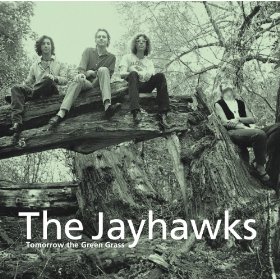
Matthew Sweet, Shawn Mullins and Pete Droge found common ground in the California country rock sound on their self-titled one-off collaborative album as The Thorns in 2003. It may call to mind CSN, early Dan Fogelberg or The Jayhawks (whose classic song “Blue” is covered on the album). Maybe it’s down to the close-harmony type of bands they’re emulating here, but it’s impressive how three established, distinctive solo artists can sound like they’ve always been a band.
“The sun never looked so pretty goin’ down”…and you can hear that sunset in the music. Nicely done.
Chicago’s Michael Peter Smith, not to be confused with Christian pop singer Michael W. Smith, is a folk singer and songwriter of rare humor, insight and emotional gravity. Here he leans toward the humor. “Zippy” is a cheeky cautionary missive to the boomers, a word of warning about how their once laid back world is spinning a little faster now.