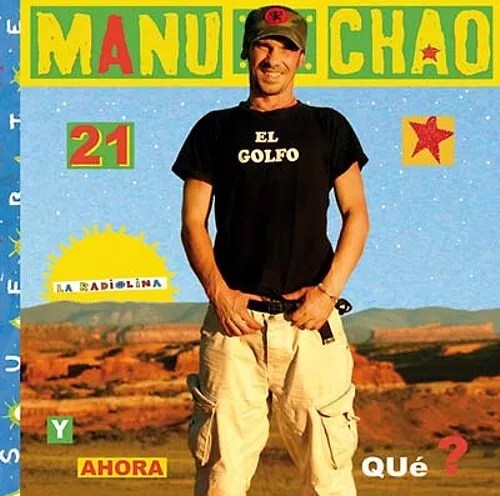
If you don’t know how to pronounce the name of French-born Spanish musician Manu Chao, you can just call him by his birth name, José Manuel Tomás Arturo Chao Ortega, which is nearly as long as the list of languages he sings in–French, Spanish, English, Italian, Arabic, Catalan, Galician, Portuguese, and Greek.
His multicultural musical mix swings between party, politics and protest. But even when the song is sad, the music celebrates.
Translation:
They Call Me Street
They call me street/stepping on the concrete/the rebellious and so lost girl
they call me street/street of the night/street of the day
they call me street/I’m going so tiredly/I’m going so vacantly/like a little machine for the grand city
they call me street/I get into your car/they call me street/I should be happy
tired street, empty street/of so much love
I’m going to the street below/I’m going to the street above/I wont back down/not even for life
they call me street/and that is my pride/I know one day I’ll arrive/I know one day my luck will come
one day it’ll look for me/at the exit a good man/giving his life without paying/my heart isn’t for rent
they call me street(2x)
suffering street/depressed street/from so much love
they call me street/most quiet street/they call me street without a future/they call me street without an exit/they call me street/most quiet street
for the women of life/rise below/sink above/like a little machine for the grand city
they call me street (2x)
suffered street/depressed street/from so much love
they call me street/most quiet street/they always call me/no matter what the hour
they call me beautiful/always at the wrong time/they call me bitch/and princess
they call me street/it’s my nobility/they call me street/suffered street, lost street/of so much love
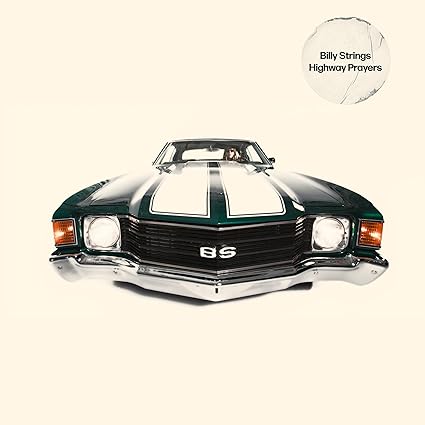
On his sprawling, 20-track double album Highway Prayers Billy Strings stretches the boundaries of traditional music in appealing fashion, mixing fast-picked bluegrass workouts with more laid-back fare such as the reflective “Gild the Lily”.
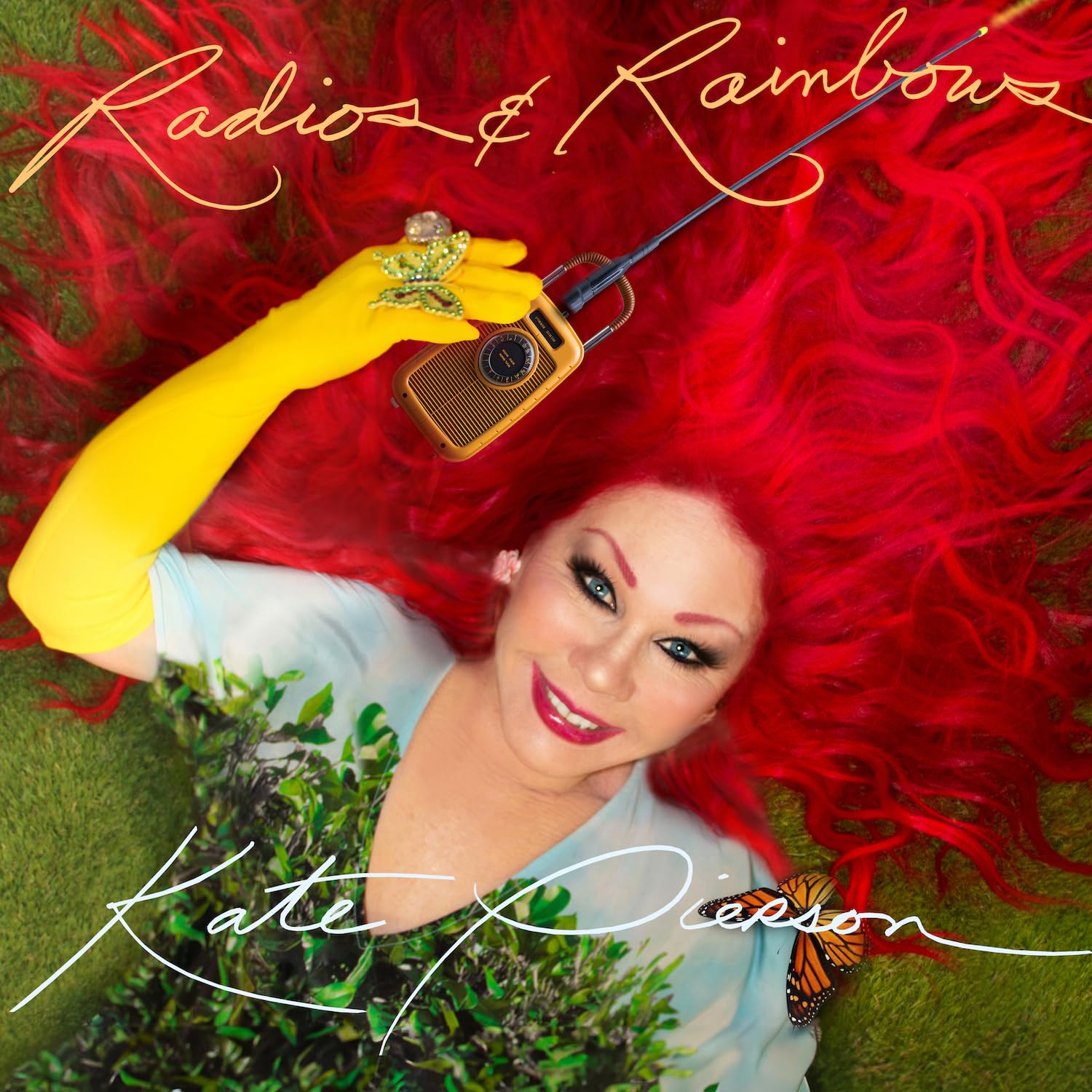
From the second solo album by the singer and founding member of the B-52’s.
Happily Kate hasn’t moved far from the party vibe that characterizes her former band. At times on her solo releases she evokes the girl pop sound of Tracey Ullman.
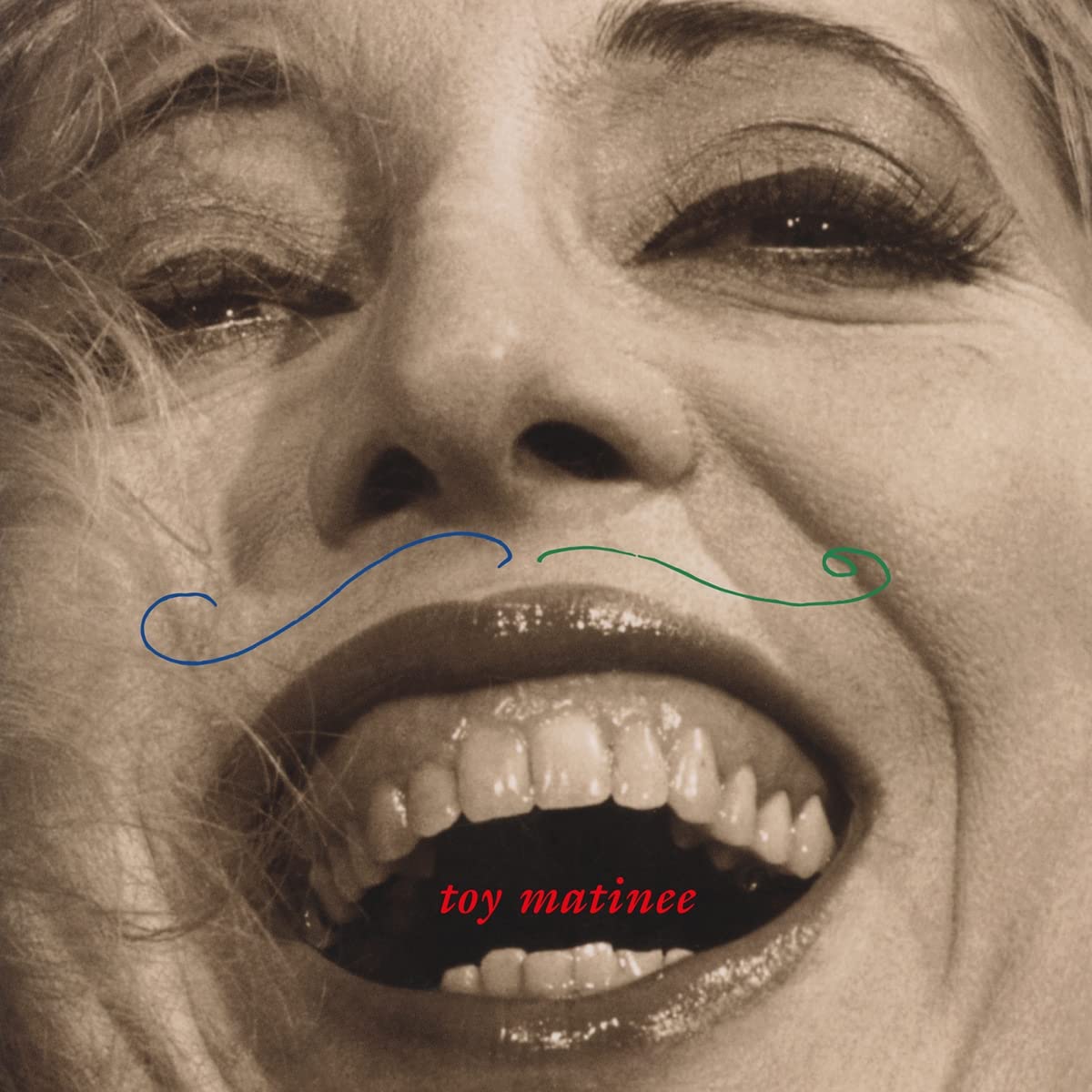
We’ve elsewhere discussed the “really cool band” that was producer Patrick Leonard’s art project after the boredom of making half a billion dollars for Warner Brothers producing Madonna albums.
While I’m not here to diss Madonna (not today anyway–we’ve done plenty of that elsewhere) I can appreciate Leonard’s desire to flex other muscles.
And flex he does.
Tasty licks abound on the Toy Matinee album and on “Turn it On Salvador” in particular.
And the song contains enough melodic, chordal and compositional twists and turns to keep it interesting on repeated (or in my case, incessant) listens.
Dawes is the kind of band that, over the course of an album, can proverbially lull you to sleep with long, ponderous lyric phrases and melodies tending to be short on dynamics and originality.
Then like Ali in the Rumble in the Jungle they can wake you up with a quick jab of something so feel-osophical you’re not sure what hit you.
“The Game” is specific to itself as a story song, but in its summarizing title line it takes on metaphorical import.
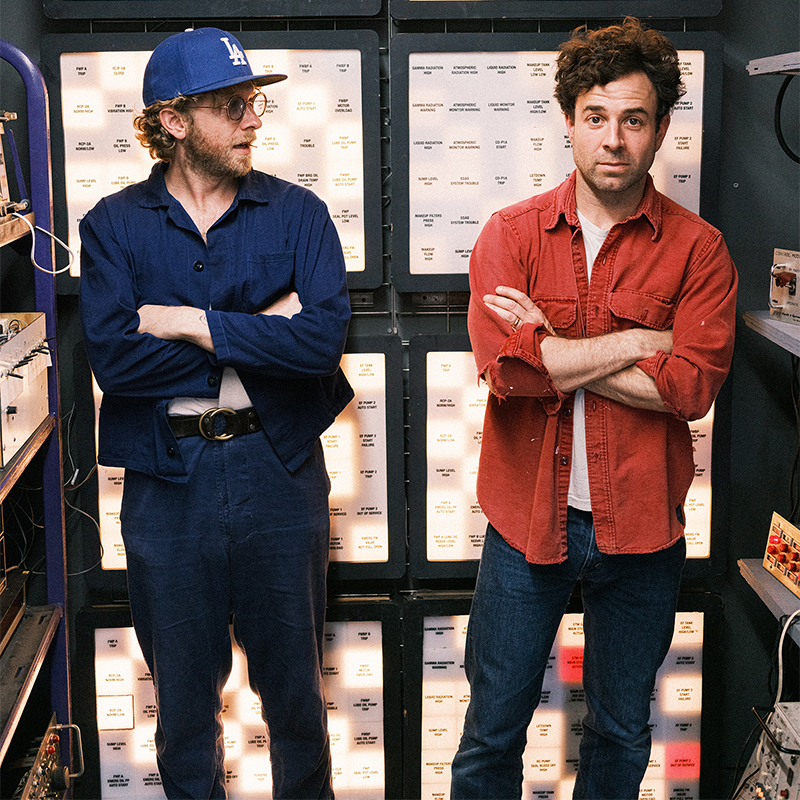
Singer-songwriter Taylor Goldsmith and his brother, drummer Griffin Goldsmith have released the ninth Dawes album as a duo. Gone are a few bandmates. Still intact is their ability to create songs that show you your life through a new lens.
“The Game”
Millie came up playing in the boys’ clubs But they made her play at midnight or at 8 Her friends all said the times were finally changing It only felt a few centuries too late Her eyes were always deep inside her notebook Her hands were always tuning her guitar And while some stayed busy waiting for permission She was on her way to be a star
But if you asked her if anyone had held her back She’d tеll you she forgot most of their names Thе losers only think about the winners The winners only think about the game
Then Millie fell in love with a civilian Or at least we know he fell in love with her He could see how bright her light was shining He could feel how wild her fire burned But love has its own kind of symmetries You have to give as much as you receive And once he realized he would never give her nothing He decided it was time for him to leave
But now he likes to criticize her privately While she simply says that neither were to blame The losers only think about the winners The winners only think about the game
So Millie kept on adding to the setlist And working on her studio tan And for the first time found it hard telling the difference Between all her friends and all her fans Which left her with a special brand of emptiness She channeled right back into the songs She wasn’t gonna ask herself the question If this is what she wanted all along
Some people said she was a genius Some people said she was insane But those losers only think about the winners The winners only think about the game
She wouldn’t suffer any fools She danced to her own rhythm She wasn’t playing by the rules She was playing with ’em
Millie knew just when the dust was settled When it’s time to put the pencil down When the harmony is only just a shadow Of the way it felt the first hundred times around Which left her to the critics and the experts To tell the world how Millie really felt To somehow say she lost a competition She was only ever having with herself
Well, some might look for meaning in the ashes She just misses standing in the flame The losers only think about the winners The winners only think about the game Oh, the losers only think about the winners The winners only think about the game
Imagine pulling a 20-year-old CD from your collection that somehow went in one ear and out the other on first listen but now completely blows your pop-leaning musical mind.
Imagine lamenting, at age 60, that all the music you love most was that which you discovered before you turned 16, and that you may never again be touched that deeply by something new–only to have a woman who sings in a language you don’t even know crash into the circle of your most revered and hallowed handful of artists.
Imagine falling in love with a voice, a melody, a clever confection of an arrangement, only to translate a Spanish lyric into English out of curiosity and fall ever deeper in love, over and over and over again, song after song after amazing song.
For me over the past year or so, the unimaginable happened.
Mexican singer-songwriter Julieta Venegas produces Spanish language pop rock that, while touching on traditional Latin and Mexican musical styles here and there, basically falls between categories.
This lack of genre identification seems to free up Venegas to let the lyric, message or mood of a song determine its sound. Sometimes the vibe is indie pop, sometimes it’s rap-infused and bass-heavy, and sometimes it’s pure sugary pop. At times it’s uptempo and bouncy, at others it’s spare and brooding.
But it’s always thoughtfully arranged with co-producers Cachorro López and Coti Sorokin deserving credit (Sorokin also has co-writing credits on many cuts).
The more of Julieta Venegas’ songs you hear, and the more times you hear them, the more her undeniable songwriting talent impresses. Her gifts are on par with far better-known songwriters, the kind whose songs have received millions of plays over four or five decades in this country.
The production adds another layer of listening bliss. Check out the subtle 4-chord progression on guitar at the 27-second mark. It’s the kind of musical frosting on the cake you may only hear on the tenth listen.
So many times I’ve thought “it wouldn’t have been as good if the bass didn’t come in right there” or “it’s just a bit tastier with the handclaps on top of the percussion” or “nice touch to kill the vocal reverb and go with drier vocals on that bit for emphasis”.
Venegas has won 9 Grammy and Latin Grammy awards, received a Master of Latin Music Award from Berklee College, and has been recognized as a major influence on a generation of Latino songwriters.
She’s proficient on 17 different instruments and is a bit of a badass on accordion.
“Lento” is hardly the last thing you’ll see or hear from her on this site. And although the above version of is definitive, it’s the MTV Unplugged version–with Venegas seated at the piano, a sympathetic string arrangement and backup vocals–that truly gets to the heart of the song.
(If the video below has been removed by the time you read this, do yourself the favor of finding it on YouTube.)
I actually choke up every time I hear the crowd burst into spontaneous applause after each chorus, as if to thank Venegas for the gift of the beautiful sentiment of the song.
It’s one of the most affecting musical moments I’ve ever witnessed.
Lento (Slow)
Si quieres un poco de mí If you want a little of me Me deberías esperar You should wait for me Y caminar a paso lento And walk at a slow pace Muy lento Very slow
Y poco a poco olvidar And little by little forget El tiempo y su velocidad Time and its speed Frenar el ritmo Slowing down the pace Ir muy lento, más lento Go very slow, more slowly
Se delicado y espera Be gentle and wait Dame tiempo para darte Give me time to give you Todo lo que tengo Everything I’ve got
Si quieres un poco de mí If you want a little of me Dame paciencia y verás Give me patience and you’ll see Será mejor que andar corriendo It’ll be better than running Levantar vuelo Taking flight
Y poco a poco olvidar And little by little forget El tiempo y su velocidad Time and its speed Frenar el ritmo Slowing down the pace Ir muy lento, cada vez más lento Going very slow, slower and slower
Se delicado y espera Be gentle and wait Dame tiempo para darte Give me time to give you Todo lo que tengo Everything I’ve got
Si me hablas de amor If you talk to me about love Si suavizas mi vida If you soften my life No estaré más tiempo I won’t be around any longer Sin saber que siento Without knowing what I feel
Se delicado y espera Be gentle and wait Dame tiempo para darte Give me time to give you Todo lo que tengo Everything I’ve got





 Every Moment Has A Song