"There's a time in life for Hoagy Carmichael. There's a time in life for Claude Debussy. There's a time in life for Jerry Lee Lewis. There's a time in life for Destiny's Child. All these things have their moment." ~Elvis Costello
On the heels of, and capitalizing on, successes with tex-mex supergroup Texas Tornados, Tejano squeezebox legend Jiménez stepped out for solo projects with high profile duet partners such as Dwight Yoakam, Stephen Stills, Linda Ronstadt and Raul Malo.
But this bouncy bit of border pop features Flaco himself on vocals.
British dance music producer Norman Cook, a.k.a. Fatboy Slim, enjoyed his fifteen minutes of singles chart fame in America with the international hits “The Rockafeller Skank” and “Praise You”, which have turned up on quite a few TV commercials and soundtracks.
In his native England the hits kept coming, including this little blast of fun from a half-decade later.
The Explorers Club: “California’s Callin’ Ya” (2016)
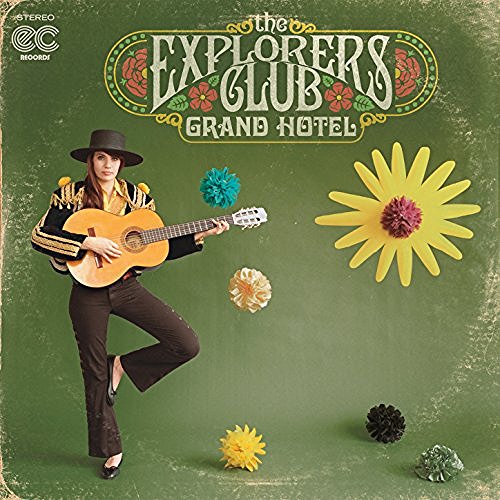
Perhaps no band has paid more earnest homage to the Beach Boys than the Explorers Club. I mean, check out the cover of their 2008 debut Freedom Wind alongside its obvious point of reference, the Beach Boys’ All Summer Long.
And the cover art on their latest, Together, clearly seems to be a take on that of the Boys’ Friends LP:
In between they released Grand Hotel in 2012, on which they actually commissioned Beach Boys engineer (and liner note writer extraordinaire) Mark Linnett to do the mixing.
Grand Hotel is the most diverse of their three releases. It’s like busting out your dad’s entire 60’s album collection in one swell foop (as my own dad used to say).
But interestingly, while Grand Hotel contains Beatles-era musical references aplenty, it seems everyone but the Fab Four are called back. And that’s ok–the Beatles have been paid tribute countless times. It’s far more fun to hear echoes of less ubiquitous 60’s artists such as the Association, Herb Alpert & the Tijuana Brass, the Grass Roots, the Cowsills, the Turtles, the Fortunes and others. Even 60’s lounge pop gets a reverential nod.
But Beach Boy harmonies are a staple of the Explorers Club sound, and on Together they’ve constructed an entire album around the songwriting style and sound textures of late 60’s/early 70’s Beach Boys music. Throughout the album, the Jason Brewer-led South Carolina band check one box after another: theremin, bass harmonica, flute, vibraphone and much more. The layered harmonies, the delightful key modulations–it’s all here.
“California’s Callin’ Ya” isn’t the most ambitious tune on the collection. But it’s perhaps the most appealingly melodic, and captures the southern California warmth that radiated from Brian Wilson’s most enduring work.
Note: A nice touch on Explorers Club CDs is the faux vinyl wear marks on the cover, ticking one more box for nostalgic fans of 60’s pop.
From their 1981 Fear of Frying LP. Eggs Over Easy were the overlooked American band who essentially invented what is known as pub rock in the early ’70’s and influenced acts who would achieve greater prominence working the formula.
Their 1972 Link Wray-produced Good ‘N’ Cheap album and their Monday night residency at a London club called Tally Ho gave birth to the pub rock movement and influenced the punk scene that followed.
The band had subverted the club’s jazz-only policy by convincing management that they were a jazz band and asking to play on the club’s slowest night. Soon they were playing three nights a week at Tally Ho and attracting capacity crowds that included artists such as Nick Lowe, Graham Parker and Elvis Costello. Huey Lewis and the News were also greatly influenced by the Eggs.
Having returned to the US, they ended up touring in support of arena rock acts such as Eagles and Yes, ironic since the pub and punk rock movements in England they’d helped create were directly antithetical to the music of the megarock bands.
Eggs Over Easy’s legacy and music are getting a justified reappraisal thanks to a newly-released compilation.
Luke Spiller’s Mercurial (as in Freddie) vocals and propensity for a singalong chorus have earned The Struts millions of YouTube views and a number one placing on Spotify’s Viral Top 50 (for this very song).
It also has fans hailing them as the Next Big Thing, which, unfortunately, they are not.
Not because they aren’t a good, exciting band. But because we’ve seen this not pan out before. Their retro Anthem Rock sound with the glammily androgynous, big-voiced, Jagger-swaggering front man is an update of The Darkness for the 2010’s. The Darkness were an engaging retro rock band, too.
But they didn’t change the world. Because the world isn’t ready for that change. I don’t know if Rock will ever again be what it once was–the dominant form of popular music for young music consumers. But at last check, albums like Everybody Wants The Struts weren’t showing promise of elbowing Drake and Kanye from the Billboard Top 40.
Still, with songs like this stirring ode to giving life your all (reminiscent of some of Frank Turner’s better work) the Struts certainly deserve to find an audience.
Even if that audience will likely never be a Queen-sized one.
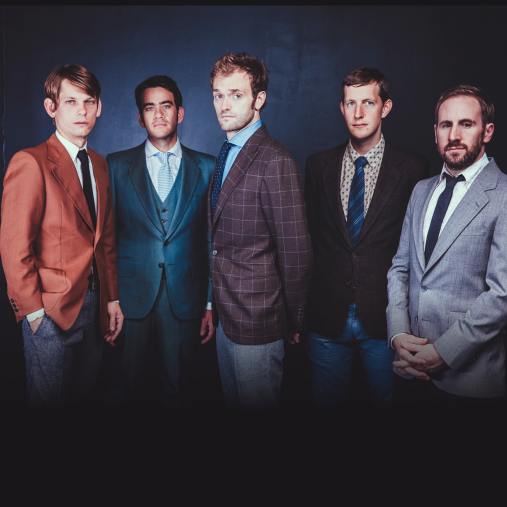
The Punch Brothers are a difficult band to describe; you really have to listen.
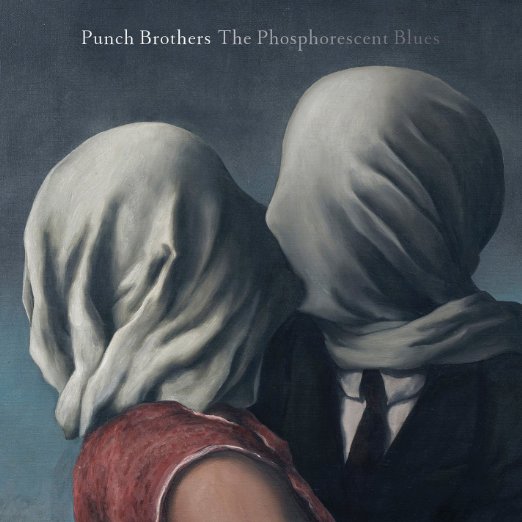
With T-Bone Burnett producing, the band which rose from the ashes of Nickel Creek, helmed by mandolin virtuoso Chris Thile, has broadened its palette on The Phosphorescent Blues. Classical music fuses surprisingly easily with acoustic Americana. At times it’s like listening to a bluegrass band fronting the Brodsky Quartet, or vice-versa.
The album’s concept, the view of modern life the band attempted to put across with this ambitious musical mix is explained by Thile thusly:
We often go to bars after shows or writing sessions, to be around other people for a little while. And I d see people just like me on their phones, telling people they wish they were there, texting people who really are there. Then a song would come on that somebody likes and then they see that someone else does too and maybe they both sing it together and that moment is spiritual, some shared experience, and they are interacting in the flesh, with their fellow man. And that s communion. Many of the songs on this record dive into that: how do we cultivate beautiful, three-dimensional experiences with our fellow man in this day and age?
The lyric of “I Blew it Off” conveys the flipside of this cultivation of common experience–the isolation that is possible in this age of the virtualification of more and more of our contact and communication:
Go ahead and bloody up your knuckles Knockin’ at my door I’ll blow ’em off I’ll blow em off
’cause there’s nothin’ to say That couldn’t just as well be sent We’ve all got an American share Of 21st century stress
See the oceans rise and leave the nations Cryin’ at heaven’s door I blew it off I blew it off





 Every Moment Has A Song