These Are the Songs a High-End Audio Company Uses to Test Its Speakers

From Leonard Cohen to Eva Cassidy, here’s how the audio experts at Sonus faber ensure the best sound for their line of speakers

(via Rolling Stone} by Tim Chan

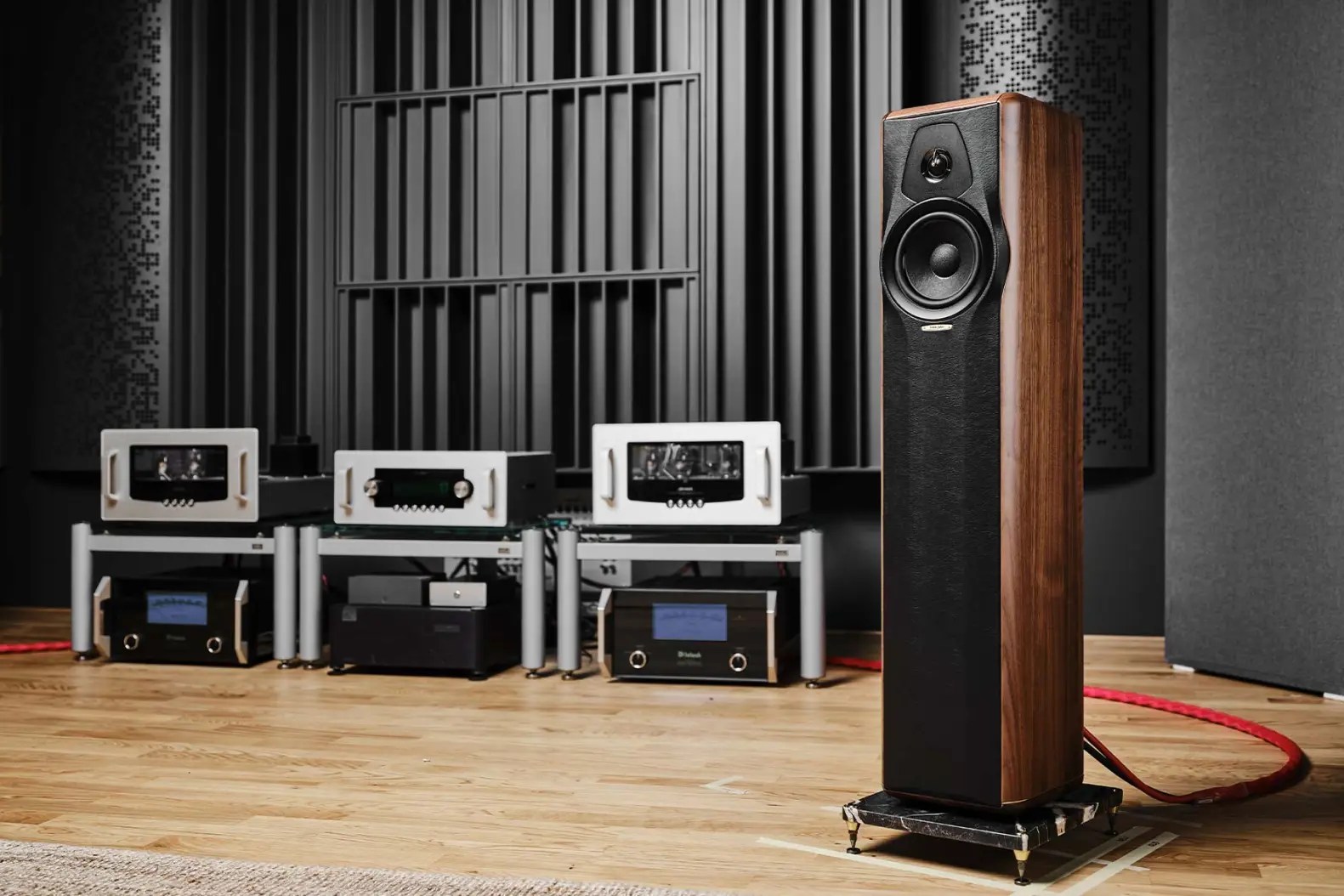
WHEN PAOLO TEZZON puts his Sonus faber speakers through the paces at the company’s headquarters in Italy, he has a very specific checklist of things he’s looking for, to make sure they’re sounding their best.

“There are many things I try to address any time I test a loudspeaker system,” Tezzon tells Rolling Stone, on a recent visit to the Vicenza factory where all Sonus faber audio systems are still designed and manufactured today. “First and most importantly, at least to me,” he says, “is the overall ‘tonal balance,’ meaning all the frequencies must be present and well-harmonized.”

“Sonus faber tailors the sound of our creations,” Tezzon explains, “so that our speakers will never sound artificial to human ears, but rather replicates natural sound as best as possible.”

Other things that can affect the way your speakers sound: “transparency,” a.k.a. “a speaker system’s ability to reveal every detail, down to the smallest ones, contained in the recording,” Tezzon says. To wit: during a listening session, Tezzo demonstrates how a speaker should reflect not just the main voice, but every background vocal and harmony too. Listening to a rock or jazz track? A good pair of speakers should let you hear the drum beat down to the distinction between hi-hats and snare…

Read more: https://www.rollingstone.com/product-recommendations/electronics/sonus-faber-speakers-review-1242267/

24/192 Music Downloads …and why they make no sense

(via xiph.org) 

Articles last month revealed that musician Neil Young and Apple’s Steve Jobs discussed offering digital music downloads of ‘uncompromised studio quality’. Much of the press and user commentary was particularly enthusiastic about the prospect of uncompressed 24 bit 192kHz downloads. 24/192 featured prominently in my own conversations with Mr. Young’s group several months ago.
Unfortunately, there is no point to distributing music in 24-bit/192kHz format. Its playback fidelity is slightly inferior to 16/44.1 or 16/48, and it takes up 6 times the space.
There are a few real problems with the audio quality and ‘experience’ of digitally distributed music today. 24/192 solves none of them. While everyone fixates on 24/192 as a magic bullet, we’re not going to see any actual improvement…

Read more:

https://xiph.org/~xiphmont/demo/neil-young.html

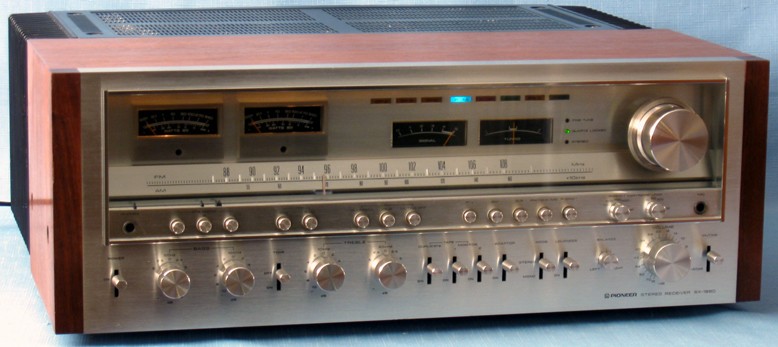
How Can 30-Year-Old Receivers Sound Better than New Ones?

pioneer

(via C/net)

by Steve Guttenberg

It’s a strange turn of events, but mainstream manufacturers long ago gave up on the idea of selling receivers on the basis of superior sound quality. I’m not claiming today’s receivers sound “bad,” but since almost no one ever listens to a receiver before they buy one, selling sound quality is next to impossible.

Back in the days when brick-and-mortar stores ruled the retail market, audio companies took pride in their engineering skills and designed entire receivers in-house. Right up through the 1980s most of what was “under the hood” was designed and built by the company selling the receiver. That’s no longer true; the majority of today’s gotta-have features–auto-setup, GUI menus, AirPlay, iPod/iPhone/iPad compatibility, home networking, HD Radio, Bluetooth, HDMI switching, digital-to-analog converters, Dolby and DTS surround processors–are sourced and manufactured by other companies. Industry insiders refer to the practice of cramming as many features as possible into the box as “checklist design.” Sure, there are rare glimpses of original thinking going on–Pioneer’s proprietary MCACC (Multi Channel Acoustic Calibration) auto-setup system is excellent–it’s just that there’s precious little unique technology in most receivers…

Read more: http://www.cnet.com/news/how-can-30-year-old-receivers-sound-better-than-new-ones/

The Loudness War: Good and Bad News from the Front

swift

(via msn entertainment)

by Matt Medved

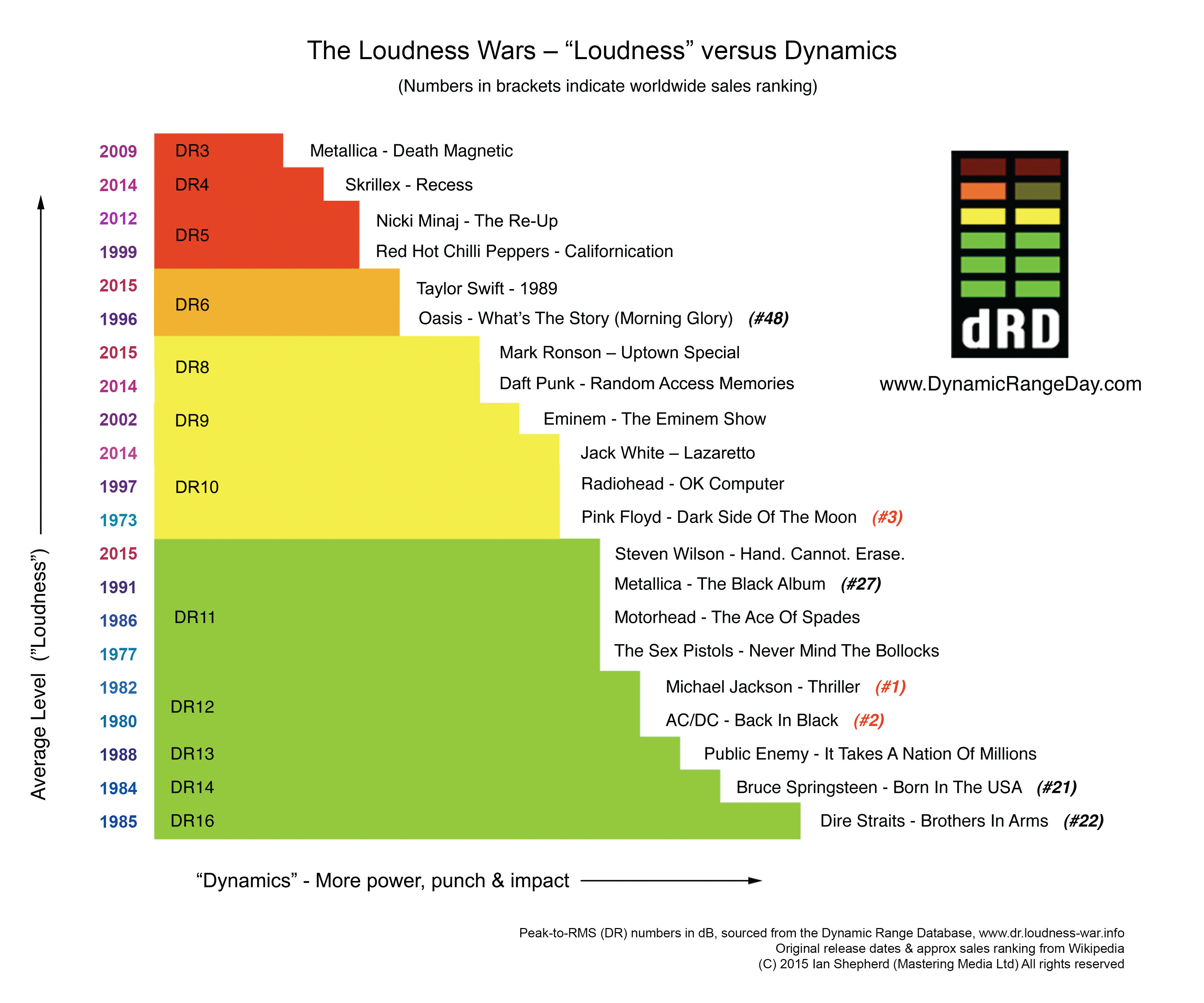
In honor of last month’s Dynamic Range Day, mastering engineer Ian Shepherd made an infographic comparing the loudness of popular albums — and the results may surprise you.

Take Taylor Swift‘s 1989, which clocked in at a fairly compressed DR6 rating. While Shepherd says that’s pretty standard for modern pop music, it’s still much louder than classic heavy metal LPs like AC/DC‘s Back in Black (DR12) and Metallica‘s The Black Album (DR11). Metallica’s more recent Death Magnetic reached a blistering DR3 level, while Skrillex‘s Recess charts at DR4…

…There may be hope on the horizon. As YouTube joins platforms like Spotify and iTunes Radio in employing loudness normalization to even out track volumes, Shepherd believes artists and engineers will realize the audio arms race is “pointless.”

Read more: http://www.msn.com/en-us/music/news/taylor-swifts-1989-is-louder-than-ac-dcs-back-in-black-heres-why/ar-AAbEi07

Adobe Photoshop PDF

Is the Sound on Vinyl Records Better than on CDs or DVDs?

(Reprinted from HowStuffWorks)

The answer lies in the difference between analog and digital recordings. A vinyl record is an analog recording, and CDs and DVDs are digital recordings. Take a look at the graph below. Original sound is analog by definition. A digital recording takes snapshots of the analog signal at a certain rate (for CDs it is 44,100 times per second) and measures each snapshot with a certain accuracy (for CDs it is 16-bit, which means the value must be one of 65,536 possible values).
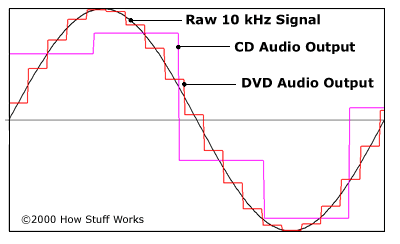
Comparison of a raw analog audio signal to the CD audio and DVD audio output

This means that, by definition, a digital recording is not capturing the complete sound wave. It is approximating it with a series of steps. Some sounds that have very quick transitions, such as a drum beat or a trumpet’s tone, will be distorted because they change too quickly for the sample rate.

In your home stereo the CD or DVD player takes this digital recording and converts it to an analog signal, which is fed to your amplifier. The amplifier then raises the voltage of the signal to a level powerful enough to drive your speaker.

A vinyl record has a groove carved into it that mirrors the original sound’s waveform. This means that no information is lost. The output of a record player is analog. It can be fed directly to your amplifier with no conversion.

This means that the waveforms from a vinyl recording can be much more accurate, and that can be heard in the richness of the sound. But there is a downside, any specks of dust or damage to the disc can be heard as noise or static. During quiet spots in songs this noise may be heard over the music. Digital recordings don’t degrade over time, and if the digital recording contains silence, then there will be no noise.

From the graph above you can see that CD quality audio does not do a very good job of replicating the original signal. The main ways to improve the quality of a digital recording are to increase the sampling rate and to increase the accuracy of the sampling.

The recording industry has a new standard for DVD audio discs that will greatly improve the sound quality. The table below lists the sampling rate and the accuracy for CD recordings, and the maximum sampling rate and accuracy for DVD recordings. DVDs can hold 74 minutes of music at their highest quality level. CDs can also hold 74 minutes of music. By lowering either the sampling rate or the accuracy, DVDs can hold more music. For instance a DVD can hold almost 7 hours of CD quality audio.

CD Audio DVD Audio
Sampling Rate 44.1 kHz 192 kHz
Samples per second 44,100 192,000
Sampling Accuracy 16-bit 24-bit
Number of Possible Output Levels 65,536 16,777,216

DVD audio discs and players are rare right now, but they will become more common, and the difference in sound quality should be noticeable. To take advantage of higher quality DVD audio discs, however, you will need a DVD player with a 192kHz/24-bit digital to analog converter. Most DVD players only have a 96kHz/24-bit digital to analog converter.  So if you are planning to take full advantage of DVD audio be sure to look for a 192kHz/24-bit DAC.

(Thanks Dave!)
Neil Young Explains Pono to David Letterman…Sort Of

http://www.youtube.com/watch?v=2GrgTiqZCF0&feature=player_embedded

Pono will give us “the best sound anybody can get” and Neil Young is already starting to transfer classic Bob Dylan albums to the new “Mother of all formats”.

Here’s hoping it truly makes the woeful mp3 obsolete one day soon.

Video

Previous Older Entries