Few bands in rock history have such a carefully written and precisely arranged catalog of songs as Styx.
The Chicago-based group blends rock, pop and prog elements into a seamless whole that maintains a remarkably high standard across the majority of its albums, despite wandering around stylistically in a manner that few of its commercial peers can match. That fact makes it remarkably difficult to choose the most underrated song on each of Styx’ studio albums – because there are quite a few undiscovered gems on almost every album they’ve recorded.
Styx began their recording career as an Americanized pop-rock response to British progressive rock, but most of their biggest hits were an amalgam of straight-ahead rock and vocal-oriented pop elements. That approach yielded a run of classic hits that includes “Lady,” “Come Sail Away,” “Renegade,” “Blue Collar Man,” “Babe,” “Too Much Time on My Hands,” “Mr. Roboto” and more, but some of the best tracks on each Styx album are mostly unknown to casual listeners.
Below, we uncover a musical feast that touches on classical music, hard rock, blues, ballads and just about everything in between. Styx have something for everyone, especially if you dig deeper into their catalog…
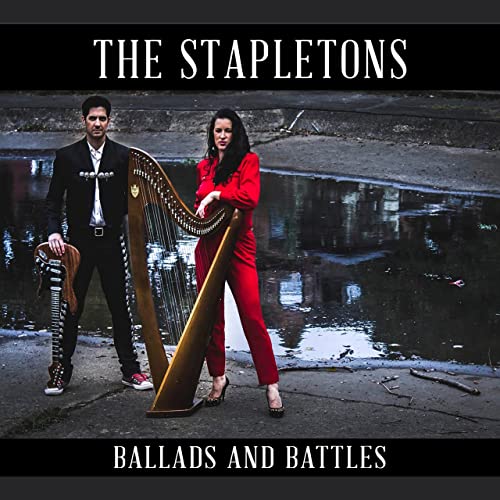
The Stapletons are a husband and wife, harp and guitar duo. Together, they write baroque folk rich with hints of Appalachian balladry, Delta blues, and echoes of the English folk revival movement. Blues-driven harp and guitar arrangements topped by ethereal vocal harmonies combine to create a wondrous sound.
Casey, a mariachi from LA married Kate, who grew up in Middle Ridge, WI. Swept into sooty post-industrial Pittsburgh, The Stapletons set about reconciling their many cultural clashes and started a brood of children. Six years later they sat down one morning in the kitchen with a Celtic harp and a Mexican guitar and began writing music. Their unique, “chamber folk” style features blues driven harp riffs, tightly interwoven vocals, and ethereal harmonies. Inspired by their home surrounded by civil war ghosts, this husband wife duo write intricate songs that bring the past alive, illuminate the present, and lift listeners into the stars.
For those not familiar with Douglas Adams’ HItchhiker’s Guide to the Galaxy, some explaining is in order on this one.
In the fictional book series, radio drama, TV series and movie, Marvin is a robot starship crew member who has been programmed with a human personality.
Unfortunately, Marvin is chronically depressed and bored with the mundane tasks he’s routinely asked to perform. Marvin claims to be 50,000 times more intelligient than a human, yet, as his song laments, “they make me pick the paper off the floor”.
Stephen Moore, who voiced Marvin in the British radio and TV series, released the single “Marvin” in 1981, and it reached number 52 in the British pop charts.
Aside from play on the Dr. Demento show, the song had basically zero exposure in America. And that’s exactly where I came across it, around 1985, and recorded it to a long lost cassette from the boombox beside my bed.
I'm just a robot and I know my place
A metal servant to the human race
I work my can off trying to satisfy
I know they'll disconnect me by and by.

Chip on my shoulder made of silicon
My printed circuit's like a lexicon
Ten billion logic functions, maybe more
They make me pick the paper off the floor.

Solitary solenoid
Terminally paranoid
Marvin

Know what makes me really mad
They clean me with a Brillo Pad
A carwash wouldn't be so bad
Life! Don't talk to me about life.

I'm so depressed I could expectorate
My moving parts are in a solid state
I want to rust in peace, switch off and lie
In that great junk yard in the sky.

Solitary solenoid
Terminally paranoid
Marvin

Nothing left to be enjoyed
Every diode rheumatoid
Marvin

Outer alloy Inner void
Marvin

Happiness has been destroyed.
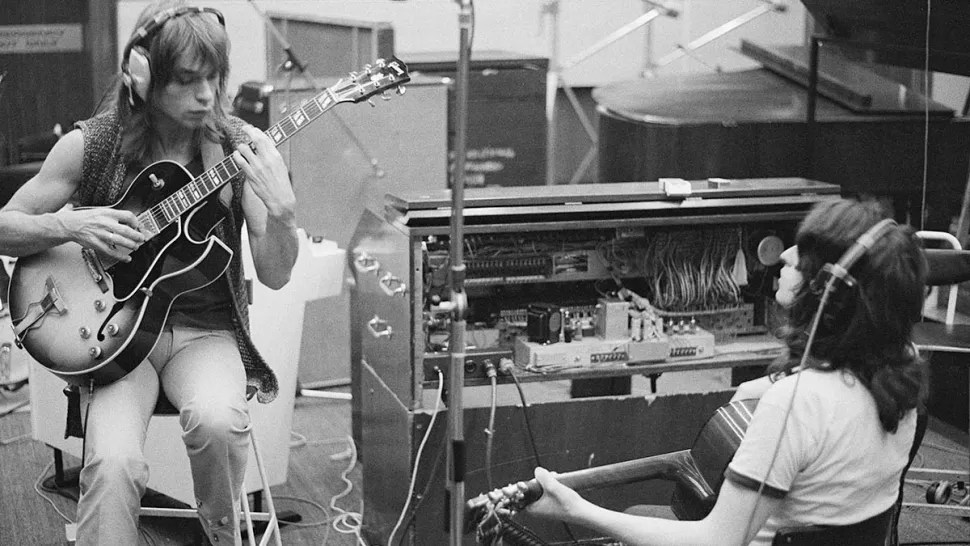
There was no such thing as progressive rock, explains Howe. It was just that their sound needed a bigger canvas.
Steve Howe has no idea where the term progressive rock came from, but he makes one thing clear: It certainly didn’t start with him. “I never called us ‘progressive rock’ or ‘prog-rock,’” he says. “As I recall, when I first joined Yes, we all used to call our music different things.
“There was ‘orchestral rock’ and ‘cinemagraphic rock.’ We never argued about it, but there were a lot of names and terms being tossed about.” So what term did he use to describe Yes’s music?
Howe laughs. “I often called it ‘soft rock,’” he says. “I thought what I wrote was a sort of soft rock, but the phrase didn’t catch on, at least not with what we were doing. But progressive rock? Where that got started, I don’t know. I think it might have come after the fact.”
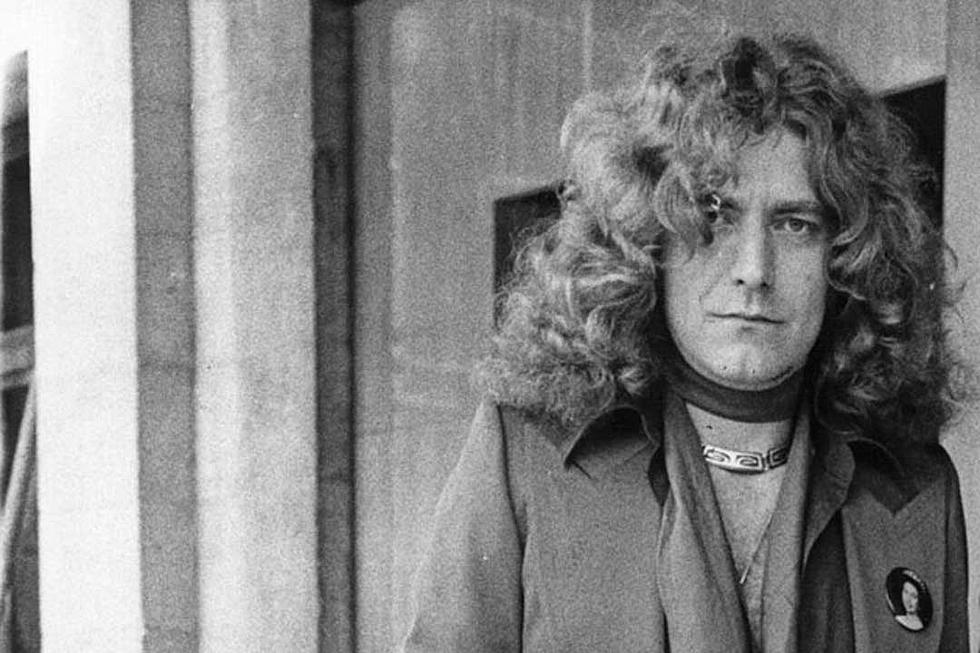
Robert Plant and his family were vacationing on Aug. 4, 1975 in Rhodes, Greece, when the car he was driving spun off the road and crashed. It was the first in a string of bad luck moments for the Led Zeppelin singer.
The band was on a short break and in between tour dates when Plant, along with his wife and children, took a trip to the Greek island of Rhodes. They rented a car, which Plant lost control of and crashed. The accident left Plant and his wife Maureen injured; his kids escaped with just a few bruises…



 Every Moment Has A Song