"There's a time in life for Hoagy Carmichael. There's a time in life for Claude Debussy. There's a time in life for Jerry Lee Lewis. There's a time in life for Destiny's Child. All these things have their moment." ~Elvis Costello
(Reprinted from Collectors Weekly) By Hunter Oatman-StanfordDecember 16th, 2013
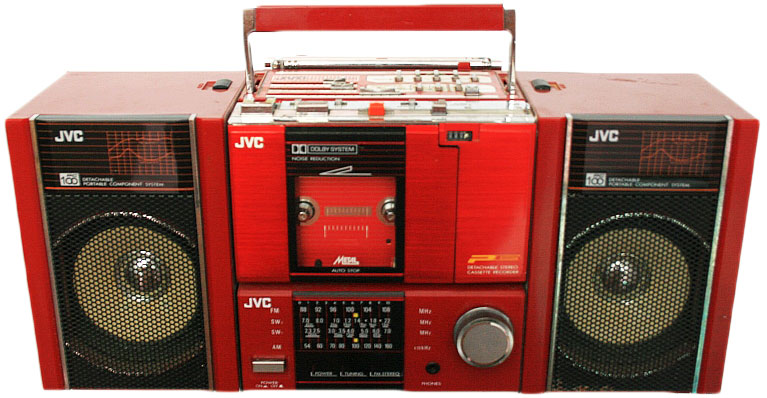
oomboxes are, by definition, excessive. With their deafening bass thud and dazzling chrome dials, these electric beasts are heavy enough to tone your biceps. Also known as “ghetto blasters” or “jamboxes,” they rose to fame in the 1980s along with hip-hop, flourishing as a tool for sharing and mixing the latest beats. Yet despite their widespread popularity, the innovators who conceived of these devices are still largely unknown, consigned to anonymity by the corporations that manufactured their creations.
Miles Lightwood hopes to change that. He’s the founder of Boomboxラジカセ Creators, an online archive and forthcoming documentary film devoted to identifying the individuals behind the most successful boomboxes of all time. So far, Lightwood has only located a handful original designers and engineers, a few of whom are already deceased, but he hopes that with the help of the Internet’s global community, more will be found before they pass away…
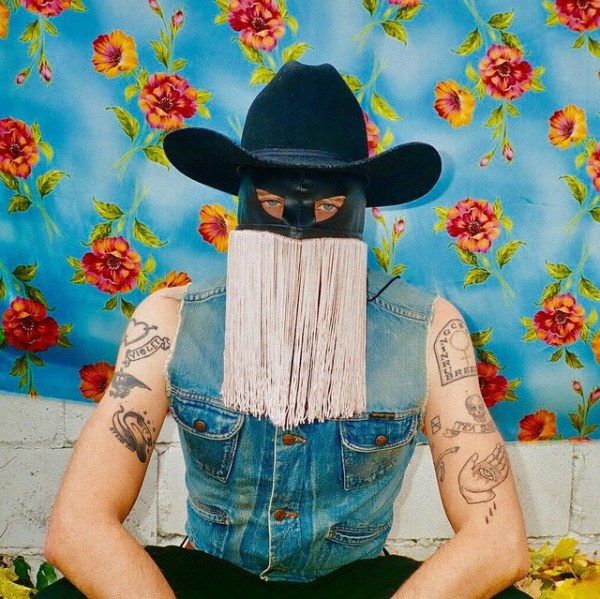
He wears handmade masks adorned with fringe, from under which his two blue eyes pierce. He is covered in tattoos, visible through his open vests. He wears colorful Stetson hats and cowboy boots. His music is replete with whistles and the sound effects of hooves, bull-whips, and gunshots. His lyrics are at once unabashedly mawkish and languorously erotic. He is gay. He is anonymous. He is the messiah of country music and he goes by Orville Peck.
Peck’s debut album, Pony, was released in early 2019 and has already become a classic, a must have for any true fan of country music, and a pool of perfect temperature for anyone willing to dip their toe into the genre for the first time. Country, as a genre, has always been massively underrated by mainstream listeners as an art form. The mainstream listeners are not to blame, however. What is to blame is the parade of terrible country musicians of the last 30 or so years. Musicians who have decided, in one way or another, that they’d spite those mainstream listeners by becoming caricatures: singing about their daddy’s pick-up truck, tractors, guns, the flag, and empty beer cans. Despite years of association, these singers and these subjects don’t represent country music. They represent only bad songwriting and nothing more…
(via Quora) Answered by Alex Johnston, Guitar & bass, BA Hons in music theory, tech and musicology
I’ll tell you why I do. And it’s a symptom of something which, for me, blemishes a good deal of the Beatles’ later work.
In general, I am very fond of ‘Hey Jude’ and consider it one of the best songs that McCartney ever wrote. I think that the cunning rhyme scheme really works, and the pleasingly laconic but warm-hearted lyric is one of the best the band ever had. And don’t even get me started on the music. It’s a lovely song.
However, when McCartney first played the song to Lennon, he hadn’t yet finished it.
The song has two bridge/middle eight sections, whatever you want to call them, which serve as a kind of alternative verse. The first one goes like this:
And anytime you feel the pain
Hey Jude, refrain
Don’t carry the world upon your shoulders
For well you know that it’s a fool
Who plays it cool
By making his world a little colder…