Take a trip through music history with the Great 78 Project

By digitizing songs recorded on 78 rpm records from the 1890s to the 1950s, project preserves old music for future generations.

(via opensource.com) by Chris Hermanson

A few weeks ago, a friend sent me a link to the Great 78 Project, “a community project for the preservation, research, and discovery of 78 rpm records.” The project is supported by the Internet Archive, George Blood, and the Archive of Contemporary Music. Its purpose, first and foremost, is to convert old recordings into digital audio to preserve those historic performances for future listeners. Currently it’s working to digitize the 200,000 or so 78 rpm records it has collected, and it’s actively looking for contributions to add to its collection.

I think this is an exciting project that should be of interest to anyone who enjoys exploring music—and especially those involved in the open community. In this article, I’ll look at a few things you may want to know about the project…

Read more:
https://opensource.com/article/17/9/great-78-project

Video of the Week: Yusuf/Cat Stevens–NPR Music Tiny Desk Concert


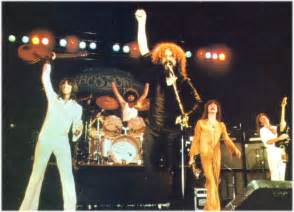
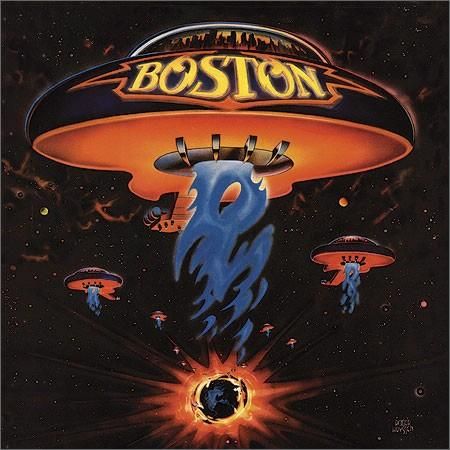
Boston: Two Tributes to the Classic First Album

Rock N’ Roll Band: What We Can Learn from Boston’s Debut Album

by S.P. Burke

http://www.magazine.tonereport.com/mag/0935566001502385839

Boston’s Debut Album isn’t a Guilty Pleasure–It’s One of the Best Records Ever

by Tim Sommer

Boston’s Debut Album Isn’t a Guilty Pleasure—It’s One of the Best Records Ever


24/192 Music Downloads …and why they make no sense

(via xiph.org) 

Articles last month revealed that musician Neil Young and Apple’s Steve Jobs discussed offering digital music downloads of ‘uncompromised studio quality’. Much of the press and user commentary was particularly enthusiastic about the prospect of uncompressed 24 bit 192kHz downloads. 24/192 featured prominently in my own conversations with Mr. Young’s group several months ago.
Unfortunately, there is no point to distributing music in 24-bit/192kHz format. Its playback fidelity is slightly inferior to 16/44.1 or 16/48, and it takes up 6 times the space.
There are a few real problems with the audio quality and ‘experience’ of digitally distributed music today. 24/192 solves none of them. While everyone fixates on 24/192 as a magic bullet, we’re not going to see any actual improvement…

Read more:

https://xiph.org/~xiphmont/demo/neil-young.html

Video of the Week: Why More Pop Songs Should End with a Fade Out

The Unlikely Return of Cat Stevens

Photograph by Matt Writtle / eyevine / Redux

(via The New Yorker) By

n a Cat Stevens, a.k.a. Yusuf Islam, a.k.a. Yusuf/Cat Stevens, concert in Boston a couple of years ago, there was a hushed pause in the room as the then sixty-six-year-old performer waited for a stagehand to bring him a guitar in between songs. “I’m really happy to be here!” the singer suddenly exclaimed. It did not sound like ersatz show-biz banter; it sounded humble, childlike even, as if he himself were surprised by the emotion. It sounded like capitulation. The crowd, in response, rose to its feet en masse, producing a sound that was more than just a cheer. It was an embrace. It was an acknowledgment by artist and audience alike: Cat Stevens, a figure who, for all intents and purposes, had ceased to exist more than three decades ago, had come back…

Read more:

https://www.newyorker.com/culture/culture-desk/the-unlikely-return-of-cat-stevens

Previous Older Entries Next Newer Entries