Recommended Albums #69

picar

The Decemberists: Picaresque (2005)

Picaresque was the Decemberists’ final indie label album before they signed with Capitol records, released the rock opera masterpiece The Hazards of Love and followed it with a number one album, The King is Dead, among other accomplishments.

And although I just referred to the 2009 folk/prog conceptual Hazards as a masterpiece, I would call Picaresque their best collection of songs–perhaps the best any band produced in the decade of the 2000’s.
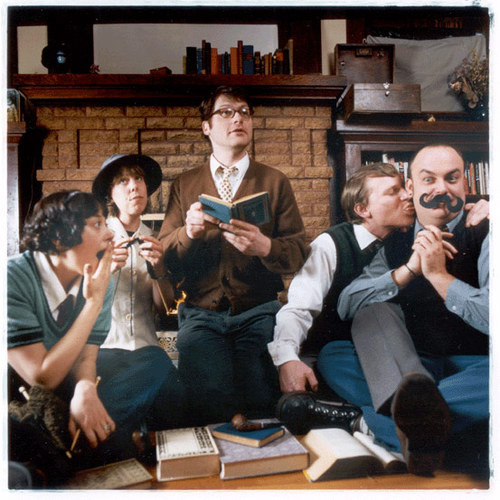
bookLit rock…geek rock…British folk-infused Dickensian rock…whatever label you apply to this iconoclastic assembly’s music, songwriter Colin Meloy’s hyper-literate, hyper-imaginative tunes set them apart, and earn them more fans and critical acclaim with each release.

Meloy has always liked a good murder ballad, and death and tragic circumstance are staples of his dark-yet-alluring tunes. Put across with appealing melodies in a dialect seemingly all his own, his lyrics typically are as cheerful as the black plague, as exemplified by “We Both Go Down Together” and the epic “Mariner’s Revenge Song” here.

But unlike most bands who specialize in dark, sulky angst it’s clearly a vaudeville here. Of course, the character traits may ring familiar and the harsh lessons may apply in real life. But the songs themselves, constructed out of archaic language and given a veneer of Thespian melodrama, are like the rock music equivalent of unsanitized Brothers Grimm fairy tales. There’s danger, but it’s all ultimately charming, fanciful, bewitching.

If this album appeals to you, the good news is that there is a whole lot more Decemberists catalogue to explore. This band has yet to make a dud album. And my recommendation if you tackle The Hazards of Love next is to listen to the entire 60-minute piece uninterrupted and undistracted, with both lyrics and a concordance at hand. Then listen again. It’s jaw-droppingly brilliant and the best evidence one could cite to make an argument that the era of the ambitious art-rock concept album isn’t quite a thing of the past.

Listen to: “We Both Go Down Together”


Listen to: “The Engine Driver”


Listen to: “The Sporting Life”


Listen to: “16 Military Wives”


Listen to: “The Mariner’s Revenge Song”
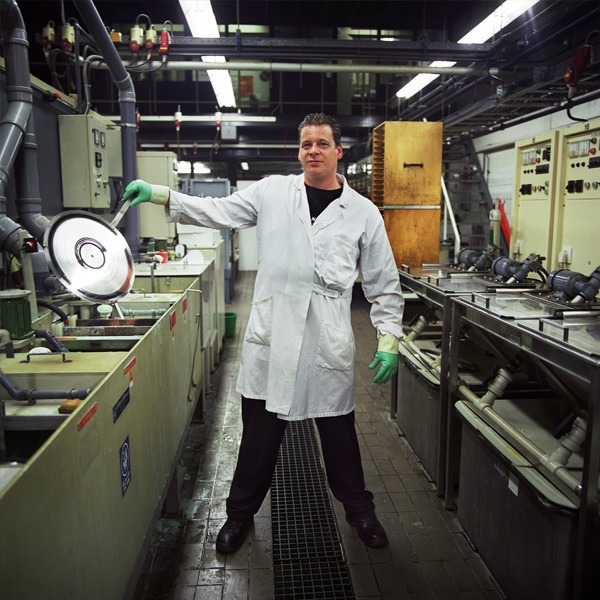
The Vinyl Record Factory That Makes Your Niche Music Dreams Come True

plant

Eight-tracks gave way to cassettes, which gave way to compact discs, which gave way to streaming audio and hi-res files. If there’s one constant in the music biz, it is that every format eventually yields to newer, better technology. All but vinyl, that is. Somehow, records have not only endured, but lately they’ve enjoyed a renaissance.

It’s odd when you think about it. Records are archaic technology, a format that is not at all portable and subject to all manner of degradation, from scratches and skips to pops and clicks, if it isn’t properly and lovingly cared for. But audiophiles insist vinyl offers superior sound. We’ll stay out of that debate, but you have to admit it is pretty cool how vinyl works.

“Sound is converted into microscopic ridges and valleys, stamped onto vinyl, played back through an extremely sensitive needle and amplified thousands of times in your living room,” says photographer Alastair Philip Wiper. “It’s almost unbelievable.”

That’s a bit of a simplification, but you get the point. There’s a process to it that borders on artistry, something Wiper—who loves records—discovered during a visit to Record Industry, a pressing plant in the in the Dutch city of Haarlem. The British photographer followed every step in the process, from making the master to pressing the wax to shrink-wrapping the finished product. “Seeing how it’s done really makes you realize how amazingly clever this old-fashioned technology is,” he says…

Read more: http://www.wired.com/2016/01/alastair-wiper-record-industry/?mbid=nl_12616

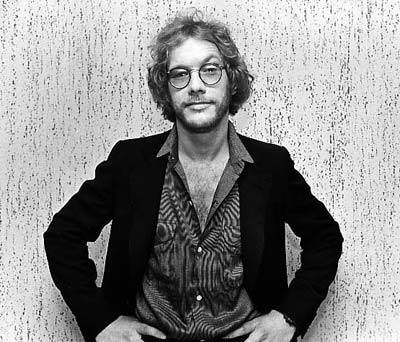
Remembering Warren Zevon on his 69th Birthday

zevon

Guster Turns Snowed-Out Philly Show into Impromptu ‘Dumpster Set’ in Pittsburgh

Brian of the Rosenworcels's avatarGuster Road Journal

The blizzard cancelled our Philadelphia show and sent the GusBus on a mad dash west to avoid Jonas on Saturday. After a dicey drive we landed in Pittsburgh for an unexpected day off — we love us some PGH and they only got like 5 inches of snow total. It was a nice choice.

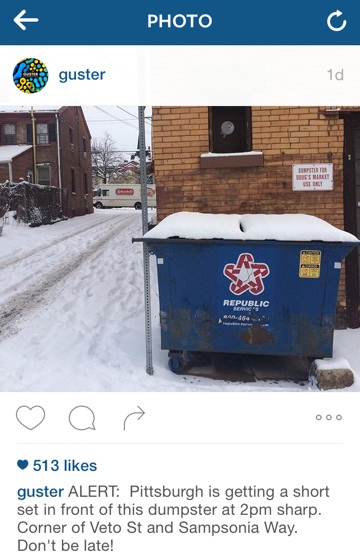
After watching 4 hours of CNN reporters in ski goggles we got bored and decided to go play a “Dumpster Set” somewhere in town. We picked a nice blue dumpster over near the Mexican War Streets neighborhood, and at 1:15 we tweeted the location out on the socials:

dumpster_insta

That gave people in Pittsburgh 45 minutes to learn about the show, find the dumpster, and enjoy a spontaneous random Guster concert.  The hope was that, since it was a weekend, maybe we’d get like 30 people to show up.  Eleven people did.

But we had a great…

View original post 316 more words

How the Eagles’ ‘Greatest Hits Invented a New Kind of Blockbuster

hits

(via Rolling Stone)

by Steve Knopper

The old story goes that Glenn Frey, Don Henley and their bandmates were taking forever to finish Hotel California when their record label, Asylum, needed a new Eagles album to raise revenue in the first quarter of 1976. So the label released Their Greatest Hits 1971-1975 as a sort of placeholder – a way of placating fans until the real album could come out. But Irving Azoff, the band’s longtime manager, says the truth is far simpler. “We decided it was time to put out the first greatest-hits because we had enough hits,” he tells Rolling Stone.

The LP containing “Take It Easy,” “Desperado,” “Take It to the Limit,” “Peaceful Easy Feeling” and six others has sold a massive 29 million copies in the U.S.; back in 1999, it leapfrogged Thriller as the best-selling album of all time. “I think when Michael Jackson sees this on television, he’s going to go out and buy a million-and-a-half copies of Thriller,” Frey, who died Monday at age 67, quipped at the time. (The Eagles returned to second place after Michael Jackson’s 2009 death.)

Read more: http://www.rollingstone.com/music/news/how-the-eagles-greatest-hits-invented-a-new-kind-of-blockbuster-20160120

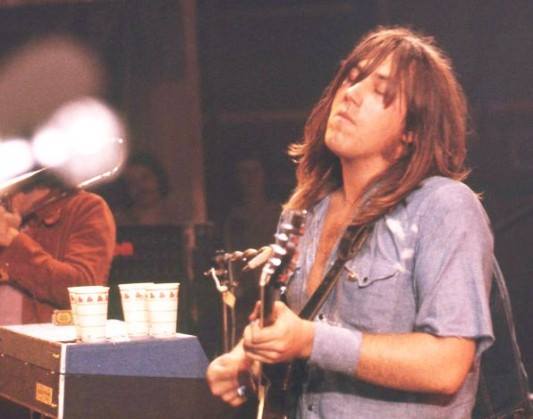
38 Years Ago Today We Lost Terry Kath

kath

(Reprinted from The College of Rock and Roll Knowledge)

There is a story that says that Jimi Hendrix, when asked what it is like to be the greatest guitarist in the world said “I don’t know you’d have to ask Terry Kath.” (It has been said that Hendrix made that comment about Rory Gallagher also).

Terry was the original guitarist for and a founding member of Chicago. It was 38 years ago today that we lost Terry.

By 1978, Kath was regularly carrying guns around, and enjoyed playing with them. Around 5 p.m., on Jan. 23, after a party at roadie and band technician Don Johnson’s home in Woodland Hills, Los Angeles, California, Kath took an unloaded .38 revolver and put it to his head, pulling the trigger several times on the empty chambers. Johnson had warned Kath several times to be careful. Kath then picked up a semiautomatic 9 mm pistol and, leaning back in a chair, said to Johnson, “Don’t worry about it … look, the clip is not even in it.” To satisfy Johnson’s concerns, Kath showed the empty magazine to Johnson. Kath then replaced the magazine in the gun, put the gun to his temple, and pulled the trigger. However, there was a round in the chamber, and Kath died instantly. Terry was only 31 years old.

His guitar playing on the first few LP’s by Chicago is legendary.

What is the first song you think about when you hear Terry’s name?

RIP Terry. You had the whole world watching and listening.

___________________

…and Kath was extremely underrated as a singer, too. Take a listen.

Previous Older Entries Next Newer Entries