"There's a time in life for Hoagy Carmichael. There's a time in life for Claude Debussy. There's a time in life for Jerry Lee Lewis. There's a time in life for Destiny's Child. All these things have their moment." ~Elvis Costello
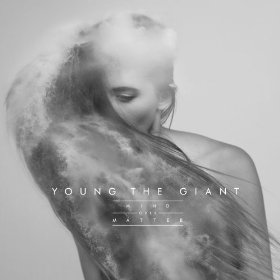
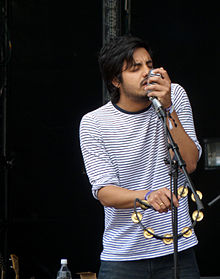
After a debut that Amazon.com rated as the third best rock album of 2010, the Orange County modern rock band fronted by full-voiced frontman Sameer Gadhia are back with the follow-up, Mind Over Matter. The title cut is a highlight, and contains a fish hook of a chorus that might ricochet around in your brain all day.
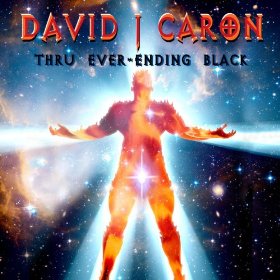
Irish-Italian David J. Caron released a double CD album, Thru Never Ending Black, in 2013–a move usually made by an artist with an established following. The unusual thing here is that the mammoth 28-track work is his debut. Caron wrote, performed and produced one of the best rock debut albums in recent years, a work that lives up to its own ambition with solid consistency over its abundant length.
Categorizing the music is more difficult than appreciating it. Caron seems to straddle the worlds of progressive rock (the genre suggested by the album’s cover, artwork and, at times, lyrics) modern rock and AOR. Caron’s work has echoes of 80’s neo-prog, but with a fresh, modern rock-informed sound. It really defies easy categorization.
But while it doesn’t fit neatly into a particular genre, any fan of modern melodic rock with intelligent, captivating lyrics and infectious choruses will find something appealing here–and a generous helping thereof.
As Scott Mervis wisely pointed out on his Pop Noise blog (I’d forgotten), Jimmy Page turned 70 yesterday. No long biographies here. No attempt to be definitive here. You can get the obvious stuff anywhere. Here’s some Page material from the lesser-known earlier corners of his career.
1957:
The budding skiffler at 13. From the BBC’s “Hugh Weldon Show. 13 year old page was playing Skiffle, the British musical craze of 50’s just before rock and roll. The music is just a mix of folk, blues, country and jazz, the same stuff John Lennon, Paul McCartney and George Harrison played in Liverpool as the Quarrymen…
Note young Page wanted to become a “biological researcher” at the time. Right…
1965:
Page’s solo single: “She Just Satisfies.” Page was a successful London studio guitarist at the time he made this single, doing both guitar and vocal. The song and sound are a steal from the Kinks of the “You Really Got Me” era (which contrary to decades of rumors, Page did NOT play lead guitar on).
Mid-1966:
Playing bass with the Yardbirds. Jeff Beck on lead guitar, Keith Relf on vocals, Chris Dreja playing second guitar and drummer Jim McCarty, from French TV. “Train Kept A-Rollin'” Page replaced original bassist Paul Samwell-Smith.
November, 1966:
Page and Beck: Dual Guitars: When Chris Dreja moved to bass, Beck and Page both shared guitar duties. This live version of “Happenings Ten Years Time Ago” comes from an appearance on “The Milton Berle Show.”
March 9, 1968:
The Yardbirds’ Lead Guitarist. From French TV. With Jeff Beck gone, Page took the guitar spot. Here they play both “Train” and “Dazed and Confused.” When Relf and the others left, Page began forming the “New Yardbirds,” the original name of Led Zeppelin.
1969:
Early Zep: “Babe, I’m Gonna Leave You.”
1972:
Zep In Australia. “Let’s Have A Party” Plant and Page loved throwing in Elvis Presley covers onstage. A bootleg live CD of them appeared at one point.
2001:
Back To Skiffle? Reunited with Robert Plant and others performing “My Bucket’s Got A Hole In It,” from a televised tribute to Sun Records tribute, honoring Sonny Burgess’s rockabilly version. Oh, the elderly guy who talks with encyclopedic musical knowledge is another legendary label founder and producer: Ahmet Ertegun, the man behind Atlantic Records.
Postmodern Jukebox has folded some of 2013’s most popular tunes into a very retro-sounding mashup. What would “Blurred Lines” sound like if it had been recorded in the 1920’s? Here ya go.
Blurred Lines, Robin Thicke, featuring T.I., Pharell
Holy Grail, Jay-Z, featuring Justin Timberlake
We Can’t Stop, Miley Cyrus
Roar, Katy Perry
Royals, Lorde
What Does the Fox Say, Ylvis
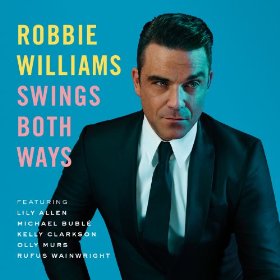
With over 70 million records sold worldwide, Robbie Williams is one of the most popular entertainers in the world, despite America not being hip to the former member of Take That. His first seven solo albums since leaving the 90’s boy band have all gone to number one in the UK.
Robbie’s “Go Gentle” expresses a tender, protective sentiment suggestive of a father-daughter relationship. It’s typical of the singer’s smooth, classy MOR sound–Brits get it, though it’s not the preferred cup of tea of most Americans.
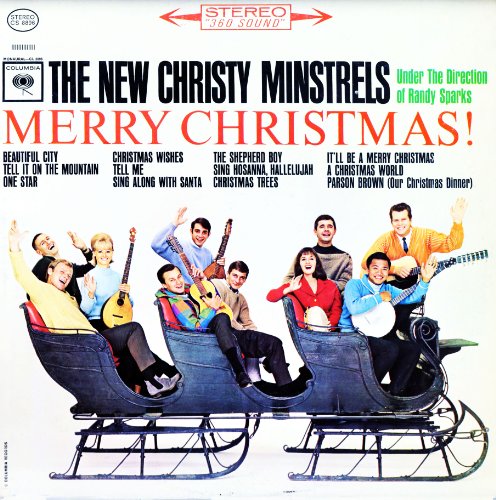
The New Christy Minstrels: Merry Christmas! (1963)
The liner notes from a brand new 2013 reissue of this classic Christmas album begin as follows:
During the holidays, in most homes there are a few Christmas albums–even old scratchy LP’s–that have become such a treasured part of family tradition that…well, the season just wouldn’t be the same without them.
This precisely describes my own family’s relationship with Merry Christmas! by the New Christy Minstrels. For so many Decembers, when it was time for my dad to pull a pile of immaculate Christmas records from his Immaculate Collection, this was one of the albums removed first from the shelf, then from a plastic sleeve, then from the cover, then from the album’s inner sleeve, then cleaned with a soft, round red pad specially designed for the purpose, and only then placed onto a stack on the spindle above the turntable. (Had he only known how counterintuitive the stack-on-spindle turntable was to the fanatical level of care he gave his record collection…but I digress).
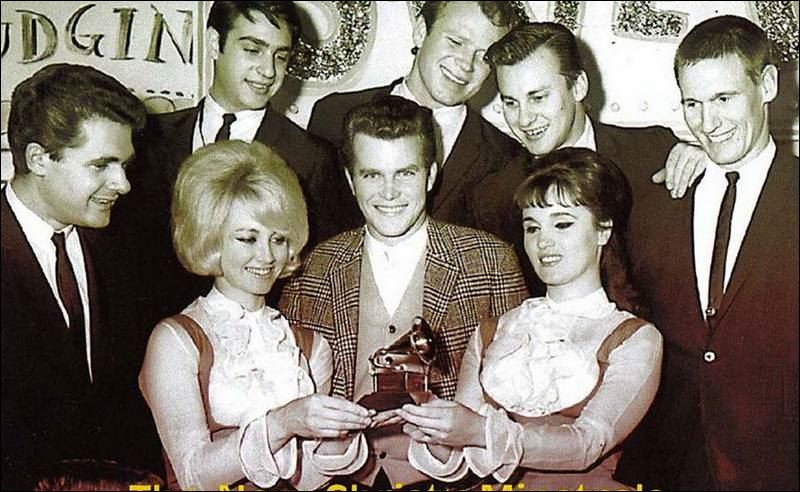
At the height of both the 60’s folk music boom and the Christies’ own popularity (fresh off a stint as regulars on Andy Williams’ NBC TV Show and a Grammy win for their debut album) the group, under the direction of founder Randy Sparks, entered the recording studio for just three days in July 1963 to record what many consider their crowning achievement.
A smoggy Los Angeles summer not being entirely conducive to the holiday spirit, an all-out Christmas party was arranged in the studio to put the group in the mood. Member Barry McGuire was elected from the ranks to play the role of Santa, costume and all. But mock-holiday frivolity in no way blunted the professional performances delivered by a talented, well-rehearsed group of vocalists and musicians. As the finished product attests, the blend of carefully chosen voices and bold arrangements of mostly original holiday material makes up a Christmas classic that remains a favorite of families lucky enough to have owned a vinyl copy back in the 60’s. In fact former Christy soprano Gayle Caldwell, who went on to become a music teacher, would recount that many of her students told her the album was a favorite and that their parents owned a copy.
Randy Sparks, the group’s founder and main songwriter, had backed off from performing with the Christies prior to the Merry Christmas album, preferring to stay home in L.A. to develop the group’s material, in a role similar to that of Brian Wilson in the mid-60’s Beach Boys. Sparks presented new songs as they were completed, and intense rehearsals ensued in hotel rooms during the group’s performance tour in the weeks leading up to their studio dates. Then co-arranging members Nick Woods and Art Podell would add their input, with Sparks usually arguing for simplicity and the other two for more complicated musical flourishes, until the finished arrangements were fleshed out.
Sparks’ instincts for keeping it simple often won out, as is obvious in such pieces as “One Star”, “Christmas Wishes” and “Christmas Trees”, which are things of simple yet heartrending beauty. And yet, the rousing, full-throated ensemble pieces like “Beautiful City” and “Sing Hosanna, Hallelujah” are perhaps the best remembered gems here.
“Sing Hosanna, Hallelujah” encapsulates the way this album, and Sparks’ writing, neatly straddles the boundary between sacred and secular holiday sentiments. Lines like “we observe a holy celebration” and “we sing in praise in adoration” alongside “we raise our glasses of the mulled winter wine” and “we’ll glide through snowy winter weather”? Somehow it works. “Santa” isn’t mentioned here, but “St. Nicholas” is. It’s a seamless blend of festive and holy. And it’s beautifully rendered.
It’s this full band sound with multipart harmony and distinctive voices singing in turn that inspired the spot-on yet loving lampoon treatment of A Mighty Wind, in which the New Christy Minstrels were the template for the New Main Street Singers.
The Christies’ classic lineup didn’t last long. Three years later they released another Christmas album with an almost completely different group of singers. That album, a collection of covers of traditional holiday tunes with less folky, more (60’s) contemporary arrangements, pales in comparison with Merry Christmas!
Yet this revolving door of lineup changes (this site lists a roster of 298 alumni!) also meant the Christies were the ideal place for up-and-coming talents to hone their chops. Emerging from the group to go on to stardom elsewhere were such luminaries as Kim Carnes, Roger McGuinn and Gene Clark of the Byrds, Barry (“Eve of Destruction”) McGuire, Larry Ramos of The Association, and at least three members of the First Edition including Kenny Rogers. That’s not to mention two members who went on to notoriety as Broadway singers and another who became a Miss America.
Merry Christmas! is a singular success of a holiday album–a collection of mostly original Christmas songs of high quality, with a blend of sacred and secular sentiments, all wrapped up in a warm folksy sound that suits the material like a red fur-lined coat on an old jolly fat guy.
And it sounds like all the Christmases of my youth.