"There's a time in life for Hoagy Carmichael. There's a time in life for Claude Debussy. There's a time in life for Jerry Lee Lewis. There's a time in life for Destiny's Child. All these things have their moment." ~Elvis Costello
We used to have good times together/But now I feel them slip away/It makes me cry to see love die/So sad to watch good love go bad…
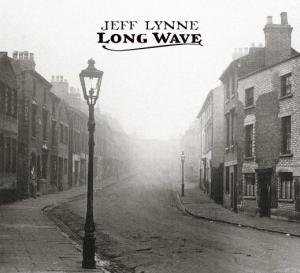
I’ll tell you what else is so sad: the thought that we’ve probably heard the last of the Electric Light Orchestra, one of the truly iconoclastic bands to emerge in the 70’s. As nice a tribute to the music of his formative years as Jeff Lynne’s Long Wave is, it is also one more reminder that we can’t expect a reunion tour by the band who carved such a one-of-a-kind British symphonic rock niche.
So I’ll direct the following to anyone reading this who was born too early, or too late, or was too much of a rock snob or punk music fan to care about the Electric Light Orchestra:
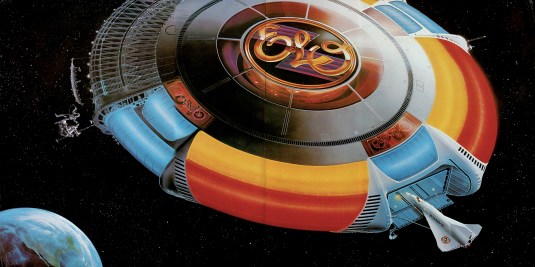
Beginning with the “Showdown” single in late 1973 (a favorite of John Lennon’s as the story is told) Lynne and his supporting cast released a series of ever more ambitious albums (Eldorado, Face the Music, A New World Record) culminating with the platinum-selling double LP Out of the Blue in 1977. With its gatefold cover adorned with a spaceship that brought to mind 2001: A Space Odyssey and simultaneously punched up the Star Wars/Close Encounters zeitgeist, Out of the Blue was an album you bought and rushed home with. And beyond the eye-popping artwork, the 17-song, 70-minute epic didn’t disappoint musically. In fact, in addition to its four charting singles (“Turn to Stone”, “Sweet Talkin’ Woman”, “Mr. Blue Sky” and “It’s Over”) the abundance of great album tracks is truly stunning. It was the band’s artistic and commercial high water mark.
It was also archetypical of the kind of commercial pop rock (ABBA, Journey, Toto, Foreigner, et al) that has found favor with next-generation fans, musicians and tastemakers. No less a standard-bearer of nouveau geek chic than the Decemberists made “Mr. Blue Sky” an encore of their live set during their breakout tour of 2006. And Doctor Who, Britian’s foremost cult TV phenomenon, dedicated an entire episode subplot to the music of ELO. So if you still think you’re too cool for this band, think again.
Is Jeff Lynne’s Long Wave a bad LP? Not by a long shot. As this cover of the Everly Brothers’ 1960 hit demonstrates, Lynne has a knack for finding the essence of the song, marinating it in that trademark Lynne sound, and creating something pleasant to the ear. Is his sound a watered-down Beatles imitation as some say? Good question. I’ll answer it with two more questions: 1) Aren’t most bands some form of the very same thing? and 2) Is there anyone more worth imitating?
No, I’ll never have a problem with Jeff Lynne being such an obvious Beatle disciple. My only lament isn’t that he gives us “watered-down Beatles”. It’s that at this point perhaps all he can offer is watered-down Electric Light Orchestra.
Impressed by this Oxford, England band’s latest, I wanted to select a representative song to post in another category of this blog. Trouble was, I couldn’t choose between the beautifully haunting song, the smartly philosophical song, or the cheerfully whimsical song. So here we are, under the heading of Recommended Albums.
“Farewell Appalachia” is the haunting melody, and one that shows the band’s penchant for using atypical instrumentation (and even non-instruments). In the past, the sound of a saw or that of carrots being chopped have served as percussion. In this case, and fittingly so, it’s the sound of crunching leaves accompanying the scene-setting first stanza’s lyric “From the cape/To the hook/With a carpet of leaves underfoot”.
The insinuative melody evokes the work of a band like Winterpills or even the Decemberists, whose songs similarly reward repeated listening–even require repeated listening, but then sink deeper into your soul than the ephemeral pop of lesser bands.
A second point of comparison with the Decemberists is a lyric that is both of the caliber and style of Colin Meloy:
And in the house where I last held you our bed was cast adrift all night and you were taking me to higher ground out of my skin above the clouds
“The Bigger Picture” rambles along to an organ/mandolin vibe as vocalist Brian Briggs puts context to mundane concerns by casting them against the larger universe. Briggs’s distinctive dialect isn’t immediately identifiable as English; rather it possesses only a vaguely European quality that lends intrigue to the band’s sound. It’s one more point of similarity to the Decemberists’ Meloy who, despite calling Portland home and being American, possesses a dialect seemingly all his own.
“The Great Procrastinator” takes a cheeky lyric tone with lines like “I’ve been busy as a beaver/And I’ll be damned if I don’t ease the flow” to an arrangement that conjures a ragtime feel, of all things.
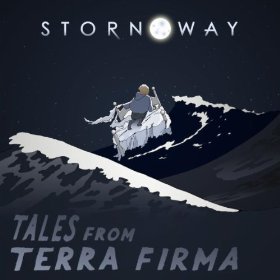
Tales of Terra Firma is smartly engaging throughout, and Stornoway are exactly what I’d expect from a band that formed at Oxford University. Not a cup of tea for everyone, mind you. But an aromatic and gently intoxicating blend for people of a certain taste.
“How do you take someone from a Third World country and throw them into the circus?” That’s the question posed by Don’t Stop Believin’: Everyman’s Journey, the charming new documentary detailing Arnel Pineda’s too-amazing-to-be-real musical fairy tale — the tale of a virtually unknown singer stepping into the role of frontman for one of rock’s most legendary bands, Journey.
Sound a bit insane? Well, as the song goes, don’t stop believin’. Pineda’s story is 100 percent true. The vocalist, who grew up in a struggling Filipino household and spent several years on the streets of Manila, managed to gain local acclaim after joining a neighborhood band, but never gained much attention outside the Philippines.
That all changed in 2007, when Pineda — who had a series of videos on YouTube covering favorite American rock songs, including Journey’s classic “Faithfully” — received an eye-opening email.
“Interested in singing for the real band Journey?” it read, and it was signed “Neal Schon” — Journey’s founding member and guitarist.
“I thought it was a scam,” admitted Pineda, who was 40 at the time. “Where I come from, it would be crazy to just believe an email like that … but my friend, the one who uploaded my live video performances on YouTube, he was pretty persistent. He was [certain] that the email was for real.”
So, although skeptical, Pineda replied to the email with his contact information. “That was it,” he noted. “He called up, and to my surprise, it was Neal.”
It was, indeed. Schon had been enduring a frustrating period since 1998 attempting to find a lead singer to replace original frontman Steve Perry. By 2007, he’d lost two replacements and found himself resorting to YouTube for ideas on where to find the next.
When he heard Pineda’s voice, he was stunned. “I thought, this is too good to be true,” he told USA Today.
Pineda had his doubts about joining the group. Aside from insecurity about walking unknown into an iconic rock band, he had concerns about how fans might compare him to Perry. “I’m so short and so Asian!” he laughed.
However, he found boundless encouragement from his new bandmates. “They taught me how to be brave. How to be confident,” he explained.
Pineda remembers his first big show with Journey — a Chilean date in front of nearly 20,000 fans, which nearly caused him to pass out from stage fright. “After peeking out from behind the curtain, I went back to the band and said, ‘Can I just go home? I don’t think I can do this!'” he says.
“But Neal said, ‘Too late, brother.'”
From there, it’s been nothing but an upward trajectory for the singer — who’s received boundless support from fellow Filipinos and the Asian community at large. When he was contacted with the idea for a documentary about his amazing tale, he took a minute to consider how he would translate on the big screen — “me and my ugly face, and my short stature.”
But then he realized it was a unique opportunity to spread a positive message. “I represent the kids in the Philippines,” he explained. “Kids around the world, especially in Third World countries, we have dreams. I’m living my dreams.”
“We’re selling hope. Dreams, they do come true. Miracles can overcome misery and hardship.”
We say: Hold on to that feelin’.
Don’t Stop Believin’: Everyman’s Journey is now playing in limited release.
Ask die-hard John Denver fans why they love the late singer’s music so much and they’ll likely tell you the same thing: “He makes me cry.” Denver, who wrote unabashedly sentimental songs about love, nature and an ever-homesick life on the road, had a rare gift for stirring something inside listeners. To many, his melodies and lyrics could come off as maudlin and conventional. But for the countless believers — and there are many — Denver was a poet, a visionary and a constant companion.
The artists assembled for a new John Denver tribute record, The Music Is You, likely fall into the latter category. The album, out April 2, showcases some of Denver’s most beloved songs, as performed by a cross-genre, cross-generational and impressive mix of musicians — many of whom were in elementary school in the ’70s and ’80s, when Denver was singing on The Muppet Show and appearing in kid-friendly TV specials.
My Morning Jacket opens the collection with what might be Denver’s most popular song, the oft-covered “Leaving on a Jet Plane.” True to the original, singer Jim James dispenses a sweetly sung tearjerker, awash in heartache and loneliness. Dinosaur Jr.’s J Mascis and Sharon Van Etten pair up for a gritty, electrified take on “Prisoners,” Denver’s ode to the working class, while veteran roots-rock singer Lucinda Williams performs a spare, bittersweet version of “This Old Guitar,” a song of simple thanks to the instrument that gave Denver (and Williams) a life and living. Edward Sharpe and the Magnetic Zeros close the album with a retooled interpretation of “Wooden Indian,” Denver’s broadside against the treatment of Native Americans. Other artists appearing on the record include Dave Matthews, Blind Pilot, Josh Ritter and Emmylou Harris, among many others.
The Music Is You arrives 15 years after Denver’s death. The singer would also have turned 70 this year, on Dec. 31; Denver died when the single-engine plane he was piloting crashed off the coast of California. Toward the end of his life, Denver was struggling: He wrote and spoke openly about his marital infidelities, drug and alcohol abuse, domestic violence and said he thought of killing himself. He was arrested twice for drunken driving. Some fans dismissed the troubles, while others were disappointed, but all had hoped Denver would turn his life around and enjoy a resurgence in his career. He didn’t live long enough to make it happen, but The Music Is You shows that his songs maintain the power to reach new audiences — and, yes, make them cry.