Recommended Albums #36

what the man saidcoming up

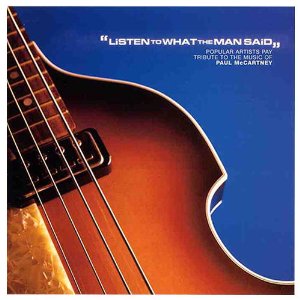
Various Artists: Listen to What the Man Said–Popular Artists Pay Tribute to the Music of Paul McCartney (2001)

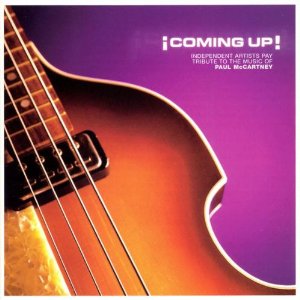
Various Artists: Coming Up–Independent Artists Pay Tribute to the Music of Paul McCartney (2001)

These were the tribute albums that, more than any other, changed my mind about tribute albums. My thinking as a music consumer had been: if you really love an artist, why would you waste time listening to other artists cover that artist? And other than those made for a charitable cause, why would such albums be worth the money? Aren’t they just a poor man’s version of the original? I mean, the Beatles never recorded trib– oh wait. They kinda did. What were “A Taste of Honey”, “Anna”, “Twist and Shout”, or Lennon’s Rock and Roll album but tributes to artists they admired?

Anyway, I’ve come around about enjoying a reverent–or even an imaginatively different–version of a song I love. But basically it took an extraordinary tribute album–actually a pair of them–to begin that change for me.

Listen to What the Man Said is supposedly “popular” artists’ musical tributes to McCartney. It’s actually a mix of household names (Matthew Sweet, The Finn Brothers) and lesser-knowns (Owsley, The Merrymakers).

Coming Up, described as “independent” artists, is where it gets truly indie, with Kyf Brewer, Cliff Hillis, Phil Keaggy and others, most of whom I’d never heard of before owning this CD. If you’d assume the volume featuring the “popular” artists would be the only one worth having, you’d be wrong. Matthew Sweet and company do a fine job, but the indies are mostly unsung power pop heroes, and imitating the Beatles is what they do. Their hearts are in the project, and they turn in some great performances.

Best example: Cliff Hillis’ take on “This One”, a Flowers in the Dirt album track that, frankly, McCartney didn’t maximize the potential of. It’s rare to hear anyone improve on a Beatle’s version of his own song, but Hillis does so here. In other cases, it’s a fresh energy (Michael Carpenter’s “Getting Closer”) or added harmony layers (Linus of Hollywood’s “Warm and Beautiful”) or meatier guitars (“Maybe I’m Amazed” by Virgos Merlot) or a female lead vocal (“With a Little Luck” by The Masticators) that enable you to hear McCartney’s greatness with fresh ears.

These two CDs are out of print, but still to be found. If you’re a real fan of McCartney’s work, this is music worth owning.

Listen to: “Every Night” (Matthew Sweet)

Listen to: “Band On the Run” (Owsley)

Listen to: “This One” (Cliff Hillis)

Listen to: “Maybe I’m Amazed” (Virgos Merlot)

Listen to: “Getting Closer” (Michael Carpenter)

Listen to: “Somedays” (Phil Keaggy)

Songs You May Have Missed #290

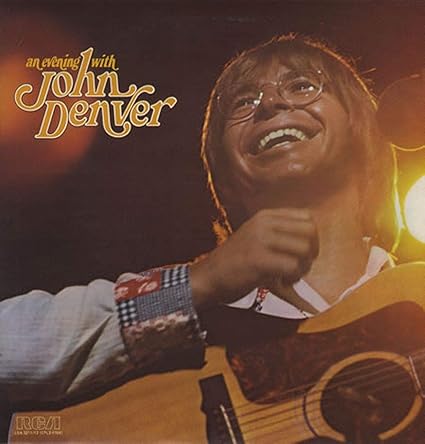
John Denver: “Matthew” (Live) (1975)

Though John Denver’s 1975 live double album An Evening with John Denver spent two weeks at number 2, went triple-platinum and spawned two hit singles, it’s a largely forgotten piece of his catalogue today, with the exception of #1 single “Thank God I’m a Country Boy”. (“Greatest Hits” collections, of which Denver has too many, often make relics of live albums).

But like “Country Boy”, much of this record’s performances actually outdid their original studio versions. Denver put his all into a live album that was a celebration of his rise to the top of the pop music world, backed by a stellar orchestra conducted by Lee Holdridge and such luminaries as Steve Weisberg and Hal Blaine.

The gentle bluegrass ballad “Matthew”, the story of Denver’s real-life uncle, is superior here to its Back Home Again LP version from less than a year earlier. Denver’s voice, one of pop’s sweetest and purest, was perfectly suited to his homespun, optimistic folk-pop, similarly to the way Karen Carpenter’s was a great match to her lovelorn ballad material.

But more than a pleasant voice, Denver was hitting his stride as a singer. His phrasing in this song shows great instincts. He knows to draw out the syllables on lines like “born just south of Colby, Kansas“, while the chorus lines “joy was just the thing that he was raised on, love was just a way to live and die” see him skipping across the short words like a stone across a stream. By alternating similarly throughout the song he both tells his story more credibly and keeps the ear from tiring of one pace of delivery. It’s the subtle genius of a superior singer.

I’ll step onto the soapbox only long enough to say the American Idolization of pop is killing both subtlety and variety in today’s music. With Adele-style belting and Christina Aguilera-style pyrotechnics as primary templates, the singing competitions are the bland tributaries feeding too much of one kind of singing into the mainstream. A young singer today wouldn’t aspire to sing like Karen Carpenter–there’s no one like her on TV to emulate. Neil Young would be laughed off a singing competition show.

John Denver came from a folk music background; young singers today don’t know what folk is. It’s a cliché to say there are no John Denvers anymore. But it’s accurate, I think, to say that pop’s rich diversity isn’t served well by TV singing competition culture.

See also: https://edcyphers.com/2025/04/25/songs-you-may-have-missed-776/

Songs You May Have Missed #289

da vinci

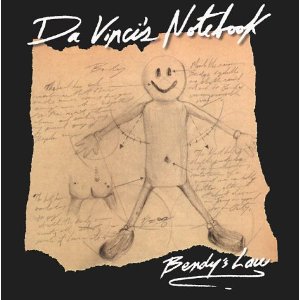
Da Vinci’s Notebook: “Liposuction” (1997)

Comic a cappella vocal group Da Vinci’s Notebook are here to help with your post-holiday weight loss. You’ve already broken the New Year’s resolutions–time for something a little more drastic.

Predating the a capella trend in pop by a number of years, Da Vinci’s Notebook put the focus on humor above polished perfection.

Hence the deliberate sped-up tempo, cornpone delivery, conspicuous throat-clearing and other comic touches.Maybe not as radio-ready as Pentatonix, Rockapella, et al. But arguably more entertaining.

See also: https://edcyphers.com/2013/03/14/songs-you-may-have-missed-360/

See also: https://edcyphers.com/2013/06/06/songs-you-may-have-missed-424-2/

Songs You May Have Missed #288

coxon

Graham Coxon: “You & I” (2006)

Don’t expect a life-changing lyric from former Blur guitarist Coxon here. A bit of the Kinks-flavored bloke rock maybe (if that were a real genre).

Does Listening to Mozart Really Boost Your Brainpower?

mozart

(Reprinted from BBC Future)

by  Claudia Hammond

It is said that classical music could make children more intelligent, but when you look at the scientific evidence, the picture is more mixed.

You have probably heard of the Mozart effect. It’s the idea that if children or even babies listen to music composed by Mozart they will become more intelligent. A quick internet search reveals plenty of products to assist you in the task. Whatever your age there are CDs and books to help you to harness the power of Mozart’s music, but when it comes to scientific evidence that it can make you more clever, the picture is more mixed.

The phrase “the Mozart effect” was coined in 1991, but it is a study described two years later in the journal Nature that sparked real media and public interest about the idea that listening to classical music somehow improves the brain. It is one of those ideas that feels plausible. Mozart was undoubtedly a genius himself, his music is complex and there is a hope that if we listen to enough of it, a little of that intelligence might rub off on us.

The idea took off, with thousands of parents playing Mozart to their children, and in 1998 Zell Miller, the Governor of the state of Georgia in the US, even asked for money to be set aside in the state budget so that every newborn baby could be sent a CD of classical music. It’s not just babies and children who were deliberately exposed to Mozart’s melodies. When Sergio Della Sala, the psychologist and author of the book Mind Myths, visited a mozzarella farm in Italy, the farmer proudly explained that the buffalos were played Mozart three times a day to help them to produce better milk.

I’ll leave the debate on the impact on milk yield to farmers, but what about the evidence that listening to Mozart makes people more intelligent? Exactly what was it was that the authors of the initial study discovered that took public imagination by storm?

When you look back at the original paper, the first surprise is that the authors from the University of California, Irvine are modest in their claims and don’t even use the “Mozart effect” phrase in the paper. The second surprise is that it wasn’t conducted on children at all: it was in fact conducted with those stalwarts of psychological studies – young adult students. Only 36 students took part. On three occasions they were given a series of mental tasks to complete, and before each task, they listened either to ten minutes of silence, ten minutes of a tape of relaxation instructions, or ten minutes of Mozart’s sonata for two pianos in D major (K448).

The students who listened to Mozart did better at tasks where they had to create shapes in their minds. For a short time the students were better at spatial tasks where they had to look at folded up pieces of paper with cuts in them and to predict how they would appear when unfolded. But unfortunately, as the authors make clear at the time, this effect lasts for about fifteen minutes. So it’s hardly going to bring you a lifetime of enhanced intelligence.

Brain arousal

Nevertheless, people began to theorise about why it was that Mozart’s music in particular could have this effect. Did the complexity of music cause patterns of cortical firing in the brain similar to those associated with solving spatial puzzles?

More research followed, and a meta-analysis of sixteen different studies confirmed that listening to music does lead to a temporary improvement in the ability to manipulate shapes mentally, but the benefits are short-lived and it doesn’t make us more intelligent.

Then it began to emerge that perhaps Mozart wasn’t so special after all. In 2010 a larger meta-analysis of a greater number of studies again found a positive effect, but that other kinds of music worked just as well. One study found that listening to Schubert was just as good, and so was hearing a passage read out aloud from a Stephen King novel. But only if you enjoyed it. So, perhaps enjoyment and engagement are key, rather than the exact notes you hear.

Although we tend to associate the Mozart effect with babies and small children, most of these studies were conducted on adults, whose brains are of course at a very different stage of development. But in 2006 a large study was conducted in Britain involving eight thousand children. They listened either to ten minutes of Mozart’s String Quintet in D Major, a discussion about the experiment or to a sequence of three pop songs: Blur’s “Country House,” “Return of the Mack,” by Mark Morrison and PJ and Duncan’s “Stepping Stone”. Once again music improved the ability to predict paper shapes, but this time it wasn’t a Mozart effect, but a Blur effect. The children who listened to Mozart did well, but with pop music they did even better, so prior preference could come into it.

Whatever your musical choice, it seems that all you need to do a bit better at predictive origami is some cognitive arousal. Your mind needs to get a little more active, it needs something to get it going and that’s going to be whichever kind of music appeals to you. In fact, it doesn’t have to be music. Anything that makes you more alert should work just as well – doing a few star jumps or drinking some coffee, for instance.

There is a way in which music can make a difference to your IQ, though. Unfortunately it requires a bit more effort than putting on a CD. Learning to play a musical instrument can have a beneficial effect on your brain. Jessica Grahn, a cognitive scientist at Western University in London, Ontario says that a year of piano lessons, combined with regular practice can increase IQ by as much as three points.

So listening to Mozart won’t do you or your children any harm and could be the start of a life-long love of classical music. But unless you and your family have some urgent imaginary origami to do, the chances are that sticking on a sonata is not going to make you better at anything.
Songs You May Have Missed #287

roman

Roman Candle: “Why Modern Radio is A-OK” (2009)

One of NC’s finest bands explain why sometimes the sack o’ monkeys that is modern radio is the right choice of bar music…

See also: https://edcyphers.com/2012/11/28/recommended-albums-31/

CANDLE

Previous Older Entries Next Newer Entries