"There's a time in life for Hoagy Carmichael. There's a time in life for Claude Debussy. There's a time in life for Jerry Lee Lewis. There's a time in life for Destiny's Child. All these things have their moment." ~Elvis Costello
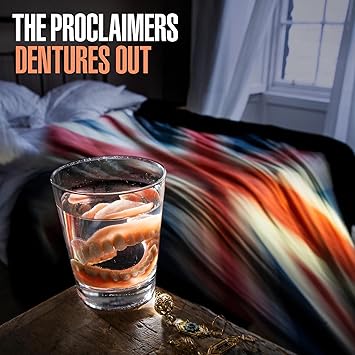
Scottish duo the Proclaimers will seemingly never lose the knack for punchy, pointed, succinct, quasi-political musical manifestos like “Dentures Out”.
From 2022’s LP of the same name, which the Reid brothers describe as an “anti-nostalgia album”, a reflection on the terminal decline of Britain. Says brother Craig, “I don’t think anybody could seriously argue that Britain is a stronger, better or happier society now than it was 10 years ago. The decline seems to be accelerating, which is part of the feeling behind.”
Still, strictly from a musical point of view, it’s like listening to ABBA sing about their own marital disintegration in addictively catchy numbers like “SOS” and “Knowing Me, Knowing You”. No one made the demise of a relationship sound so sublime.
The Proclaimers are the political equivalent. No one makes cultural malaise sound so miraculously joyous.
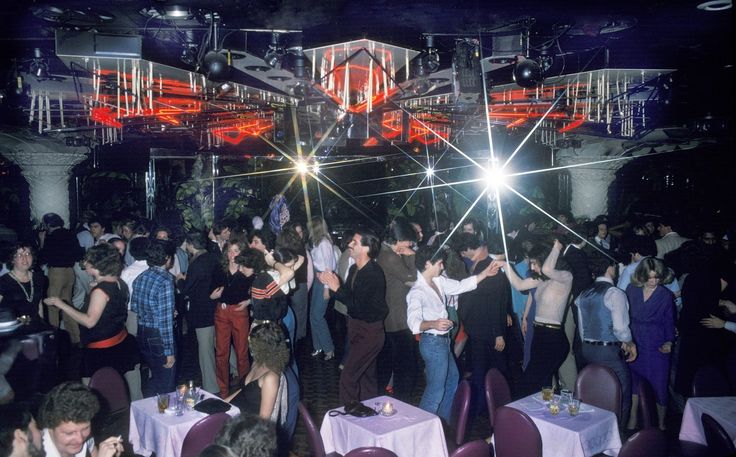
When you think of “disco,” what comes to mind? Is it the music? Is it the lit-up dance floor? The outfits? Does the word “Revolution” ever come to mind?
For many, disco music transcended the dance floors of trendy clubs and became the genre of self-expression. But what goes up, must come down. The backlash to the barrage of disco from the music industry forced the genre to evolve. But decades later, new audiences are still reaching to disco for inspiration.
The new PBS docuseries, “Disco: Soundtrack of a Revolution,” airs tomorrow. It dives into the history of the genre and explores the legacy still felt decades later.
Why is the disco era so often dismissed as hedonistic and frivolous, when the genre was embraced by so many?
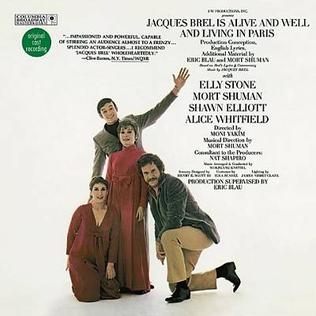
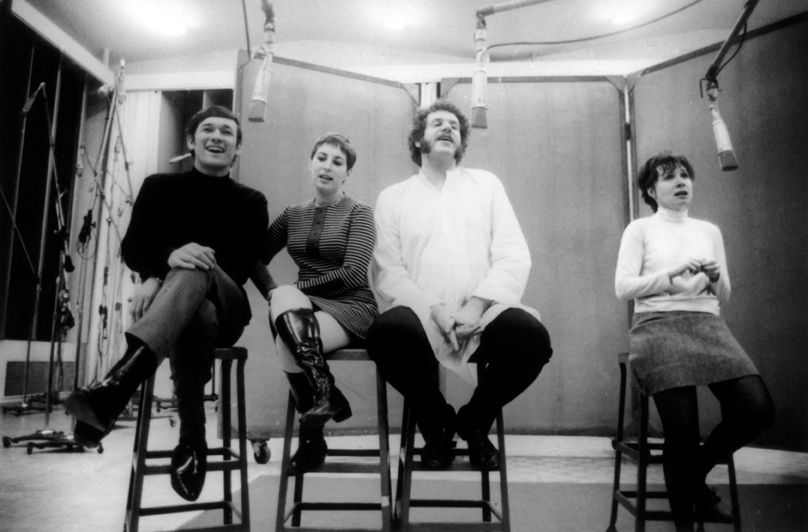
From the 1968 Off-Broadway revue Jacques Brel is Alive and Well and Living in Paris, for which French songwriter/singer/actor Brel himself provided music and French lyrics, which were (brilliantly) translated to English by Eric Blau and cast member Mort Shuman, one of only four vocalists featured in the musical.
The original Off-Broadway production lasted four years, spawned a film version, and led to even greater stage successes around the globe.
Paris, Dublin, Sydney, Copenhagen and Amsterdam were among the cities that had successful runs. And a production in Johannesburg, South Africa became the longest-running theatrical production in that country’s history.
Perhaps most importantly, this musical gave the world definitive English-language versions of many fine Jacques Brel compositions, making the soundtrack a great primer on the work of one of the era’s greatest songwriters.
New productions of the musical have continued be presented from New York to Canada to Dublin to Singapore and as recently as 2017.
To the uninitiated I recommend adding this soundtrack to your collection or playlist. Jacques Brel hasn’t been with us since 1978, but the revue that features his brilliant work is indeed still alive and well.