The Persistence of Prog Rock

Photograph by Tony Byers / Alamy

Critics think that the genre was an embarrassing dead end. So why do fans and musicians still love it?

(via The New Yorker) By Kelefa Sanneh June 12, 2017

In April, 1971, Rolling Stone reviewed the début album by a band with a name better suited to a law firm: Emerson, Lake & Palmer. The reviewer liked what he heard, although he couldn’t quite define it. “I suppose that your local newspaper might call it ‘jazz-influenced classical-rock,’ ” he wrote. In fact, a term was being adopted for this hybrid of highbrow and lowbrow.

People called it progressive rock, or prog rock: a genre intent on proving that rock and roll didn’t have to be simple and silly—it could be complicated and silly instead. In the early nineteen-seventies, E.L.P., alongside several more or less like-minded British groups—King Crimson, Yes, and Genesis, as well as Jethro Tull and Pink Floyd—went, in the space of a few years, from curiosities to rock stars.

This was especially true in America, where arenas filled up with crowds shouting for more, which was precisely what these bands were designed to deliver. The prog-rock pioneers embraced extravagance: odd instruments and fantastical lyrics, complex compositions and abstruse concept albums, flashy solos and flashier live shows. Concertgoers could savor a new electronic keyboard called a Mellotron, a singer dressed as a batlike alien commander, an allusion to a John Keats poem, and a philosophical allegory about humankind’s demise—all in a single song (“Watcher of the Skies,” by Genesis).

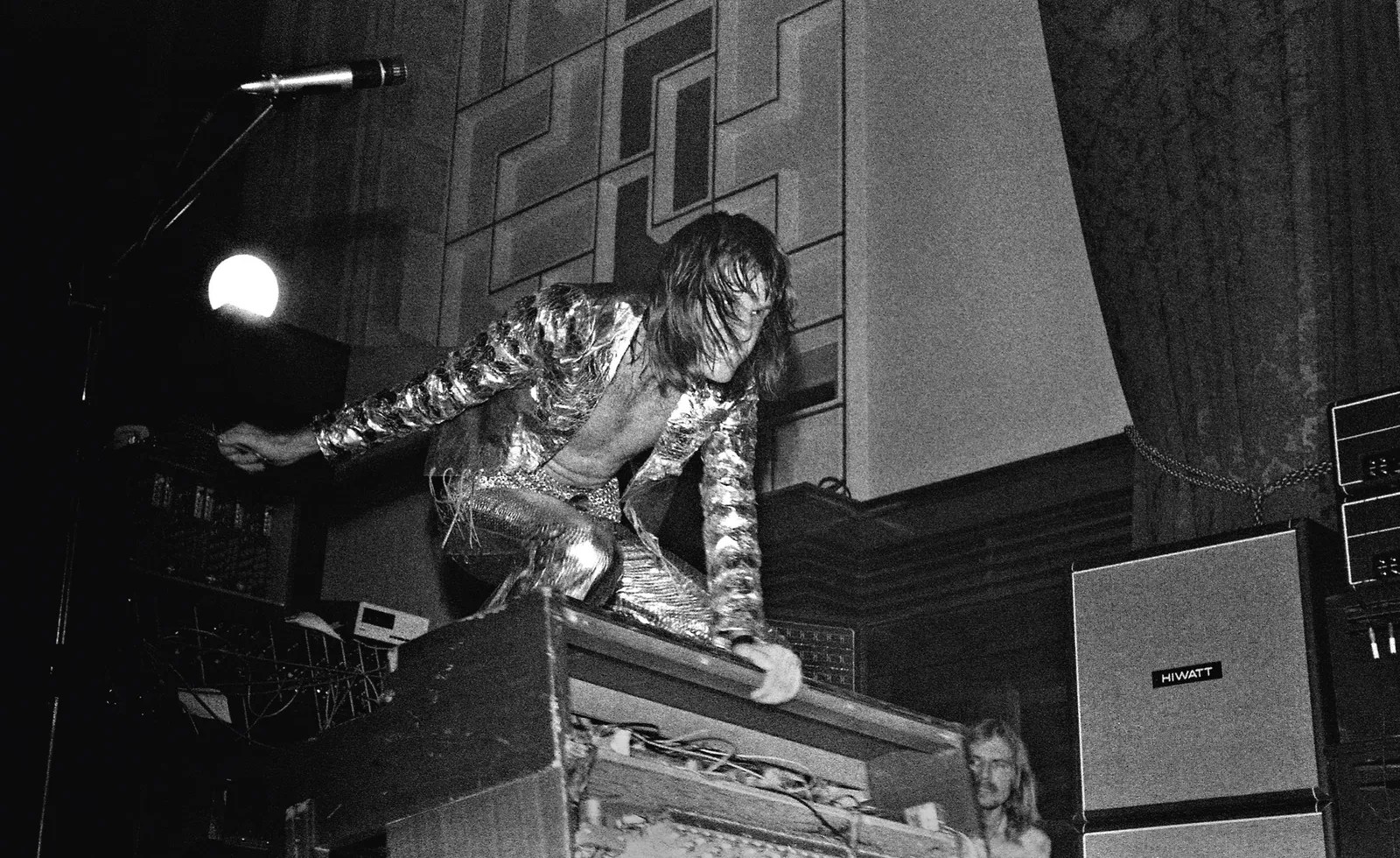
In place of a guitarist, E.L.P. had Keith Emerson, a keyboard virtuoso who liked to wrestle with his customized Hammond organ onstage, and didn’t always win: during one particularly energetic performance, he was pinned beneath the massive instrument, and had to be rescued by roadies. Perhaps this, too, was an allegory…

Read more: https://www.newyorker.com/magazine/2017/06/19/the-persistence-of-prog-rock
Video of the Week: Hazel Scott–Taking a Chance On Love

The great Hazel Scott (June 11, 1920 – October 2, 1981) Trinidad-born American jazz and classical pianist and singer, She was not only a gifted pianist and singer – a child prodigy who at only eight-years-old was given a scholarship from the Julliard School of Music to be privately tutored – Scott was also an outspoken critic of racial discrimination and segregation, She used her influence to improve the representation of Black Americans in film.

Here, she is performing “Taking a Chance on Love” in 1943.

Quora: Why is the band “Queen” called “Queen”? What is the story behind the choice of name?

(via Quora)

Why is the band “Queen” called “Queen”? What is the story behind the choice of name?

The main reason was clever marketing and imagination on Freddie’s part. He had said he wanted a one-word name as it would have more impact. IMO he wisely fought off Brian’s determination to name their new group “Build Your Own Boat” and Roger’s idea to name them “The Rich Kids”. Also, he had talked about the need for bands to be a little bit outrageous in order to stand out and get noticed when they are trying to…..make a name for themselves. Sorry. Daring to call themselves Queen did just that. Surely there was some outrage at the cheekiness of commandeering the name Queen inside the British Monarchy. He loved the monarchy. He had seen suffering on the part of citizens in his former countries because of widespread corruption among government officials and greatly appreciated Britain’s legal system. He also loved the regal and grandiose connotation of the name. The gay connotation lent itself well to the glam rock and androgyny that became so popular during that period. He pointed out that King wouldn’t have had the same impact because it doesn’t have the same ring or aura as “Queen”. He was right. He was even thinking of the phonetic sound of the name in addition to the multiple meanings behind the word.

Here’s a great quote by Freddie: “It’s just a name, but it’s very regal obviously, and it sounds splendid. It couldn’t have been King, it doesn’t have the same ring or aura as Queen. It’s a strong name, very universal and immediate. It had a lot of visual potential and was open to all sorts of interpretations. I was certainly aware of gay connotations, but that was just one facet of it.”

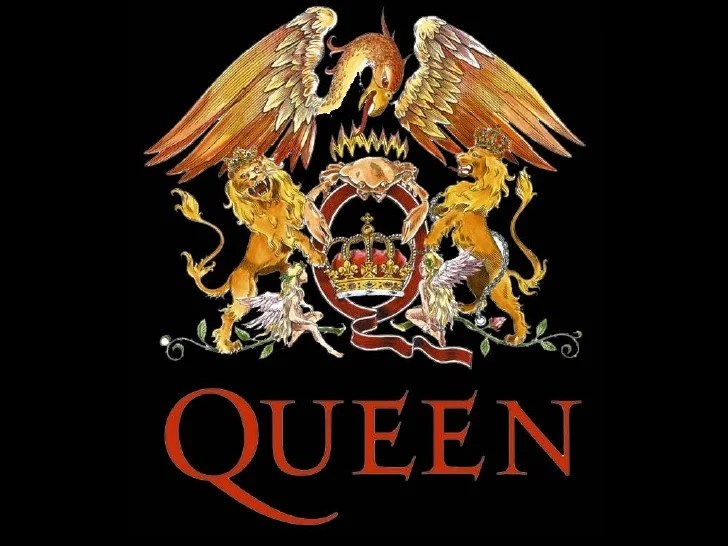
“Visual potential” Freddie studied fashion and graphic design/advertising and was thinking ahead. “Queen” lent itself so well visually. It made for a distinctive and regal band crest that Freddie designed. They used a crown lighting rig at one point and if it weren’t for the name Queen we wouldn’t have the memories and images of Freddie wearing the crown and robe during his final appearances. That’s hard to imagine.

The icing on the cake for Freddie must have been the fact that he was gay and in the closet at the time they adopted the name. Freddie was a subversive wedge in a time of homophobia. You can’t tell me he didn’t relish the name Queen for this reason as well.

A Shelter in Time: John Berger on the Power of Music

“Songs are like rivers: each follows its own course, yet all flow to the sea, from which everything came.”

(via The Marginalian) by Maria Popova

“A rough sound was polished until it became a smoother sound, which was polished until it became music,” the poet Mark Strand wrote in his ode to the enchantment of music. Music is the most indescribable of the arts, and that may be what makes it the most powerful — the creative force best capable of giving voice and shape to our most ineffable experiences and most layered longings, of containing them and expanding them at once. It is our supreme language for the exhilaration of being alive.

I have come upon no finer definition of music than philosopher Susanne Langer’s, who conceived of it as a laboratory for feeling in time. Time, indeed, is not only the raw material of music — the fundamental building block of melody and rhythm — but also its supreme gift to the listener. A song is a shelter in time, a shelter in being — music meets us at particular moments of our lives, enters us and magnifies those moments, anchors them in the stream of life, so that each time we hear the song again the living self is transported to the lived moment, and yet transformed…

Read more: https://www.themarginalian.org/2023/06/27/john-berger-some-notes-on-song/?mc_cid=8d3eb0e4c4&mc_eid=3d582d0f9a

On a Lighter Note…

Video of the Week: Neil Diamond Reflects in 2011 Irish TV Interview

Previous Older Entries Next Newer Entries