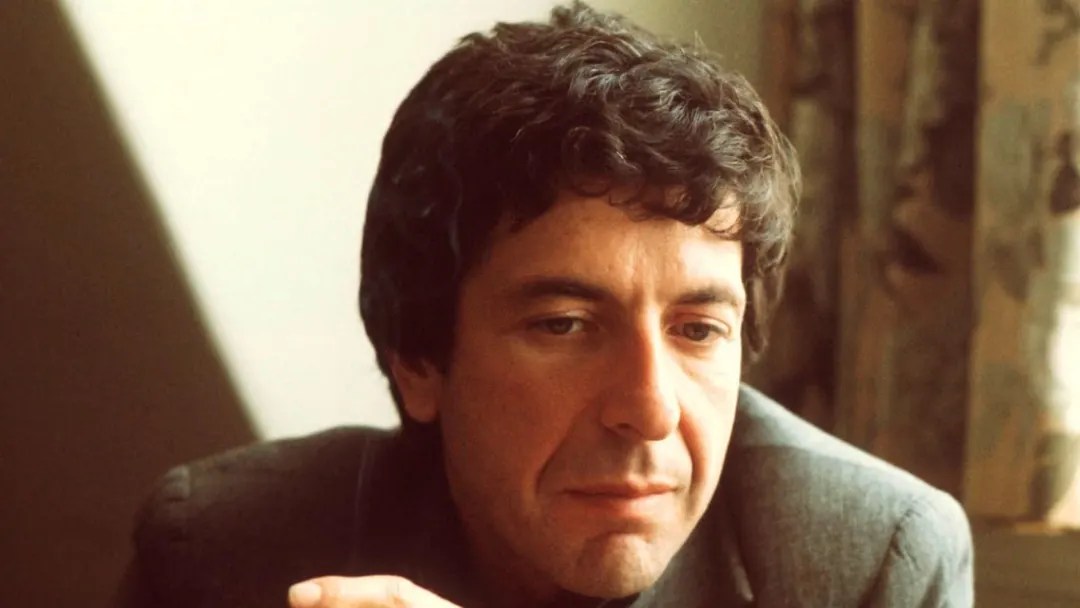
Leonard Cohen in London in June 1974. / Michael Putland/Getty Images
(via Mental Floss) By Kenneth Partridge
In the late 1970s, Leonard Cohen sat down to write a song about god, sex, love, and other mysteries of human existence that bring us to our knees for one reason or another. The legendary singer-songwriter, who was in his early forties at the time, knew how to write a hit: He had penned “Suzanne,” “Bird on the Wire,” “Lover, Lover, Lover,” and dozens of other songs for both himself and other popular artists of the time. But from the very beginning, there was something different about what would become “Hallelujah”—a song that took five years and an estimated 80 drafts for Cohen to complete.
In the 35 years since it was originally released, “Hallelujah” has been covered by more than 300 other artists in virtually every genre. Willie Nelson, k.d. lang, Justin Timberlake, Bono, Brandi Carlile, Bon Jovi, Susan Boyle, Pentatonix, and Alexandra Burke—the 2008 winner of the UK version of The X Factor—are just a few of the individuals who have attempted to put their own stamp on the song. After Burke’s soulful version was downloaded 105,000 times in its first day, setting a new European record, “Hallelujah” soon became a staple of TV singing shows…
Hindsight bias is fascinating, particularly with students of a culture as opposed to those who experienced cultural events firsthand. Today, Steely Dan is regarded as two master craftsmen of studio sophistication – cynical jazz-heads with little patience for all but the cream of the musical crop.
The early-to-mid 1970s were a slightly different story, however. With the emergence of progressive bands like Genesis, Yes, and Jethro Tull, those not paying attention might have lumped Steely Dan in with any number of pedestrian rock bands of the day.
Sure, preemptive moves had been made to suggest the ultimate direction of the outfit. But as far as heady chords and swearing off the road, The Beatles had beaten them to the punch a decade earlier.
Today, listeners generally glean their interpretation of the Steely Dan “sound” from the group’s sixth LP, the high watermark, Aja. But during the first half of their career, a general pop audience may have been more likely to associate the group with their 1972 debut, Can’t Buy a Thrill…












 Every Moment Has A Song