I thought I’d share actual video of one of the more infamous–and erroneous–stories in rock history. For years people told the story of how Alice Cooper bit the head off a live chicken onstage, a story that helped cement his shock rocker rep.
The truth, revealed in this documentary clip, was that someone in the audience threw the chicken onto the stage and Alice, not knowing chickens can’t fly, tossed it back, wereupon the audience tore it to pieces.
Bad for the chicken–who probably wondered, as we all do, what it was doing at an Alice Cooper show–but great for rock and roll lore.
Every era and genre of music has songs that were popular in their day, but whose footprints have been washed from the sand over time. Our goal in this series of posts is to resurrect their memory; to help in a small way to reverse the process of the “top tenning” of oldies formats, which reduce hit makers from previous decades to their most popular song or two and then overplay them until you almost loathe an artist you used to enjoy (think “Sweet Caroline” or “Don’t Stop Believin’”).
I’ll be citing the Billboard pop charts for reference. Billboard Hot 100 charts of the 60′s and 70′s were a much more accurate reflection of a song’s popularity, before there were so many other ways for a song to enter the public consciousness (reflected by the number of pop charts Billboard now uses). It was an era when radio ruled–before a car commercial, social music sharing site, or Glee were equally likely ways for a song to break through.
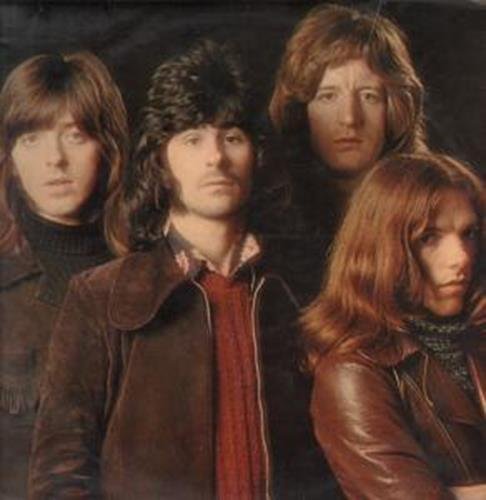
Badfinger: “Baby Blue”
#14 in 1972
Badfinger were responsible for three of the decade’s classic pop songs, “No Matter What”, “Day After Day” and “Without You” (which Nilsson recorded a Grammy Award-winning version of). But “Baby Blue” from 1972 is a lost treasure and a classic case of pop oldies radio’s “top tenning” of its format. Give it a listen and see if you agree it deserves a better fate than its obscurity:
Following the impossible-to-follow Frampton Comes Alive album, the LP credited with single-handedly bringing the record industry out of a mid-70’s slump, Peter Frampton was somehow talked into one of the most unfortunate cover shoots in pop music history. Where he’d looked like a badass guitar hero on the iconic live album’s cover, here he looked like kind of a pussy. And “I’m in You”, as a musical follow-up, was kind of a pussy song.
Don’t get me wrong, I love pussy rock songs. But when you’ve just established yourself as an FM radio god (we made the disctinction back then, because AM was still home to top 40 stations) and recorded the 14-minute “Do You Feel Like We Do” and brought the talk box into our collective consciousness and so on, “I’m in You” seemed like a concession to the female segment of your audience, and a betrayal of the pale young boys–you know, the ones who bought Frampton Comes Alive.
A career-killer if there ever was one. Frampton never really recovered from this.
I know, I know. Alice Cooper, Shock Rocker. In your face, “No More Mr. Nice Guy”, “School’s Out” Alice. To the uninitiated he was one-dimensionally demented. But I’ll say this for the man Bob Dylan called the most underrated songwriter of his generation: he could write a pretty ballad. No less than three qualify as Forgotten Hits in my book. All date from a period when he was trying to kick the bottle and change (or at least broaden) his image.
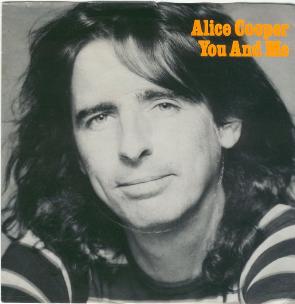
His personal life needing to be put in order, Alice the man had to learn to keep Alice the character onstage, for the sake of his own sanity and longevity. Like Kiss a couple of years later, he even took the makeup off. Looks rather charming I think on the “You and Me” 45 sleeve above–though it’s hardly Peter Frampton in pink silk pants…
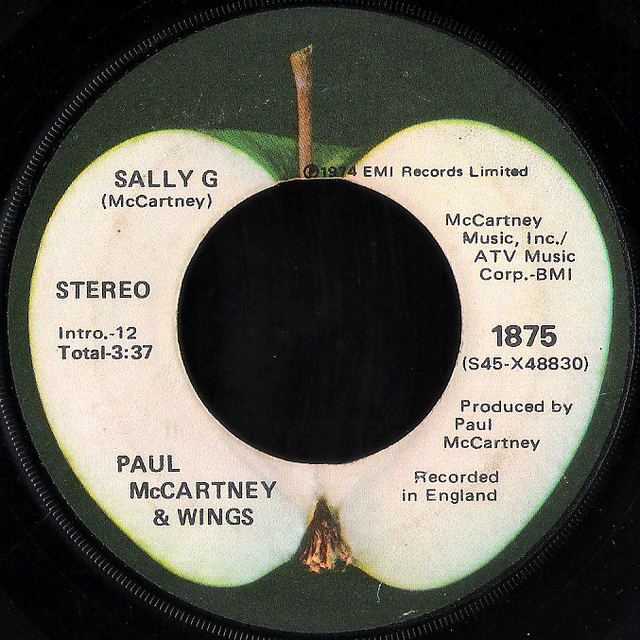
Ever restless in the first post-Beatles decade, Paul seemed to record in a different location each time he worked on a record. The flip side of non-album single “Junior’s Farm” came from sessions he recorded in Nashville in 1974–and the fiddle and steel guitar didn’t exactly make it a country song. They made it a McCartney song with fiddle and steel guitar. But even as a stylistically atypical B-side it went top twenty on the pop charts. A cute, largely forgotten piece of Paul’s catalog.
Although the guitar effect known as the “talk box” has a history dating back to 1939, Peter Frampton’s use of the effect on Frampton Comes Alive‘s “Do You Feel Like We Do” was the effect’s first exposure to many. But a few months earlier America (of all people) used it on the reggae-tinged single “Woman Tonight”. The song isn’t typical of America’s stuff–it’s neither the dour meditation of “A Horse With No Name” or a pretty harmony-laden ballad like “I Need You”. It sounds like a party song. And maybe it’s because it sounds so little like an America song that radio programmers have left it behind. Or maybe it’s because it never charted very high in the first place. Either way it deserves another listen.
“The Circle is Small” was the final top 40 hit in Gordon Lightfoot’s nearly 8-year run as a pop star. He’d never really followed up the success of the #2 “Wreck of the Edmund Fitzgerald” a year and a half earlier. Funny how you don’t really see the end of an artist’s run until a few years go by and you’re wondering whatever happened to… Such was the case with Lightfoot, at least as an American pop artist. He remains a Canadian folk music legend, though, to this day.
Gord’s hits like “Sundown”, “If You Could Read My Mind” and “Carefree Highway” fit the playlists of senior radio perfectly. But they’ve never found a place in the rotation for his final chart hit. The circle is small, indeed.
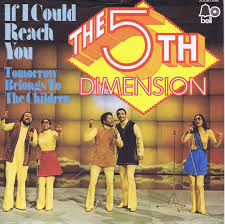
“If I Could Reach You” was the last top ten, or even top thirty, hit of the many the Fifth Dimension racked up between 1967 and ’72. The sophisticated, proto-Adult Contemporary ballad peaked at #10 and I don’t know why it doesn’t slot into the same radio formats that still keep “Wedding Bell Blues” and “One Less Bell to Answer” and “(Last Night) I Didn’t Get to Sleep at All” in the mix. Marilyn McCoo’s melancholy delivery nails it on this ode to unrequited love. Should be a classic. It’s a buried treasure instead. Dig it.
The phrase “power ballad” means something different to everyone who hears or uses it. For me the term is inescapably accurate for describing a type of music that holds an undeniable fascinating and appeal for me. The next several songs I’ll share have the traits I consider this type of song to possess.
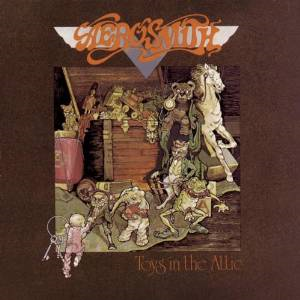
They would include something I can only describe as a latent-sounding power, a feeling of something held in reserve. Perhaps a lead vocal sung in a voice that’s clearly built for screaming rather than cooing to an audience. Or a mix that’s a little heavier on the drums or bass than the producer of a ballad-singing artist would have thought appropriate. And an overall rough-edged sound that gives you the feeling you’re hearing a band in a tender moment, but that it’s clearly a band who doesn’t often have tender moments–giving the song, of course, more “power”. “You See Me Crying”, from Aerosmith’s 1975 Toys in the Attic LP fits my definition at least of the term “power ballad” perfectly.
I must digress for a moment to say that Toys… is far and away Aerosmith’s greatest moment as a band. Not only does the album contain classics “Walk This Way” and “Sweet Emotion” but it’s loaded with great album cuts like “Adam’s Apple”, “No More No More”, title track “Toys in the Attic” and their cover of boogie-woogie blues chestnut “Big Ten Inch Record”, which surely would have been covered by David Lee Roth, with or without Van Halen, had Aerosmith not beat him to it.
“You See Me Crying” is the perfect closer to this classic album, and a nice contrast to everything that precedes it. Joining the melancholy piano figure opening the track are a pair of woodwinds–an oboe, of all things!–and Steven Tyler’s ragged voice is nicely offset by a gradually swelling orchestral arrangement.
Alice Cooper’s “Only Women Bleed”, which was released as a single in the same month of April ’75 and was the shock rocker’s first foray into power ballad territory, uses an almost identical formula. If you haven’t heard it recently, listen again to its breathtaking arrangement, which beautifully incorporates horns and strings alongside traditional rock guitar/bass/drums for maximum emotional impact. It’s a true rock masterpiece–perhaps the greatest “power ballad” of them all.





 Every Moment Has A Song