For years, I neglected my CD collection. Most of the music I listened to was through streaming services like Spotify, and while I have a modest CD collection and a small record collection, I’ve been very digital-first, and not caring much about the quality of my music.
But lately, that’s been changing. Lots of people are returning to retro tech, and that made me think about my CDs, a beautiful format with fantastic audio quality, portability, and longevity. To hold a physical representation of my music in my hands, to display it, and to treasure it feels more meaningful than a Spotify subscription, so I’m happy to be revisiting my CDs again in 2024. Here are some of my main reasons for doing that…
“If I could just afford one new CD a week, I’d be a happy man,” I declared to a coworker at Pure Pop Records in Burlington, Vermont, where I worked between 1995 and 1998. In the first years of my 20s, this goal represented the peak of my aspirations, and the fluke of fortune that won me employment at the hip, indie, basement record store — right out of High Fidelity — made the achievement possible.
Then I joined the Peace Corps and by September 1998 had landed in a tiny Estonian village to teach English for the next two years. The CD collection of about 600 I’d amassed from Pure Pop’s employee discount, promotional copies and trades could not make the journey, save a fistful of “desert island discs” slipped into a Case Logic and a backpack.
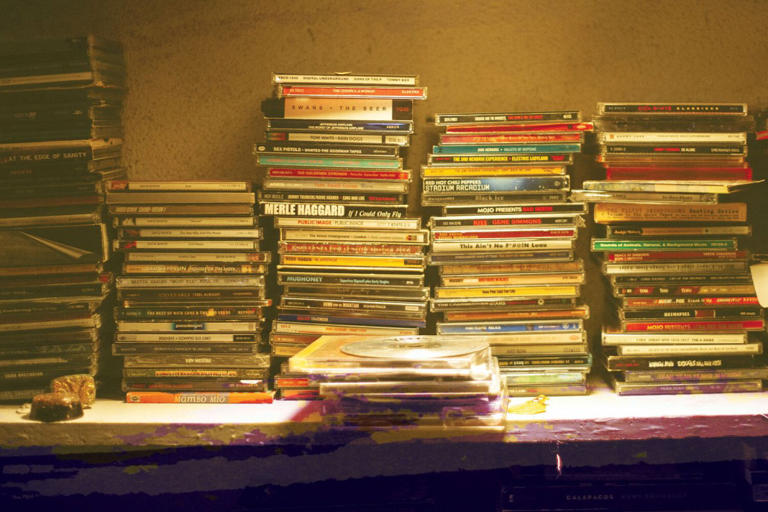
The rest of the collection took its own journey, staying tucked away in a variety of storage areas as I pursued collecting countries over the next two decades. In fact, most remained under literal wraps until 2023, when I finally was able to bring it all back home. By this point, the collection was much reduced. Many boxes had disappeared, some storage locations were forgotten or no longer existed, other discs were gifted and sold, and one box simply melted in the attic heat into plastic abstract art. Nevertheless, the 250 survivors now stand tall in the corner of my living room — the first time in 25 years.
To my surprise, as the ‘90s discs took their first spins in decades, more came from the speakers than just music.
This Is Me
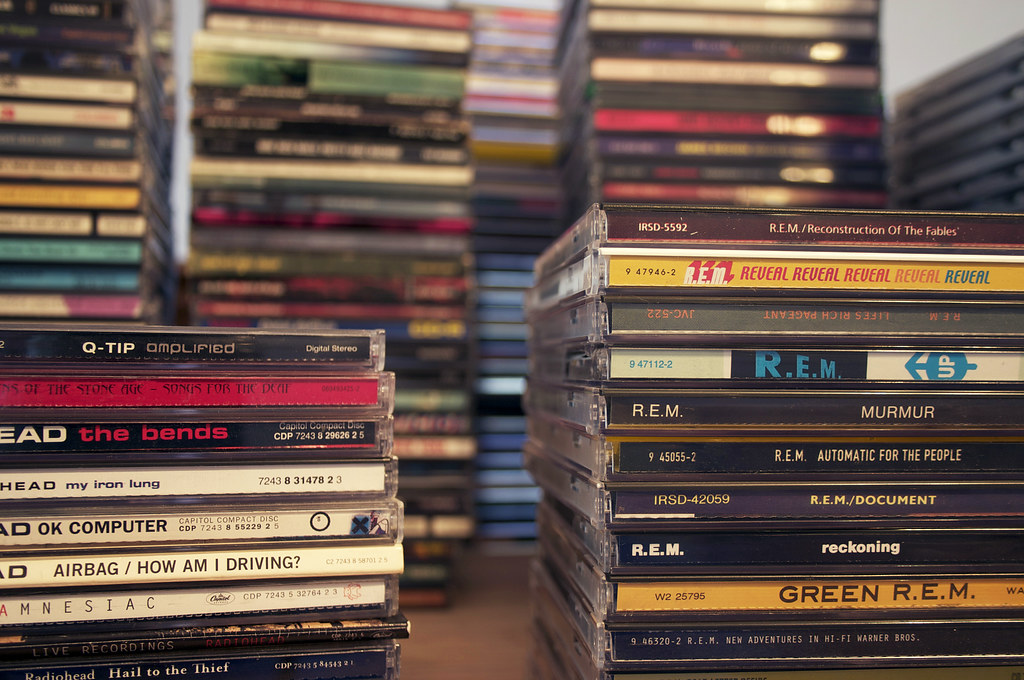
“What really matters is what you like, not what you are like,” Nick Hornby wrote in his novel High Fidelity, and ‘90s CD collections offered this window to the soul in a very public way, as most everyone kept their music collection in the common areas — if not making it a centerpiece. A simple scan of the titles and artists on display at any new person’s home, all clear along the spine, could reveal much about the person behind them. It wasn’t just the amount of classic rock vs. hip-hop vs country or other, but the method of organization (if any), condition of cases and the ratio of greatest hits compilations to proper albums.
With physical music collections far less common today and often packed away in storage, or secured behind platform passwords online, this powerful public expression of identity has been lost to many. Having the collection out in the open again returns it, proclaiming in a fulfilling way to the world — and myself — “This is me!”
Escape from the Planet of the Algorithm
Under the great algorithm in the sky, our choices are shaped and directed by artificial intelligence and mathematical calculation. This is particularly true with music today, as platforms, playlists and channels push derivations of each other, as if part of a single musical family tree. That’s in stark contrast to the more human ‘90s approach that did not have these tools.
My collection provides a tangible and tactile reminder of this more analog time — even in a digital format — when purchases were driven more from word-of-mouth, life experiences, cover art and sometimes simply throwing a dart and seeing where it landed. The result was music I pulled toward me, not that was pushed on me. With the pull comes a closer connection and greater meaning, enriching a listening session with more soul than the algorithm can ever provide.
 Every Moment Has A Song