(Reprinted from The College of Rock and Roll Knowledge)
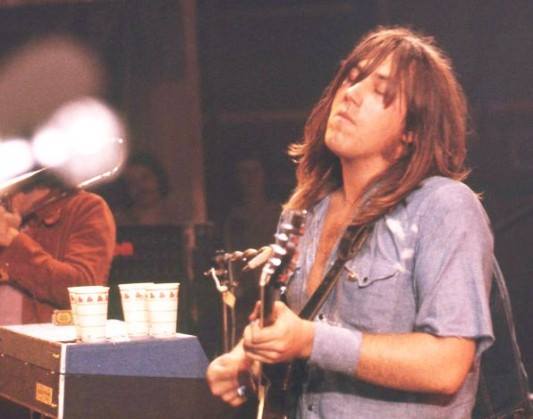
There is a story that says that Jimi Hendrix, when asked what it is like to be the greatest guitarist in the world said “I don’t know you’d have to ask Terry Kath.” (It has been said that Hendrix made that comment about Rory Gallagher also).
Terry was the original guitarist for and a founding member of Chicago. It was 38 years ago today that we lost Terry.
By 1978, Kath was regularly carrying guns around, and enjoyed playing with them. Around 5 p.m., on Jan. 23, after a part…y at roadie and band technician Don Johnson’s home in Woodland Hills, Los Angeles, California, Kath took an unloaded .38 revolver and put it to his head, pulling the trigger several times on the empty chambers. Johnson had warned Kath several times to be careful. Kath then picked up a semiautomatic 9 mm pistol and, leaning back in a chair, said to Johnson, “Don’t worry about it … look, the clip is not even in it.” To satisfy Johnson’s concerns, Kath showed the empty magazine to Johnson. Kath then replaced the magazine in the gun, put the gun to his temple, and pulled the trigger. However, there was a round in the chamber, and Kath died instantly. Terry was only 31 years old.
His guitar playing on the first few LP’s by Chicago is legendary.
What is the first song you think about when you hear Terry’s name?
RIP Terry. You had the whole world watching and listening.
___________________
…and Kath was extremely underrated as a singer, too. Take a listen.
There’s nothing fancy going on here, just one of those songs that made a great album opener (complete with count-off) setting the tone for what I consider to be Chicago’s last great album. It’s a simple ditty, but has everything a good Chicago song should: the horn charts, the fiery Terry Kath guitar solo, and an uplifting vibe. They were a band nearing the end of their true classic period–but they weren’t quite dead yet.
Every era and genre of music has songs that were popular in their day, but whose footprints have been washed from the sand over time. Our goal in this series of posts is to resurrect their memory; to help in a small way to reverse the process of the “top tenning” of oldies formats, which reduce hit makers from previous decades to their most popular song or two and then overplay them until you almost loathe an artist you used to enjoy (think “Sweet Caroline” or “Don’t Stop Believin’”).
I’ll be citing the Billboard pop charts for reference. Billboard Hot 100 charts of the 60′s and 70′s were a much more accurate reflection of a song’s popularity, before there were so many other ways for a song to enter the public consciousness (reflected by the number of pop charts Billboard now uses). It was an era when radio ruled–before a car commercial, social music sharing site, or Glee were equally likely ways for a song to break through.
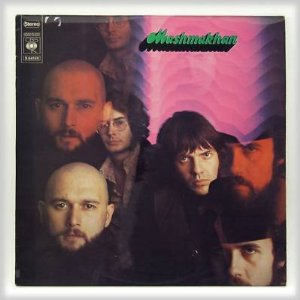
Mashmakhan: “As the Years Go By”
#31 in 1970
Some of these songs are being resurrected from the dustbin, but “As the Years Go By” by Montreal’s Mashmakhan sounds, at least for the first 30 seconds, like it’s rising out of a tomb. Surely one of the more distinctive-sounding songs to brush the top 40, perhaps it suffered from being a little too distinctive. The lyrics have been criticized as being typically jejune for the time. But hey, it’s cut from the same cloth as Zager and Evans’ “In the Year 2525” and I happen to have a soft spot for both songs.
“As the Years Go By” does have a message, and it’s one you don’t hear in a hundred other songs. It’s got mad hooks too. Plus the intro is super scary.
Though this song only peaked at #31 in America, it actually sold a million copies in Japan.
_________________________
Gerry Rafferty: “Get it Right Next Time”
#21 in 1979
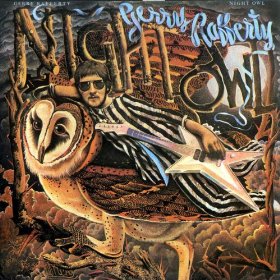
Ex-Stealers Wheel Gerry Rafferty had one massive, platinum selling success (1978’s City to City) then Nite Owl managed to sell gold in ’79. But with each successive subsequent release his albums were being dipped in less and less precious metals before framing. It’s the sad, clammy tale of many a 70’s pop star.
Rafferty, who struggled with alcoholism, died of liver disease in 2011. His two best-remembered works will surely be “Stuck in the Middle With You” and “Baker Street” while a layer of dust has already settled on hits like “Get it Right Next Time”.
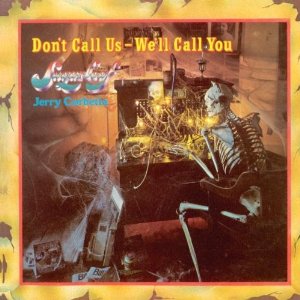
Almost five years after their only other top 40 hit, 1970’s #3 “Green-Eyed Lady”, Sugarloaf slyly made tribute to The Beatles, both by cribbing the guitar riff from “I Feel Fine” and by mentioning “John, Paul and George” in this amusingly cynical look at record company relations. (“You ain’t bad, but we’ve heard it all before”)
My favorite line is the spoken aside: “I said, ‘you got my number?’–He said, ‘yeah I got it when you walked in the door'”
_________________________
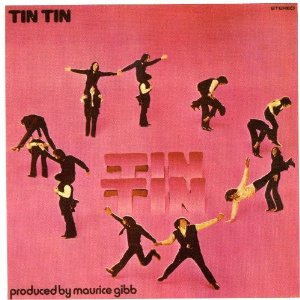
Tin Tin: “Toast and Marmalade for Tea”
#20 in 1971
Maurice Gibb of the Bee Gees produced this debut single by Australian pop duo Tin Tin, and it certainly carries the stamp of the Brothers Gibb’s stately ballads of the same period (think “Lonely Days” or “I Started a Joke”).
Singer/keyboardist Steve Kipner later went on to write hits like Chicago’s “Hard Habit to Break” and Olivia Newton-John’s “Physical”.
Thanks, Steve.
_________________________
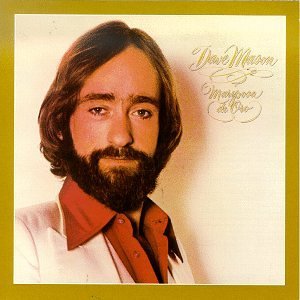
Dave Mason: “Will You Love Me Tomorrow”
#39 in 1978
An original member of Traffic, Dave Mason only cracked the top 40 twice in his subsequent solo soft-rock career. His 1977 #12 single “We Just Disagree” represents 3 minutes of classic 70’s soft rock, if you believe there could be such thing.
Mason brought a very similar sound (harmonies and flanger-effect acoustic guitar, switching out piano for organ) to his cover of a Carole King standard the next year, recording what is my personal favorite version of “Will You Love Me Tomorrow”. It grazed the top 40 and then was pretty much forgotten overnight. Kind of ironic, no?
_________________________
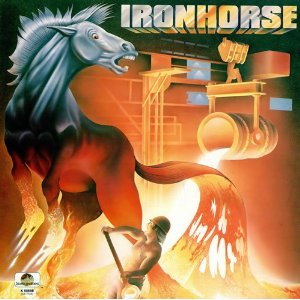
Ironhorse: “Sweet Lui-Louise”
#36 in 1979
Randy Bachman’s career trajectory (The Guess Who, then Bachman-Turner Overdrive, then Ironhorse) certainly makes the case that artists peak early in life. That’s not to say “Sweet Lui-Louise” is any worse a song than “Takin’ Care of Business” ’cause nothing is. But it’s no “Undone” or “These Eyes”.
This was the only time Ironhorse’s orbit brought them within the top 40. Interestingly (or maybe not) Bachman reprises the stuttering vocal style of BTO’s “You Ain’t Seen Nothing Yet”.
But we had. We’d seen it and we’d heard it. And we collectively said, “Go away and come back when you’ve reformed The Guess Who”.
Randy’s son Tal had a hit in 1999 with “She’s so High”.
_________________________
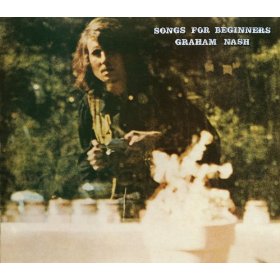
Graham Nash: “Chicago”
#35 in 1971
Graham Nash cut his pop music teeth with the Hollies during the British Invasion and the beginning of the psychedelic era. But while he was part of a truly great pop songwriting team along with Allan Clarke and Tony Hicks, responsible for such hits as “Stop, Stop, Stop”, “Carrie Anne”, “On A Carousel” and “Pay You Back With Interest”, he began to feel stifled when some of his more reflective, singer-songwriter style material only languished as obscure album tracks. Long story short, it wasn’t long before he hooked up with David Crosby and Stephen Stills and made the kind of singer-songwriter tunes that people still respect, such as “Our House” and “Teach Your Children”…before “singer-songwriter” came to mean “James Taylor” and it earned as many enemies as fans.
Fast-forward to 1971 and Nash is releasing his first solo album, Songs For Beginners, along with a star-studded lineup of guest musicians including Crosby, Jerry Garcia, Dave Mason, Rita Coolidge, Phil Lesh and Neil Young (“Joe Yankee” on the album credits).
The two best-known songs from this album are “Military Madness”, which missed the top 40 but remains relevant today due to the more universal and timeless message of the lyric, and “Chicago”, which actually hit the top 40 but was aimed lyrically at a specific time and place–the riots at the 1968 Democratic National Convention in Chicago and the trial of the Chicago Eight, who were charged with inciting. The line “won’t you please come to Chicago just to sing” is thought to be directed at band mates Crosby and Stills, in a plea to come to Chicago to protest the trial of the Chicago Eight.
But if the specificity of the lyric’s message is the reason you don’t hear the song today, why is Crosby, Stills, Nash and Young’s “Ohio”, which is similarly a protest song about a specific incident, still a classic rock staple?
Maybe it’s simply because pop music is essentially a fickle and inexplicable thing.
Chicago: “Brand New Love Affair, Part I &II” (1975)
When Chicago, and the world, lost Terry Kath in 1978 due to an unintentional self-inflicted gunshot wound, they not only lost a most formidable and innovative lead guitarist (supposedly Hendrix called him the best he’d ever seen) but also the most soulful singer in the band. Without his gutbucket delivery to offset the sweeter vocals of the Robert Lamms and Peter Ceteras of the band, it quickly became a blander affair in his absence, and the downward slide (“If You Leave Me Now”, “Baby, What a Big Surprise”, “Hard to Say I’m Sorry”, “You’re the Inspiration”…) began.
The contrast between Kath and Cetera, though, made for great chemistry in the songs they shared the lead on. “Brand New Love Affair” was one such example, as was 1972’s “Dialogue”, in which Kath’s growl perfectly suits the pessimism in his lines, while Cetera’s sweet, high-register croon matches the sunny optimism of his character in the song:
If further irrefutable proof is needed of what the loss of Kath did to neuter a great band, watch the first four minutes or so of the long version of “Make Me Smile” with him (make sure you catch Kath cutting loose with his solo):
…and at least the first three-and-a half or so of the same song performed by a latter-day incarnation of the band:
 Every Moment Has A Song