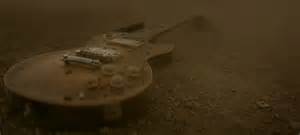
(via The Washington Post) By Geoff Edgers June 22, 2017
The convention couldn’t sound less rock-and-roll — the National Association of Music Merchants Show. But when the doors open at the Anaheim Convention Center, people stream in to scour rows of Fenders, Les Pauls and the oddball, custom-built creations such as the 5-foot-4-inch mermaid guitar crafted of 15 kinds of wood.
Standing in the center of the biggest, six-string candy store in the United States, you can almost believe all is well within the guitar world.
Except if, like George Gruhn, you know better. The 71-year-old Nashville dealer has sold guitars to Eric Clapton, Neil Young, Paul McCartney and Taylor Swift. Walking through NAMM with Gruhn is like shadowing Bill Belichick at the NFL Scouting Combine. There is great love for the product and great skepticism. What others might see as a boom — the seemingly endless line of manufacturers showcasing instruments — Gruhn sees as two trains on a collision course.
“There are more makers now than ever before in the history of the instrument, but the market is not growing,” Gruhn says in a voice that flutters between a groan and a grumble. “I’m not all doomsday, but this — this is not sustainable.”
The numbers back him up. In the past decade, electric guitar sales have plummeted, from about 1.5 million sold annually to just over 1 million…
Read more: https://www.washingtonpost.com/graphics/2017/lifestyle/the-slow-secret-death-of-the-electric-guitar/?utm_term=.471017b5534a

 Every Moment Has A Song