Recommended Albums #100

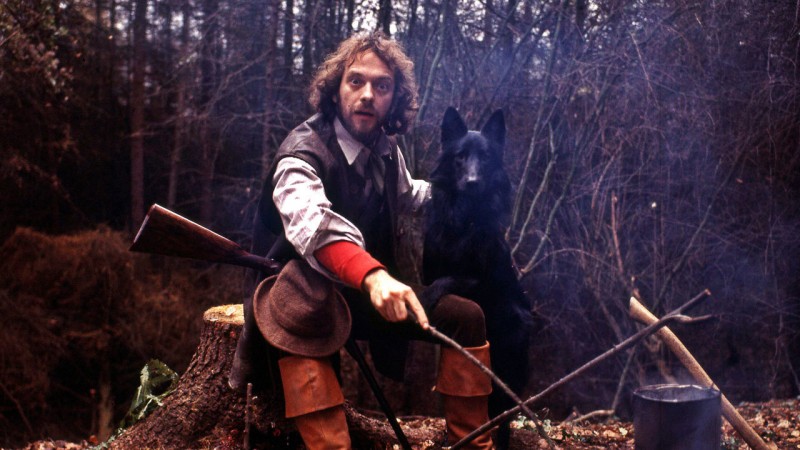
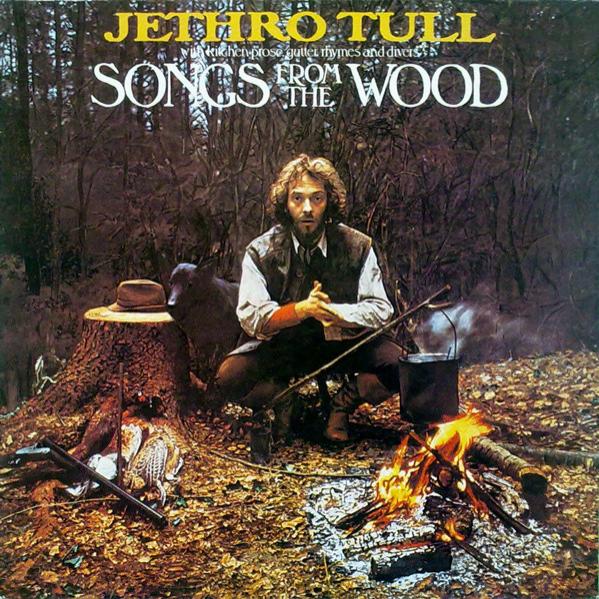
Jethro Tull: Songs from the Wood (1977)

Never has an album more directly and more perfectly issued its mission statement from the outset.

Like the sound of an old English street herald, Ian Anderson’s a cappella voice opens Jethro Tull’s Songs from the Wood with a friendly hail:

Let me bring you songs from the wood
To make you feel much better than you could know

And indeed what follows is a genre-birthing masterpiece blending British folk and progressive rock into something that could be fairly termed Elizabethan Rock–surely making fans of both folk and prog feel better than they could know.
Even many serious Tull fans feel that by 1976 and Too Old to Rock and Roll, Too Young to Die, things had grown a bit stale. Actually, taken as a batch of songs, and featuring as it did the guitar work of Martin Barre, it was a rather nice record.

But as a conceptual work about an aging rock star, coming at the height of the punk movement, Too Old… may have put Anderson and the band on the wrong side of Cool Street.

Having met, and produced albums by, English folk rock musicians, and having himself recently moved to the countryside, Anderson was inspired to take Tull in a fresh direction.

And as it turns out, the solution to Tull’s music beginning to sound old may have been to make it sound really old. Like, centuries old.

Let me bring you all things refined
galliards and lute songs served in chilling ale…
No one has electrified British folk more credibly with original compositions than Jethro Tull did on Songs from the Wood. It’s unique even within the band’s catalogue. What Fairport Convention and Steeleye Span did in plugging ancient songs into rock band arrangements was amazing. But the songs here aren’t based on centuries-old verse or inspired by particular traditional folk songs. This is all from Ian Anderson’s imagination–like J.R,R, Tolkien creating his own mythology as a setting for his characters. The fact that Anderson isn’t borrowing or reworking old traditionals–combined with the quality of the songwriting–makes this all the more astonishing.

McCartney could write timeless melodies. Brian Wilson could write heavenly harmonies. Cohen and Dylan could write inspired lyrics. But perhaps no other songwriter but Ian Anderson could have given us Songs from the Wood, with its highly literate lyrical sensibilities, evocative settings, its tinge of escapism, and its fantastically complex arrangements, performed by one of the best band lineups ever assembled.

It’s a wonderful blend of the gentle acoustic and the hard rock, along with some lovely singing and harmonizing. At turns mirthful and morose, regal and bawdy, natural and supernatural. Elsewhere we’ve opined on how Prince was comparatively minor league compared to Anderson in terms of dirty-minded double entendre. “Hunting Girl” takes low-minded lust into highbrow territory and is a showcase for guitarist Barre.

A singer of these ageless times.
With kitchen prose and gutter rhymes…
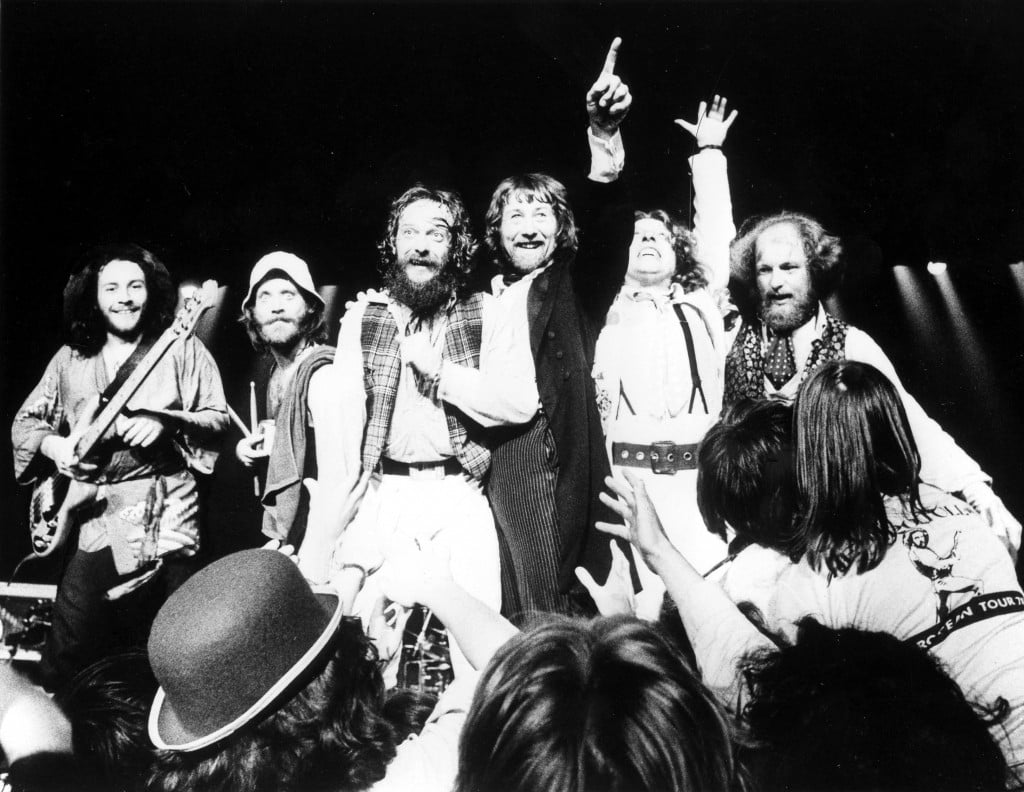
Full disclosure: for decades now I’ve considered this my favorite album by any artist in any genre, and I’ve listened to it literally hundreds of times. And yet I still will hear detail in the arrangements for the first time. How many bands in the current era make rock music so complex, with so many overlapping layers, that you’ll come across musical Easter eggs decades and hundreds of listens later?

One caveat: Like most progressive rock, Songs from the Wood has an appeal that takes multiple listens to be assimilated. I didn’t love it at first. Let it repeat, marinate and sink in.

This is an album that richly rewards repeated listening.

Songs from the wood make you feel much better…
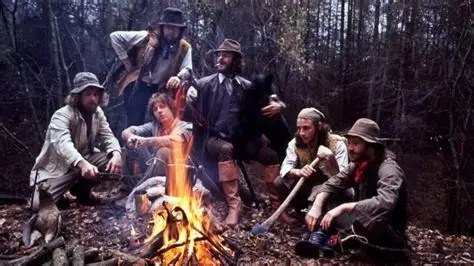
Listen to: “Songs from the Wood”

Listen to: “Jack-in-the-Green”

Listen to: “Cup of Wonder”

Listen to: “Hunting Girl”

Listen to: “Ring Out, Solstice Bells”

Listen to: “Velvet Green”

Listen to: “The Whistler”

Listen to: “Fire at Midnight”

See also: https://edcyphers.com/2020/02/28/unpopular-opinion-prince-lowered-the-bar-for-sexual-innuendo-in-music/

See also: https://edcyphers.com/2012/11/18/songs-you-may-have-missed-242/

See also: https://edcyphers.com/2013/02/24/songs-you-may-have-missed-340/

See also: https://edcyphers.com/2025/03/30/songs-you-may-have-missed-772/

Ian Anderson: Jethro Tull’s one-legged hammy past and their potential stripped-down future

(via Louder) by James McNair

Not ones for living in the past, Jethro Tull are back with their 24th album – and third in three years – Curious Ruminant. It finds frontman Ian Anderson embracing his love of sci-fi and issuing a warning about climate change. He tells Prog about building on the band’s legacy, hamming it up for the crowd and making sure all the semiquavers are in the right place.


Twenty minutes into his scheduled 9am Zoom interview with Prog, Ian Anderson has yet to appear. This is very unlike him and there is speculation about his whereabouts. Is he feeding his chickens? His pigs? Has he become absorbed in some music at his home studio? It’s a safe bet Jethro’s Tull’s venerable leader is up and doing something, because even now – or maybe especially now, given time’s year-stealing march – indolence is not this driven, 77-year-old flautist’s way.

Suddenly Anderson appears on screen, apologising that he has only just learned of a Google spreadsheet apprising him of the day’s many tasks. It turns out he’s been up since 6.30am (“A late start”) and has already replied to Derek Shulman of Gentle Giant’s email requesting a quote of endorsement for an upcoming memoir.

“I thought, ‘Okay, another end-of-life story,’” says Tull’s frontman, “but it’s what we do when we get older, right? You want to leave a legacy that isn’t just carved on your tombstone, but also carved in your own memory before it’s too late.”

After 24 studio albums and almost 60 years with Jethro Tull, Anderson’s legacy looks safe even before you factor in his not inconsiderable solo output. The band’s latest LP Curious Ruminant fulfils the contractual stipulations of their three-album deal with German prog label InsideOutMusic – but unlike 2022’s The Zealot Gene and 2023’s RökFlöte, it’s not a concept album; and it feels weightier, closer to home…

Read more: https://www.yahoo.com/entertainment/articles/ian-anderson-jethro-tull-one-060300357.html

Songs You May Have Missed #772

Jethro Tull: “Reasons for Waiting” (1969)

Another gem from the deep catalog of a band whose hardcore fans seem to think every release is a masterpiece (they couldn’t be more wrong) but who gets such little mainstream critical respect that, as of this writing, the band hasn’t been inducted into the Rock and Roll Hall of Fame (they couldn’t be more wrong).

Similarly to Fleetwood Mac, Jethro Tull started out as a British blues-rock band, but lineup changes–and perhaps commercial considerations–dictated a musical course correction.

Following the departure of band leader and guitarist Mick Abrahams after their first album, Tull was effectively Ian Anderson’s band (and has been ever since).

After a brief (less than 2 month) stint by future Black Sabbath legend Tony Iommi, guitarist Martin Barre was brought aboard to replace Abrahams on guitar. A more versatile musician, Barre was adept on mandolin and had actually been playing flute longer than Anderson himself.

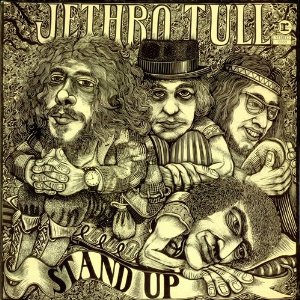
Tull’s signature sound would be forged by Anderson’s flute and Barre’s guitar licks over the next decade. In the meantime, second LP Stand Up was the record on which the transition from blues-influenced rock to a folk-inflected style began. Soon after, their distinctive folk/progressive rock blend fully unfolded.

But Tull has never truly abandoned its folk-rock leanings under flautist Anderson’s leadership.

“Reasons for Waiting” is nowhere on any Tull fan’s list of favorite songs. But this beautiful Ian Anderson ballad showcases the versatility of the writer better known for such canonical classic rock as “Aqualung”, “Locomotive Breath” and “Thick as a Brick”.

Palmer, 1970’s
Palmer, recent

This was the first song on which the band used orchestration in the studio, and Dee (at the time David) Palmer’s string arrangement is what raises the song to another level.

Palmer, perhaps Jethro Tull’s true unsung hero, would later become a full-fledged recording and touring member of the band, helping to build the lavish arrangements on albums like Songs from the Wood and songs like “Orion”.

Credited as composer of the 1979 Stormwatch album-closer “Elegy”, one of the few Tull songs without an Anderson writing credit, Palmer wrote the song as an ode to her father, writing it within an hour after first hearing he had died.

See also: https://edcyphers.com/2013/02/24/songs-you-may-have-missed-340/

See also: https://edcyphers.com/2012/11/18/songs-you-may-have-missed-242/

See also: https://edcyphers.com/2025/07/12/recommended-albums-100/

Ian Anderson Voted Best Rock n Roll Flautist For 55th Year in a Row

(via Madhouse magazine)

Ian Anderson, of the band Jethro Tull has been named the best Rock n Roll flute player aka flautist for the 55th consecutive year. The honor was unanimous and Anderson also came in second and third. 

Anderson first won the award in 1967 when Jethro Tull first formed. “In the 1960s I actually had a little competition” said Ian. “There were a few bands here and there that incorporated a flute in a song or two. Honestly they were all hippie hacks. Over time though there was less and less competition and eventually I was the only nominee. Go ahead name another Rock n Roll flute player, I dare you. I double dog dare you. See, exactly as I thought.”

Read more: https://www.madhousemagazine.com/ian-anderson-voted-best-rock-n-roll-flautist-for-55th-year-in-a-row/

“The day I ask the audience to sing my songs I might as well go home. It’s hard enough for trained singers, let alone an audience who will massacre it”: How Ian Anderson refined Jethro Tull stage shows

© Getty Images

When Jethro Tull released The Broadsword And The Beast in 1982, many of their fans breathed a sigh of relief: it seemed their favourite band had returned to their more traditional folk rock roots. Ian Anderson reveals the story behind the recently reissued and expanded album that he reckons contains some of Tull’s best music.

If ever Ian Anderson were to doubt the enduring popularity of Jethro Tull’s 1982 album The Broadsword And The Beast, he gets regular reminders of it when he meets long-time fans of the band. Perhaps not actually written all over their faces, but close enough.

“I’ve been asked to sign many an album-sized tattoo of the album cover on somebody’s back,” he says, “which is embarrassing, but I’ve seen very good likenesses of the album cover in glorious colour on the flesh of human beings. It’s beyond me why people do that sort of thing, but perhaps that’s a reflection of the affinity some fans feel to it.”

They can immerse themselves even more fully in it as the 40th anniversary edition (slightly delayed thanks to that pesky pandemic) has been released, offering an 81-track expanded version of the album replete with Steven Wilson remixes, live renditions, and a handful of previously unreleased tracks…

Read more: https://www.msn.com/en-us/music/news/the-day-i-ask-the-audience-to-sing-my-songs-i-might-as-well-go-home-it-s-hard-enough-for-trained-singers-let-alone-an-audience-who-will-massacre-it-how-ian-anderson-refined-jethro-tull-stage-shows/ar-AA1jwEBP

Video of the Week: Jethro Tull Fish ‘n Sheep & Rock ‘n Roll (1986 Documentary)

Previous Older Entries