The other day I got into my car and the first thing I did–just like I was taught in Driver’s Ed class–was to check the CD player. As I switched the function from radio to CD and landed on track 3 where I’d left off listening, I heard parts of Ben Harper’s ‘Steal My Kisses’ and Belle & Sebastian’s ‘If She Wants Me’ back to back. It sounded a little like this:
A weird coincidence only, most likely. But It did get me thinking about some of the more heinous song-on-song crimes that have been perpetrated throughout the years. I’m talking about artists lifting musical ideas from other artists without necessarily giving credit where it’s due. I’m talking about the scandal of Pop-lifting…
____________________
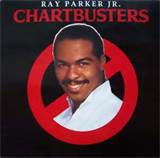
‘Ghostbusters’ by Ray Parker Jr. lifted from ‘I Want a New Drug’ by Huey Lewis
The producers of the film Ghostbusters approached Lindsay Buckingham to write a theme song based on his successful contribution of ‘Holiday Road’ to National Lampoon’s Vacation. When Buckingham declined Ray Parker Jr. took the job and wrote the ‘Ghostbusters’ theme. He was promptly sued by Huey Lewis, whose hit ‘I Want a New Drug’ had been a hit earlier that same year and sounded eerily like ‘Ghostbusters’ (ok maybe not ‘eerily’ but still…).
The two settled out of court, with Columbia Pictures paying a settlement to Huey Lewis. The details of this settlement were to remain confidential and were until Lewis made comment about his payment on an episode of VH1’s Behind the Music. Parker then sued Lewis for breach of confidentiality.
What’s really weird is that the bass line the two songs share that made them so similar, is also quite similar to that of M’s ‘Pop Muzik’, a number one hit in late 1979.
Here’s an excellent mashup showing why Ray Parker got Ghostbusted:
____________________
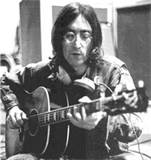
‘Come Together’ by The Beatles lifted from ‘You Can’t Catch Me’ by Chuck Berry
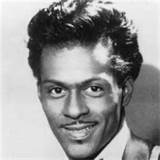
‘Come Together’ is pretty much a slowed down, heavier version of Chuck Berry’s ‘You Can’t Catch Me’ with different lyrics–mostly.
The song got John Lennon sued by Big Seven Music Corp, the publisher of Berry’s song. They settled out of court, but a pissed off Lennon vowed to record three more of Big Seven’s songs. He got around to releasing two. Both appeared on his Rock n Roll album and one of them was ‘You Can’t Catch Me’. (The third, ‘Angel Baby, went unreleased until after his death). Big Seven sued and won another award ($6,795) then released an album of Lennon’s unauthorized outtakes in a move designed to embarrass Lennon. This time Lennon sued and won, to the tune of $84,912.96. I’ll always wonder how it came down to that 96 cents…
____________________
‘Surfin’ U.S.A.’ by the Beach Boys lifted from ‘Sweet Little Sixteen’ by Chuck Berry
And speaking of Chuck Berry, rock n roll’s most ripped-off figure was pretty ticked off to hear ‘Surfin’ U.S.A.’ on the radio one day. It’s very nearly a note-for-note rip-off of his ‘Sweet Little Sixteen’. He sued and won royalties and a songwriting credit. It gets weirder: The lyrics of ‘Surfin’ U.S.A.’ also seems to have been ‘inspired’ by another song, Bobby Rydell’s ‘Kissin’ Time’, which names various American cities. And ‘Kissin’ Time’ borrows melodically from…yup, ‘Sweet Little Sixteen’. It all comes back to Chuck.
____________________
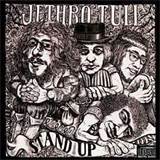
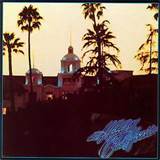
‘Hotel California’ by Eagles lifted from ‘We Used to Know’ by Jethro Tull
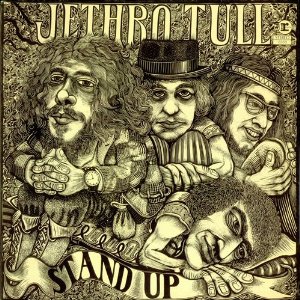
When the Eagles toured as opening act for Jethro Tull in their earliest days a song from Tull’s live set and written by Ian Anderson made an impression on songwriter Don Henley. It took a while, but about half a decade later his masterwork, ‘Hotel California’ showed the influence of the earlier song. As far as I know, no one sued anyone. But it is interesting to note how un-original Henley’s magnum opus actually is.
____________________
‘Take it to the Limit’ by Eagles lifted from ‘If You Don’t Know Me by Now’ by Harold Melvin & the Blue Notes
And while we’re on the subject of the Eagles, let’s take note (why not, everybody else is doing it) of Randy Meisner’s ‘Take it to the Limit’. The opening string arrangement comes across as a homage (to put it politely) to Harold Melvin’s R&B hit of three years earlier, written by Gamble and Huff. It was also, incidentally, the first Eagles single not to feature either Henley or Glenn Frey on lead vocals.
____________________
So, here’s to the Originals–the Chuck Berrys and Ian Andersons and Huey Lewis’ of the world–those who sometimes have to sue to get the recognition (and money) they deserve. It’s high praise when artists of the stature of Don Henley, John Lennon and Brian Wilson tap your musical legacy for ideas.

 Every Moment Has A Song