John Denver’s credentials as a songwriter are impressive. He is also the subject of a unique bit of music trivia in that his first two top 40 hits have been adopted as official state songs.
Colorado recognized “Rocky Mountain High” as such in 2007. And in 2014 “Take Me Home, Country Roads” (co-written by Denver with Bill Danoff and Tammy Nivert) was given the same distinction by the state of West Virginia.
But Denver wasn’t averse to putting his stamp on other writers’ work if it spoke for him.
And Randy Sparks’ moving ballad “Today”, a #17 hit in 1964 for Sparks’ folk group the New Christy Minstrels, is one of the most sublime songs Denver ever sang.
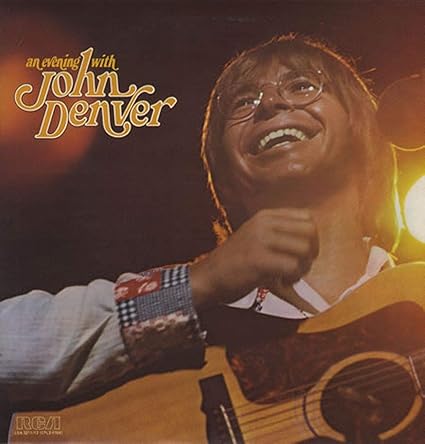
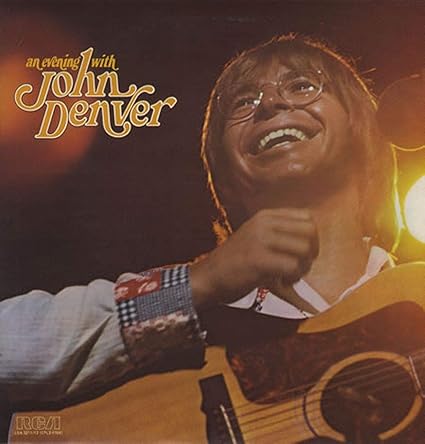
Denver’s beautifully recorded live double LP An Evening with John Denver reached #2 on the pop album chart and was a #1 country album in an era when double and even triple live albums cracked the top 10 with regularity.
Ask die-hard John Denver fans why they love the late singer’s music so much and they’ll likely tell you the same thing: “He makes me cry.” Denver, who wrote unabashedly sentimental songs about love, nature and an ever-homesick life on the road, had a rare gift for stirring something inside listeners. To many, his melodies and lyrics could come off as maudlin and conventional. But for the countless believers — and there are many — Denver was a poet, a visionary and a constant companion.
The artists assembled for a new John Denver tribute record, The Music Is You, likely fall into the latter category. The album, out April 2, showcases some of Denver’s most beloved songs, as performed by a cross-genre, cross-generational and impressive mix of musicians — many of whom were in elementary school in the ’70s and ’80s, when Denver was singing on The Muppet Show and appearing in kid-friendly TV specials.
My Morning Jacket opens the collection with what might be Denver’s most popular song, the oft-covered “Leaving on a Jet Plane.” True to the original, singer Jim James dispenses a sweetly sung tearjerker, awash in heartache and loneliness. Dinosaur Jr.’s J Mascis and Sharon Van Etten pair up for a gritty, electrified take on “Prisoners,” Denver’s ode to the working class, while veteran roots-rock singer Lucinda Williams performs a spare, bittersweet version of “This Old Guitar,” a song of simple thanks to the instrument that gave Denver (and Williams) a life and living. Edward Sharpe and the Magnetic Zeros close the album with a retooled interpretation of “Wooden Indian,” Denver’s broadside against the treatment of Native Americans. Other artists appearing on the record include Dave Matthews, Blind Pilot, Josh Ritter and Emmylou Harris, among many others.
The Music Is You arrives 15 years after Denver’s death. The singer would also have turned 70 this year, on Dec. 31; Denver died when the single-engine plane he was piloting crashed off the coast of California. Toward the end of his life, Denver was struggling: He wrote and spoke openly about his marital infidelities, drug and alcohol abuse, domestic violence and said he thought of killing himself. He was arrested twice for drunken driving. Some fans dismissed the troubles, while others were disappointed, but all had hoped Denver would turn his life around and enjoy a resurgence in his career. He didn’t live long enough to make it happen, but The Music Is You shows that his songs maintain the power to reach new audiences — and, yes, make them cry.
Though John Denver’s 1975 live double album An Evening with John Denver spent two weeks at number 2, went triple-platinum and spawned two hit singles, it’s a largely forgotten piece of his catalogue today, with the exception of #1 single “Thank God I’m a Country Boy”. (“Greatest Hits” collections, of which Denver has too many, often make relics of live albums).
But like “Country Boy”, much of this record’s performances actually outdid their original studio versions. Denver put his all into a live album that was a celebration of his rise to the top of the pop music world, backed by a stellar orchestra conducted by Lee Holdridge and such luminaries as Steve Weisberg and Hal Blaine.
The gentle bluegrass ballad “Matthew”, the story of Denver’s real-life uncle, is superior here to its Back Home Again LP version from less than a year earlier. Denver’s voice, one of pop’s sweetest and purest, was perfectly suited to his homespun, optimistic folk-pop, similarly to the way Karen Carpenter’s was a great match to her lovelorn ballad material.
But more than a pleasant voice, Denver was hitting his stride as a singer. His phrasing in this song shows great instincts. He knows to draw out the syllables on lines like “born just south of Colby, Kansas“, while the chorus lines “joy was just the thing that he was raised on, love was just a way to live and die” see him skipping across the short words like a stone across a stream. By alternating similarly throughout the song he both tells his story more credibly and keeps the ear from tiring of one pace of delivery. It’s the subtle genius of a superior singer.
I’ll step onto the soapbox only long enough to say the American Idolization of pop is killing both subtlety and variety in today’s music. With Adele-style belting and Christina Aguilera-style pyrotechnics as primary templates, the singing competitions are the bland tributaries feeding too much of one kind of singing into the mainstream. A young singer today wouldn’t aspire to sing like Karen Carpenter–there’s no one like her on TV to emulate. Neil Young would be laughed off a singing competition show.
John Denver came from a folk music background; young singers today don’t know what folk is. It’s a cliché to say there are no John Denvers anymore. But it’s accurate, I think, to say that pop’s rich diversity isn’t served well by TV singing competition culture.

 Every Moment Has A Song