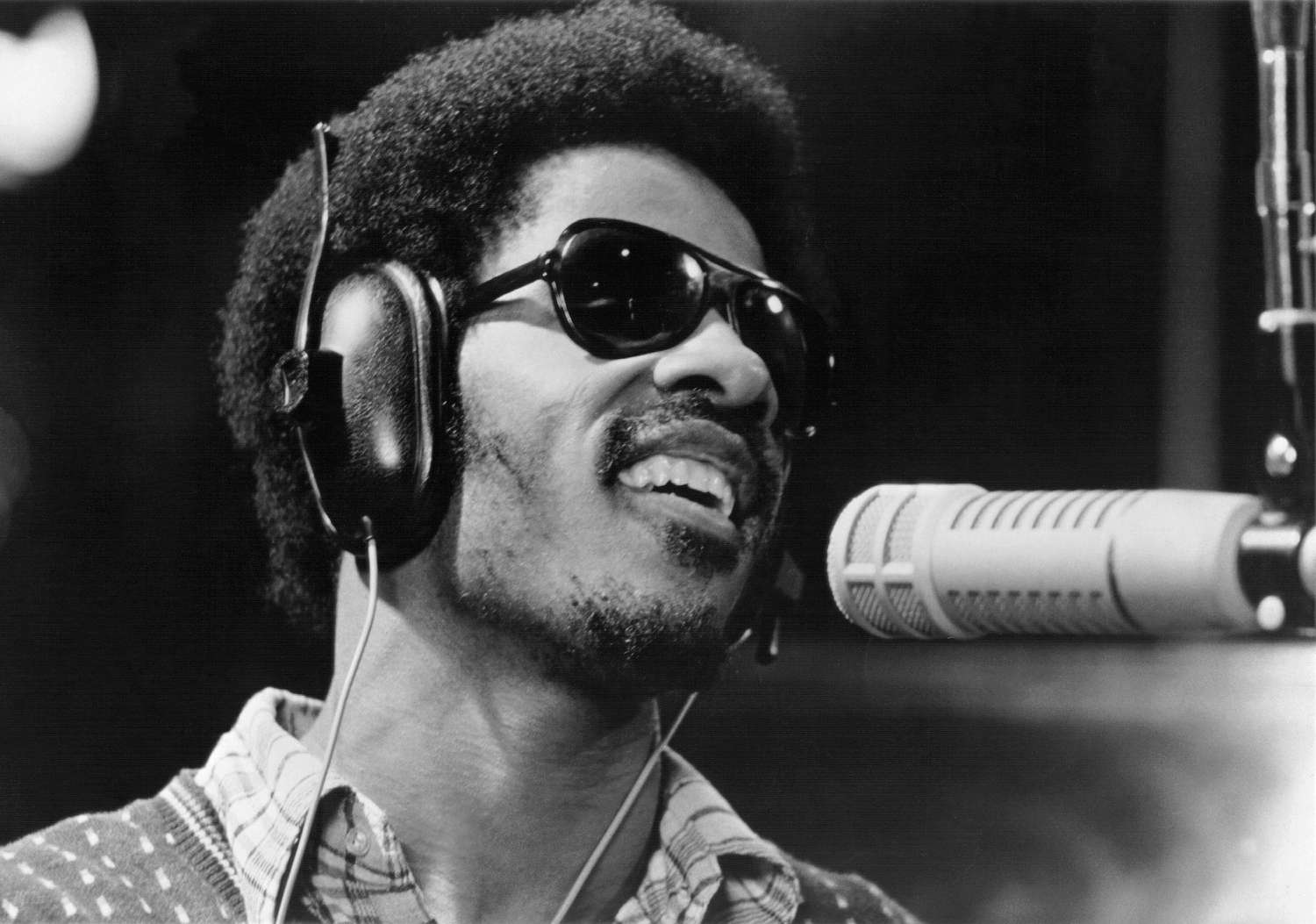
Somehow when the discussion turns to the greatest songwriters, a conversation revisited again recently on the occasion of the passing of Brian Wilson, this guy often gets overlooked. Today we just want to remind you that in addition to his ten #1 hits, 20 R&B #1’s, and 100+ million records sold as a musician, Stevie Wonder was responsible for lots of hits and great tracks by other artists.
Here are just a few:
Art Garfunkel: “I Believe (When I Fall in Love it Will Be Forever)” (1975)
Non-charting fourth single from Art Garfunkel’s hit Breakaway LP. This one deserved a better fate.
Appeared on Wonder’s 1972 Talking Book album.
Smokey Robinson & The Miracles: “Tears of a Clown” (1967/1970)
Stevie Wonder, who was discovered by Ronnie White of the Miracles, had written the music for “Tears of a Clown” and brought it to the 1966 Motown Christmas party, hoping Smokey Robinson would have a good lyric idea. He did–a tried-and-true one.
He’d previously written “My Smile is Just a Frown (Turned Upside Down)” and “Tracks of My Tears”, so he trotted out a now-familiar lyrical trope for “Tears of a Clown”.
It appeared as a Miracles album track in 1967 (with a slightly different melody). Then upon Smokey’s decision to retire from touring and recording with the group in ’69, the record company (in the absence of new product) resurrected and remixed the song. Ironically on its release in 1970 it became the group’s first and only number one hit with Smokey as lead singer, though released after he’d left the band.
Cashbox called “Tears of a Clown” a “brilliant return to the heyday sound of the Miracles” and listeners may have thought its sound was a bit of a throwback in 1970. To this listener at least, it always seemed to have the sound of a song a half decade older. But “dated” and “brilliant return to the heyday sound” are two sides of the same coin I suppose.
I wonder how many listeners caught the name drop of Pagliacci in the bridge, or the song’s use of the bassoon–a rarity in pop recordings to say the least.
Spinners: “It’s a Shame” (1970)
The Detroit group’s biggest hit with Motown before moving on to Atlantic Records (at Aretha Franklin’s urging) and their period of greatest success.
Rufus: “Tell Me Something Good” (1974)
The first and only hit credited simply to “Rufus”, before the next album re-branded them “Rufus featuring Chaka Khan”. It peaked at #3 in the Hot 100.
This song is packed to capacity with funky ingredients: from the two-guitar interplay (with wah-wah and talk box effects) to the Hohner clavinet keys to the heavy breathing and the extra 5th count leading into the chorus. Pretty “dirty” for a top ten pop record.
Jeff Beck: “Cause We’ve Ended as Lovers” (1975)
As we’ve elsewhere discussed, Jeff Beck gave Stevie Wonder the groove that Wonder shaped into his number one hit “Superstition”.
Stevie returned the favor by contributing two songs to Beck’s Blow by Blow album, “Cause We Ended as Lovers” and “Thelonious”.
Roberta Flack featuring Donny Hathaway: “You Are My Heaven” (1980)
From Flack’s Grammy-nominated 1980 album, and featuring posthumous vocals from Hathaway, who’d passed away the previous year. A #8 R&B hit.
Aretha Franklin: “Until You Come Back to Me (That’s What I’m Gonna Do” (1973)
Co-written by Morris Broadnax and Clarence Paul, this song was recorded by Wonder in 1967, but not issued until it appeared on his 1977 Looking Back compilation album.
Franklin’s sublime, million-selling version peaked at #3 on the pop charts and #1 R&B.
The number of songs Stevie Wonder contributed to others’ careers is truly staggering. These are just a few highlights–a list of well over one hundred songs Stevie wrote for other artist can be found here.
 Every Moment Has A Song