It was a slow song, in the style of a plaintive Roy Orbison ballad. The band started to record it; but the producer wasn’t feeling it. He advised the band to pick up the tempo, and to add a hooky instrumental bit at the beginning.
Fortunately, the band listened to the grownup in the room.
John Lennon grabbed his harmonica. Ringo kicked up the tempo. “Please Please Me,” The Beatles’ first #1 single (in the UK) was born – and a bond between the band and George Martin was forged.
What would have happened if the lads insisted on doing it their way?
In 1982 Michael Jackson flew to England to record the song “Say, Say, Say” with former Beatle Paul McCartney at the famous Abbey Road studio. This was the second musical collaboration between Paul and Michael, the first being 1981’s “The Girl is Mine” which was featured on Jackson’s smash hit album “Thriller”. While working on “Say, Say, Say”, Paul invited Michael to stay with him and his wife Linda at their home in suburban London. One fateful night, after the three finished dinner, Paul took out a thick leather bookl and laid it out on the dining room table. This particular book listed every song and publishing right that Paul had acquired over the last 10 years. He made it clear to Michael that owning publishing rights was the only way to make really big money in the music industry. Paul further bragged that in the last year alone, he had earned approximately $40 million off his music catalogue.
“Every time someone records one of these songs, I get paid. Every time someone plays these songs on the radio, or in live performances, I get paid.”
Paul also clarified that none of those earnings came from Beatles songs because amazingly, he did not own them. Ironically, this free advice would come back to bite Paul in the butt two years later when Michael purchased the entire Beatles catalogue for $47.5 million. Paul felt appropriately back stabbed and his relationship with Michael was damaged forever. But how on earth did Paul McCartney and John Lennon lose ownership of The Beatles catalogue in the first place??!!
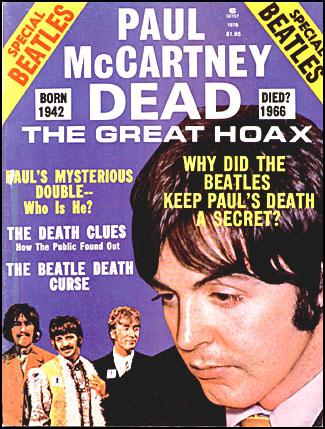
In 1969, the Northern Star newspaper of Northern Illinois University ran a story claiming that Paul McCartney had been killed in a car crash in 1966 and had been replaced by a look-alike. Russell Gibb of WKNR-FM in Detroit picked up on the claim and the story went worldwide. By late October 1969, the hoax was so well entrenched that McCartney came out of seclusion at his Scottish farm to deny the story. When McCartney was asked to comment by a reporter visiting Macca’s farm, he replied, “Do I look dead? I’m as fit as a fiddle.”
The other day I got into my car and the first thing I did–just like I was taught in Driver’s Ed class–was to check the CD player. As I switched the function from radio to CD and landed on track 3 where I’d left off listening, I heard parts of Ben Harper’s ‘Steal My Kisses’ and Belle & Sebastian’s ‘If She Wants Me’ back to back. It sounded a little like this:
A weird coincidence only, most likely. But It did get me thinking about some of the more heinous song-on-song crimes that have been perpetrated throughout the years. I’m talking about artists lifting musical ideas from other artists without necessarily giving credit where it’s due. I’m talking about the scandal of Pop-lifting…
____________________
‘Ghostbusters’ by Ray Parker Jr. lifted from ‘I Want a New Drug’ by Huey Lewis
The producers of the film Ghostbusters approached Lindsay Buckingham to write a theme song based on his successful contribution of ‘Holiday Road’ to National Lampoon’s Vacation. When Buckingham declined Ray Parker Jr. took the job and wrote the ‘Ghostbusters’ theme. He was promptly sued by Huey Lewis, whose hit ‘I Want a New Drug’ had been a hit earlier that same year and sounded eerily like ‘Ghostbusters’ (ok maybe not ‘eerily’ but still…).
The two settled out of court, with Columbia Pictures paying a settlement to Huey Lewis. The details of this settlement were to remain confidential and were until Lewis made comment about his payment on an episode of VH1’s Behind the Music. Parker then sued Lewis for breach of confidentiality.
What’s really weird is that the bass line the two songs share that made them so similar, is also quite similar to that of M’s ‘Pop Muzik’, a number one hit in late 1979.
Here’s an excellent mashup showing why Ray Parker got Ghostbusted:
____________________
‘Come Together’ by The Beatles lifted from ‘You Can’t Catch Me’ by Chuck Berry
‘Come Together’ is pretty much a slowed down, heavier version of Chuck Berry’s ‘You Can’t Catch Me’ with different lyrics–mostly.
The song got John Lennon sued by Big Seven Music Corp, the publisher of Berry’s song. They settled out of court, but a pissed off Lennon vowed to record three more of Big Seven’s songs. He got around to releasing two. Both appeared on his Rock n Roll album and one of them was ‘You Can’t Catch Me’. (The third, ‘Angel Baby, went unreleased until after his death). Big Seven sued and won another award ($6,795) then released an album of Lennon’s unauthorized outtakes in a move designed to embarrass Lennon. This time Lennon sued and won, to the tune of $84,912.96. I’ll always wonder how it came down to that 96 cents…
____________________
‘Surfin’ U.S.A.’ by the Beach Boys lifted from ‘Sweet Little Sixteen’ by Chuck Berry
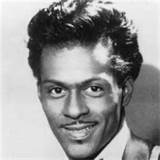
And speaking of Chuck Berry, rock n roll’s most ripped-off figure was pretty ticked off to hear ‘Surfin’ U.S.A.’ on the radio one day. It’s very nearly a note-for-note rip-off of his ‘Sweet Little Sixteen’. He sued and won royalties and a songwriting credit. It gets weirder: The lyrics of ‘Surfin’ U.S.A.’ also seems to have been ‘inspired’ by another song, Bobby Rydell’s ‘Kissin’ Time’, which names various American cities. And ‘Kissin’ Time’ borrows melodically from…yup, ‘Sweet Little Sixteen’. It all comes back to Chuck.
____________________
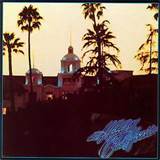
‘Hotel California’ by Eagles lifted from ‘We Used to Know’ by Jethro Tull
When the Eagles toured as opening act for Jethro Tull in their earliest days a song from Tull’s live set and written by Ian Anderson made an impression on songwriter Don Henley. It took a while, but about half a decade later his masterwork, ‘Hotel California’ showed the influence of the earlier song. As far as I know, no one sued anyone. But it is interesting to note how un-original Henley’s magnum opus actually is.
____________________
‘Take it to the Limit’ by Eagles lifted from ‘If You Don’t Know Me by Now’ by Harold Melvin & the Blue Notes
And while we’re on the subject of the Eagles, let’s take note (why not, everybody else is doing it) of Randy Meisner’s ‘Take it to the Limit’. The opening string arrangement comes across as a homage (to put it politely) to Harold Melvin’s R&B hit of three years earlier, written by Gamble and Huff. It was also, incidentally, the first Eagles single not to feature either Henley or Glenn Frey on lead vocals.
____________________
So, here’s to the Originals–the Chuck Berrys and Ian Andersons and Huey Lewis’ of the world–those who sometimes have to sue to get the recognition (and money) they deserve. It’s high praise when artists of the stature of Don Henley, John Lennon and Brian Wilson tap your musical legacy for ideas.
“When you’re drowning,” John Lennon told Rolling Stone in 1970, “you don’t say, ‘I would be incredibly pleased if someone would have the foresight to notice me drowning and come and help me.’ You just scream.”
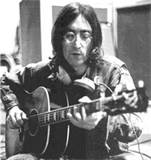
“Don’t Let Me Down” is Lennon’s anguished scream to his lover, Yoko Ono. When he and the Beatles recorded the song during the Let It Be sessions in late January of 1969, Lennon asked Ringo Starr to hit the cymbal very hard at the beginning, to “give me the courage to come screaming in.”
The Beatles were in the process of breaking apart when Lennon wrote the song. It was a dark time in my ways, and he was becoming more and more dependent upon Ono for personal and creative support. As Paul McCartney told writer Barry Miles in Many Years From Now:
It was a very tense period: John was with Yoko and had escalated to heroin and all the accompanying paranoias and he was putting himself out on a limb. I think that as much as it excited and amused him, at the same time it secretly terrified him. So ‘Don’t Let Me Down’ was a genuine plea, ‘Don’t let me down, please, whatever you do. I’m out on this limb, I know I’m doing all this stuff, just don’t let me down.’ It was saying to Yoko, ‘I’m really stepping out of line on this one. I’m really letting my vulnerability be seen, so you must not let me down.’ I think it was a genuine cry for help.
You can get a strong sense of Lennon’s anguish and vulnerability when you listen to the isolated vocal track above. And for the full arrangement, including Starr’s cymbal-crash near the beginning and Billy Preston’s brilliant electric piano playing, see below.

 Every Moment Has A Song